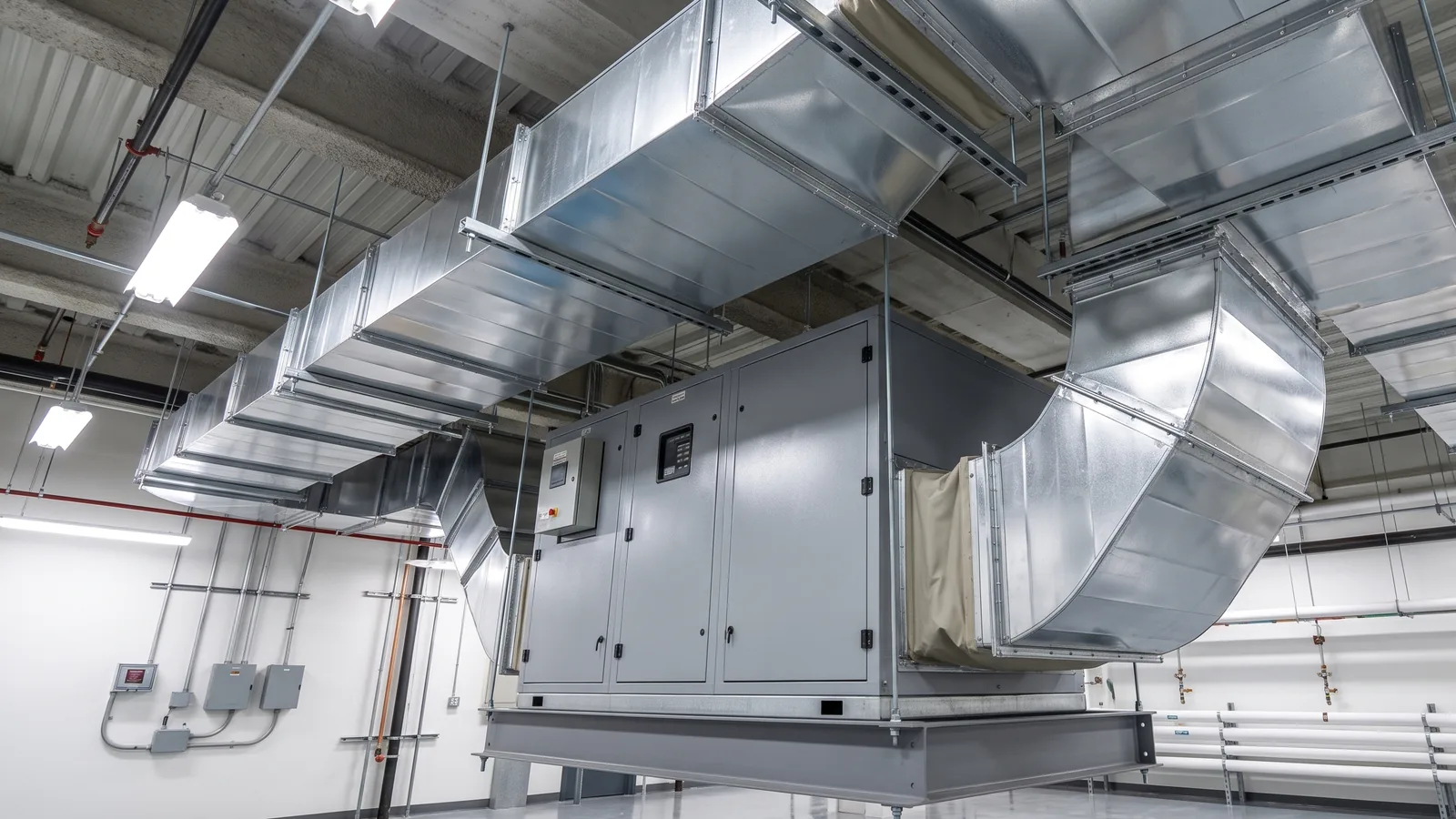
Indoor air quality in commercial facilities depends heavily on humidity control. The ASHRAE Standard 55 recommends keeping relative humidity (RH) between 30% and 60% for occupied commercial buildings, with most facility managers targeting the 40-60% band for comfort and material protection. For Australian operations spanning tropical, temperate, and arid climate zones, maintaining stable humidity demands purpose-built commercial dehumidifiers and humidifiers matched to each facility’s conditions.
Why Humidity Control Matters for Commercial Operations
Uncontrolled humidity costs Australian businesses through damaged inventory, accelerated equipment wear, and higher rates of sick leave. Keeping RH within the target range protects both assets and workforce productivity.
Most commercial spaces perform best between 40-60% RH, though regulated industries often require tighter bands. Understanding your facility’s specific moisture loads helps you select the right equipment from the desiccant dehumidifier or refrigerant dehumidifier range.
Direct Business Impacts of Poor Humidity Control
- Equipment corrosion and premature failure when RH stays above 70%
- Static discharge damage to electronics when RH drops below 40%
- Increased absenteeism linked to respiratory complaints
- Product quality defects and customer complaints
- Higher energy costs from HVAC systems compensating for moisture loads
- Compliance failures in regulated industries (pharmaceutical, food, healthcare)
Industry-Specific Humidity Challenges
Different commercial sectors face distinct humidity-related risks. Manufacturing facilities battle corrosion and static discharge, while healthcare environments must suppress pathogen growth. The table below outlines critical RH ranges by industry.
| Industry | Critical RH Range | Primary Risks Outside Range |
|---|---|---|
| Warehousing | 45-55% | Product spoilage, packaging failure, mould on stored goods |
| Manufacturing | 40-50% | Equipment corrosion, electrostatic discharge, dimensional changes in materials |
| Healthcare | 40-60% | Infection transmission, equipment malfunction, patient discomfort |
| Food Processing | 50-65% | Bacterial growth, texture changes, condensation contamination |
| Data Centres | 50-70% (per ASHRAE TC 9.9) | Component failure, condensation, static discharge |
These risks compound when facilities lack continuous monitoring. A warehouse storing cardboard packaging at 75% RH for even a few days can lose stock to mould and adhesive failure that would not occur at 50%.
Australian Standards and Workplace Obligations
Australian commercial buildings must comply with Safe Work Australia’s WHS obligations around indoor air quality. While the model WHS laws do not prescribe a specific humidity percentage, they require employers to provide a safe working environment, and persistent humidity outside comfortable ranges is a recognised hazard.
Australian Standard AS 1668.2 governs ventilation and air conditioning in buildings, mandating minimum outdoor-air supply rates. Ventilation alone does not control humidity, though.
In tropical and subtropical regions like Darwin, Cairns, and Brisbane, outdoor air regularly exceeds 70% RH, introducing moisture loads that only dedicated dehumidification equipment can manage. Even in temperate cities like Sydney and Melbourne, summer humidity spikes push warehouse and office environments outside the target range without active control.
Key Compliance Touchpoints
- AS 1668.2:2024 sets minimum ventilation rates for commercial buildings
- WHS regulations require employers to manage indoor air quality hazards including mould exposure
- Food Standards Australia New Zealand (FSANZ) requires documented temperature and humidity control in food handling areas
- ASHRAE Standard 55 provides the internationally recognised comfort range (30-60% RH) widely referenced in Australian specifications
Health and Safety Implications
Humidity directly influences pathogen survival and occupant wellbeing. Building science research confirms that sustained RH above 70% allows mould spore germination within 24-48 hours on organic surfaces. Below 40% RH, dry air irritates respiratory passages and dries mucous membranes.
Key Health Thresholds
- Above 70% RH: Mould spores germinate on most surfaces within 24-48 hours
- Above 50% RH: House dust mite populations increase rapidly. Research from Ohio State University found that mites die within 6-11 days at 50% RH or below
- Below 40% RH: Dry air increases respiratory irritation and viral transmission rates
- Below 30% RH: Eye discomfort and static discharge become persistent complaints
- 40-60% RH: Optimal range for both human comfort and pathogen suppression
Maintaining proper humidity control reduces sick leave and respiratory complaints in commercial offices. Facilities that hold within the 40-60% band report fewer occupant health complaints overall.
Material Protection Requirements
Commercial assets deteriorate fast outside the right humidity range. Understanding material-specific vulnerabilities helps prioritise which areas of a facility need the tightest control.
Humidity Damage by Material Type
| Material | High Humidity Damage (>70%) | Low Humidity Damage (<40%) |
|---|---|---|
| Steel/Metal | Corrosion, oxidation | Brittleness, static buildup |
| Paper/Cardboard | Mould, warping, adhesive failure | Brittleness, tearing |
| Electronics | Short circuits, condensation | Static discharge, component failure |
| Timber | Rot, swelling, fungal growth | Cracking, shrinkage, splitting |
| Textiles | Mildew, colour bleeding | Static cling, fibre damage |
Protecting these materials requires different approaches depending on facility layout and operating temperatures. Ducted dehumidification systems integrate with existing HVAC infrastructure for whole-building control, while portable or wall-mounted units target specific problem zones like cold stores and loading docks.
Selecting Commercial Humidity Control Technology
Technology selection depends on operating temperature and space configuration. Each dehumidification or humidification type has a distinct operating window.
Dehumidification Technologies
- Desiccant systems: Use a silica-gel rotor to adsorb moisture. Effective from -20°C to +50°C, making them the only viable option for cold stores, freezer rooms, and sub-15°C facilities. Browse the desiccant dehumidifier range
- Refrigerant systems: Condense moisture by cooling air below its dew point. Efficient between 15°C and 35°C for offices, retail, and standard warehouses. Performance drops below 15°C as the coil frosts. Browse the refrigerant dehumidifier range
- Ducted systems: Integrate into existing HVAC ductwork for whole-building dehumidification without standalone equipment on the floor
- Portable units: Targeted spot treatment for temporary moisture problems or localised high-humidity zones
Humidification Technologies
- Ultrasonic systems: Energy-efficient, precise control, and low maintenance. Produce a fine cool mist without heating elements. Explore the ultrasonic humidifier range
- Steam systems: Sterile output suited to healthcare and cleanroom environments
- Evaporative systems: Provide a natural cooling effect alongside humidification, suited to large open spaces
Facilities with cold rooms alongside ambient zones often pair desiccant units for cold-side extraction with refrigerant systems for warmer areas. Moisture Cure Commercial has helped Australian businesses improve workplace performance through humidity control for over 20 years.
Implementation Best Practices
Successful humidity control requires proper system sizing, strategic placement, and ongoing monitoring. Undersized systems cycle too frequently, creating humidity swings that stress materials and occupants.
Critical Implementation Steps
- Conduct full moisture load calculations, accounting for occupancy, industrial processes, and air infiltration
- Map airflow patterns to identify dead zones and high-risk condensation areas
- Install continuous monitoring with remote alerts when conditions drift outside the target range
- Establish preventive maintenance schedules based on operating hours and environmental severity
- Train facility staff on system operation and first-response troubleshooting
- Document baseline humidity conditions and track improvements over time to demonstrate ROI
Professional site assessment prevents the common mistake of specifying equipment based on room volume alone, which ignores process moisture, infiltration, and occupancy loads.
Measuring Return on Investment
Humidity control delivers returns through reduced material damage, lower maintenance frequency, and fewer occupant health complaints. The strongest business cases come from facilities with high-value inventory or strict regulatory requirements.
Where ROI Is Most Measurable
- Warehousing and logistics: Reduced spoilage and packaging damage directly lowers replacement costs
- Manufacturing: Fewer corrosion-related equipment repairs and less electrostatic damage to components
- Food processing: Lower rejection rates and fewer compliance incidents during audits
- Data centres: Reduced risk of humidity-related outages, where protecting servers from humidity damage avoids downtime that costs large enterprises upwards of $300,000 per hour according to industry benchmarks
- Offices: Fewer sick days and reduced building-related illness complaints
Facilities that track humidity-related losses before and after installation typically demonstrate payback within 12-24 months. Start by documenting current damage rates, maintenance costs, and occupant complaints to establish the baseline.
Frequently Asked Questions
What humidity level should a commercial building maintain?
ASHRAE Standard 55 recommends 30-60% RH for occupied commercial spaces. Most Australian facility managers target 40-60% RH, which balances occupant comfort, material protection, and pathogen suppression. Tighter ranges apply to regulated environments: pharmaceutical manufacturing typically requires 45-55%, while food processing areas may need 50-65%.
How does humidity affect indoor air quality in offices?
Humidity outside the 40-60% range degrades air quality in several ways. High humidity above 70% RH promotes mould growth and increases airborne biological contaminants. Low humidity below 40% RH dries respiratory passages, increases dust suspension, and raises the rate of viral transmission between occupants.
What is the difference between desiccant and refrigerant dehumidifiers?
Refrigerant dehumidifiers cool air below its dew point to condense moisture. They work efficiently between 15°C and 35°C but lose performance in cold environments. Desiccant dehumidifiers use an absorbent rotor and work across the full range from -20°C to +50°C, making them essential for cold stores, freezer rooms, and sub-zero applications.
Do Australian workplaces have legal humidity requirements?
Australia does not mandate a specific humidity percentage in workplaces. However, WHS legislation requires employers to provide a safe working environment, and persistent humidity outside comfortable ranges is a recognised hazard. AS 1668.2 governs ventilation, and Safe Work Australia guidance references indoor air quality as a factor in workplace health management.
How do you control humidity in a warehouse?
Warehouse humidity control combines sealed building envelope improvements with mechanical dehumidification. Large unheated warehouses in humid climates often need desiccant dehumidifiers because temperatures drop below the effective range of refrigerant units. Monitoring at multiple points helps identify problem zones near loading docks and external walls.
Can poor humidity damage commercial electronics and servers?
Yes. ASHRAE TC 9.9 guidelines for data centres recommend 50-70% RH. Below 8% RH, static discharge risk increases significantly. Above 80%, condensation can cause short circuits and corrosion on circuit boards.
Ultrasonic humidifiers provide precise humidity control for electronics manufacturing and server environments where tight tolerances matter.
What causes condensation in commercial buildings?
Condensation forms when warm, humid air contacts a surface below its dew point. Common sites include cold water pipes, refrigerated display cases, uninsulated external walls, and loading dock openings. Dehumidification lowers the moisture content of indoor air, widening the dew point gap and preventing condensation.
How is commercial dehumidifier capacity measured?
Commercial dehumidifiers are rated by the volume of moisture they extract, typically in litres per day (L/day) at a stated temperature and humidity condition. A unit rated at 50 L/day at 30°C and 80% RH will extract significantly less at 20°C and 60% RH.
Always compare ratings at conditions that match your facility, not just the headline number. Selecting the right capacity for your facility requires a professional moisture load calculation.
Should commercial buildings use humidifiers or dehumidifiers?
It depends on the climate and the facility’s internal moisture loads. Coastal and tropical regions of Australia typically need dehumidification to remove excess moisture. Inland areas with dry winters may need humidification to prevent static discharge, respiratory complaints, and material damage from low humidity.
Some facilities need both, switching between seasons or even running both systems in different zones simultaneously.
Take Action on Your Facility’s Humidity
Humidity problems in commercial buildings rarely improve on their own. Contact Moisture Cure Commercial for a professional site assessment and humidity control recommendations tailored to your industry and climate zone.