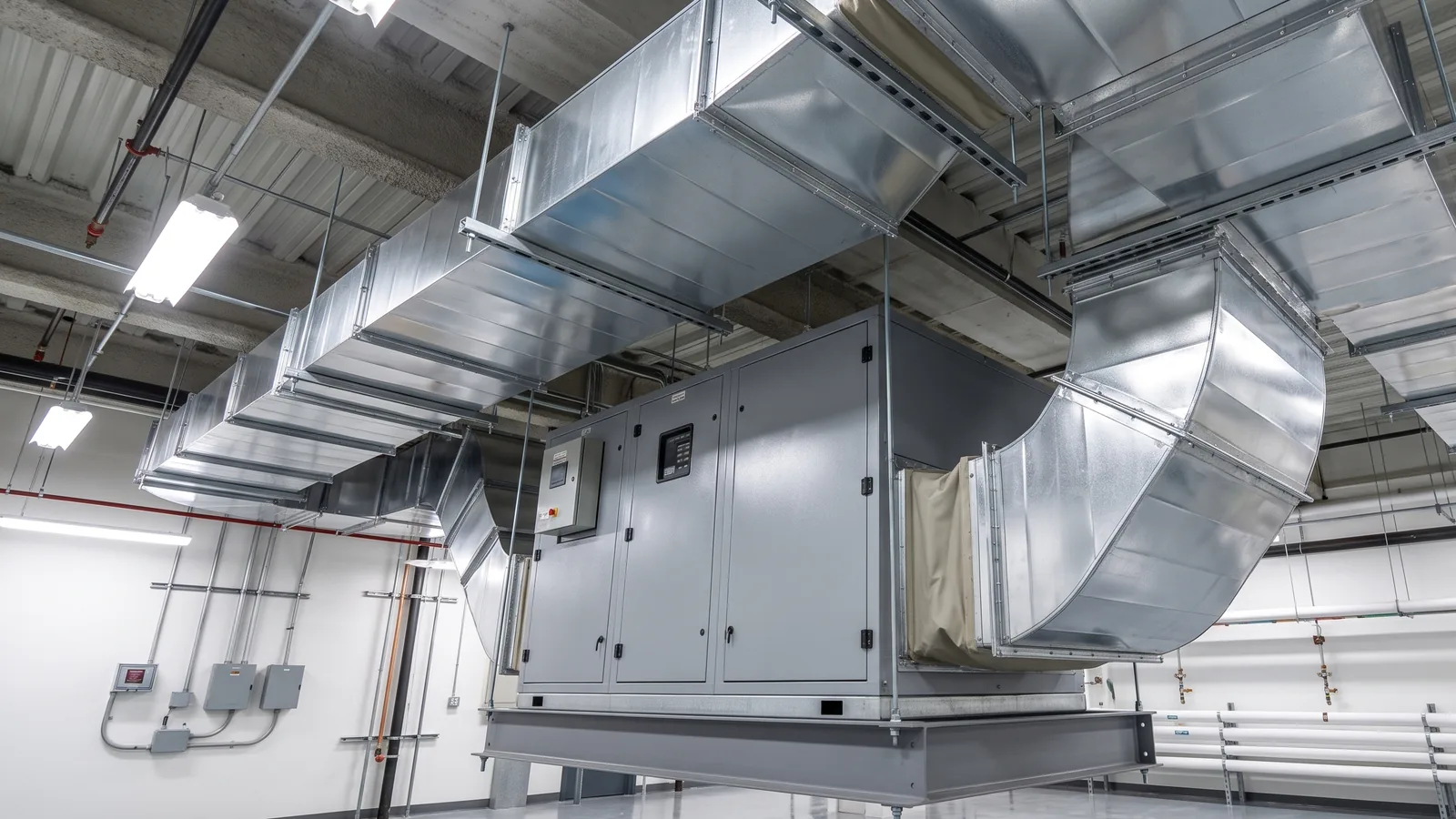
Commercial dehumidifiers remove water vapour from the air, helping control condensation and damp conditions in commercial facilities. They can protect moisture-sensitive stock and support indoor air quality management when the equipment suits the building’s temperature and moisture load.
A warehouse protecting stock has different requirements from an occupied office or a pharmaceutical production room. Moisture Cure’s commercial dehumidification solutions for facility moisture control suit applications that need dedicated moisture removal alongside existing building services.
Operational damage from uncontrolled humidity
Excess moisture can affect stored materials, production equipment and the building itself. The first task is to distinguish airborne humidity from plumbing leaks, water ingress and moisture retained in building materials.
- Inspect metal equipment and electrical enclosures for condensation or corrosion.
- Check moisture-sensitive stock, packaging and paper records against their storage specifications.
- Record wet floors, dripping pipes and condensation around chilled equipment.
- Investigate recurring mould on furnishings, wall linings or duct insulation.
- Check whether humidity excursions coincide with washdown, deliveries or production changes.
The US EPA’s guidance on moisture and mould growth explains that damp conditions can support mould that damages building materials and contents. A dehumidifier can help manage airborne moisture, but leaking roofs, wet insulation and defective drainage still require repair.
For procurement teams, the useful question is which moisture-related failure the system must prevent. Define the affected area and the acceptable conditions before comparing equipment capacities.
Indoor air quality improvements through humidity control
Dehumidification addresses the moisture component of indoor air quality by making conditions less favourable for mould growth. It does not remove every airborne contaminant, replace outdoor-air ventilation or clean existing mould from surfaces.
| Observed problem | Role of dehumidification | Additional action |
|---|---|---|
| Recurring dampness or mould | Reduce excess airborne moisture | Find water sources and arrange appropriate remediation |
| Condensation on cold surfaces | Lower the air’s dew point | Assess insulation, surface temperatures and airflow |
| Musty odours | Help control damp conditions that sustain the source | Inspect hidden wet materials and drainage |
| Dust, fumes or stale air | Humidity control alone is insufficient | Assess source control, extraction, ventilation and filtration |
Safe Work Australia’s work environment guidance explains that ventilation can reduce airborne biological hazards and should suit the work and level of risk. Treat humidity control as one part of the facility’s air management plan.
Dampness, mould and occupant concerns are examined in the health considerations of proper humidity control. Do not use a humidity reading alone to diagnose the cause of staff symptoms or certify air quality.
What humidity should a commercial facility maintain?
The EPA’s general mould-prevention guidance recommends indoor relative humidity below 60%, ideally between 30% and 50% where possible. This is general guidance, not a universal Australian operating specification for healthcare, food production or sensitive collections.
Set the facility’s target using its process requirements, stored-material specifications and engineering assessment. Check temperature as well as relative humidity because cold surfaces can develop condensation even when the room reading looks acceptable.
Humidity and staff comfort
Humidity is one part of staff comfort, alongside temperature, air movement and the demands of the work. Improvements in comfort do not establish a reduction in sick leave or a measurable increase in productivity.
Safe Work Australia’s indoor heat guidance identifies high temperature and humidity as contributors to fatigue and heat-related illness. Its controls include removing heated air or steam, isolating heat sources and improving air movement or cooling.
- Review humidity together with temperature, workload, protective clothing and ventilation.
- Record where and when staff report uncomfortable conditions.
- Check whether the proposed unit adds heat or disruptive noise to occupied areas.
- Compare comfort reports before and after commissioning under similar working conditions.
In offices, this may mean investigating humidity that remains high after the room reaches its cooling setpoint. In food processing, moisture from washdown or exposed water may need source control and extraction as well as dehumidification.
Technology selection for different commercial applications
Select equipment for the required temperature, moisture load and target humidity rather than floor area alone. Refrigerant and desiccant describe moisture-removal technologies; ducted describes how air is distributed.
| Facility conditions | Option to assess | Selection question |
|---|---|---|
| Warm storage or production areas | Refrigerant dehumidification | What extraction capacity is available at the actual room conditions? |
| Cold areas or demanding low-humidity processes | Desiccant dehumidification | What dew point is required, and how will regeneration air be managed? |
| Multiple rooms or an occupied building | Ducted air distribution | Can the airflow reach each zone without disrupting ventilation? |
| Temporary or localised moisture problems | Portable commercial equipment | Can drainage and airflow be maintained without obstructing work? |
refrigerant dehumidifiers for warm commercial spaces condense moisture on a cold coil, making them candidates for general moisture removal where operating conditions support adequate extraction. Compare extraction capacity at the site’s temperature and humidity, as the advertised litres-per-day figure may be measured under warmer, wetter conditions.
desiccant dehumidifiers for colder or low-humidity applications use a moisture-attracting material and can suit conditions where refrigerant extraction becomes limited. Allow for the regeneration heat supply and the manufacturer’s requirements for removing the released moisture.
integrated ducted systems for distributed humidity control can deliver treated air to several zones when a single local unit would leave uneven conditions. Duct layout, air balancing and controls need to be designed with the existing HVAC system.
In museums and archives, the aim may be stable conditions for the collection rather than the lowest possible humidity. Electronics facilities also need a specified operating range, so excessive drying should not be treated as an improvement.
Measuring return on investment
Commercial dehumidification adds equipment, energy use and maintenance obligations. Judge its business value against the moisture-related losses it is intended to address, using site records rather than assumed savings.
- Measure time outside the agreed humidity or dew-point limits.
- Count condensation incidents and moisture-related maintenance callouts.
- Track affected stock, rejected batches or packaging damage where moisture is an identified cause.
- Meter system electricity in kWh and include any regeneration heat or additional cooling.
- Record filter servicing, drain inspections and equipment downtime.
A dedicated system may reduce reliance on overcooling to remove moisture, but total energy savings are not automatic. Its electrical consumption, heat output, ventilation load and control settings all affect the result.
Compare similar weather and production periods before drawing conclusions. If loading-door use or production volume changes, account for that difference rather than attributing every improvement to the new equipment.
Planning and commissioning the installation
Begin with moisture mapping and a load calculation that covers outdoor air, door openings, people and process moisture. Include peak operating conditions and agree how the installed system’s performance will be demonstrated.
- Identify and repair leaks, drainage faults and other avoidable moisture sources.
- Log temperature and relative humidity in affected zones during representative operating periods.
- Calculate the moisture load and check equipment performance at the design conditions.
- Plan air distribution, drainage or regeneration exhaust, electrical supply and service access.
- Coordinate humidity controls with cooling and ventilation so systems do not work against each other.
- Commission sensors, alarms and drainage, then test operation under normal facility use.
- Assign responsibility for maintenance and reviewing excursions outside the agreed limits.
Moisture Cure’s Urunga Library moisture remediation and collection protection project combined dehumidification with air purification and surface remediation. It illustrates why moisture control and contamination treatment need separate consideration within the same plan.
Place monitoring sensors where they represent the areas being protected, away from a unit’s dry-air outlet. A low reading beside the equipment can hide a damp storage aisle or poorly served room.
Check filters, coils, drains and sensor accuracy at the manufacturer’s recommended intervals, adjusted for site conditions. Where building management system integration is required, confirm the actual model’s interfaces and alarm functions rather than assuming every unit supports remote monitoring.
After commissioning, investigate persistent high humidity before adding more capacity. Open doors, blocked airflow, failed drainage or incorrect sensor placement can each prevent a suitable system from delivering the intended result.
Frequently asked questions
- Use the facility’s operating specifications and measured conditions to judge performance; equipment capacity alone is not an acceptance test.
What is a commercial dehumidifier used for?
A commercial dehumidifier removes water vapour to maintain a required humidity or dew point in commercial premises. Applications include managing condensation, protecting moisture-sensitive stock and controlling conditions around production equipment.
Does a dehumidifier remove existing mould?
No, lowering humidity does not clean contaminated surfaces or remove damaged materials. Correct the moisture source and arrange appropriate remediation alongside ongoing moisture control.
Can air conditioning control humidity without a separate dehumidifier?
Air conditioning can remove moisture while its cooling coil is operating, but performance depends on design, controls and the moisture load. If humidity remains outside the required range after the temperature setpoint is met, assess dedicated dehumidification and the existing HVAC operation.
Will commercial dehumidification reduce energy use?
It may improve how moisture is managed, but it adds energy consumption and can add heat to the space. Compare total metered energy and achieved conditions before claiming savings.
How effective are industrial dehumidifiers?
Effectiveness depends on whether extraction capacity and air distribution match the site’s moisture load at its operating temperature. Assess sustained conditions in the protected zones.
How should a business assess whether a dehumidifier is worthwhile?
Identify the moisture-related losses or operating limits the system must address, then compare them with installation, energy and servicing requirements. Measured stock damage, downtime and humidity excursions provide a more useful basis than a generic payback promise.
What are the downsides of commercial dehumidifiers?
They require power, servicing, space and a reliable way to remove collected or released moisture. Noise, heat output and excessive drying also need consideration when selecting and commissioning a system.
Should a facility use portable or ducted equipment?
Portable equipment can suit a localised or temporary requirement where airflow and drainage are practical. Ducted distribution is worth assessing when several zones need treatment or equipment placement in occupied areas is difficult.
What if condensation continues after humidity falls?
Check cold-surface temperatures, insulation and whether the sensors represent the affected location. The required dew point may differ from the room’s general humidity target, so have the installation reviewed before simply lowering the setpoint.
Arrange a facility moisture assessment
- Prepare the affected area’s dimensions, temperature and humidity logs, operating hours and details of any moisture-related damage.
Moisture Cure Commercial’s humidity control solutions for commercial and industrial facilities include equipment for different operating temperatures and moisture loads. Selecting the right type requires matching its performance to the facility’s conditions and control requirements.
Contact Moisture Cure Commercial for a consultation or site assessment to discuss your facility’s air quality concerns and operational requirements.