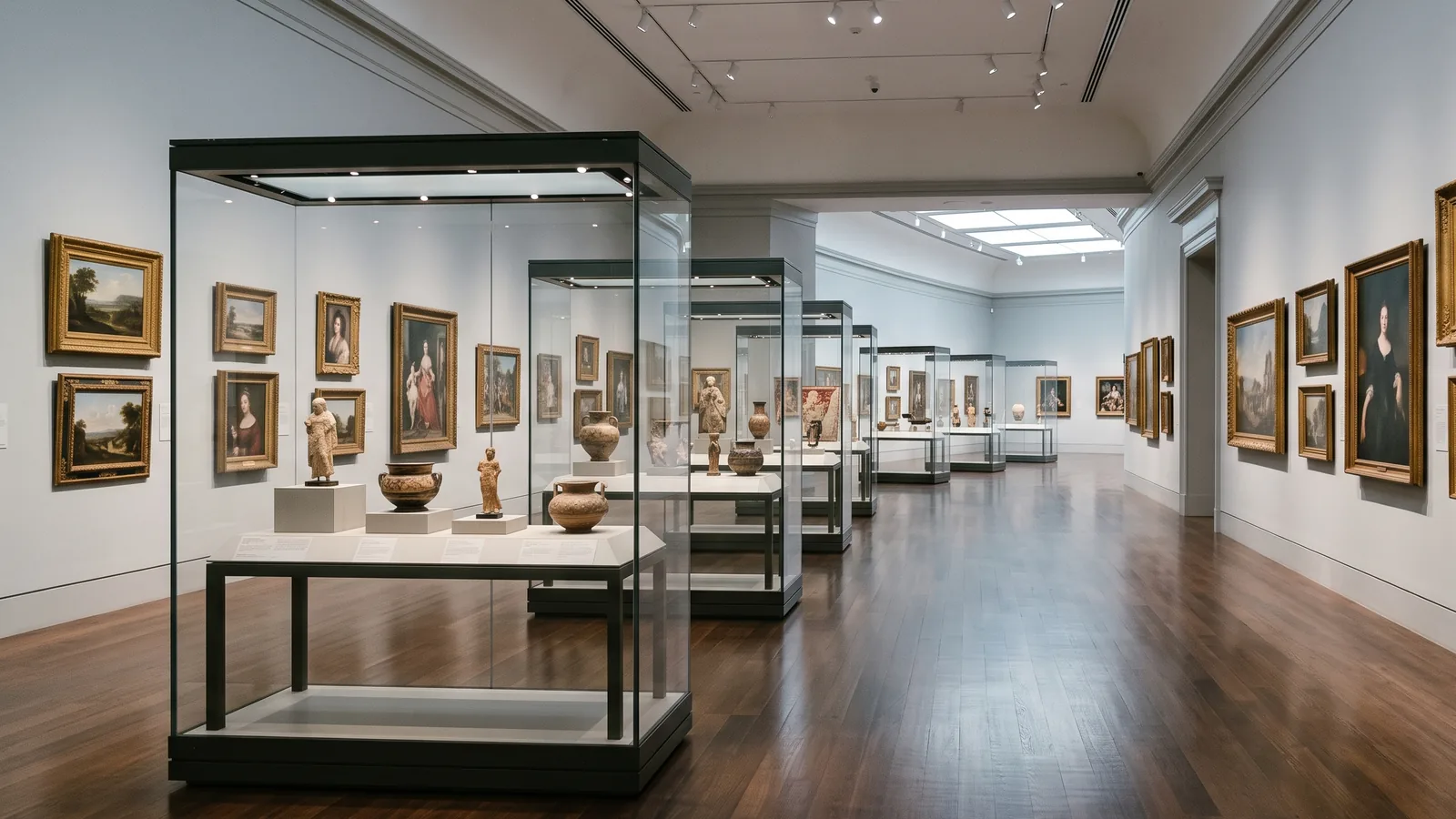
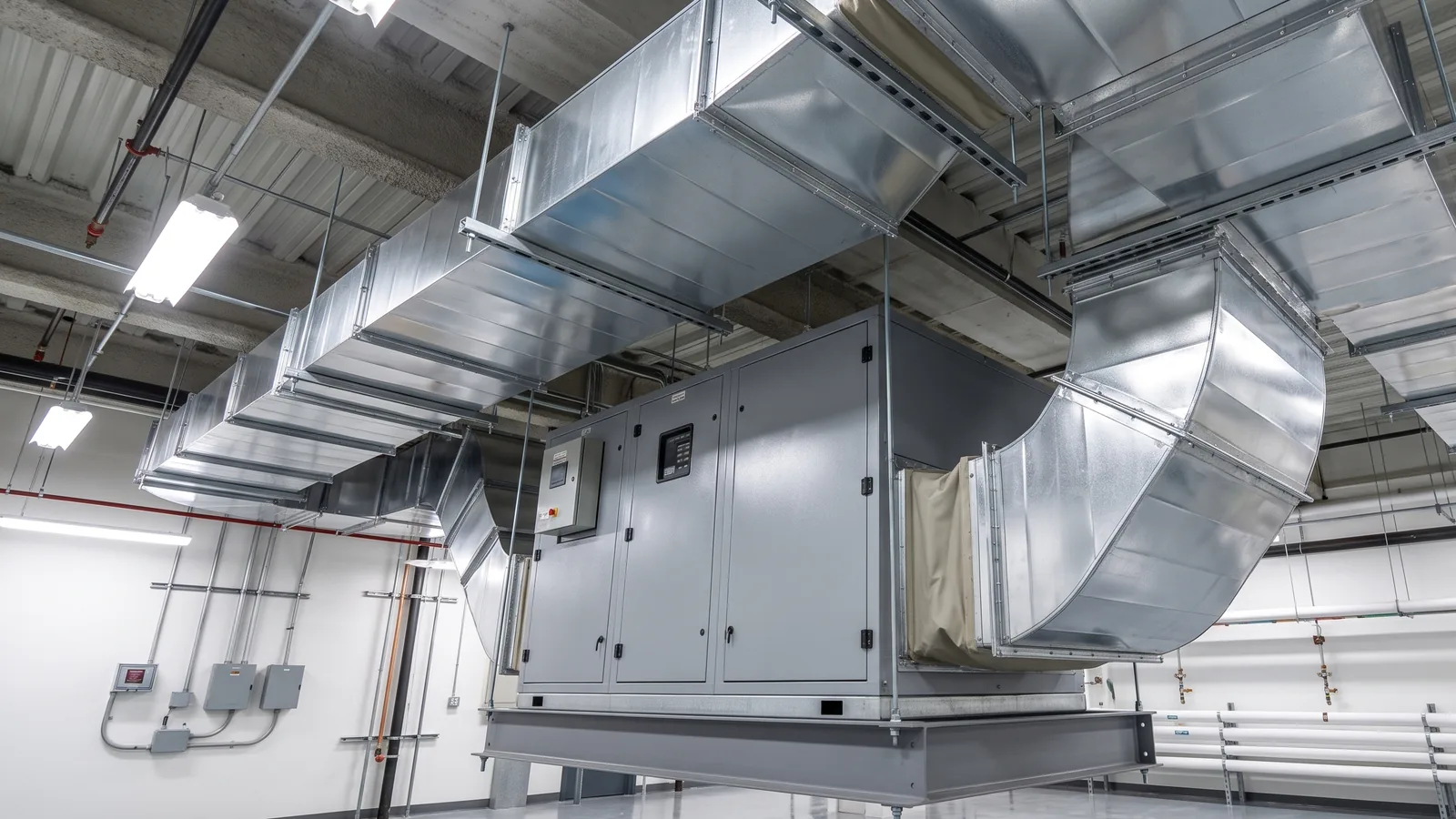
Museums protect Australia’s cultural heritage through precise environmental control that prevents irreversible damage to priceless collections. Temperature and humidity fluctuations accelerate deterioration across all material types, from Aboriginal bark paintings to colonial-era textiles. Moisture Cure Commercial supplies commercial humidity control systems suited to museum and gallery applications.
Critical Humidity Ranges for Museum Collections
Each material type requires specific relative humidity (RH) levels to maintain structural integrity over decades of storage and display. Conservation bodies such as the American Museum of Natural History and the International Institute for Conservation publish optimal ranges based on long-term deterioration research.
| Collection Type | Optimal RH Range | Temperature Range | Primary Risks |
|---|---|---|---|
| Oil paintings | 40–55% | 18–22°C | Canvas warping, paint cracking, varnish bloom |
| Works on paper | 30–50% | 16–20°C | Foxing, brittleness, mould |
| Parchment and vellum | 55–60% | 16–20°C | Cockling, desiccation cracking |
| Timber artefacts | 45–55% | 18–22°C | Splitting, joint failure |
| Textiles | 30–50% | 18–20°C | Fibre degradation, insect damage |
| Metals | Below 40% | 18–22°C | Corrosion, tarnishing |
| Photographs and film | 30–45% | 15–18°C | Gelatin softening, emulsion lifting |
| Stone and ceramics | 40–60% | 18–22°C | Salt efflorescence, cracking |
| Lacquerware | 50–60% | 18–22°C | Surface cracking, flaking |
Mixed collections require compromise settings that protect the most vulnerable materials while minimising risk across all holdings. Most Australian museums target 45–55% RH at 20°C as their baseline, with specialised storage areas maintaining tighter controls for sensitive items.
Australian Climate Challenges for Museums
Australia’s climate zones present distinct preservation challenges that demand robust humidity control systems. Tropical museums in Queensland and Northern Territory face year-round high humidity, while facilities in Tasmania experience dramatic seasonal variations.
- Coastal regions: Salt air accelerates metal corrosion, requiring RH below 40% for vulnerable collections
- Tropical zones: Ambient humidity often exceeds 80%, creating extreme dehumidification loads
- Arid inland: Rapid humidity fluctuations stress organic materials through expansion and contraction cycles
- Southern temperate: Winter heating drops indoor RH below 20%, necessitating controlled humidification
- Urban environments: Air pollution compounds humidity damage through chemical reactions with surface moisture
Visitor traffic also influences gallery conditions, as high foot traffic during peak hours can raise localised RH by several percentage points. Building characteristics further complicate environmental control, particularly in heritage-listed structures lacking modern vapour barriers.
Dehumidification Technologies for Museum Applications
Desiccant dehumidifiers excel in museum environments because they operate effectively from -20°C to +50°C regardless of ambient temperature, unlike refrigerant systems that lose capacity below 15°C. This makes them the preferred choice for facilities with cold storage areas or overnight temperature drops.
Key selection criteria for museum dehumidification include:
- Capacity matching: Systems must handle peak moisture loads during visitor hours and seasonal extremes
- Precision control: ±2% RH accuracy prevents the fluctuations that cause cumulative material stress
- Quiet operation: Noise levels below 50 dB(A) maintain visitor experience in gallery spaces
- Energy efficiency: Continuous 24/7 operation demands low running costs across all seasons
- Redundancy: Backup systems prevent catastrophic failures that could damage irreplaceable collections
Large institutions often integrate ducted dehumidification systems with existing HVAC infrastructure, distributing conditioned air through multiple galleries while maintaining independent zone control for specialised storage areas.
Humidification Requirements in Controlled Environments
Winter heating and aggressive dehumidification can drop relative humidity below safe thresholds, requiring controlled moisture addition. Ultrasonic humidification technology provides precise moisture control without introducing mineral deposits that damage sensitive artefacts.
Critical humidification considerations include:
- Water quality: Demineralised or reverse-osmosis water prevents white dust accumulation on display cases
- Distribution method: Even moisture dispersion avoids localised condensation
- Control integration: Humidifiers must coordinate with dehumidification systems to prevent setpoint oscillation
- Maintenance access: Regular cleaning prevents biological contamination of water reservoirs
- Fail-safe operation: Systems need high-limit cutoffs, as over-humidification causes more damage than under-humidification
Institutions managing library and archive collections alongside museum holdings face similar humidification challenges, particularly for paper-based materials that become brittle below 30% RH.
Micro-Climate Strategies for Display Cases and Storage
Where building-wide climate control is impractical or cost-prohibitive, micro-climate strategies provide targeted protection for the most sensitive items. Sealed display cases with conditioned environments can maintain tighter RH bands than the surrounding gallery.
- Sealed display cases: Gasket-sealed vitrines with calibrated silica gel cassettes buffer short-term RH fluctuations without active equipment
- Humidity indicator strips: Placed inside sealed cases, these confirm buffering is performing within target bands
- Rooms within rooms: Purpose-built enclosures inside heritage buildings provide a stable envelope without modifying the original structure
- Localised active control: Small desiccant or humidification units dedicated to a single case or storage room give ±2% precision
This layered approach is particularly relevant for art gallery collections housed in heritage buildings where retrofitting a full HVAC system would compromise the structure’s architectural significance.
Conservation Standards for Museum Environments
International conservation bodies publish environmental guidelines that inform climate control design. Align system specifications with these standards when commissioning or upgrading equipment.
| Standard | Recommended RH | Temperature | Key Principle |
|---|---|---|---|
| ASHRAE Chapter 24 | Class AA: ±5% from setpoint | 15–25°C | Tiered control classes based on collection sensitivity |
| Bizot Green Protocol | 40–60% | 16–25°C | Broader bands reduce energy use without measurable damage increase |
| BS EN 16893:2018 | Collection-specific | Collection-specific | Evidence-led approach to storage and display conditions |
The Bizot Green Protocol, endorsed internationally in 2023, broadened recommended environmental bands from 50% ±5% RH to a 40–60% range. This recognises that many materials tolerate broader stable ranges better than they tolerate frequent fluctuations caused by a system hunting a narrow setpoint.
Monitoring and Control Systems
Modern museum climate control relies on continuous monitoring with data logging capabilities for conservation documentation. Wireless sensors throughout storage and display areas track microclimates that affect individual objects.
| Monitoring Component | Recommended Specification | Purpose |
|---|---|---|
| RH sensors | ±2% accuracy, NIST-traceable calibration | Primary control parameter |
| Temperature sensors | ±0.5°C accuracy | Secondary control, energy optimisation |
| Data loggers | 15-minute intervals minimum | Conservation documentation and trend analysis |
| Alert systems | SMS/email, 24/7 monitoring | Rapid response to system failures |
| BMS integration | BACnet/Modbus protocols | Centralised facility management |
Alarm thresholds typically trigger at ±5% RH deviation from setpoint. Facilities that connect their dehumidifiers to a building management system gain centralised visibility across all zones and automated logging for insurance and loan compliance.
Implementation Strategies for Museum Projects
Successful museum climate control projects follow systematic implementation phases that minimise disruption to operations while establishing baseline conditions.
Project phases typically include:
- Environmental audit: Document existing conditions, building envelope performance, and collection vulnerabilities over at least 12 months of monitoring data
- System design: Calculate moisture loads, specify equipment capacity, and plan distribution networks
- Staged installation: Prioritise high-risk collections while maintaining public access
- Commissioning: Verify ±2% RH performance across all operating conditions
- Staff training: Cover proper operation, emergency response, and object acclimatisation procedures when moving items between environments
- Performance validation: Confirm conservation standards through extended monitoring over a full seasonal cycle
Retrofit projects in heritage buildings require sensitivity to architectural features. Discrete equipment placement and careful ductwork routing preserve aesthetic integrity.
Energy Efficiency in Museum Climate Control
Continuous climate control is energy-intensive, and museums face growing pressure to reduce their environmental footprint. Conservation heating, which prioritises RH stability over occupant temperature comfort, can cut energy consumption compared with conventional approaches.
- Conservation heating: A humidistat-controlled system that modulates heating to prevent RH from dropping below a set minimum, rather than maintaining a fixed temperature
- Broader environmental bands: Adopting the Bizot Green Protocol’s 40–60% RH range reduces mechanical energy demands
- Building envelope improvements: Insulation, draught-proofing, and vapour barriers reduce the moisture load on active systems
- Heat recovery: Desiccant regeneration heat can be partially recovered in ducted systems
- Zone-based control: Tight conditions only in rooms housing sensitive collections, broader bands in less critical areas
Facilities considering industrial dehumidifier power consumption and running costs should factor in total cost of ownership, including the value of avoided collection damage.
Maintenance and Operational Considerations
Museum climate control systems operate continuously, demanding robust maintenance programmes to ensure reliability. Preventive maintenance schedules should align with both conservation requirements and manufacturer recommendations.
Essential maintenance tasks include:
- Monthly: Filter inspection and replacement, condensate drain clearing
- Quarterly: Sensor calibration verification against NIST-traceable references, control sequence testing
- Biannually: Desiccant wheel inspection, refrigerant system checks
- Annually: Complete system performance audit, energy efficiency analysis
- As needed: Emergency response for environmental excursions beyond alarm thresholds
Facilities that follow a structured desiccant dehumidifier maintenance and service schedule reduce the risk of unplanned outages that could expose collections to damaging conditions.
Frequently Asked Questions
What relative humidity should a museum maintain?
Most mixed-collection museums target 45–55% RH at 18–22°C as a general baseline, though optimal ranges vary by material type. Metals require below 40% RH to prevent corrosion, while parchment and vellum need 55–60% to avoid desiccation. The Bizot Green Protocol accepts a broader 40–60% range where collections tolerate it.
Why is humidity stability more important than a precise setpoint?
Frequent RH fluctuations cause hygroscopic materials such as wood, paper, and textiles to swell and shrink repeatedly. This repeated mechanical stress causes more cumulative damage than sustained exposure at a slightly different but stable level. Conservation standards now prioritise fluctuation control over hitting an exact number.
Can museums use refrigerant dehumidifiers?
Refrigerant dehumidifiers work well above 15°C but lose effectiveness in cooler conditions. Museums with cold storage areas, unheated archives, or overnight temperatures below 15°C benefit from desiccant dehumidifiers, which operate effectively from -20°C to +50°C regardless of ambient temperature.
How do sealed display cases help control humidity?
Sealed, gasket-fitted display cases create micro-climates that buffer the contents from gallery-wide RH fluctuations. Passive buffering materials such as conditioned silica gel cassettes maintain stable conditions inside the case for weeks between servicing.
What is conservation heating?
Conservation heating uses a humidistat rather than a thermostat to control the heating system. Instead of maintaining a set temperature, it applies just enough heat to prevent RH from dropping below a minimum threshold, stabilising humidity while reducing energy consumption.
How often should museum RH sensors be calibrated?
Quarterly calibration against NIST-traceable references is the minimum standard for collection-adjacent sensors. Sensors in sealed display cases and high-value storage areas may warrant monthly verification, particularly if they feed automated control systems.
What role does a building management system play in museum climate control?
A BMS centralises monitoring of all HVAC equipment, logs environmental data for conservation documentation, and triggers alarms when conditions deviate from setpoints. It also enables zone-based control so different galleries maintain conditions suited to their specific collections.
How should museums handle artefact transport between environments?
Objects acclimatised to one environment can suffer irreversible damage if moved suddenly to different conditions. Museums use acid-free tissue wrapping, climate-controlled transit cases, and gradual acclimatisation protocols supervised by conservators.
What happens if museum humidity control fails overnight?
Short excursions of a few hours rarely cause immediate damage to most materials, but repeated failures create cumulative stress. Redundant systems, 24/7 alarm monitoring, and on-call maintenance contracts minimise downtime, with metals, photographs, and parchment collections facing the highest risk.
Museum climate control protects irreplaceable cultural assets while managing operational costs through energy-efficient system design. Contact Moisture Cure Commercial for a museum climate assessment tailored to your facility’s collection types, building characteristics, and preservation requirements.