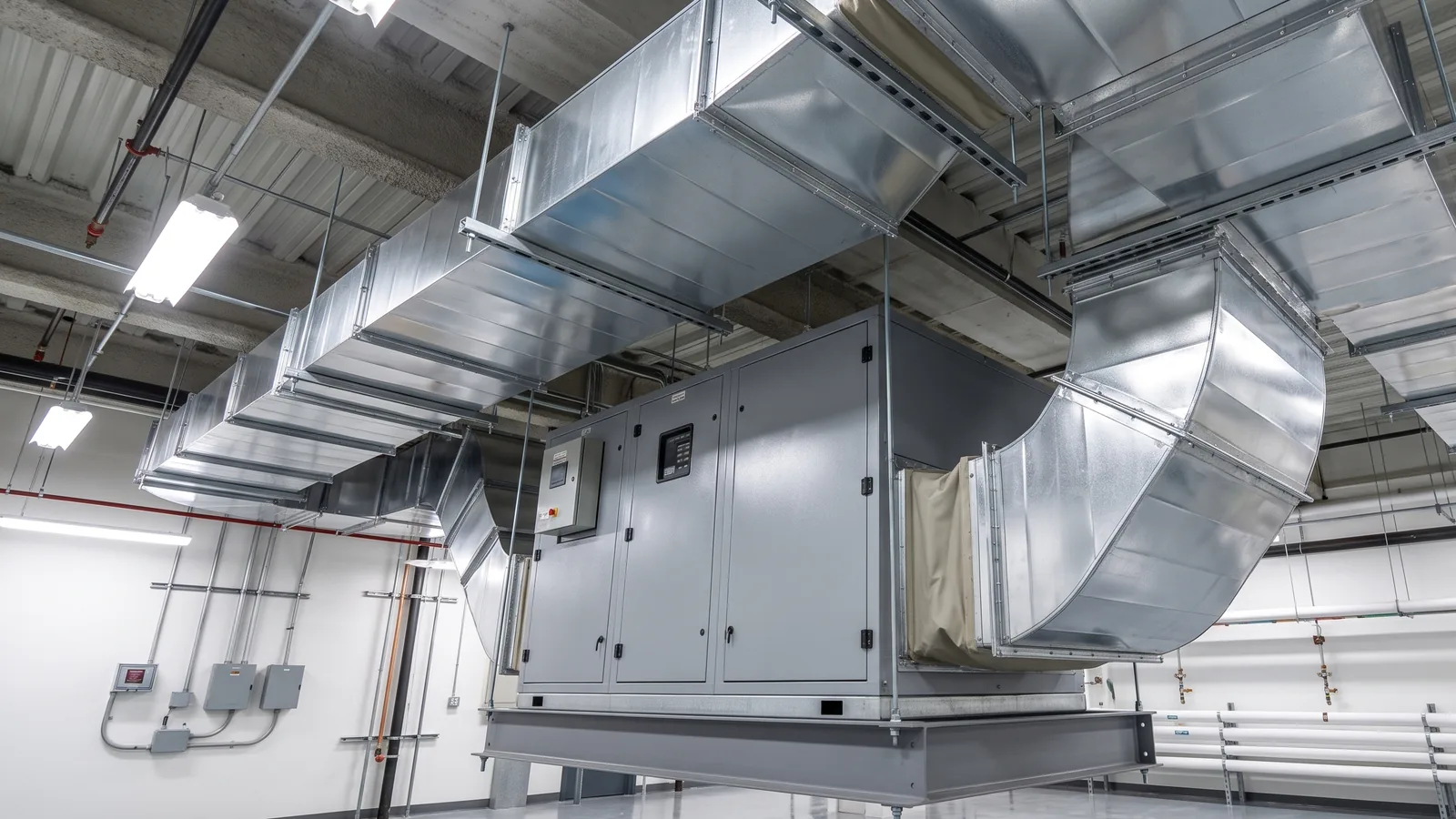
Innovative trends in commercial dehumidification technology are changing how facilities measure moisture loads, control equipment and verify performance. Useful advances provide steadier control, clearer fault information and better HVAC coordination.
The right technology still depends on the room temperature, target relative humidity or dew point, outdoor-air load, process moisture and operating schedule. Moisture Cure Commercial supplies commercial systems suited to varying moisture loads, but equipment selection should follow a site assessment and a defined control objective.
Smart building integration changes humidity control
Newer controls can share readings, alarms and status with a building management system (BMS). Protocols such as BACnet support this exchange when the equipment uses compatible points.
- Trend logging: Relative humidity, dew point, coil temperature, fan status and runtime can be reviewed over time rather than checked only during a fault.
- Alarm handling: A facilities team can receive notice of high humidity, blocked filters, sensor faults or abnormal operating conditions.
- Zone control: Separate sensors and setpoints allow the system to respond to different loads in production, storage and occupied areas.
- Maintenance planning: Runtime and pressure information can help technicians investigate performance before a loss of humidity control disrupts operations.
Integration is most useful when the controls strategy defines which system has authority over fans, dampers, cooling and dehumidification. Facilities connecting ducted dehumidification equipment designed for central air distribution should document those interlocks during design and commissioning.
What is active dehumidification?
Active dehumidification uses powered equipment, sensors and controls to remove water vapour and maintain a defined humidity or dew-point target. It differs from passive moisture absorbers because the system responds continuously to changing indoor and outdoor moisture loads.
- Refrigerant systems cool air below its dew point so water condenses, then return treated air to the space or duct system.
- Desiccant systems transfer water vapour to a hygroscopic material and use a separate regeneration airstream to remove that moisture.
- Hybrid systems combine cooling and desiccant stages when one process alone cannot meet the required condition efficiently.
An air conditioner may remove some moisture while cooling, but its sensible cooling demand and humidity-control demand do not always occur together. The practical differences between dedicated dehumidifiers and air conditioners used for moisture control matter when a facility needs stable conditions outside normal cooling hours.
Variable-speed technology improves load matching
Variable-speed compressors and fans can reduce capacity as the moisture load falls, then increase output as conditions change. This can provide steadier control than repeated on-and-off cycling.
| Operating condition | Control response | Potential benefit | What to verify |
|---|---|---|---|
| Low or stable moisture load | Reduce compressor or fan speed | Longer, steadier operation with less cycling | Minimum stable capacity and sensor accuracy |
| Production or occupancy peak | Increase output to meet the load | Faster recovery towards the control target | Available electrical capacity and airflow |
| Start-up after a shutdown | Ramp output under controller limits | Controlled recovery without an abrupt start | Recovery time under expected peak conditions |
| Multiple-unit installation | Stage and rotate units | Load sharing and planned redundancy | Lead-lag logic and failure response |
Variable speed is not an automatic guarantee of lower energy use. Procurement teams should compare performance across the facility’s expected load range, including fan power, reheat and auxiliary equipment, then verify the result through trend data after commissioning.
Lower-impact refrigerants affect equipment selection
Australia’s hydrofluorocarbon phase-down is reducing bulk HFC imports over time. Existing equipment is not automatically obsolete, but refrigerant choice and service availability belong in a long-term procurement review.
- Confirm the refrigerant specified by the manufacturer and its global warming potential.
- Check safety classification, charge limits, ventilation and detection requirements for the proposed plant location.
- Ask how refrigerant availability and technician competency will affect maintenance over the equipment’s service life.
- Compare whole-system performance rather than choosing equipment on refrigerant label alone.
Facilities with warm, moisture-heavy air may suit refrigerant dehumidifiers designed for condensation-based moisture removal. The final choice should be checked against the operating envelope because coil-based performance changes with entering air temperature and humidity.
Hybrid systems combine technologies for demanding duties
Hybrid dehumidification combines refrigerant cooling, desiccant drying or another conditioning stage within one control strategy. It is most relevant where the operating conditions vary widely or where a low dew point cannot be maintained efficiently by a cooling coil alone.
| Duty | Likely approach | Reason |
|---|---|---|
| Warm space with a moderate humidity target | Refrigerant dehumidification | Condensation is effective when the coil can operate below the air’s dew point. |
| Cool store or process with a low dew-point target | Desiccant dehumidification | Moisture removal is less dependent on cooling the air to condense water. |
| Variable conditions or staged process drying | Hybrid configuration | Each stage can operate where it is most useful. |
A useful starting point is understanding how refrigerant and desiccant equipment suit different operating duties. Pharmaceutical, electronics, cold-storage and process-drying projects may require desiccant systems for low-temperature or low-dew-point duties, subject to the actual process specification.
Heat recovery can improve whole-system performance
A dehumidifier moves energy as well as moisture. Depending on the equipment and plant design, condenser heat or desiccant-regeneration exhaust may be recovered for reheat, incoming-air tempering or another compatible load.
- Reheat: Condenser heat can help return dry air at a suitable supply temperature after moisture removal.
- Air tempering: A heat exchanger may transfer useful energy between exhaust and incoming airstreams without mixing them.
- Process integration: A facility with a simultaneous heat demand may be able to use energy that would otherwise be rejected.
Assess the energy balance across the complete plant. Recovery adds little value if the heat has no consistent use or creates extra cooling or fan demand.
Filtration and air-quality functions need careful coordination
Some commercial dehumidification systems include particulate filters or can be integrated with separate air-cleaning equipment. Filtration protects coils and process spaces, but a dehumidifier should not be assumed to provide every air-quality function required by the facility.
- Match the filter class to the contamination risk and the available fan pressure.
- Provide access for inspection, replacement and safe disposal.
- Monitor pressure drop so a loaded filter does not quietly reduce airflow and moisture-removal capacity.
- Keep humidity control, outdoor-air ventilation and contaminant control as separate design requirements, then coordinate them at system level.
This distinction is important in healthcare, food production, archives and clean manufacturing, where air cleanliness and humidity may have separate specifications. Readers planning occupied-space controls can also review how stable humidity conditions affect commercial indoor environments without treating humidity control as a substitute for ventilation or filtration.
Modular design supports staged capacity and resilience
Multiple smaller units can provide better staging and service continuity than one large unit. The design must still account for duct pressure, sensors, drainage, controls and an offline module.
| Design question | Why it matters |
|---|---|
| Is spare capacity required during maintenance? | This sets the appropriate redundancy strategy rather than assuming every project needs the same arrangement. |
| Will future process loads increase? | Electrical, duct and drainage infrastructure may need allowance for another module. |
| Can each zone be isolated? | Isolation can keep unaffected areas operating during service work or a local fault. |
| How will the units share runtime? | Lead-lag rotation prevents one unit carrying the base load while others remain idle. |
Large industrial projects may use distributed equipment when moisture loads and access constraints differ across the site. Moisture Cure Commercial’s large-scale dehumidifier deployment for LNG operations shows why logistics and placement are part of the engineering task, not an afterthought.
Acoustic engineering starts with the operating duty
Variable-speed fans, vibration isolation, flexible duct connections and purpose-built enclosures can reduce noise at the receiver. The result depends on airflow, static pressure, structure-borne vibration, duct breakout and where the equipment sits relative to occupied areas.
- Specify sound data at the intended operating point, not only at minimum speed.
- Check both airborne and structure-borne transmission paths.
- Allow enough plant-room space for service access without removing acoustic treatments.
- Measure background and operating sound at noise-sensitive receivers where the project requires verification.
The article on how humidity control and acoustic performance interact in commercial spaces provides more context for facilities where both environmental stability and noise matter.
How to evaluate a new dehumidification technology
A feature is useful only if it improves the facility’s required outcome and can be maintained by the operating team. A sound assessment begins with the moisture load and control target, then tests the proposed technology against the site rather than a generic headline figure.
- Define the target: Record the required relative humidity or dew point, allowable variation and recovery time.
- Calculate the load: Include outdoor air, infiltration, wet processes, people, product and building fabric.
- Review the operating envelope: Confirm capacity at the expected air temperature and humidity, not just a nominal rating point.
- Check integration: Document BMS points, alarms, interlocks, drainage, ductwork and electrical requirements.
- Plan verification: Set commissioning tests and a period of trend logging so performance can be checked under real loads.
- Consider serviceability: Confirm filter access, sensor calibration, refrigerant support, spare parts and safe maintenance clearances.
Moisture Cure Commercial’s commercial dehumidifier options for different operating duties include refrigerant, desiccant, portable and integrated configurations. A site assessment is the best way to determine which control method and capacity fit the application.
Frequently asked questions
- Do smart controls make an older dehumidifier more efficient?
Controls may improve scheduling, staging and fault visibility, but they cannot change the underlying operating envelope of the equipment. A retrofit review should confirm sensor quality, control authority and how the unit responds at part load.
- Does variable-speed technology always save energy?
No, savings depend on the moisture-load profile, minimum stable capacity, fan power, reheat and control settings. Compare whole-system performance at the conditions the facility actually experiences.
- When is desiccant technology preferred?
Desiccant equipment is often considered for cool environments, low dew-point duties and processes where stable drying is required across changing temperatures. Regeneration energy, airflow and sealing still need to be included in the design.
- When does a hybrid dehumidification system make sense?
A hybrid system can suit a process with a wide operating range or a target that shifts between moderate and low humidity. The controls must determine when each stage should operate and prevent the stages from working against each other.
- What data should a BMS collect from a dehumidifier?
Useful points commonly include relative humidity or dew point, supply and return conditions, fan and compressor status, filter alarms, runtime and fault codes. The final point list should match the maintenance and compliance needs of the site.
- How is performance confirmed after installation?
Commissioning should test sensors, alarms, interlocks, airflow, drainage and recovery under representative loads. Trend logs can then show whether the system holds the target through operating and weather changes.
For a new installation, retrofit or performance review, contact Moisture Cure Commercial to arrange a consultation or site assessment. The team can assess the moisture load, operating conditions and integration requirements before recommending a commercial or industrial humidity-control solution.