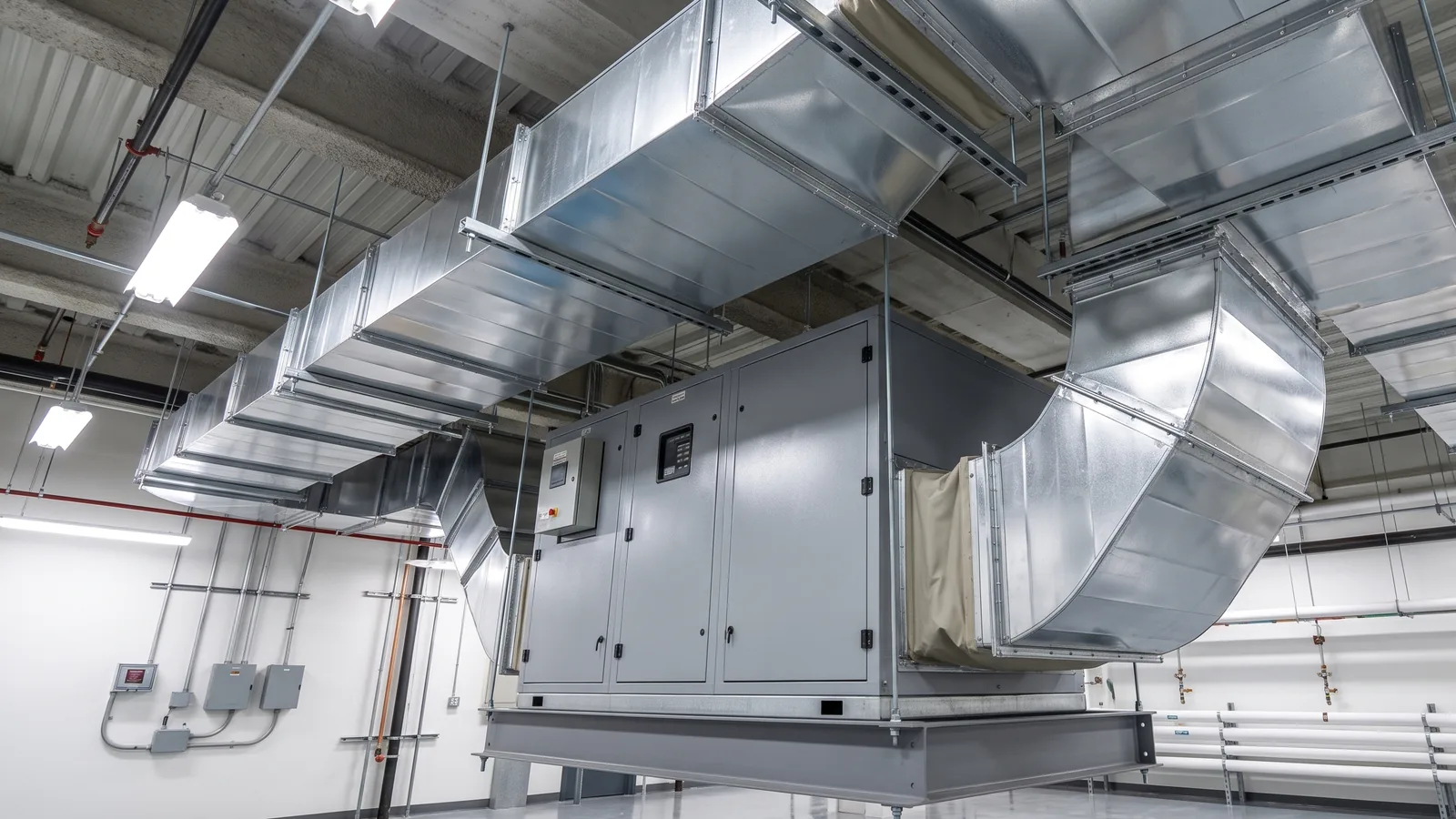
Commercial vehicle garages require precise humidity control to protect fleet investments and maintain operational efficiency. Moisture management directly impacts equipment lifespan, repair quality, and workplace safety across automotive service facilities.
Our commercial dehumidification solutions include units designed for these high-moisture environments.
Critical Humidity Challenges in Vehicle Service Facilities
Vehicle maintenance environments face unique moisture problems that compound quickly without proper control systems. These challenges affect everything from diagnostic equipment accuracy to structural integrity.
| Problem Area | Impact | Business Cost |
|---|---|---|
| Fleet Corrosion | Accelerated rust on chassis, brake lines, exhaust systems | Reduced vehicle lifespan, warranty claims |
| Tool Degradation | Precision equipment calibration drift, bearing seizure | Replacement costs, diagnostic errors |
| Parts Inventory | Oxidation of stored components, filter deterioration | Write-offs, customer delays |
| Paint Operations | Orange peel, fisheye defects, extended cure times | Rework costs, booth downtime |
| Building Damage | Concrete spalling, insulation failure, mould growth | Structural repairs, compliance violations |
Uncontrolled humidity accelerates corrosion across metal surfaces and structural components, reducing the service life of vehicles, tools, and building elements. Safe Work Australia requires PCBUs to manage environmental hazards including excessive humidity, making moisture control a compliance obligation as well as an operational one.
Why Commercial Garages Develop Moisture Problems
Several factors combine to make vehicle service facilities particularly vulnerable to excess humidity. Understanding these sources is the first step toward effective control.
- Temperature differentials: Cold vehicles entering a warm garage create immediate condensation on bodywork, floors, and overhead structures
- Wet vehicle entry: Rainwater and road spray carried in on fleet vehicles introduce significant moisture with every entry
- Frequent door openings: Service bays with roller doors cycling multiple times per hour allow humid outdoor air to flood the space
- Wash bay proximity: Internal or adjacent wash operations generate sustained moisture loads that migrate into service areas
- High ceilings and open spans: Large air volumes common in commercial garages allow moisture to stratify and make localised control more difficult
Seasonal variation compounds these sources. In coastal and subtropical Australian regions, ambient relative humidity regularly exceeds 70% during summer, placing continuous load on garage ventilation and dehumidification systems.
Optimal Humidity Specifications by Garage Type
Different service operations require specific humidity ranges based on activities performed and equipment sensitivity. ASHRAE Standard 55 recommends 30 to 60% RH for occupied commercial spaces, but automotive service environments benefit from tighter zone-specific targets.
- General Service Bays: 45 to 55% RH maintains tool reliability while preventing condensation on vehicles entering from outside conditions
- Paint and Body Shops: 40 to 50% RH ensures proper paint adhesion, cure rates, and finish quality. Industrial paint shops require dedicated dehumidification to prevent orange peel and fisheye defects
- Parts Storage Areas: 35 to 45% RH protects metal components, electronics, and rubber seals from degradation
- Diagnostic Equipment Rooms: 40 to 50% RH maintains calibration accuracy for computerised testing systems
- Wash Bays: 50 to 60% RH with high air exchange rates prevents standing water accumulation and corrosion spread
Facilities storing high-value or vintage vehicles should aim for the lower end of these ranges. Humidity control for classic car storage demands even tighter tolerances to protect leather, chrome, and original paintwork.
Calculating Dehumidification Requirements
Proper system sizing depends on multiple factors beyond simple floor area calculations. Each variable affects moisture load and required extraction capacity.
- Measure Space Volume: Calculate total cubic metres including ceiling height, not just floor area
- Count Moisture Sources: Vehicle entries per hour, wash bay operations, compressed air usage, staff numbers
- Assess Ventilation: Natural air changes, exhaust fan capacity, door opening frequency
- Consider Climate Zone: Local humidity averages, seasonal variations, temperature extremes
- Calculate Load Factor: Multiply base requirement by 1.3 to 1.5 for high-traffic facilities
Professional load calculations prevent undersized systems that run continuously without achieving target conditions. For a detailed walkthrough of the sizing process, see our guide on how to size an industrial dehumidifier for your facility.
Technology Selection for Vehicle Service Environments
Dehumidification technologies offer different advantages depending on garage configuration and operating temperature. Selection criteria include energy efficiency, temperature range, and integration with existing HVAC systems.
| Technology | Best Application | Key Advantages |
|---|---|---|
| Refrigerant Systems | Heated spaces above 15°C | Energy efficient, low maintenance, quiet operation |
| Desiccant Units | Cold environments, paint booths | Operates from -20°C to +50°C, precise control, continuous operation |
| Ducted Systems | Multi-zone facilities | Centralised control, hidden installation, balanced distribution |
| Portable Units | Spot treatment, temporary needs | Flexible placement, no installation, immediate deployment |
Refrigerant dehumidifiers lose effectiveness sharply when ambient temperatures drop below 15°C, making them unsuitable for unheated garages and cold-climate service bays. Desiccant units avoid this limitation entirely.
For facilities needing both spot treatment and centralised control, understanding the trade-offs between ducted and portable dehumidifiers helps match equipment to operational requirements. Ducted dehumidification systems integrate with existing ventilation in larger facilities while remaining out of sight.
Ventilation and Sealing Strategies
Dehumidifiers work most effectively when combined with proper ventilation design and building envelope improvements. Addressing moisture ingress at the source reduces the total dehumidification load.
- Mechanical ventilation: Extract fans positioned near wash bays and high-moisture zones remove humid air before it spreads through the facility
- Vapour barriers: Polyethylene sheeting beneath concrete slabs prevents ground moisture wicking upward, a common source of persistent dampness in slab-on-grade garages
- Floor coatings: Epoxy or polyurethane floor sealants reduce moisture absorption through concrete and simplify drainage
- Door management: Rapid-roller doors or strip curtains on service bay entries limit the volume of humid outdoor air entering during vehicle movements
- Roof drainage: Blocked gutters and poor roof drainage allow water ingress that elevates indoor humidity independently of ventilation capacity
These measures reduce the dehumidification workload, lowering running costs and extending equipment service intervals.
Implementation Strategy
Successful humidity control implementation requires systematic planning beyond equipment selection. Strategic deployment maximises operational benefits while minimising disruption to daily operations.
- Baseline Assessment: Document current humidity levels, problem areas, and associated costs over 7 to 14 days using calibrated hygrometers
- Zone Prioritisation: Target high-value areas first, such as diagnostic bays and parts storage
- Phased Installation: Deploy systems during low-activity periods to maintain workflow
- Staff Training: Educate teams on optimal settings, basic maintenance, and problem indicators
- Performance Monitoring: Track humidity levels, energy consumption, and equipment condition improvements
- Maintenance Scheduling: Establish filter changes, drain cleaning, and professional service intervals
Facilities that combine dehumidification with the ventilation and sealing measures above typically see measurable reductions in corrosion-related maintenance and rework within the first operating year.
Integration with Existing Building Systems
Modern garages often feature complex HVAC, ventilation, and control systems requiring careful integration planning. Compatibility ensures optimal performance without conflicts or efficiency losses.
Building management systems (BMS) enable centralised monitoring and control of humidity alongside temperature and air quality parameters. Connecting industrial dehumidifiers to your BMS provides real-time visibility and automated responses to changing conditions.
- Control Integration: Modbus, BACnet, or proprietary protocols enable remote monitoring and adjustment
- Ventilation Coordination: Synchronise with exhaust fans to prevent competing airflows
- Heating Compatibility: Coordinate with space heating to avoid overcooling during dehumidification
- Drainage Planning: Connect to existing floor drains or condensate pumps for automatic water removal
- Power Distribution: Calculate electrical loads and circuit requirements for safe operation
Preventive Maintenance for Long-Term Performance
Regular maintenance ensures consistent humidity control while maximising equipment lifespan and efficiency. Neglected systems lose capacity gradually before failing completely.
| Maintenance Task | Frequency | Impact of Neglect |
|---|---|---|
| Filter Cleaning/Replacement | Monthly | Reduced airflow, compressor strain |
| Coil Cleaning | Quarterly | Reduced efficiency, ice formation |
| Drain Line Inspection | Monthly | Water overflow, property damage |
| Refrigerant Check | Annually | Poor performance, compressor failure |
| Control Calibration | 6 months | Inaccurate readings, energy waste |
A structured commercial dehumidifier maintenance schedule prevents unplanned downtime and supports warranty claims. Documented maintenance history also demonstrates compliance with workplace health and safety obligations.
Frequently Asked Questions
What humidity level should a commercial garage maintain?
General service bays should target 45 to 55% RH. Paint and body shops need tighter control at 40 to 50% RH to prevent coating defects. Parts storage areas benefit from 35 to 45% RH to minimise oxidation of metal components and electronics.
Why do commercial garages have worse humidity problems than other facilities?
Vehicle service facilities face a unique combination of moisture sources. Wet vehicles entering from rain or wash bays, frequent roller door cycling that admits humid outdoor air, and high-moisture activities like pressure washing all create sustained humidity loads that standard HVAC systems cannot handle alone.
Can ventilation alone control garage humidity?
Ventilation helps reduce moisture levels, but in humid climates or facilities with heavy moisture loads it cannot achieve precise RH targets on its own. Mechanical dehumidification provides the controllable, measurable extraction capacity needed to maintain specific humidity ranges regardless of outdoor conditions.
Which dehumidifier type works best in an unheated garage?
Desiccant dehumidifiers are the clear choice for unheated environments. Refrigerant units lose effectiveness below 15°C as the evaporator coil ices over. Desiccant systems operate effectively from -20°C to +50°C, making them suitable for cold-climate garages, overnight shutdown periods, and seasonal temperature swings.
How do I size a dehumidifier for a commercial garage?
Calculate the total air volume in cubic metres, count moisture sources such as vehicle entries per hour and wash operations, assess ventilation rates, and factor in the local climate zone. Apply a load factor of 1.3 to 1.5 for high-traffic facilities to avoid undersized systems that run continuously without reaching target conditions.
Does garage humidity affect paint quality?
Excess humidity causes orange peel texture, fisheye defects, poor adhesion, and extended cure times in automotive paint work. Maintaining 40 to 50% RH in spray booths and body shops is critical for first-coat quality and reducing costly rework.
How does humidity damage diagnostic equipment?
Moisture causes calibration drift in precision instruments, corrosion of circuit boards and connectors, and short circuits in electronic testing equipment. Computerised diagnostic systems are particularly sensitive, requiring stable 40 to 50% RH for accurate, repeatable readings.
Can I connect a dehumidifier to my existing BMS?
Many commercial and industrial dehumidifiers support Modbus, BACnet, or proprietary protocols for building management system integration. This allows centralised monitoring, automated setpoint adjustments, and fault alerting alongside existing HVAC controls.
How often should commercial garage dehumidifiers be serviced?
Filters should be cleaned or replaced monthly, coils cleaned quarterly, and refrigerant levels checked annually. Control sensors should be calibrated every six months. Garage environments with dust, exhaust fumes, and abrasive particles require more frequent filter attention than cleaner commercial spaces.
What are the signs of inadequate humidity control in a garage?
Visible condensation on cold surfaces, rust forming on stored parts and tools, musty odours, mould growth on walls or ceilings, and paint quality complaints from body shop staff all indicate humidity levels above acceptable thresholds. A calibrated hygrometer provides objective measurement to confirm the problem.
Talk to Moisture Cure Commercial
Moisture Cure Commercial has supplied dehumidifiers and humidifiers to Australian businesses for over 20 years. Whether you need help selecting the right unit, sizing a system for your facility, or troubleshooting an existing setup, our team can help.
Call us on (02) 6584 2511 or browse our commercial dehumidifier range to find the right solution for your operation.