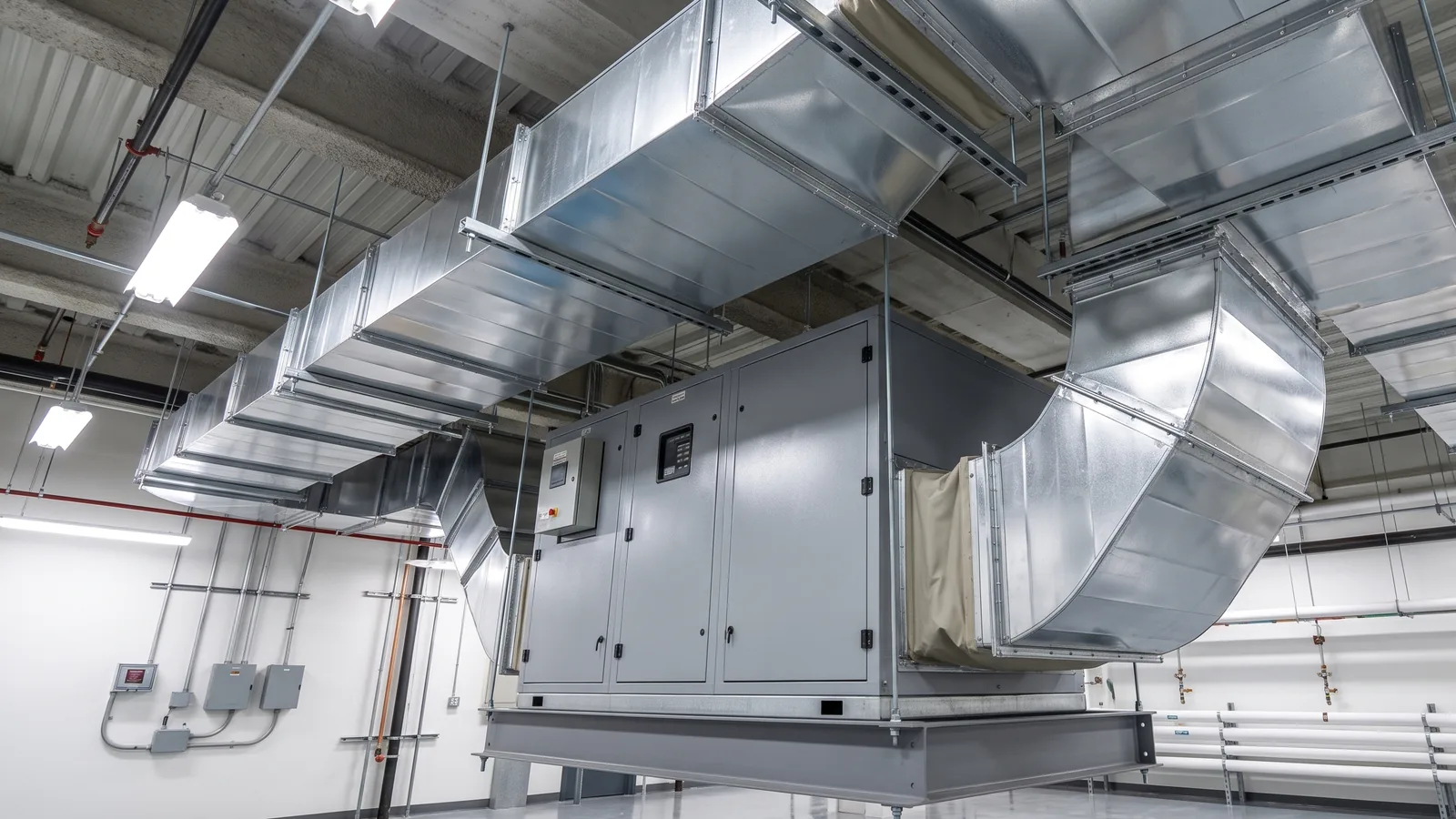
Commercial insect production facilities face unique environmental challenges that directly impact breeding success and production yields. Precise humidity control determines whether operations meet production targets or face costly population crashes. Our commercial humidifier range includes units purpose-built for this application.
Critical Humidity Parameters for Insect Production
Each insect species requires specific humidity ranges during different life stages, with deviations causing reduced fertility, developmental delays, or complete reproductive failure. Modern insectaries monitor these parameters continuously to maximise commercial output.
Temperature and humidity work synergistically to affect insect physiology. Relative humidity fluctuations of just 5-10% can disrupt critical processes like moulting, egg laying, and metamorphosis. A peer-reviewed study on black soldier fly thermal thresholds confirmed that population growth rate was most favourable at 30°C, with a doubling time of just 5.5 days under optimal conditions.
| Production Type | Optimal RH Range | Critical Life Stage | Temperature Range |
|---|---|---|---|
| Black Soldier Fly Larvae | 60-70% | Pupation | 27-30°C |
| Cricket Production | 50-70% | Egg Development | 28-32°C |
| Mealworm Farming | 50-70% | Adult Mating | 26-29°C |
| Beneficial Wasps | 50-65% | Host Parasitisation | 24-26°C |
| Silk Moth Rearing | 75-85% | Larval Growth | 23-25°C |
Disease Prevention and Biosecurity Through Humidity Management
Humidity control in insectaries is not just about production yield. It is a frontline biosecurity measure. When relative humidity climbs above species-safe thresholds, mould, bacteria, and fungal pathogens proliferate in substrate, feed, and rearing containers.
These outbreaks can devastate entire colonies within days. Conversely, humidity falling below 60% causes desiccation stress, weakening immune responses and making insects more susceptible to disease.
Maintaining the target range suppresses both pathogen growth and dehydration-related mortality.
- Mould and fungal control: Excess moisture in frass and substrate promotes Beauveria and Metarhizium fungal infections that spread rapidly through dense colonies
- Bacterial suppression: Controlled humidity reduces bacterial bloom in feed trays, cutting contamination-related losses
- Quarantine zone management: Separate humidity zones allow incoming stock to be isolated at optimal conditions before joining the main colony
- Condensation prevention: Desiccant dehumidifiers prevent surface condensation on walls and ceilings that would otherwise drip onto rearing trays
Moisture Sources in Commercial Insectaries
Understanding moisture generation helps facility managers calculate dehumidification requirements accurately. Most operations underestimate the cumulative moisture load from multiple sources, leading to inadequate system sizing and climate control failures.
Feed decomposition and organic waste processing create additional moisture challenges beyond standard calculations. These biological processes can substantially increase the expected moisture load during peak production periods.
- Substrate moisture: Growing media releases moisture continuously as organic matter decomposes
- Insect respiration: High-density populations generate significant water vapour through metabolic processes
- Feeding systems: Fresh food sources contribute a large share of the total moisture load, particularly wet feeds like fruit and vegetable waste
- Cleaning operations: Daily washing of rearing trays and floors adds substantial moisture to enclosed spaces
- Staff activity: Each worker adds approximately 100 g of moisture per hour through respiration and perspiration
- Processing equipment: Steam cleaning and sanitisation cycles contribute peak loads that exceed baseline by a wide margin
- Ventilation infiltration: External air exchange introduces seasonal moisture variations, particularly during humid Australian conditions
Dehumidification Requirements by Facility Size
Proper system sizing prevents both under-capacity issues and unnecessary energy consumption. Ducted dehumidification systems offer the capacity and distribution needed for large-scale insect production facilities with multiple climate zones.
Oversized systems create temperature fluctuations and short-cycling issues that stress insect populations. Undersized equipment struggles during peak moisture periods, particularly during feeding cycles and high-production seasons.
| Facility Size | Typical Moisture Load | Extraction Capacity Required | Recommended System Type |
|---|---|---|---|
| Small (100-500 m²) | 20-50 L/day | 60-150 L/day | Portable Commercial Units |
| Medium (500-2,000 m²) | 50-200 L/day | 150-600 L/day | Fixed Installation |
| Large (2,000 m²+) | 200 L+/day | 600 L+/day | Ducted Systems |
Humidification Needs for Tropical Species
Many commercially valuable insects originate from tropical environments requiring sustained high humidity throughout their life cycles. Specialised ultrasonic humidification systems prevent desiccation stress while maintaining sanitary conditions essential for commercial production.
Ultrasonic humidification provides precise moisture addition without creating condensation that promotes pathogen growth. These systems respond rapidly to humidity demands during critical breeding phases and maintain consistent particle size distribution for optimal moisture absorption.
- Butterfly and moth breeding: Requires 75-90% RH during larval development stages
- Tropical beetle production: Needs sustained 80-85% humidity for egg viability
- Stick insect colonies: Demands 65-80% RH to prevent moulting complications
- Mantis breeding programs: Requires 60-75% humidity for successful oothecae development
Equipment Selection and Capacity Planning
Choosing between refrigerant and desiccant dehumidification depends on operational parameters and target humidity levels. Refrigerant systems work well for moderate humidity control, while desiccant technology handles extremely low humidity requirements and operates reliably in environments from -20°C to +50°C where refrigerant units fail below 15°C.
Facility managers must consider seasonal variations, production scaling, and species diversification when specifying equipment capacity. Peak moisture loads during Australian summer months can far exceed baseline calculations, making headroom essential.
- Refrigerant systems: Optimal for 40-65% RH control in temperature-stable environments above 15°C
- Desiccant dehumidifiers: Essential for sub-40% humidity or low-temperature operations where refrigerant units lose effectiveness
- Hybrid configurations: Combine technologies for year-round efficiency and redundancy
- Modular installations: Allow capacity scaling as production expands
Energy Efficiency in Insectary Climate Control
Humidity control equipment runs continuously in commercial insectaries, making energy efficiency a significant operating cost factor. Adiabatic and ultrasonic humidification systems deliver an additional benefit: every litre of water evaporated provides approximately 0.68 kW of evaporative cooling, reducing the load on dedicated cooling systems.
Desiccant dehumidifiers with integrated heat recovery can reclaim thermal energy from the regeneration process, redirecting it to warm rearing chambers during cooler months. This dual benefit reduces both heating and dehumidification costs simultaneously.
- Variable-speed drives: Match dehumidifier output to real-time moisture loads rather than running at full capacity continuously
- Heat recovery: Capture waste heat from desiccant regeneration to supplement facility heating
- Zoned control: Separate climate zones for different life stages avoid conditioning unused space
- Off-peak scheduling: Run energy-intensive dehumidification cycles during off-peak tariff periods where production schedules allow
Integration with Existing HVAC Systems
Successful humidity control in commercial insectaries requires seamless integration between specialised moisture control equipment and existing HVAC infrastructure. Poor integration leads to energy waste, equipment conflicts, and inconsistent environmental conditions that compromise insect health.
Airflow coordination between ventilation systems and humidity control units is the first consideration. Ducted dehumidifiers connect directly to existing ductwork, ensuring uniform moisture removal across multiple breeding chambers without disrupting established air circulation patterns.
Control system compatibility determines whether humidity equipment can communicate with existing building management systems. Modern commercial units offer multiple control interfaces including analogue outputs, digital protocols, and standalone operation modes to accommodate various HVAC configurations.
- Install humidity sensors upstream and downstream of HVAC units for optimal control feedback
- Coordinate dehumidifier drainage with existing condensate management systems
- Schedule humidity equipment operation during off-peak HVAC hours to reduce energy costs
- Install bypass dampers to maintain airflow when humidity equipment requires maintenance
- Position humidification equipment upstream of cooling coils to prevent moisture condensation issues
Maintenance Schedules and System Monitoring
Preventive maintenance protocols are essential for maintaining consistent humidity control in insectary environments where equipment failures can rapidly compromise entire breeding populations. Servicing schedules must account for the high-moisture, high-particulate conditions typical in insect production facilities.
Digital controllers with remote monitoring allow facility managers to track multiple environmental zones simultaneously and receive alerts when conditions drift outside acceptable ranges. Automated logging also supports compliance with biosecurity and food safety audits.
Filter maintenance is the most frequent service requirement, particularly in facilities housing species that generate significant frass or shed materials. Neglected filters reduce equipment efficiency and can become breeding grounds for unwanted microorganisms that threaten colony health.
- Replace pre-filters monthly and HEPA filters quarterly in high-debris environments
- Inspect and clean evaporator coils every six weeks to prevent biological growth
- Calibrate humidity sensors bi-annually using certified reference standards
- Flush humidifier water systems weekly with approved antimicrobial solutions
- Document all maintenance activities and performance data for regulatory compliance
- Maintain spare parts inventory including filters, sensors, and critical control components
Frequently Asked Questions
What humidity level do insect breeding facilities need?
Most commercial insectaries maintain relative humidity between 50% and 80%, depending on the species. Crickets thrive at 50-70% RH, black soldier fly larvae need 60-70%, and tropical species like silk moths require 75-85%. Each life stage within a species may also need a different set point, so zoned climate control is standard in larger facilities.
Why is humidity control important for insect biosecurity?
Humidity outside the target range creates conditions for disease outbreaks. Excess moisture promotes mould and fungal pathogens such as Beauveria bassiana, while humidity below 60% causes desiccation stress that weakens insect immune responses. Maintaining precise humidity is as much a biosecurity measure as a production tool.
Should an insectary use a desiccant or refrigerant dehumidifier?
It depends on your operating temperature and target humidity. Refrigerant dehumidifiers work well above 15°C for moderate humidity control (40-65% RH). Desiccant units are the better choice for cold environments, sub-40% RH targets, or facilities that operate year-round across wide temperature swings.
How does humidity affect black soldier fly production yields?
Black soldier fly larvae develop most rapidly at 60-70% RH and 25-35°C. Humidity below 60% causes larval dehydration, while excess moisture promotes mould contamination in the substrate. Facilities that maintain automated humidity control have reported biomass output increases of up to 35% compared to manually managed environments.
Can ultrasonic humidifiers be used in insect breeding facilities?
Yes, ultrasonic humidifiers are well suited to insectaries because they produce a fine, cold mist that raises humidity without adding heat. This avoids condensation on surfaces and gives precise control over moisture levels. They are particularly useful for tropical species that need sustained high humidity during larval and pupal stages.
How often should insectary humidity equipment be serviced?
In high-particulate insect production environments, pre-filters should be replaced monthly and HEPA filters quarterly. Evaporator coils need inspection every six weeks, and humidity sensors should be calibrated bi-annually against certified reference standards. Humidifier water systems require weekly flushing with antimicrobial solutions to prevent biofilm build-up.