Medical device manufacturing requires strict environmental control to maintain product quality and meet regulatory standards. Humidity fluctuations can damage sensitive materials, cause equipment failures, and compromise sterile environments throughout production facilities.
Both ISO 14644 (cleanroom classification) and ISO 13485 (quality management for medical devices) require documented environmental monitoring. This makes precision humidity control a regulatory requirement, not an optional upgrade.
Critical Humidity Risks in Medical Manufacturing
Medical device production involves multiple humidity-sensitive processes that demand precise environmental management. Each manufacturing stage presents specific vulnerabilities that affect both product integrity and compliance documentation.
Material Integrity Challenges
Hygroscopic materials used in medical devices readily absorb atmospheric moisture, causing dimensional changes and performance degradation. Common materials like polycarbonate, nylon, and silicone experience significant property changes when exposed to uncontrolled humidity.
- Dimensional instability: Components expand beyond tolerance specifications, preventing proper assembly
- Mechanical weakness: Moisture-saturated polymers lose tensile strength, increasing the risk of field failures in load-bearing components
- Surface contamination: Moisture creates ideal conditions for particulate adhesion on critical surfaces
- Chemical degradation: Material composition changes affect biocompatibility testing results
Electronic Component Protection
Low humidity environments below 30% RH generate dangerous electrostatic discharge (ESD) conditions for sensitive electronics. Medical devices containing circuit boards, sensors, and microprocessors require humidity levels between 40–60% RH to prevent static damage, consistent with ASHRAE guidelines for ESD-sensitive manufacturing.
| Humidity Level | ESD Risk | Impact on Production |
|---|---|---|
| Below 30% RH | High | Component failures, production delays |
| 30–40% RH | Moderate | Increased quality control measures needed |
| 40–60% RH | Low | Optimal production conditions |
| Above 60% RH | Low | Corrosion and condensation risks increase |
Manufacturers producing circuit boards and semiconductor components for medical devices face particularly tight tolerances, as ESD events can cause latent defects undetectable during initial quality checks.
Humidity Requirements by Device Type
Different medical device categories require different target humidity ranges depending on their materials, assembly methods, and end-use environment. The following ranges reflect ISO 13485-aligned manufacturing practices.
| Device Category | Target RH Range | Primary Concern |
|---|---|---|
| Polymer and composite devices | 40–60% | Material stability and dimensional tolerance |
| Metal instruments and implants | 30–50% | Corrosion prevention and surface finish |
| Implantable devices | 20–40% | Sterility and biocompatibility |
| Packaging and labelling | 30–50% | Seal integrity and adhesive performance |
Implantable device assembly demands the tightest control. Facilities often maintain ±2% RH tolerance in these areas, compared to the ±5% acceptable in general production zones.
Cleanroom Humidity Requirements
ISO 14644 cleanroom classification sets particle count limits but does not prescribe specific humidity targets. Most medical device cleanrooms operate between 45–55% RH based on industry GMP practice, balancing contamination control with worker comfort.
Contamination Control Parameters
High humidity above 60% RH promotes microbial proliferation and increases airborne particle counts, per WHO GMP guidelines. Below 40% RH, materials generate more particles through friction and static discharge.
- Microbial growth threshold: Above 60% RH creates conditions for bacteria and mould colonisation
- Particle generation: Low humidity increases particle shedding from personnel and equipment
- HEPA filter efficiency: Filters perform optimally at 45–55% RH
- Personnel comfort: Proper humidity reduces fatigue and supports productivity
Facilities operating cleanroom and laboratory humidity control systems need equipment rated for continuous duty with validated performance records.
Manufacturing Process Vulnerabilities
Different medical device manufacturing processes require specific humidity ranges for optimal results. Understanding these requirements helps facility managers implement targeted control strategies.
Assembly and Packaging Operations
Manual assembly areas need 45–55% RH to prevent static discharge while maintaining worker dexterity. Automated packaging lines require tighter control at 50% RH ±5% to ensure consistent seal integrity.
| Process | Optimal RH Range | Critical Concerns |
|---|---|---|
| PCB Assembly | 45–55% | ESD protection, solder quality |
| Plastic Welding | 40–50% | Material consistency, bond strength |
| Sterile Packaging | 45–55% | Seal integrity, material handling |
| Label Application | 50–60% | Adhesive performance, wrinkle prevention |
Sterilisation Environment Control
Ethylene oxide (EtO) sterilisation, widely used for heat-sensitive medical devices, requires approximately 70% RH to activate the gas effectively. This humidity level demands dedicated commercial humidification equipment within the sterilisation suite.
Facilities managing sterilisation suites alongside packaging and post-sterilisation handling areas need multi-zone humidity systems capable of maintaining different RH targets across adjacent spaces.
Storage and Inventory Management
Raw materials and finished devices require controlled storage environments to maintain shelf life and regulatory compliance. Many medical-grade polymers and adhesives specify storage below 50% RH to prevent degradation.
Consistent conditions across large warehouse spaces require desiccant dehumidifiers rated for continuous industrial operation. These units provide the capacity needed for 24/7 operation in critical storage areas, particularly in humid coastal regions where ambient moisture loads remain high year-round.
Regulatory Compliance for Australian Manufacturers
The TGA requires documented environmental control as part of Good Manufacturing Practice (GMP) compliance, aligning with PIC/S guidelines and ISO 13485 quality management requirements. Humidity monitoring and control systems must provide continuous data logging for audit purposes.
Key Standards
- ISO 13485: Quality management system standard for medical devices, requires documented environmental monitoring throughout production
- ISO 14644: Cleanroom classification standard, defines particle count limits by class
- TGA GMP requirements: Australian manufacturers must demonstrate validated environmental control as part of TGA licensing
- IQ/OQ/PQ validation: Humidity control systems require installation qualification, operational qualification, and performance qualification before regulatory submission
Documentation Requirements
- Continuous monitoring: Real-time humidity data with alarm capabilities
- Calibration records: Annual sensor validation documentation
- Deviation reports: Detailed records of any excursions outside specified ranges
- Corrective actions: Documented responses to environmental control failures
Humidity Control System Selection
Selecting appropriate humidity control equipment depends on facility size, process requirements, and existing HVAC infrastructure. Medical device manufacturers typically require systems capable of maintaining ±2–5% RH tolerance across varying production loads.
Why Standard HVAC Falls Short
Conventional air conditioning systems maintain roughly ±10% RH tolerance, designed for occupant comfort rather than process control. Dedicated humidity control equipment provides the ±2–5% precision, redundancy, and audit-ready data logging that GMP compliance demands.
Technology Comparison
Desiccant dehumidification technology excels in cleanroom applications requiring precise low-humidity control. These systems operate effectively across a wide temperature range, produce no condensate that could contaminate sterile environments, and achieve RH levels below what refrigerant systems can deliver.
| Technology | Best Application | Key Advantage |
|---|---|---|
| Desiccant | Cleanrooms, implantable device assembly, cold storage | Precise control below 40% RH, no condensation risk |
| Refrigerant | General production areas above 15°C | Energy efficiency at moderate RH levels |
| Ducted Systems | Multi-zone facilities | Centralised control across production areas |
In Australian coastal manufacturing facilities, excess ambient humidity is often the primary challenge. Refrigerant dehumidifiers lose effectiveness below 15°C, making desiccant technology the reliable choice for cold storage areas and temperature-controlled cleanrooms.
Integration Considerations
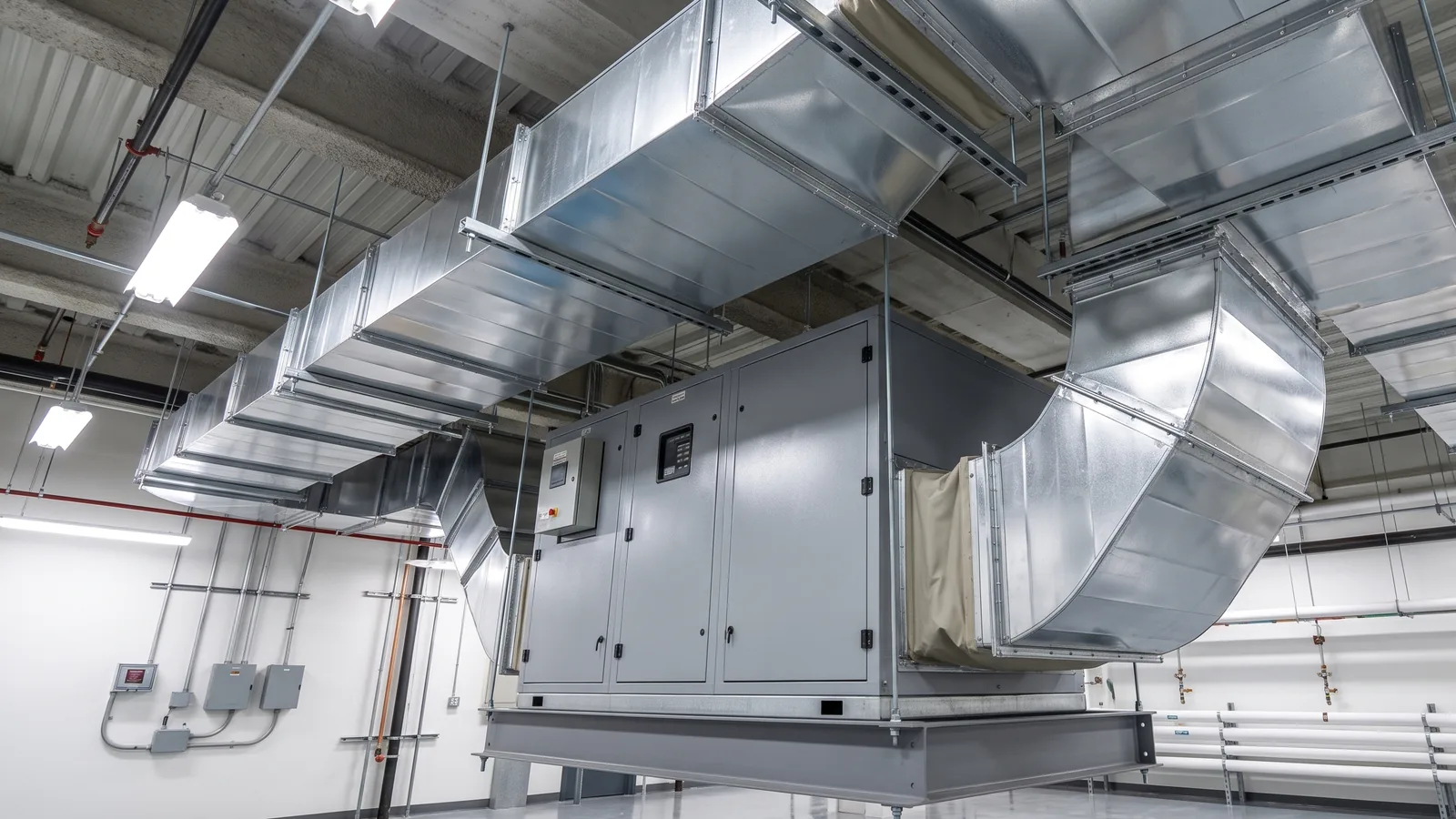
Modern humidity control systems must integrate with building management systems for centralised monitoring. Ducted dehumidification systems provide seamless HVAC integration while maintaining independent humidity control capabilities.
- BMS compatibility: Modbus, BACnet, or proprietary protocols
- Zone control: Independent humidity management for different production areas
- Redundancy: Backup systems for critical manufacturing zones
- Energy recovery: Heat wheel or plate exchangers for efficiency
Frequently Asked Questions
What humidity level is recommended for medical device manufacturing?
Most medical device manufacturing operates between 35–60% RH, with specific targets depending on the device type. Polymer device assembly typically requires 40–60% RH, metal instruments 30–50% RH, and implantable device assembly 20–40% RH.
What are the risks of low humidity in a medical device cleanroom?
Below 30% RH, electrostatic discharge risk increases significantly, damaging circuit boards, sensors, and microprocessors. Low humidity also increases particle shedding from personnel and equipment, compromising cleanroom particle counts.
What regulatory standards govern humidity control in medical device manufacturing?
ISO 13485 requires documented environmental monitoring as part of the quality management system. ISO 14644 sets cleanroom particle classifications. In Australia, the TGA requires GMP compliance including validated environmental control systems with continuous data logging.
Why can’t standard HVAC maintain medical manufacturing humidity tolerances?
Commercial HVAC systems typically maintain ±10% RH tolerance, designed for occupant comfort rather than process control. Medical device manufacturing requires ±2–5% RH precision, along with continuous monitoring, alarm systems, and audit-ready data logging.
What humidity is required for ethylene oxide sterilisation?
Ethylene oxide sterilisation requires approximately 70% RH to activate the gas effectively. This creates a distinct humidity zone that must be isolated from lower-humidity manufacturing and packaging areas within the same facility.
Do desiccant dehumidifiers work better than refrigerant systems in medical manufacturing?
Desiccant dehumidifiers excel where precise control below 40% RH or low-temperature operation is needed. They produce no condensate, eliminating contamination risk in sterile environments. Refrigerant systems suit moderate humidity reduction above 15°C but cannot achieve the low RH levels that implantable device assembly demands.
Implementation Best Practices
Successful humidity control implementation requires careful planning and systematic deployment across manufacturing facilities. Start with comprehensive environmental mapping to identify problem areas and establish baseline conditions.
Deployment Strategy
- Environmental assessment: Map humidity levels across all zones and identify variation patterns
- Risk prioritisation: Focus on critical manufacturing areas first
- Phased implementation: Deploy systems progressively to minimise production disruption
- IQ/OQ/PQ validation: Complete installation, operational, and performance qualification before production use
- Training programmes: Ensure operators understand system operation and maintenance
Medical device manufacturers face increasing pressure to maintain tighter environmental controls while managing operational costs. Professional humidity control systems provide the reliability and precision necessary to meet TGA and international regulatory requirements while supporting continuous production schedules.
Contact Moisture Cure Commercial for a site assessment and customised humidity control recommendations for your medical device manufacturing facility.