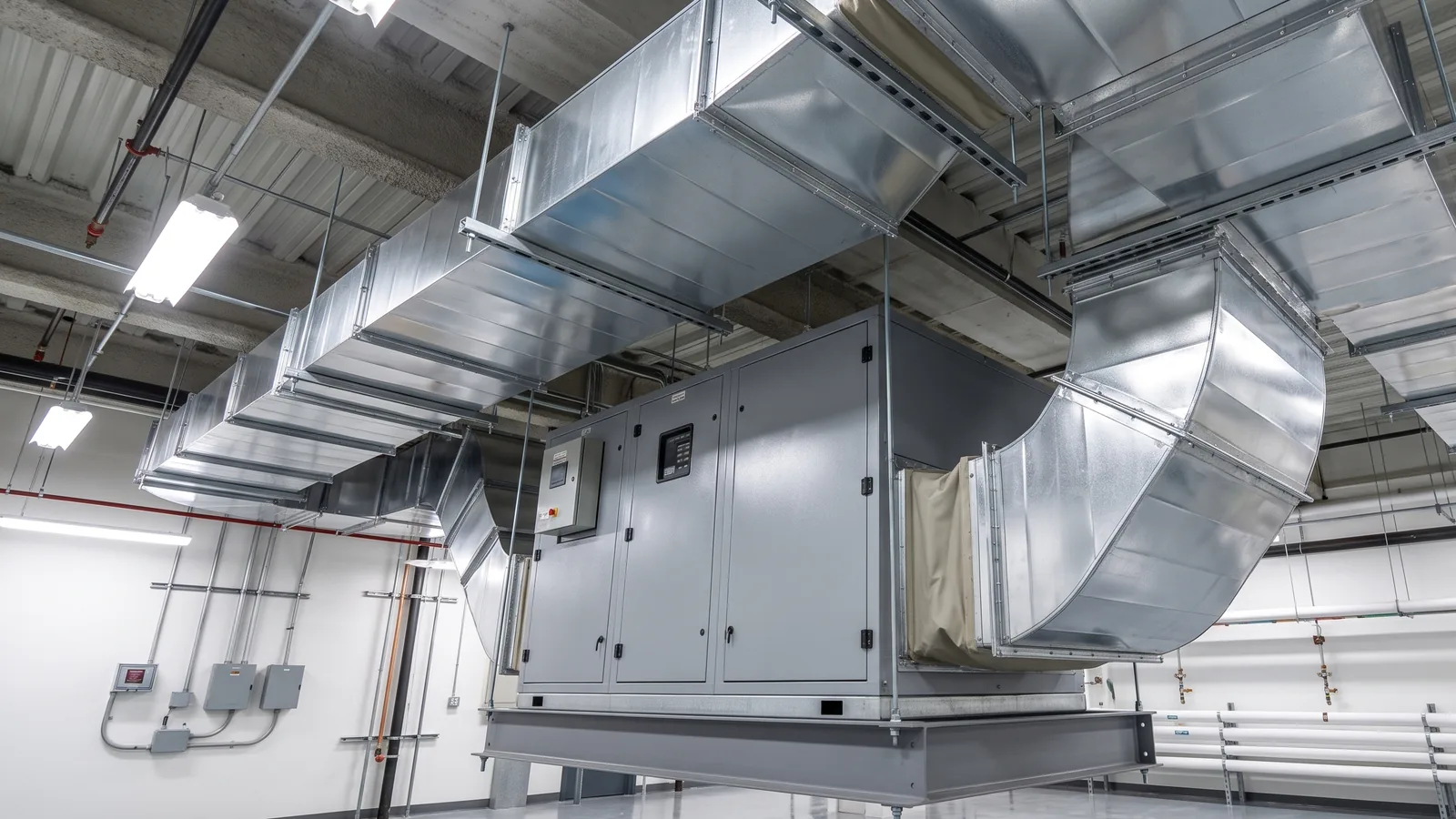
Ultrasonic humidification technology has become a reliable solution for commercial and industrial facilities requiring precise humidity control. These systems use high-frequency vibrations to create fine water droplets, delivering rapid humidity adjustment without the heat generation or energy consumption of traditional steam systems.
For facility managers evaluating humidity control options, the question is not whether ultrasonic humidifiers work, but whether they suit the specific demands of your operation. The short answer: yes, they work exceptionally well in commercial settings when paired with proper water treatment and maintenance protocols.
How Ultrasonic Humidification Works in Commercial Applications
Ultrasonic humidifiers employ piezoelectric transducers that vibrate at frequencies above 20 kHz to atomise water into microscopic droplets. This process creates a cool mist that disperses quickly throughout the workspace without raising ambient temperatures.
| Component | Function | Commercial Benefit |
|---|---|---|
| Piezoelectric disc | Generates ultrasonic vibrations | Energy efficiency up to 90% lower than steam |
| Water reservoir | Stores demineralised water | Extended operation between refills |
| Mist chamber | Contains atomisation process | Prevents water damage to surroundings |
| Distribution system | Disperses humidified air | Even coverage across large areas |
The technology differs fundamentally from evaporative or steam-based systems by operating at room temperature. This characteristic makes ultrasonic humidification units particularly suitable for temperature-sensitive environments where additional heat load would compromise process control.
Performance Capabilities for Industrial Operations
Modern ultrasonic humidifiers deliver consistent performance across varying operational demands. Output capacities range from 1 litre per hour for small spaces to over 100 litres per hour for large industrial facilities.
- Instant mist production with no warm-up period required
- Precise humidity control within +/-2% RH accuracy
- Adjustable output from 10% to 100% capacity
- Uniform droplet size between 1 and 5 microns for optimal absorption
- Continuous operation capability with automatic refill systems
Response times typically measure in seconds rather than the minutes required by traditional humidification methods. This rapid adjustment capability proves essential in manufacturing processes where humidity fluctuations can impact product quality or equipment performance.
Energy Efficiency and Operating Costs
Ultrasonic technology consumes significantly less energy than steam generators or resistive heating systems. According to ASHRAE, steam-based humidification systems typically require 7 to 10 times more electrical input per litre of output compared to ultrasonic atomisation methods.
Energy Comparison: A 10-litre-per-hour ultrasonic system uses approximately 100 watts, while a steam system with equivalent output requires around 7,500 watts. Over a 12-month operating cycle, this translates to substantial savings on electricity costs for facilities running humidification continuously.
Lower energy consumption translates directly to reduced operational costs and smaller carbon footprints. The absence of heating elements also eliminates the need for high-temperature safety systems and reduces maintenance requirements associated with scale buildup.
Ultrasonic vs Evaporative vs Steam Humidifiers
Choosing the right humidification technology depends on your facility’s operating conditions, budget, and air quality requirements. Each type has distinct advantages in commercial settings.
| Factor | Ultrasonic | Evaporative | Steam |
|---|---|---|---|
| Energy consumption | Very low (50-500 W) | Low to moderate | High (several kW) |
| Response time | Seconds | Minutes | Minutes |
| Heat output | None (cool mist) | Slight cooling effect | Significant heat added |
| Water quality needed | Demineralised or RO | Standard mains supply | Softened or treated |
| Noise level | Very quiet | Moderate (fan noise) | Moderate to loud |
| Mineral dust risk | Yes (mitigated with treated water) | No (minerals stay in wick) | No (minerals stay in boiler) |
| Over-humidification risk | Possible without controls | Self-regulating | Possible without controls |
| Best suited for | Temperature-sensitive, low-energy facilities | General HVAC integration | Sterile environments, hospitals |
Ultrasonic systems excel where energy costs are a priority and the facility can maintain a proper water treatment setup. Evaporative systems suit general HVAC integration where water quality is variable. Steam systems remain the standard for hospital and pharmaceutical environments where sterility is non-negotiable.
Managing White Dust and Mineral Deposits
The most common concern with ultrasonic humidifiers is white dust, a fine mineral residue that settles on surfaces when untreated water is atomised. This occurs because ultrasonic transducers atomise everything dissolved in the water, not just the water itself.
- Tap water contains dissolved calcium, magnesium and other minerals that become airborne particles
- Research published in Building and Environment found that ultrasonic humidifiers operating with tap water produced PM2.5 concentrations significantly above background levels
- Demineralised or reverse osmosis water eliminates the problem almost entirely
- Deionised water reduces airborne particle output by approximately 90% compared to standard tap water
Commercial Solution: All commercial ultrasonic installations should include an inline reverse osmosis or demineralisation system. This eliminates white dust, protects sensitive equipment and product surfaces, and extends transducer life. Moisture Cure Commercial recommends an RO water filter for every YAKE ultrasonic unit.
In a commercial setting with proper water treatment, white dust is a solved problem rather than an ongoing concern.
Addressing Bacterial and Hygiene Risks
Stagnant water in any humidifier reservoir can harbour bacteria and fungi. Because ultrasonic units atomise water without boiling it, microorganisms in the reservoir can become airborne if the unit is not properly maintained.
- Bacteria and fungal colonies can establish within days in an unmaintained reservoir
- The U.S. EPA recommends emptying, wiping and refilling humidifier reservoirs daily, and disinfecting weekly
- Commercial-grade units with continuous flow-through water systems and automatic drain cycles significantly reduce standing water risk
- UV sterilisation modules, available on industrial units, neutralise bacteria before atomisation
For facilities handling pharmaceutical manufacturing or food processing, specifying units with built-in sterilisation and automatic drain cycles is essential. In standard commercial environments, a documented maintenance schedule eliminates the risk.
Applications Across Commercial Sectors
Different industries leverage ultrasonic humidification for specific operational requirements. Each sector benefits from the technology’s precision control and energy efficiency.
| Industry | Application | Target Humidity |
|---|---|---|
| Data centres | Static electricity prevention | 45-55% RH |
| Printing facilities | Paper dimensional stability | 50-60% RH |
| Food processing | Product moisture retention | 65-75% RH |
| Textile manufacturing | Fibre flexibility maintenance | 55-65% RH |
| Electronics assembly | ESD protection | 40-50% RH |
The cool mist output proves particularly valuable in facilities where humidification must operate alongside sensitive electronic equipment or temperature-controlled processes. Facilities managing electronics manufacturing and storage environments benefit from ultrasonic technology’s zero heat output and precise controllability. Integration with existing HVAC systems requires minimal modification due to the low heat output.
Installation Requirements and System Design
Successful ultrasonic humidifier deployment requires careful consideration of water quality, distribution patterns, and control integration. Demineralised or reverse osmosis water prevents mineral deposits that could damage equipment or create white dust.
- Water supply with conductivity below 10 microsiemens per centimetre recommended
- Mounting height 2 to 3 metres for optimal mist distribution
- Clearance of 1 metre from walls and equipment
- Drainage provision for overflow and cleaning
- Integration with building management systems via 0-10V or digital protocols
Professional installation ensures proper water treatment, electrical connections, and control system integration. Many facilities combine ultrasonic humidifiers with comprehensive humidity control solutions including dehumidification for year-round climate management. Facilities with existing BMS infrastructure can explore how industrial humidity equipment connects to building management systems for centralised monitoring.
Maintenance and Operational Reliability
Ultrasonic humidifiers require regular but straightforward maintenance to ensure consistent performance. The absence of heating elements or complex mechanical components reduces failure points compared to traditional systems.
Maintenance Schedule: Daily reservoir inspection and water change. Weekly reservoir cleaning with mild disinfectant. Monthly transducer inspection. Quarterly control calibration. Annual component replacement assessment.
Transducer life typically exceeds 5,000 operating hours with proper water treatment. Replacement involves simple component swaps rather than extensive system rebuilds, minimising downtime and maintenance costs.
Limitations and Considerations
While ultrasonic technology offers numerous advantages, certain applications may require alternative solutions. Understanding these limitations helps facility managers make informed decisions about humidity control strategies.
- Water quality requirements more stringent than evaporative systems
- Limited effectiveness in high-temperature environments above 40 degrees Celsius
- Potential for over-humidification in poorly ventilated spaces without integrated controls
- Mineral deposits possible without proper water treatment
- Output capacity constraints for very large open areas exceeding 5,000 square metres
Some facilities combine ultrasonic units with other humidification technologies to address specific operational challenges. Understanding how dehumidifiers and humidifiers control commercial environments together helps inform a hybrid approach that maximises efficiency while ensuring reliable performance across all operating conditions.
Making the Right Choice for Your Facility
Ultrasonic humidifiers prove highly effective for commercial and industrial applications requiring precise humidity control with minimal energy consumption. Their quiet operation, cool mist output, and rapid response times address the demands of modern facilities where traditional steam systems may prove impractical or inefficient.
Proper system sizing, water treatment, and integration with existing climate control infrastructure determine long-term performance. Professional assessment ensures the technology matches your specific operational requirements and delivers the expected performance benefits.
Contact Moisture Cure Commercial today for a comprehensive site assessment and customised humidity control recommendations. Our technical specialists will evaluate your facility’s requirements and design a solution that optimises performance while minimising operational costs.
YAKE Ultrasonic Humidifiers from Moisture Cure Commercial
Moisture Cure Commercial stocks the YAKE RYJS ultrasonic humidifier range, purpose-built for commercial and industrial applications requiring precise, low-maintenance humidity control. A reverse osmosis water filter is recommended for ultrasonic units to prevent mineral build-up.
- YAKE RYJS-03D
- YAKE RYJS-06D
- YAKE RYJS-09D
- YAKE RYJS-12D
- YAKE RYJS-15D
- View the full ultrasonic humidifier range
Frequently Asked Questions
Do ultrasonic humidifiers actually increase humidity in large commercial spaces?
Yes, commercial ultrasonic humidifiers with output capacities above 10 litres per hour effectively maintain target humidity levels in facilities up to several thousand square metres. Units can be staged across zones for even distribution, and output adjusts from 10% to 100% capacity based on sensor feedback.
Is white dust a problem with commercial ultrasonic humidifiers?
White dust only occurs when untreated tap water is used. Commercial installations pair ultrasonic units with reverse osmosis or demineralisation systems that remove dissolved minerals before atomisation. With treated water, white dust is eliminated.
How do ultrasonic humidifiers compare to steam humidifiers for energy consumption?
Ultrasonic humidifiers use up to 90% less energy than equivalent steam systems. A 10-litre-per-hour ultrasonic unit draws approximately 100 watts, compared to roughly 7,500 watts for a steam unit with the same output. This makes ultrasonic technology significantly more cost-effective for continuous operation.
Can ultrasonic humidifiers be integrated with a building management system?
Yes. Most commercial ultrasonic humidifiers support 0-10V analogue signals and digital communication protocols for integration with BMS platforms. This enables automated humidity control, remote monitoring, and coordinated operation with HVAC systems.
What maintenance do commercial ultrasonic humidifiers require?
Commercial ultrasonic units require daily water changes, weekly reservoir disinfection, monthly transducer inspection, and quarterly control calibration. With proper water treatment, transducer life exceeds 5,000 operating hours before replacement is needed.
Are ultrasonic humidifiers safe for food processing and cleanroom environments?
Ultrasonic humidifiers are suitable for food processing and controlled environments when paired with appropriate water treatment and units equipped with UV sterilisation or automatic drain cycles. The cool mist output avoids introducing heat into temperature-sensitive processes.