Tobacco leaves are naturally hygroscopic, meaning they absorb and release moisture from the surrounding air until they reach equilibrium with their environment. This sensitivity makes precise environmental control essential at every production stage. Without proper humidity management, facilities face product degradation, equipment failures, and safety hazards that directly impact profitability. Our commercial humidifier range includes units engineered for tobacco processing applications.
Why Tobacco Requires Precise Humidity Control
Tobacco maintains a target moisture content of 13 to 16 percent by weight when stored at 60 to 68 percent relative humidity. When ambient humidity drops below this range, leaves dry out, becoming brittle and losing both weight and aromatic compounds. When it rises too high, leaves absorb excess moisture and become a breeding ground for mould.
Different tobacco types have distinct equilibrium targets:
- Virginia (flue-cured): 10 to 13 percent moisture content
- Burley (air-cured): 10 to 12 percent moisture content
- Oriental (sun-cured): 12 to 14 percent moisture content
These narrow ranges mean that even small humidity fluctuations cause measurable quality and yield losses across a production run.
Critical Humidity Requirements by Processing Stage
Each tobacco processing stage demands specific humidity levels to maintain product quality. Facility managers must understand these parameters to implement effective environmental control strategies.
| Processing Stage | Optimal RH Range | Temperature Range | Target Moisture Content | Critical Control Points |
|---|---|---|---|---|
| Softening / Rehydration | 85-88% | 30-32°C | ~24% by weight | Uniform rehydration before processing |
| Curing | 65-75% | 32-38°C | Varies by method | Uniform moisture removal, mould prevention |
| Stemming & Stripping | 70-75% | 24-29°C | Pliable leaf state | Prevent desiccation during stem removal |
| Fermentation | 70-80% | 25-30°C | Controlled | Bacterial activity control, flavour development |
| Conditioning / Casing | 60-68% | 22-25°C | 13-16% | Moisture equilibrium, leaf flexibility |
| Processing / Manufacturing | 65 ±5% | 20-24°C | 13-16% | Dust suppression, material handling |
| Storage | 60-70% | 18-22°C | 13-16% | Long-term stability, pest prevention |
| Packaging | 60-65% | 20-22°C | Consistent | Weight consistency, seal integrity |
Deviations from these ranges cause immediate quality issues including uneven curing, bacterial contamination, and excessive product loss. The softening stage alone requires raising leaf moisture from 1 to 2 percent up to approximately 24 percent by weight, a process that demands precision ultrasonic humidification systems capable of delivering controlled, fine-droplet moisture without wetting surfaces.
Curing Methods and Their Humidity Demands
The curing method determines both the final flavour profile and the humidity control challenge. Each approach removes moisture from harvested leaves at a different rate and under different conditions.
- Flue-curing (Virginia): Uses heated air in enclosed barns. Begins at high RH (around 85 to 90 percent) during the yellowing phase, then gradually reduces humidity as temperature rises to fix colour and dry the leaf. The full cycle runs three to seven days.
- Air-curing (Burley, cigar wrapper): Relies on natural airflow in ventilated barns. Optimal humidity sits at 65 to 70 percent RH for Burley, with research confirming 70 percent RH produces the best cigar leaf appearance. Air-curing takes four to eight weeks.
- Sun-curing (Oriental): Leaves are threaded and dried outdoors. Humidity control is limited to site selection and timing, making this the least controllable method.
- Fire-curing: Uses low-temperature wood smoke in enclosed structures. Humidity must remain high enough to prevent rapid drying while smoke compounds penetrate the leaf.
Facilities that use desiccant dehumidifiers for commercial drying operations can achieve precise RH setpoints regardless of ambient conditions, which is particularly valuable during flue-curing where the schedule is measured in days rather than weeks.
Environmental Risks in Tobacco Processing
Australian tobacco processing and storage facilities face challenges from seasonal humidity variations and temperature extremes. These environmental factors create specific risks that require targeted mitigation strategies.
- Mould and fungal growth: Occurs above 75 percent RH, producing white, grey, green, or black spots on leaf surfaces and introducing toxins that make batches unsaleable
- Leaf brittleness: Below 55 percent RH, leaves lose flexibility and break during mechanical handling, increasing material waste
- Fermentation failures: Incorrect humidity stops or accelerates bacterial processes, ruining flavour profiles
- Aromatic degradation: Excessively dry conditions cause volatile compounds to evaporate, producing a harsh, hay-like flavour
- Equipment corrosion: Sustained high humidity damages processing machinery, sensors, and control systems
- Worker health hazards: Dust exposure increases in low-humidity conditions, raising respiratory risk
- Static electricity: Below 50 percent RH, static buildup interferes with filter and paper handling on manufacturing lines
Curing Room Design and Control Systems
Curing rooms represent the most critical humidity control challenge in tobacco processing. These spaces require sophisticated environmental management to ensure uniform conditions throughout large volumes.
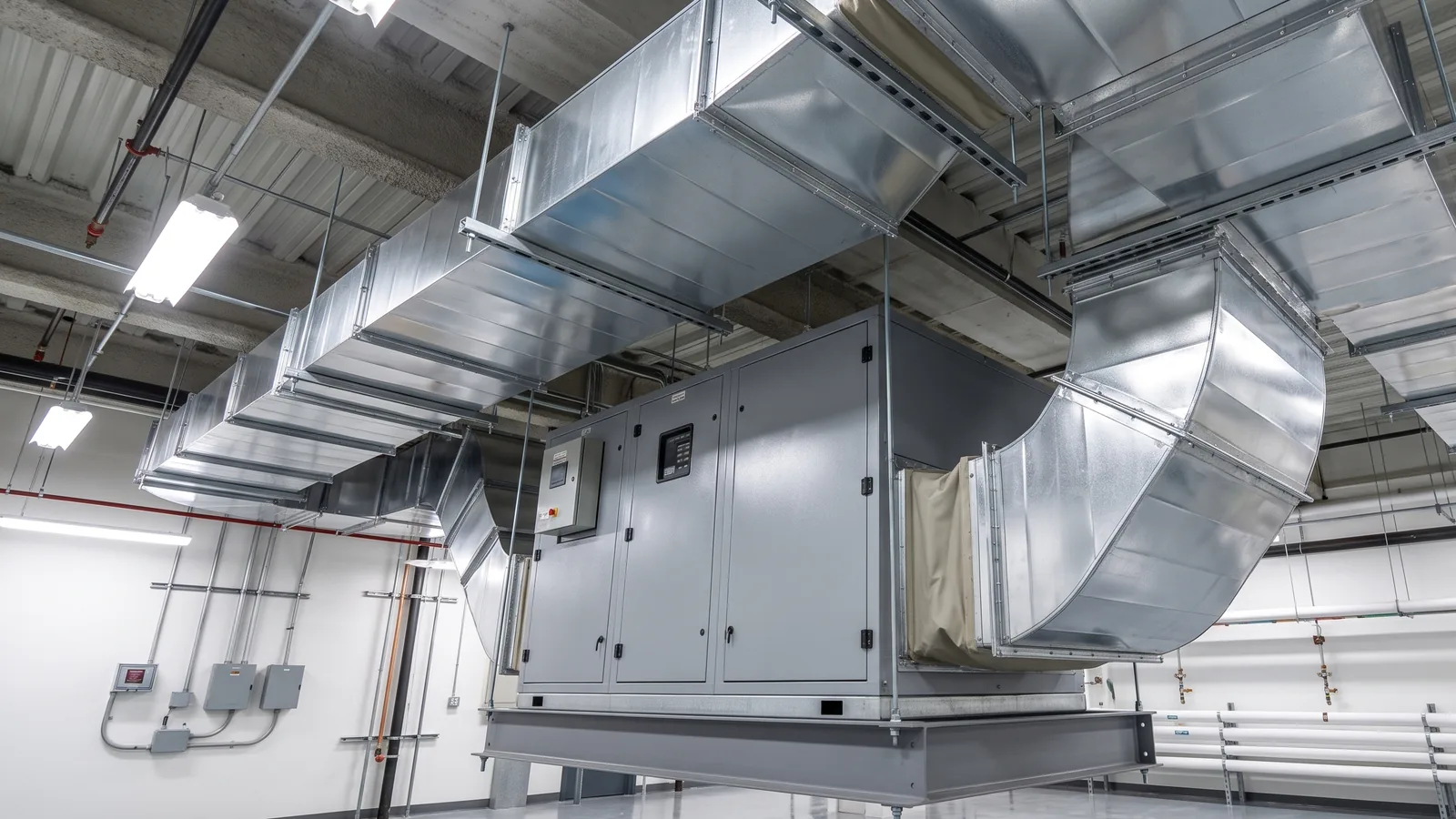
Modern curing facilities use ducted dehumidification systems to maintain precise conditions across multiple zones. These systems integrate with existing HVAC infrastructure to provide centralised control while minimising energy consumption.
Air Distribution Requirements
Effective air circulation prevents the formation of microclimates that cause uneven curing. Professional systems achieve this through strategic placement of supply and return points.
- Minimum air changes: 6 to 8 per hour during active curing phases
- Velocity requirements: 0.5 to 1.0 m/s across leaf surfaces
- Distribution pattern: horizontal flow with vertical return paths
- Zone control: independent regulation for different curing stages
- Monitoring points: sensors positioned throughout the curing space for full coverage
Fermentation and Conditioning Areas
Fermentation rooms require higher humidity levels to support bacterial activity while preventing contamination. Temperature and humidity must remain stable within narrow ranges throughout the fermentation period. Monitoring CO2 concentration in these areas serves a dual purpose: elevated CO2 indicates active fermentation is occurring, while dangerously high CO2 levels create a direct workplace safety hazard for staff in enclosed spaces.
Conditioning areas prepare tobacco for final processing by achieving moisture equilibrium. Ultrasonic humidification systems add precise, fine-droplet moisture to bring leaves to their target 13 to 16 percent moisture content without surface wetting.
Control System Integration
Modern facilities integrate humidity control with broader building management systems. This approach enables coordinated environmental control across all processing areas.
- Central monitoring dashboard displays real-time conditions across all zones
- Automated setpoint adjustments based on production schedules
- Predictive maintenance alerts prevent system failures
- Energy optimisation algorithms reduce operating costs
- Remote access enables off-site troubleshooting and adjustment
- Data logging supports quality assurance and compliance reporting
Storage and Packaging Environmental Control
Long-term storage areas require stable conditions to preserve tobacco quality over extended periods. The same principles that apply to humidity control in agricultural storage facilities hold for tobacco: humidity fluctuations cause moisture migration that degrades product consistency and enables pest infestations.
Facilities managing humidity in packaging operations need equally precise control to ensure consistent product weights and proper seal formation.
Storage Facility Requirements
- Temperature stability: ±2°C variation maximum over 24 hours
- Humidity tolerance: ±5 percent RH from setpoint
- Air filtration: HEPA filtration prevents contamination
- Monitoring frequency: continuous logging with 15-minute intervals
- Backup systems: redundant units prevent total system failure
- Capacity planning: allow overcapacity for peak load conditions
Monitoring and Compliance Standards
Tobacco testing and conditioning must meet established standards. ISO 3402:1999 specifies that tobacco and tobacco products be conditioned and tested at 23°C and 60 percent RH (±2 percent), covering measurements of tar, nicotine, carbon monoxide, and smoke emissions.
A robust monitoring system for tobacco facilities should provide:
- Sensor accuracy: humidity instruments calibrated to ±0.8 percent RH or better
- Long-term stability: sensor drift under 1 percent RH per year
- CO2 monitoring: detects unwanted fermentation during storage and transport
- Automated data logging: records that support quality assurance audits and regulatory reporting
- Calibration schedule: quarterly sensor verification against traceable references
System Selection and Sizing Considerations
Selecting appropriate humidity control equipment requires careful analysis of facility requirements and operating conditions. Undersized systems fail to maintain conditions while oversized units waste energy through excessive cycling. Choosing the right commercial dehumidifier starts with understanding the specific demands of each processing zone.
Capacity Calculation Factors
- Total air volume requiring treatment (m³)
- Maximum moisture load from products (kg/hour)
- Infiltration rates through doors and openings
- Fresh air ventilation requirements
- Internal heat gains from equipment and lighting
- Seasonal ambient condition variations
Desiccant dehumidifiers operate effectively from -20°C to +50°C, covering the full temperature range encountered in tobacco processing. Refrigerant dehumidifiers lose effectiveness below 15°C, making desiccant units the better choice for facilities with cold storage or variable-temperature zones.
Maintenance and Performance Optimisation
Regular maintenance ensures humidity control systems maintain peak performance throughout their operational life. Neglected systems experience efficiency losses and premature failures that disrupt production. Facilities benefit from following a structured commercial dehumidifier maintenance schedule tailored to their operating environment.
Critical Maintenance Tasks
- Filter replacement: monthly inspection, quarterly replacement minimum
- Coil cleaning: bi-annual cleaning prevents efficiency losses
- Sensor calibration: quarterly verification ensures accuracy
- Drain line inspection: monthly checks prevent blockages
- Control system updates: annual software updates improve performance
- Performance testing: semi-annual capacity verification
Frequently Asked Questions
What humidity level should a tobacco storage facility maintain?
Storage areas should maintain 60 to 70 percent relative humidity at 18 to 22°C. This keeps tobacco at its target moisture content of 13 to 16 percent by weight, preventing both mould growth and excessive drying. Continuous monitoring with data logging at 15-minute intervals helps identify and correct deviations before they affect product quality.
Why do tobacco leaves crack and break during processing?
When ambient humidity drops below 55 percent RH, tobacco leaves lose moisture and become brittle. Mechanical handling of dry leaves creates breakage and dust, increasing material waste and reducing yield. Maintaining the correct RH range for each processing stage keeps leaves pliable enough to withstand handling.
What is the difference between flue-curing and air-curing humidity requirements?
Flue-curing starts at 85 to 90 percent RH and gradually decreases over three to seven days as temperature rises. Air-curing maintains a steady 65 to 70 percent RH over four to eight weeks, relying on natural ventilation. Flue-curing requires active dehumidification equipment, while air-curing depends more on barn design and airflow management.
How does CO2 monitoring support tobacco humidity control?
Rising CO2 levels in storage and fermentation areas indicate active bacterial fermentation. If CO2 concentration climbs too high, it signals that humidity and temperature conditions are promoting unwanted fermentation, and it creates a direct safety risk for workers in enclosed spaces. CO2 sensors complement humidity monitoring as part of a complete environmental control system.
Can desiccant dehumidifiers handle the full temperature range in tobacco processing?
Desiccant dehumidifiers operate effectively from -20°C to +50°C, covering everything from cold storage through to high-temperature curing. Refrigerant dehumidifiers lose effectiveness below 15°C, making desiccant units the better choice for facilities with cold storage or variable-temperature zones.
Tobacco processing facilities require sophisticated humidity control systems to maintain product quality and operational efficiency. Contact Moisture Cure Commercial for a comprehensive site assessment and customised humidity control solution designed for your specific processing requirements.