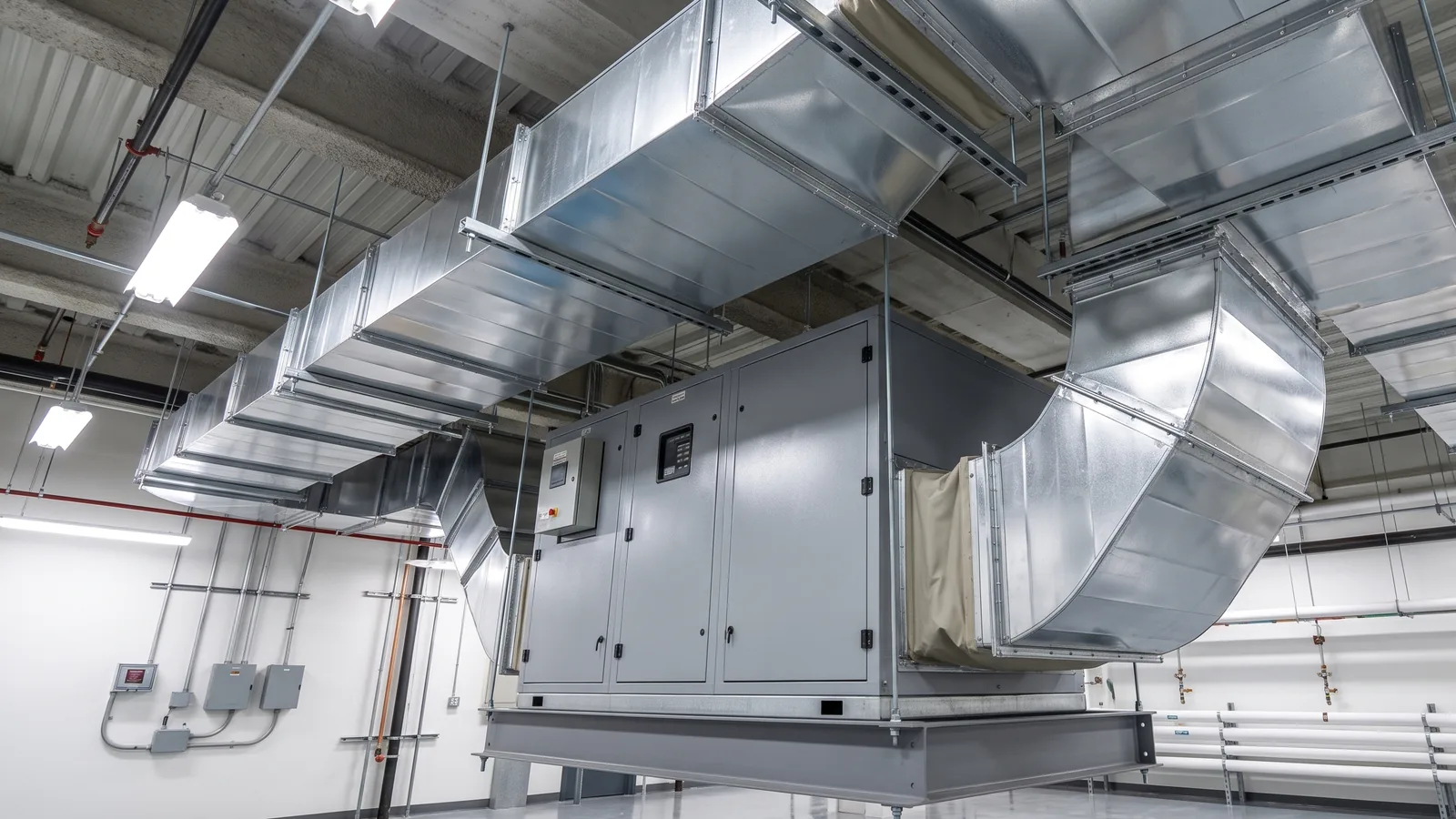
Semiconductor fabrication and printed circuit board (PCB) assembly demand precise environmental conditions. Temperature and humidity fluctuations outside tight tolerances lead to product defects, equipment damage, and significant financial losses. Reliable humidity control is a non-negotiable investment for any electronics manufacturing facility.
Manufacturing Environment Requirements
Modern electronics manufacturing facilities maintain strict environmental parameters aligned with IPC and JEDEC industry guidelines. Each production stage requires specific humidity levels to prevent material degradation and process variations.
| Manufacturing Area | Optimal RH Range | Temperature Range | Reference Standard |
|---|---|---|---|
| Wafer fabrication | 40-45% RH | 20-22°C | ISO 14644 |
| PCB assembly (SMT) | 40-55% RH | 21-24°C | IPC J-STD-001 |
| Component storage | ≤10% RH (dry cabinet) or 30-50% RH (ambient) | 18-25°C | IPC/JEDEC J-STD-033 |
| Cleanrooms (ISO 5-7) | 35-45% RH | 20-23°C | ANSI/ESD S20.20 |
Maintaining these conditions around the clock requires commercial humidification systems capable of handling large air volumes and rapid load changes, alongside industrial dehumidifiers for removing excess moisture during humid conditions.
Critical Humidity Risks in Electronics Production
Electronics manufacturers face humidity-related challenges on two fronts: too little moisture causes electrostatic discharge (ESD), while too much causes material degradation. Both directly impact production yields and equipment reliability.
Electrostatic Discharge Hazards
Relative humidity below 30% creates dangerous ESD conditions that can instantly destroy sensitive semiconductor devices. According to the ESD Association, a single discharge event can damage entire wafer lots or assembled circuit boards.
- Personnel walking across floors generate voltages exceeding 20,000 V in dry conditions
- Component handling equipment accumulates charges that discharge through sensitive circuits
- Plastic packaging materials become highly charged when humidity drops below critical thresholds
- The electronics industry reports substantial annual losses from ESD-related component damage and warranty claims
Moisture Absorption and Material Failure
Excessive humidity above 55% RH causes hygroscopic materials to absorb atmospheric moisture, leading to multiple failure modes. Circuit board substrates, IC packages, and assembly materials all exhibit moisture sensitivity that must be managed from storage through to soldering.
- Absorbed moisture causes PCB delamination during reflow soldering
- Popcorn cracking occurs when trapped moisture rapidly expands inside IC packages at reflow temperatures above 220°C
- Dendrite growth between conductors creates electrical shorts over time
- Corrosion attacks exposed metal surfaces and solder joints, reducing product lifespan
- Dimensional changes in substrates affect component placement accuracy on fine-pitch assemblies
Moisture Sensitivity Levels and Component Storage
The IPC/JEDEC J-STD-033 standard classifies electronic components into Moisture Sensitivity Levels (MSL 1 through MSL 6), defining how long each component can be exposed to ambient humidity before it must be baked dry or discarded.
- MSL 1: Unlimited floor life
- MSL 2: One year
- MSL 3: 168 hours (7 days)
- MSL 4: 72 hours
- MSL 5/5a: 48/24 hours
- MSL 6: Must be soldered within the reflow time window after removal from dry pack
Facilities handling MSL 3 and above components rely on dry cabinets held below 5% RH, or nitrogen-purged storage, to pause the floor-life clock. Desiccant dehumidifiers provide the low dewpoints these storage environments require.
Industry Standards for Electronics Humidity Control
Several international standards define acceptable humidity ranges and control practices for electronics manufacturing. Compliance is a prerequisite for supplying components to automotive, aerospace, medical, and defence customers.
- ANSI/ESD S20.20: Requires facilities to maintain RH above 30% (or implement additional ESD controls) to limit electrostatic discharge risk
- IEC 61340-5-1: The international counterpart to S20.20, mandating RH monitoring and control in electronics handling areas
- IPC-A-610: The acceptability standard for electronic assemblies, referencing environmental control requirements throughout production
- IPC/JEDEC J-STD-033: Defines moisture sensitivity classification, floor-life limits, and baking recovery procedures
- ISO 14644: Cleanroom classification standards including humidity specifications for semiconductor fabrication
Process-Specific Humidity Requirements
Different manufacturing processes within electronics facilities require tailored humidity control. Each process has unique sensitivities that determine acceptable environmental ranges.
Photolithography Operations
Semiconductor photolithography demands the tightest humidity control of any electronics manufacturing process. Photoresist materials react strongly to moisture variations, affecting pattern resolution and adhesion.
- Control tolerance: ±2% RH maximum deviation
- Response time: Less than 60 seconds to correct excursions
- Uniformity: Less than 1% RH variation across the exposure area
- Air delivery: HEPA-filtered to meet cleanroom classification requirements
Surface Mount Assembly
SMT assembly lines require balanced humidity to prevent both static damage and moisture-related soldering defects. Solder paste performance depends heavily on ambient moisture content.
- Low humidity causes solder paste to dry prematurely, reducing wetting action
- High humidity introduces oxidation that prevents proper solder joint formation
- Component placement accuracy degrades when humidity affects vision system calibration
- Adhesive dispensing becomes inconsistent with humidity fluctuations
Humidity Control Technologies for Electronics Manufacturing
Electronics manufacturers typically deploy multiple humidity control technologies to address varying load conditions and precision requirements.
Desiccant Dehumidification
Desiccant dehumidifiers provide superior low-humidity performance for semiconductor cleanrooms and dry storage areas. These systems maintain stable conditions below 40% RH where refrigerant-based units lose efficiency. Refrigerant dehumidifiers lose effectiveness below 15°C dewpoint and cannot reach the sub-10% RH required for dry component storage.
- Continuous operation at dewpoints below 0°C for dry cabinet and MSD storage zones
- Precise control within ±1% RH tolerance
- No moisture re-evaporation during defrost cycles
- Compatible with cleanroom filtration requirements and HEPA-grade air handling
Ducted Dehumidification
Large manufacturing facilities often integrate ducted dehumidification systems with existing air handling infrastructure. Ducted systems provide whole-facility humidity control while minimising floor space requirements in production areas.
- Centralised control reduces maintenance points
- Zone-specific humidity setpoints for different processes
- Energy recovery options reduce operating costs
- Redundant capacity ensures continuous operation during peak loads
Ultrasonic Humidification
Where ambient humidity drops below acceptable levels, ultrasonic humidifiers add moisture without introducing heat or large droplets. Their fine mist (1-5 micron droplet size) evaporates rapidly and does not compromise cleanroom particle counts when properly filtered.
Australian Climate Considerations
Australian electronics manufacturers face seasonal humidity swings that many overseas facility design guides do not account for. Coastal cities like Sydney, Brisbane, and Melbourne experience summer RH levels regularly exceeding 80%, while inland facilities near Adelaide or Canberra can drop below 20% RH in winter.
This dual challenge means Australian facilities need both dehumidification capacity for the humid months and humidification for the dry season. Moisture Cure Commercial supplies both desiccant dehumidifiers and ultrasonic humidifiers, allowing facility managers to address the full spectrum of Australian conditions with a single supplier backed by over 20 years of industry experience.
Implementation Considerations
Successful humidity control implementation requires careful planning. Electronics manufacturers must consider multiple factors when designing environmental control systems.
- Production equipment heat loads and moisture generation rates
- Personnel density and shift patterns affecting internal moisture loads
- Material flow and storage requirements, including MSL-rated component handling
- Cleanroom classification and filtration standards (ISO 14644)
- Redundancy requirements for critical processes
- Energy efficiency targets and sustainability goals
Oversized systems waste energy, while undersized units fail to maintain required conditions during peak loads. Professional system design balances capital costs against operational reliability.
Monitoring and Control Strategies
Modern electronics manufacturing facilities employ sophisticated monitoring systems to track environmental conditions continuously. Real-time data enables rapid response to excursions before product quality suffers.
- Distributed sensors monitor conditions at critical process points
- Automated alerts notify operators of out-of-specification conditions
- Data logging provides traceability for quality investigations and audit compliance
- Predictive maintenance algorithms prevent unexpected equipment failures
- Integration with building management systems (BMS) enables centralised oversight and energy optimisation
Regular calibration of sensors and control systems maintains measurement accuracy. Quarterly validation ensures environmental data meets quality system requirements under IPC and ISO standards.
Return on Investment
Proper humidity control delivers measurable financial benefits through reduced scrap rates, improved yields, and extended equipment life. Electronics manufacturers that implement comprehensive humidity control typically report payback within the first 12 to 18 months through operational improvements.
| Benefit Category | Reported Improvement | Impact |
|---|---|---|
| Yield improvement | 2-5% increase (industry-reported) | Higher revenue per wafer/board |
| Scrap reduction | 30-50% decrease (facility-dependent) | Lower material costs |
| Equipment uptime | Measurable increase | Greater production capacity |
| Warranty claims | Significant reduction | Improved customer satisfaction |
Additional benefits include reduced insurance premiums, improved worker comfort, and enhanced facility flexibility for new product introductions.
Frequently Asked Questions
What humidity level should a semiconductor cleanroom maintain?
Most semiconductor cleanrooms target 35-45% RH at 20-23°C. Photolithography areas typically run at 40-45% RH with ±2% tolerance, while dry storage zones for moisture-sensitive devices may require humidity below 5% RH.
Why does low humidity cause ESD damage in electronics manufacturing?
Dry air below 30% RH allows static charges to accumulate on surfaces, equipment, and personnel because there is insufficient moisture to dissipate them. These charges can exceed 20,000 V and discharge through sensitive components in nanoseconds, causing latent or catastrophic failure.
What are moisture sensitivity levels (MSL) for electronic components?
MSL ratings (1 through 6) classify how sensitive a component is to moisture absorption before soldering. MSL 1 components have unlimited exposure time, while MSL 6 parts must be soldered almost immediately after removal from dry packaging. The IPC/JEDEC J-STD-033 standard defines these classifications.
Can a refrigerant dehumidifier maintain low enough humidity for electronics?
Refrigerant dehumidifiers work for general comfort dehumidification but struggle to reach the low humidity targets electronics manufacturing demands. They lose effectiveness below 15°C dewpoint and cannot achieve the sub-10% RH needed for dry storage. Desiccant dehumidifiers are the preferred technology for precision electronics environments.
How does humidity affect solder paste performance in SMT assembly?
Solder paste is hygroscopic and absorbs ambient moisture rapidly. High humidity above 55% RH causes oxidation that inhibits proper wetting and joint formation. Low humidity below 35% RH dries the paste prematurely, reducing print quality and causing insufficient solder deposits.
What is popcorn cracking in PCB assembly?
Popcorn cracking occurs when moisture trapped inside an IC package rapidly turns to steam during reflow soldering above 220°C. The expanding steam creates internal pressure that delaminates the package or cracks the die. Proper humidity control and MSL management prevent this failure mode.
How do Australian conditions affect electronics facility humidity control?
Australia’s climate varies dramatically by season and region. Coastal facilities face summer humidity above 80% RH, requiring robust dehumidification, while inland or winter conditions can drop below 20% RH, requiring humidification. Facilities need both capabilities to maintain consistent conditions year-round.
Contact Moisture Cure Commercial to discuss humidity control for your electronics manufacturing facility. Our technical team can assess your facility conditions and recommend solutions matched to your process requirements and Australian operating conditions.