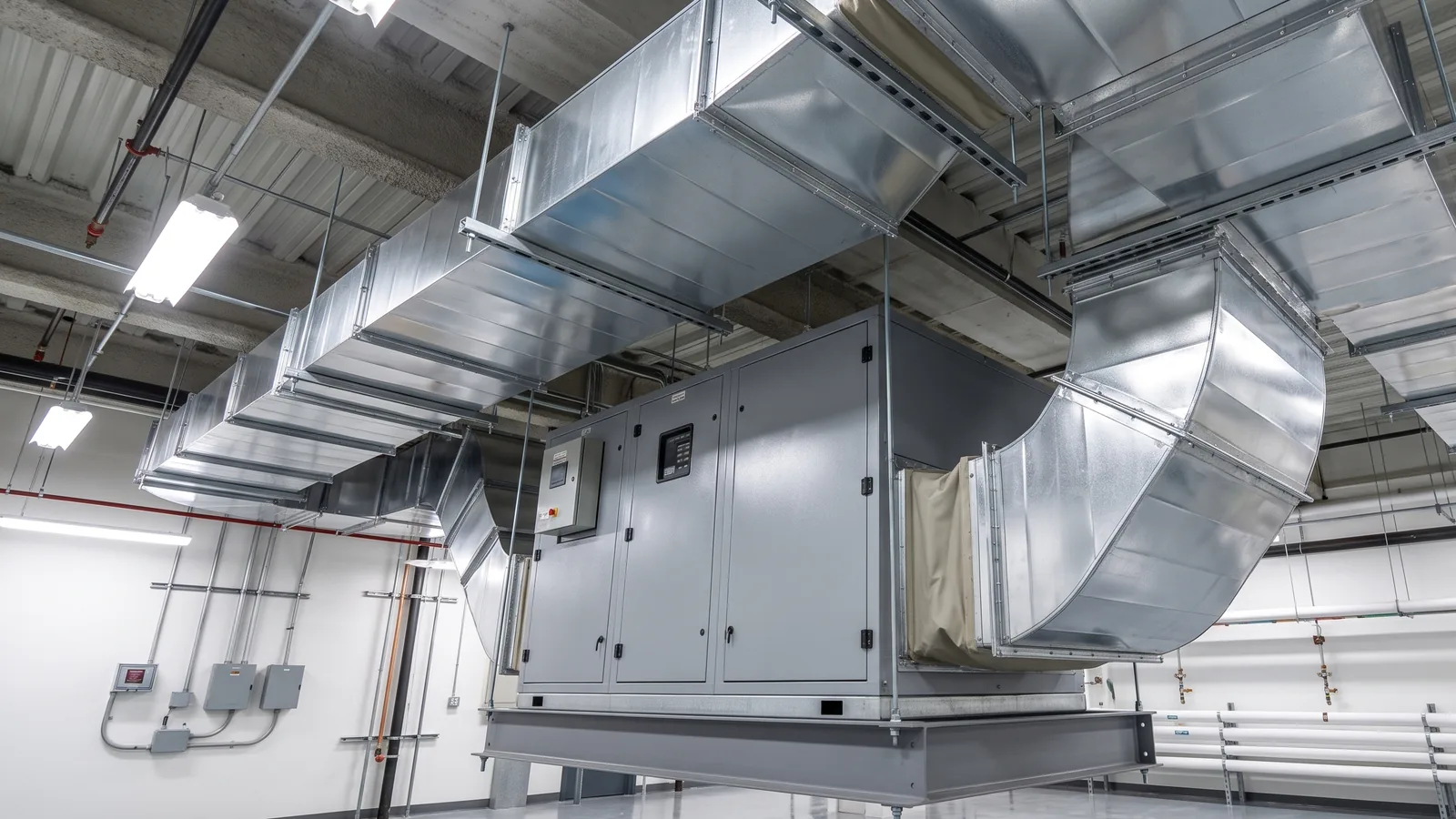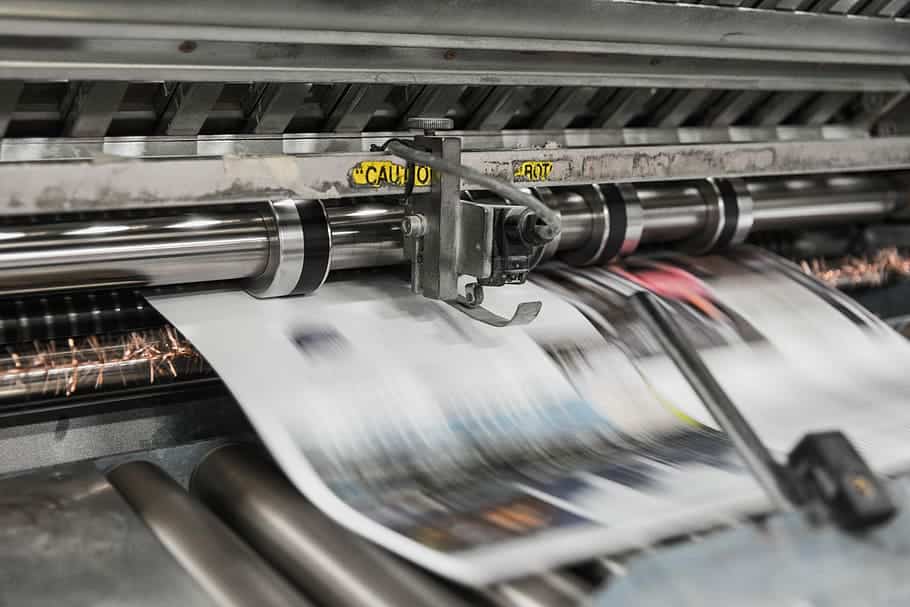
Commercial printing operations require precise environmental control to prevent costly production delays and quality defects. Humidity fluctuations directly impact paper stability, ink performance, and equipment reliability across offset, digital, and speciality printing processes. Our commercial humidity control systems include units engineered for print facility applications.
Critical Humidity Zones for Print Operations
Paper dimensional stability depends on maintaining relative humidity within narrow tolerances throughout your facility. Even minor variations trigger immediate production problems that compound across multi-pass jobs and long print runs.
| Humidity Level | Paper Response | Production Consequences |
|---|---|---|
| Below 35% RH | Rapid moisture loss, brittleness | Static discharge, web breaks, registration errors |
| 35–40% RH | Moderate shrinkage, edge curl | Sheet feeding issues, dust adhesion |
| 45–55% RH | Dimensional stability maintained | Consistent registration, smooth operation |
| 55–65% RH | Moisture absorption begins | Wavy edges, slow drying, blocking risk |
| Above 65% RH | Excessive expansion, limpness | Severe curl, ink setoff, mould growth |
These ranges align with ISO 12647-2 recommendations for offset lithographic production environments. Maintaining the 45–55% RH window keeps paper dimensionally stable and ink transfer predictable.
Static Electricity and ESD Prevention
Low humidity is the primary driver of static buildup in commercial print facilities. When relative humidity drops below 40%, paper substrates accumulate electrostatic charge during feeding, stacking, and transport through the press.
Static causes three categories of production problems:
- Sheet handling failures: Sheets stick together, causing misfeeds, double-sheet detection errors, and delivery pile jams
- Print quality defects: Airborne dust and particles are attracted to charged surfaces, contaminating printed sheets and blankets
- Equipment damage: Electrostatic discharge can damage sensitive electronics in digital presses and inline finishing systems
Maintaining humidity above 45% RH dissipates surface charge naturally by allowing a thin moisture film to form on paper fibres. This is more reliable than ionising bars alone, which only treat localised areas. Facilities that control humidity across the full production floor see reduced static defects alongside better operator comfort.
Print Process Humidity Requirements
Different printing technologies demand specific moisture levels to achieve optimal ink transfer and substrate handling. Understanding these requirements helps facility managers select appropriate humidity control equipment for their production environment.
Offset Lithography
Sheetfed and web offset presses require 50–55% RH to maintain proper ink-water balance and prevent plate oxidation. Lower humidity causes excessive fountain solution evaporation, while higher levels lead to ink emulsification and poor dot reproduction.
- Fountain solution stability: 48–52% RH optimal
- Plate storage areas: 45–50% RH prevents oxidation
- Paper acclimation zones: Match pressroom conditions ±3%
- Bindery operations: 50–55% RH for consistent folding
Digital Print Production
Toner-based systems operate best at 45–50% RH to ensure proper electrostatic transfer and fusing performance. Inkjet technologies require slightly higher levels (50–60% RH) to prevent nozzle clogging and maintain consistent droplet formation.
- Electrophotographic systems: 45–50% RH for charge stability
- Production inkjet: 55–60% RH prevents premature ink drying
- Wide-format printing: 50–55% RH reduces media cockle
- Variable data applications: ±2% RH tolerance critical
Inkjet systems are particularly sensitive to humidity-driven viscosity changes. Ultrasonic humidifiers address many of these paper handling challenges by delivering fine, uniform moisture without wetting surfaces or leaving residue.
Flexographic and Gravure
High-speed web printing demands precise humidity control to prevent web breaks and maintain consistent tension. These processes typically require 55–65% RH to compensate for heat generated during drying.
- Unwind stations: 55–60% RH prevents edge cracking
- Print zones: 60–65% RH maintains web moisture
- Rewinding areas: Match unwind conditions
- Solvent-based systems: Lower ranges acceptable (45–55% RH)
How Humidity Affects Ink Performance
Ink behaviour changes measurably with relative humidity. Understanding these interactions helps press operators diagnose quality problems that environmental controls can prevent.
- Viscosity: Oil-based offset inks thicken in dry conditions, reducing transfer efficiency. Water-based flexo inks lose moisture faster, requiring more frequent viscosity adjustments.
- Drying rate: Low humidity accelerates evaporation from ink films, shortening open time on press and causing picking on coated stocks.
- Colour consistency: Substrate expansion and contraction from humidity shifts changes ink film thickness across the sheet, producing colour variation within a single run.
- Adhesion: Excessive humidity slows drying and increases the risk of setoff between stacked sheets in the delivery pile.
Paper Storage and Conditioning
Warehouse and staging areas require the same attention to humidity control as production floors. Paper stored outside optimal conditions undergoes dimensional changes that persist even after conditioning.
- Coated stocks: 24–48 hours per 25 mm thickness
- Uncoated papers: 12–24 hours per 25 mm thickness
- Synthetic substrates: 4–8 hours minimum
- Pre-wrapped pallets: Add 50% to unwrapped times
Separate humidity control in storage areas prevents moisture migration between pallets and maintains consistent conditions year-round. Paper that enters the pressroom at the wrong moisture content produces waste regardless of how well the press is calibrated.
Seasonal Humidity Challenges
Australian climate variations create distinct seasonal humidity control requirements for print facilities. Summer conditions often push indoor humidity above 70% RH, while winter heating can drop levels below 30% RH.
| Season | Typical Challenge | Control Strategy |
|---|---|---|
| Summer | High ambient humidity (70–85% RH) | Continuous dehumidification required |
| Autumn | Rapid daily variations (±20% RH) | Automated control systems essential |
| Winter | Heating-induced dryness (25–35% RH) | Humidification to maintain levels |
| Spring | Unstable conditions, rain events | Rapid response capability needed |
Facilities in tropical regions face year-round high humidity requiring robust dehumidification capacity. Print operations across southern Australia experience greater seasonal swings demanding systems capable of both humidification and dehumidification.
Equipment Selection and Facility Design
Choosing appropriate humidity control equipment requires analysing your facility’s air volume, heat load, and moisture sources. Print production areas generate significant heat from equipment operation, affecting both temperature and relative humidity.
Temperature and humidity must be managed together. ASHRAE guidelines recommend print environments maintain 20–22°C alongside 45–55% RH. A 2°C temperature rise drops relative humidity by roughly 5–7 percentage points, so HVAC and humidity systems need coordinated control loops.
Capacity Calculations
- Room volume: Length × width × height in cubic metres
- Air changes: 4–6 per hour for print rooms
- Moisture load: Personnel, materials, ventilation
- Heat sources: Presses, dryers, UV systems
- Target conditions: ±2% RH tolerance typical
For precise environmental control across multiple zones, ducted dehumidification systems integrate with existing HVAC infrastructure. These solutions provide centralised humidity management while maintaining independent temperature control in different production areas.
Technology Options
Refrigerant dehumidifiers suit most commercial printing applications where temperatures remain above 15°C. Desiccant dehumidifiers provide superior performance in cooler environments or when extremely low humidity levels are required, operating effectively down to -20°C.
- Refrigerant systems: Cost-effective above 15°C
- Desiccant technology: Performs down to -20°C
- Hybrid configurations: Optimise energy efficiency
- Ultrasonic humidifiers: Precise moisture addition without wetting
Monitoring and Control Systems
Modern humidity control requires continuous monitoring across multiple facility zones to identify problems before they impact production. Digital sensors provide real-time data for automated control systems that maintain optimal conditions.
- Paper storage areas: Multiple height levels
- Press delivery zones: Sheet temperature critical
- Bindery equipment: Folding and cutting areas
- Shipping docks: Transition zone control
- Plate storage rooms: Prevent oxidation
Data logging documents environmental conditions for quality assurance and troubleshooting. Alert systems notify operators when conditions drift outside acceptable ranges. Facilities that connect dehumidifiers to a building management system gain centralised visibility across all zones from a single interface.
Return on Investment
Proper humidity control delivers measurable improvements in production efficiency and product quality. Print facilities with controlled environments consistently report lower waste rates, faster makeready, and fewer customer rejects.
| Improvement Area | Expected Benefit | Impact on Operations |
|---|---|---|
| Waste reduction | Fewer misfeeds and static-related rejects | Lower material costs |
| Registration accuracy | Stable substrates hold tighter tolerances | Reduced makeready time |
| Static problems | Above 45% RH eliminates most charge buildup | Faster run speeds |
| Equipment maintenance | Less corrosion and mechanical wear | Higher press availability |
Beyond immediate production benefits, controlled humidity extends equipment life by preventing corrosion from uncontrolled moisture and reducing mechanical wear. Paper inventory maintains quality longer, reducing losses from dimensional changes and edge damage.
Frequently Asked Questions
What humidity level prevents paper curling in commercial printing?
Maintaining 45–55% RH keeps most commercial paper stocks dimensionally stable. Below 40% RH, rapid moisture loss causes edge curl and brittleness. Acclimate paper to pressroom conditions for 12–48 hours before printing, depending on stock weight and coating.
Do different printing processes need different humidity levels?
Yes. Offset lithography performs best at 50–55% RH, digital toner presses need 45–50% RH for electrostatic transfer, production inkjet requires 55–60% RH, and flexographic web presses typically need 55–65% RH to compensate for dryer heat.
Can humidity control reduce printing waste and costs?
Controlled environments reduce waste from misfeeds, static-related rejects, registration drift, and ink performance issues. Stable humidity also cuts makeready time because operators spend less time compensating for substrate variability between jobs.
How does temperature interact with humidity in a print facility?
Temperature and relative humidity are inversely related. A 2°C rise drops RH by approximately 5–7 percentage points even if absolute moisture stays constant. Print facilities should maintain 20–22°C alongside 45–55% RH with coordinated HVAC and humidity controls.
Should paper storage areas have separate humidity control?
Yes. Warehouse areas often differ from pressroom conditions, especially near loading docks and exterior walls. Paper stored at the wrong humidity absorbs or loses moisture unevenly, causing dimensional changes that persist even after acclimation in the pressroom.
Contact Moisture Cure Commercial for a facility assessment and customised humidity control recommendations for your print operation. Our technical specialists analyse your production requirements and design systems that maintain consistent print quality while minimising operating costs.