Packaging facilities face direct financial impact when relative humidity drifts outside optimal ranges. Material defects, static-related equipment jams, and production stoppages compound into operational losses that ripple through the entire supply chain. Maintaining precise humidity control across production and storage zones is fundamental to consistent output quality and throughput.
Material-Specific Humidity Requirements
Each packaging material responds differently to moisture exposure, and the consequences of incorrect humidity levels are well documented. TAPPI T 402 establishes the international standard conditioning atmosphere for paper and board at 50 ± 2% RH and 23 ± 1°C, reflecting the sensitivity of cellulose-based materials to moisture variation.
| Material Type | Optimal RH Range | Low Humidity Effects | High Humidity Effects |
|---|---|---|---|
| Corrugated Cardboard | 45–55% | Brittleness, edge cracking, reduced stacking strength | Warping, delamination, loss of rigidity |
| Paper Labels | 50–55% | Static electricity, curling, feed jams | Adhesive failure, wrinkling, ink smudging |
| Plastic Films (PP/PE) | 50–60% | Static buildup, dust attraction, handling issues | Condensation, blocking, clarity loss |
| Adhesives | 40–60% | Premature curing, poor initial tack | Extended cure times, incomplete bonding |
| Metal Components | 40–50% | Static discharge risk, coating adhesion problems | Corrosion, oxidation, surface contamination |
Research published in Applied Sciences confirms that corrugated board compression strength follows a second-order polynomial decrease as relative humidity increases, with stacking strength dropping significantly beyond 60% RH. Understanding these thresholds is critical for Australian packaging facilities operating through seasonal extremes.
Static Electricity and ESD Control
Electrostatic discharge is one of the most disruptive humidity-related problems in packaging operations. When relative humidity drops below 40%, packaging films, foils, and labels accumulate static charge that causes:
- Individual sheets and film layers adhering together, jamming feeding mechanisms
- Dust and particulate attraction to product surfaces, compromising presentation and hygiene
- Mislabelling and print registration errors on high-speed lines
- Operator discomfort and potential ignition risks in environments with flammable solvents
Maintaining RH above 45% allows surface moisture on materials to dissipate static charge naturally, eliminating reliance on ionising bars or anti-static sprays. Commercial ultrasonic humidifiers deliver fine-mist humidification that raises RH without wetting surfaces, making them effective for targeted static control in packaging halls.
Production Line Humidity Challenges
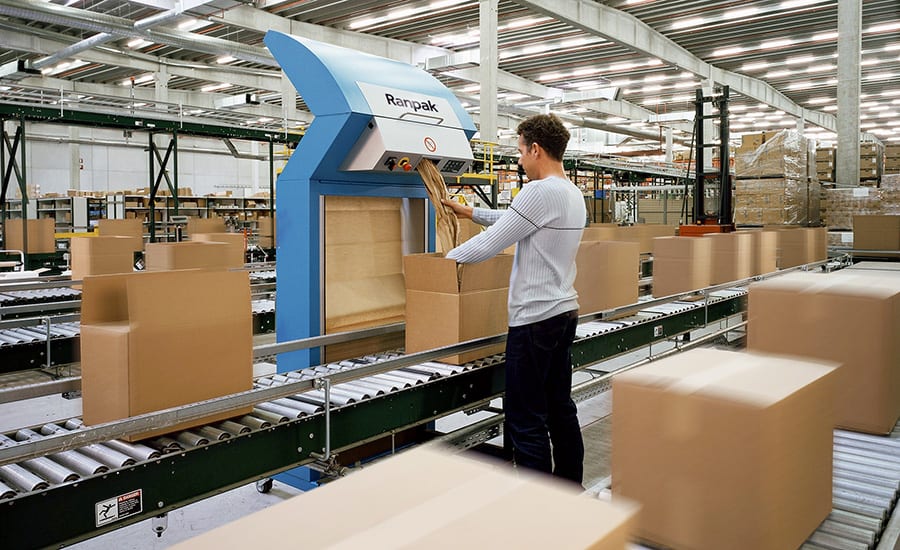
Different stages of a packaging line demand different moisture conditions, and temperature differentials between zones create condensation risks that compromise quality at handoff points.
- Form-fill-seal machines require 40–45% RH to prevent film blocking and static discharge
- Cartoning equipment operates best at 45–50% RH for consistent board feeding
- Labelling stations need 50–55% RH to ensure proper adhesive activation and prevent label curl
- Printing and die-cutting lines require stable 45–50% RH for dimensional accuracy and ink adhesion
- Shrink tunnels introduce heat that rapidly alters localised humidity, requiring downstream compensation
- Palletising areas accumulate moisture from compressed air systems and loading dock openings
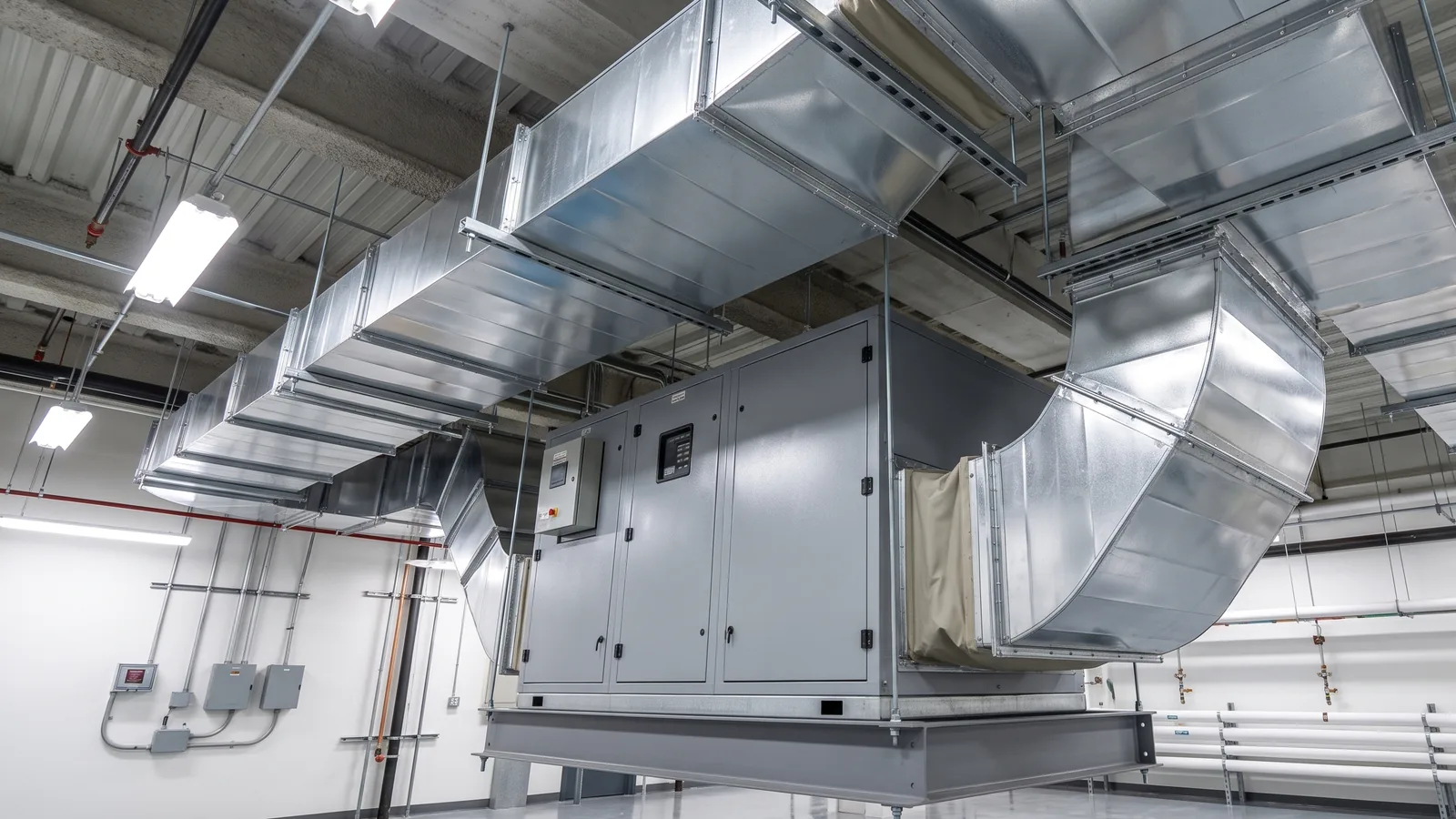
Packaging facilities that also run in-house print production face compounded challenges, as printing presses are particularly sensitive to humidity-driven paper distortion. Ducted dehumidification systems integrated with existing HVAC infrastructure ensure uniform conditions across multiple production zones while minimising equipment footprint.
Storage Area Moisture Management
Raw material storage is the first critical control point. Materials exposed to incorrect humidity during storage carry defects into production, creating cascading quality issues that are difficult to trace to root cause.
Corrugated cardboard is hygroscopic and absorbs moisture rapidly. Board held above 60% RH experiences permanent dimensional changes that affect die-cutting accuracy, print registration, and structural performance during stacking and transport.
- Maintain storage areas at 45–50% RH year-round with continuous monitoring
- Create buffer zones between external doors and storage racks to limit ambient air ingress
- Separate hygroscopic materials from moisture-sensitive finished goods
- Install remote-alert monitoring to catch RH drift before it reaches materials
Facilities managing large storage volumes benefit from the same warehouse humidity control strategies used in logistics and distribution centres, scaled for packaging material requirements.
Seasonal Humidity Variations in Australia
Australian climate patterns create significant humidity swings that challenge packaging operations year-round. Coastal facilities in Queensland and northern NSW face sustained high-humidity seasons, while inland operations contend with extremely dry winter air.
| Season | Typical Issues | Control Strategy |
|---|---|---|
| Summer | Condensation, material swelling, adhesive failure | High-capacity dehumidification, increased air circulation |
| Autumn | Rapid temperature swings, unstable RH conditions | Responsive control systems, buffer zone management |
| Winter | Static electricity, material brittleness, cracking | Controlled humidification, temperature stability |
| Spring | Mould risk, inconsistent drying and curing times | Continuous monitoring, preventive dehumidification |
Year-round control demands equipment capable of both dehumidification and humidification. Commercial humidity control systems add moisture during dry periods, while desiccant dehumidifiers remove excess moisture during humid seasons, including in temperature-controlled zones where refrigerant systems lose effectiveness below 15°C.
Choosing the Right Humidity Control Technology
Packaging facilities typically need both dehumidification and humidification, and selecting the right technology for each zone depends on operating temperatures and target RH levels.
- Desiccant dehumidifiers use a moisture-absorbing rotor to extract humidity from air. They operate effectively from -20°C to +50°C, making them the preferred choice for cold-chain packaging, temperature-controlled storage, and any zone where temperatures drop below 15°C.
- Refrigerant dehumidifiers condense moisture by cooling air below its dew point. They are energy-efficient in warm environments above 15°C but lose capacity rapidly in cold conditions.
- Ultrasonic humidifiers generate ultra-fine mist that evaporates instantly, raising RH without wetting surfaces or packaging materials. They suit packaging halls requiring static control or humidification during dry seasons.
For a detailed comparison of these technologies, see our guide to desiccant versus compressor dehumidifiers. Many packaging facilities benefit from custom dehumidification solutions designed around their specific production layout and material mix.
Equipment Selection and Sizing
Undersized humidity control equipment fails during peak loads, while oversized systems cycle excessively and create unstable conditions. Accurate sizing requires analysis of several variables.
- Total air volume, including ceiling height and racking configurations
- Moisture loads from products, personnel, and processes
- Air exchange rates from doors, loading docks, and ventilation systems
- Integration requirements with existing building management systems for automated control
- Maintenance access and condensate drainage provisions
Facilities handling food-contact packaging materials face additional requirements under FSANZ standards, where environmental controls must be documented and verifiable. Continuous RH data logging supports compliance and provides evidence during audits.
Operational Benefits
- Reduced corrugated and paper material waste when storage and production hold 45–55% RH consistently
- Fewer equipment stoppages as static-related jams and moisture-induced failures become preventable events
- Decreased customer complaints and returns when packaging integrity is maintained through the supply chain
- Extended equipment life through elimination of corrosion caused by uncontrolled humidity
- Improved worker comfort and productivity when floor-level conditions are stabilised
- Lower insurance premiums through reduced product damage exposure
Contact Moisture Cure Commercial for a site assessment of your packaging facility. With 20+ years of experience in commercial and industrial humidity control, our technical specialists will analyse your requirements and recommend a tailored humidity control solution for your operation.
Frequently Asked Questions
What humidity level is best for corrugated cardboard packaging?
Corrugated cardboard performs best between 45% and 55% relative humidity. Below this range, board becomes brittle with reduced stacking strength and edge cracking. Above 60% RH, corrugated board absorbs moisture rapidly, causing warping, delamination, and permanent dimensional changes that affect die-cutting and printing accuracy.
How does low humidity cause static problems on packaging lines?
When relative humidity drops below 40%, packaging films, labels, and foils cannot dissipate electrostatic charge naturally. This causes sheets to stick together, dust to accumulate on product surfaces, and feeding mechanisms to jam. Maintaining RH above 45% provides sufficient surface moisture for natural charge dissipation without additional anti-static equipment.
Why do packaging adhesives fail in dry environments?
Many packaging adhesives rely on ambient moisture for proper curing and initial tack development. In low-humidity conditions, adhesives cure prematurely before reaching full bond strength, resulting in label peeling, carton delamination, and seal failures. Water-based adhesives are particularly sensitive below 40% RH.
What is the difference between desiccant and refrigerant dehumidifiers for packaging?
Desiccant dehumidifiers use a moisture-absorbing rotor and operate effectively from -20°C to +50°C, making them essential for cold-chain packaging and temperature-controlled zones. Refrigerant dehumidifiers cool air below dew point to condense moisture and work well above 15°C but lose capacity in cold conditions. Most packaging facilities benefit from both types deployed across different zones.
How does humidity affect food-contact packaging materials?
Excess humidity promotes mould growth, degrades barrier properties of packaging films, and can compromise seal integrity. FSANZ regulations require documented environmental controls for food-contact materials, making continuous humidity monitoring and control a compliance requirement as well as a quality measure.
Can one system handle both humidification and dehumidification?
While no single unit does both, integrated climate control systems combine dehumidifiers and humidifiers managed through a central building management system. This allows automated switching between moisture removal and moisture addition as conditions change seasonally or between production zones.
What RH range prevents mould in packaging storage areas?
Keeping relative humidity consistently below 60% prevents mould growth on packaging materials. For corrugated and paper-based materials, 45–50% RH is the target range that balances mould prevention with maintaining material flexibility and structural properties.
How do you size a humidity control system for a packaging plant?
Sizing requires calculating total air volume, estimating moisture loads from materials and processes, accounting for air exchange rates through doors and ventilation, and factoring in seasonal peak loads. A professional site assessment ensures the system is neither undersized for peak conditions nor oversized to the point of excessive cycling.
What are the signs of a humidity problem in a packaging facility?
Common indicators include static-related jams on packaging lines, label curl or adhesive failure, visible condensation on surfaces or equipment, corrugated board that feels soft or swollen, material brittleness or cracking during folding, and increased customer complaints about packaging integrity. Continuous RH monitoring catches problems before they reach the production line.