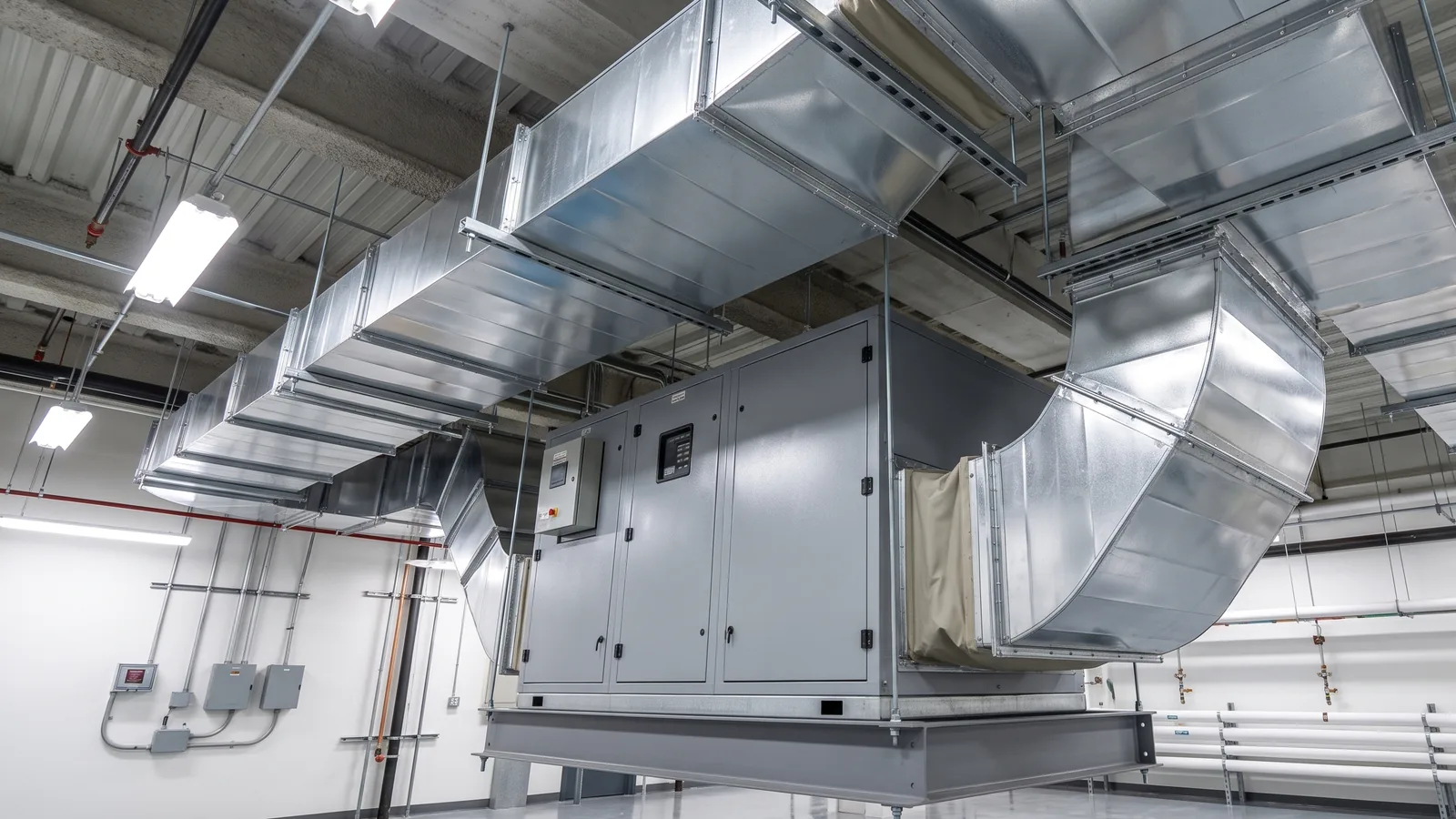
Vertical farming and controlled environment agriculture (CEA) operations depend on precise humidity management to achieve consistent yields and prevent crop failures. Without proper moisture control, these high-value growing systems face reduced productivity, disease outbreaks, and compromised product quality. Our commercial humidification solutions include units purpose-built for this application.
Critical Humidity Parameters for Commercial Growing
Vapour pressure deficit (VPD) drives plant transpiration, nutrient uptake, and overall growth performance in controlled environments. VPD measures the difference between the moisture the air can hold at saturation and the moisture it actually contains. Maintaining specific humidity ranges for each growth stage ensures optimal physiological function and maximises return on investment.
| Growth Stage | Optimal RH Range | VPD Target (kPa) | Critical Functions |
|---|---|---|---|
| Propagation | 75-85% | 0.2-0.4 | Root initiation, cutting survival |
| Vegetative | 65-75% | 0.4-0.8 | Leaf development, stem growth |
| Flowering | 50-60% | 0.8-1.2 | Pollen viability, flower formation |
| Fruiting | 55-65% | 0.6-1.0 | Fruit quality, calcium transport |
Horticultural crops generally perform best within a VPD range of 0.65 to 1.25 kPa when adequately irrigated, though optimal targets shift with each growth stage as shown above.
Stomatal regulation responds directly to ambient humidity. When VPD falls below 0.65 kPa, guard cells begin closing, restricting transpiration and CO2 assimilation. The same protective response occurs when VPD exceeds 1.25 kPa, as the plant conserves water under stress. Both extremes limit photosynthesis and directly reduce biomass accumulation and harvest weights.
Disease Prevention Through Strategic Humidity Management
Fungal pathogens thrive when relative humidity remains elevated in growing environments. Maintaining precise humidity control prevents disease conditions from developing and protects high-value crops from devastating losses.
- Powdery mildew: Research published in Phytopathology shows disease incidence peaks near 85% RH, with fluctuating humidity between day and night accelerating spore formation and dispersal
- Botrytis (grey mould): Develops at 75%+ RH and spreads rapidly through flower and fruit tissue. Unlike powdery mildew, Botrytis requires free water on plant surfaces and dies after prolonged exposure to 60% RH or below
- Downy mildew: Proliferates at 85%+ RH, creating yellow patches and progressive leaf death
- Pythium root rot: Thrives in saturated conditions above 80% RH, particularly in recirculating hydroponic systems common in vertical farms
- Bacterial leaf spot: Spreads through water droplets when RH exceeds 90%
Maintaining humidity below these pathogen thresholds eliminates disease pressure without relying on fungicides or chemical treatments. This reduces operational costs and meets increasingly strict food safety standards for commercial produce. Operations growing humidity-sensitive crops like medical cannabis face particularly severe consequences from uncontrolled moisture, where a single Botrytis outbreak can destroy an entire harvest batch.
Why Vertical Farms Need Desiccant Dehumidifiers
Vertical farms present unique dehumidification challenges that conventional refrigerant systems struggle to address. Plants transpire roughly 95% of their irrigation water back into the air, creating a constant moisture load that equipment must handle around the clock.
Refrigerant dehumidifiers lose effectiveness below 15°C because the cooling coils ice up before they can extract meaningful moisture. This creates a problem in vertical farms where propagation rooms and cold-sensitive crops require lower air temperatures. Desiccant dehumidifiers operate effectively from -20°C to +50°C, making them the practical choice for facilities with multiple climate zones.
- No coil icing at low temperatures, maintaining full moisture extraction capacity in propagation and cold storage areas
- Consistent performance across wide temperature ranges without seasonal efficiency drops
- Lower dew points achievable than refrigerant systems, critical for preventing condensation on multi-tier growing surfaces
- Heat recovery from the reactivation process can be redirected into the growing environment
For facilities requiring different humidity setpoints across growing zones, understanding how desiccant wheel technology works helps engineers specify the right capacity and configuration for each area.
Equipment Selection for Different Facility Types
Vertical farms require different humidity control strategies compared to traditional greenhouses due to their multi-tier growing systems and limited air circulation. Equipment selection depends on facility size, crop type, and environmental load calculations.
Small to Medium Vertical Farms (up to 500m²)
- Portable units with 50-100L/day capacity for individual growing rooms
- Wall-mounted systems to maximise floor space
- Units with built-in humidistats for automated control
Large Commercial Operations (500m²+)
- Ducted dehumidification systems integrated with HVAC for whole-facility control
- Multiple zone control capabilities for different growth stages
- Industrial capacity units handling 200L+ per day
Ducted systems provide uniform humidity control across multiple growing levels while minimising equipment footprint in valuable production space. Facilities operating across multiple temperature zones benefit from selecting equipment rated for continuous duty cycles rather than intermittent residential-grade units.
Integration with Environmental Control Systems
Modern CEA facilities use building management systems (BMS) to coordinate temperature, humidity, CO2, and lighting parameters. Humidity control equipment must interface seamlessly with these platforms to maintain optimal growing conditions. Connecting dehumidifiers to your BMS via Modbus or BACnet enables centralised monitoring and automated response to humidity deviations.
| Control Parameter | Integration Method | Benefits |
|---|---|---|
| BMS connectivity | Modbus, BACnet protocols | Centralised monitoring and control |
| Sensor networks | Multiple RH/temperature points | Microclimate management per growing tier |
| Data logging | Cloud-based platforms | Historical analysis, troubleshooting |
| Alarm systems | SMS/email notifications | Rapid response to deviations |
Energy Efficiency Considerations
HVAC systems account for 30-40% of total energy consumption in typical vertical farming operations, with dehumidification representing a significant share of that load. Selecting energy-efficient equipment and implementing smart control strategies reduces operational costs substantially.
- Heat recovery systems capture waste energy from dehumidification and redirect it into the growing environment
- Variable speed compressors adjust capacity based on actual demand rather than cycling on and off
- Desiccant wheels provide efficient moisture removal at lower temperatures where refrigerant systems waste energy fighting coil icing
- Night-time dehumidification leverages off-peak electricity rates
- Proper insulation and vapour barriers reduce moisture infiltration from outside air
Combining heating, cooling, and dehumidification into an integrated system allows facilities to harness waste heat from the cooling process for dehumidification, reducing overall energy consumption compared to running standalone units for each function.
Maintenance Requirements for Continuous Operation
Vertical farms operate year-round without seasonal breaks, demanding equipment that performs reliably with minimal downtime. Establishing preventive maintenance schedules ensures consistent environmental control and protects crop investments.
Daily Checks
- Monitor condensate drainage and collection systems
- Verify setpoint accuracy and sensor calibration
- Check for unusual noises or vibrations
Monthly Maintenance
- Clean or replace air filters to maintain airflow
- Inspect coils for biological growth or debris
- Test safety controls and alarm functions
Annual Service
- Professional inspection of refrigeration or desiccant wheel components
- Electrical system testing and thermal imaging
- Replacement of wear components before failure
ROI Calculations for Humidity Control Investment
Proper humidity management delivers measurable returns through increased yields, reduced crop losses, and lower disease management costs.
| Performance Metric | Without Humidity Control | With Proper Control | Impact |
|---|---|---|---|
| Crop yield | Baseline | 15-25% increase | Higher revenue per growing cycle |
| Disease losses | 10-15% of production | Less than 2% | Reduced waste and disposal costs |
| Growth cycle time | Standard | 5-10% faster | More harvests per year |
| Labour costs | High disease management | Minimal intervention | Lower operating costs |
Beyond direct financial returns, reliable humidity control improves product consistency and helps secure premium supply contracts with quality-conscious buyers. Operations maintaining tighter environmental tolerances also meet the traceability and compliance requirements that major retailers and food service companies increasingly demand.
Frequently Asked Questions
What humidity level should a vertical farm maintain?
Target humidity depends on the crop and growth stage. Propagation typically requires 75-85% RH, vegetative growth 65-75%, and flowering 50-60%. The corresponding VPD targets range from 0.2 kPa during propagation to 1.2 kPa during flowering.
Why do vertical farms need dehumidifiers?
Plants transpire roughly 95% of their irrigation water back into the air. In an enclosed vertical farm with no natural ventilation, this moisture accumulates rapidly and creates conditions for fungal disease, condensation on growing surfaces, and reduced plant transpiration.
Can refrigerant dehumidifiers work in vertical farms?
Refrigerant units work in warm growing zones but lose effectiveness below 15°C as cooling coils ice up. Vertical farms with propagation rooms, cold storage, or crops requiring lower temperatures need desiccant dehumidifiers that operate reliably from -20°C to +50°C.
How much energy does dehumidification use in a vertical farm?
HVAC systems, including dehumidification, typically account for 30-40% of a vertical farm’s total energy consumption. Integrated systems with heat recovery and variable speed compressors reduce this load by capturing waste heat for reuse in the growing environment.
What is VPD and why does it matter for CEA?
Vapour pressure deficit measures the difference between how much moisture the air can hold and how much it currently contains. It directly controls how quickly plants transpire, affecting nutrient uptake, CO2 absorption, and growth rate. Most crops perform best within a VPD range of 0.65-1.25 kPa.
How do you prevent mould in a vertical farm?
Maintain relative humidity below 70% during vegetative growth and below 60% during flowering. Ensure adequate air circulation between growing tiers, use dehumidifiers sized for the facility’s transpiration load, and monitor conditions with networked sensors connected to a building management system.
Contact Moisture Cure Commercial to discuss humidity control solutions for your vertical farming or CEA facility. Our technical specialists provide site assessments and equipment recommendations tailored to your specific growing requirements and operational goals.