Humidity control supports acoustic performance by keeping the indoor environment more consistent and protecting moisture-sensitive instruments and finishes. For facilities managers responsible for concert halls, recording studios, teaching rooms or acoustic manufacturing, the task is to control moisture without introducing intrusive equipment noise.
The effect on sound depends on frequency, temperature and the room itself, so there is no single humidity setting that guarantees better acoustics. Start with the requirements of the instruments and materials, then check the room under its normal operating conditions.
Sound quality and humidity: the commercial impact
Humidity is one variable in acoustic performance alongside room geometry, surface finishes, occupancy and building services noise. A moisture problem and an acoustic design problem may need different remedies, even when they occur in the same venue.
Facilities where humidity deserves attention include:
- Performance venues where environmental conditions change between rehearsals and full houses.
- Recording studios that need stable conditions and low background noise.
- Acoustic product factories managing timber, adhesives and finishes.
- Museums storing musical instruments with conservation requirements.
- Education facilities moving instruments between storage and practice rooms.
Define the problem before selecting equipment: damaged timber, recurring condensation and a noisy air outlet are different findings. Log when each issue occurs so an acoustic consultant and humidity specialist can work from the same evidence.
How humidity changes sound transmission
Temperature and humidity affect how sound travels through air and how air absorbs acoustic energy. Their influence varies with frequency and atmospheric conditions, making a fixed percentage improvement in sound quality misleading.
An experimental auditorium study of environmental conditions and room acoustics examined changes in temperature, relative humidity and air velocity alongside acoustic parameters. Record those conditions when comparing acoustic measurements.
| Variable | What to consider | Practical response |
|---|---|---|
| Air absorption | Frequency and atmospheric conditions influence attenuation. | Compare frequency bands, rather than a single overall result. |
| Reverberation | Air absorption is only one contributor to sound decay. | Record occupancy, finishes and room configuration. |
| Temperature and airflow | These can change alongside relative humidity. | Log them with each acoustic measurement. |
| Perceived quality | A measurable change does not establish an audible benefit. | Assess the actual use: speech, music or recording. |
A practice-room study of acoustic and environmental parameters found different relationships across the quantities measured and called for further work on perceptibility. Test the conditions in your venue before deciding whether humidity adjustment is warranted.
Material stability in acoustic environments
Humidity control also matters because instruments and room finishes have material limits. Timber components can change dimensions as moisture conditions change, but the appropriate operating range must come from the relevant manufacturer or conservator.
For example, a piano manufacturer's maintenance guidance recommends 35–55% relative humidity, with 45% preferred. That advice applies to its pianos and should not be treated as a universal specification for acoustic panels, historic collections or an entire concert hall.
- Collect care instructions for each instrument type and sensitive finish.
- Check whether loaned or insured instruments carry separate environmental conditions.
- Record seasonal excursions and changes between storage and performance spaces.
- Ask the supplier how materials should acclimatise before installation.
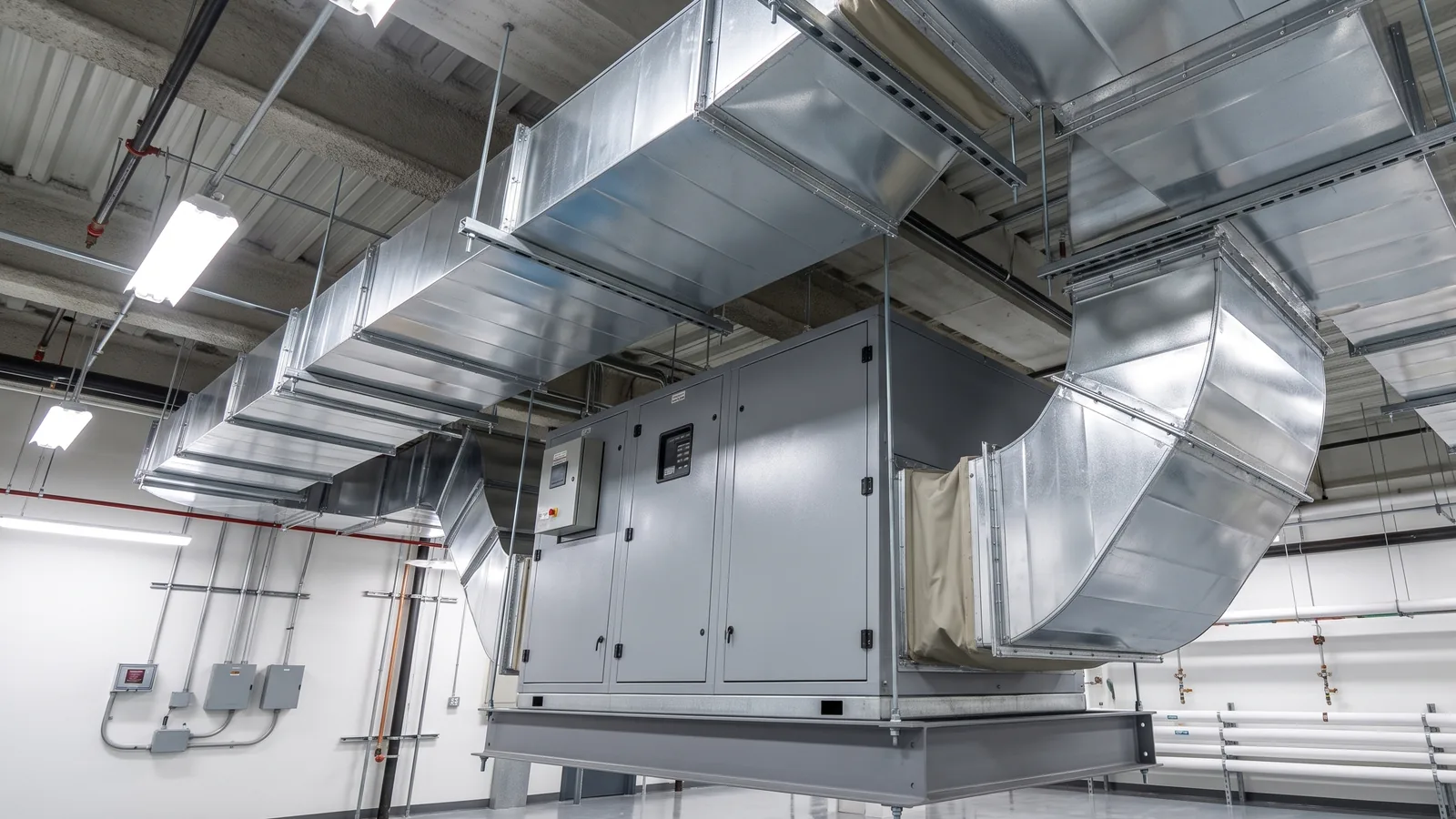
Where excess moisture is the problem, ducted humidity control systems for performance spaces can allow plant to be located away from a listening area. Their suitability still depends on duct noise, airflow, access and how the system connects to the building services.
Commercial spaces requiring acoustic humidity control
Write the environmental brief around the space's function and assets, rather than copying a generic humidity range. A storage room, live performance hall and recording booth can have different priorities within the same building.
| Facility | Define before specifying | Check during operation |
|---|---|---|
| Concert hall | Instrument requirements and acoustic criteria | Conditions before, during and after occupied events |
| Recording studio | Background noise limits and material requirements | Fan, compressor and airflow noise during recording |
| Instrument storage | Manufacturer or conservation limits | Conditions near assets, including after-hours operation |
| Acoustic manufacturing | Material handling and process specifications | Conditions during production and finished-goods storage |
Include adjacent instrument cupboards and storerooms in the assessment, even if the initial complaint comes from the auditorium.
Industrial acoustic manufacturing requirements
For acoustic product manufacturers, humidity control should follow the timber, adhesive and finish specifications used in production. A fixed acclimatisation target cannot be assigned safely without knowing the materials and the intended installation environment.
- Specify incoming-material storage and acclimatisation conditions.
- Record temperature and humidity during bonding or coating.
- Check finished products before packaging and dispatch.
- Keep inspection-room conditions consistent when comparing test results.
- Review moisture exposure during transport and temporary storage.
If a production area is too dry, commercial humidification equipment for dry production areas may suit the need to add moisture. It will not remove excess moisture, so confirm whether moisture needs to be added or removed before choosing a system.
Laboratory testing also needs environmental records: research on humidity changes in laboratory acoustic measurements examines their influence on reverberation and calculated equivalent absorption. Keep temperature and humidity records with the acoustic test report so comparisons have useful context.
Selecting humidity control systems for acoustic applications
Equipment selection starts with moisture load, operating temperature and the required humidity band. Rated capacity alone does not establish suitability, particularly when equipment must work beside a recording or performance space.
| Option | Potential fit | Design question |
|---|---|---|
| Refrigerant dehumidification | Removing excess moisture in conditioned spaces | What is the actual duty at the room's temperature and humidity? |
| Desiccant dehumidification | Cooler spaces or lower humidity targets | How will regeneration, heat and ducting be accommodated? |
| Ducted installation | Locating plant outside occupied listening spaces | How will duct paths, vibration and sound transmission be controlled? |
| Humidification | Adding moisture where conditions are too dry | How will water quality, hygiene and moisture distribution be managed? |
Consider refrigerant dehumidifiers for moisture removal in conditioned venues where the selected model's operating envelope matches the measured conditions. Require performance data at the proposed duty point rather than relying on a headline extraction rating.
Assess desiccant dehumidifiers for cooler or lower-humidity duties when those conditions form part of the brief. Allow for regeneration requirements and any heat added to the space during the design review.
Where moisture must be added, ultrasonic humidifiers for controlled moisture addition are an option to assess against output, water treatment and maintenance requirements. Confirm that moisture can be distributed without wetting nearby instruments, surfaces or equipment.
For studios, agree on acoustic criteria before ordering plant. The discussion of how industrial dehumidifier noise is assessed helps explain why a sound rating needs its measurement conditions and installation context.
Monitoring and maintenance strategies
Humidity control needs an operating record, especially when a venue alternates between quiet periods and occupied events. Locate sensors where their readings represent the assets or occupied area, rather than directly beside a supply outlet.
- Log temperature and relative humidity through rehearsals, events and unoccupied periods.
- Note door opening, ventilation schedules and occupancy with the readings.
- Compare the room sensor with a suitable reference instrument and follow its calibration requirements.
- Commission controls under realistic loads and agree on alarm thresholds.
- Check filters, drains, water treatment and service access as applicable to the selected equipment.
- Repeat acoustic checks with the humidity plant running and record its operating mode.
Record acoustic configuration as well as environmental conditions when commissioning. In a swimming-hall measurement study, the influence of changed atmospheric conditions was limited mainly to the highest octave examined, illustrating why results from one venue should not be generalised.
Return on investment for acoustic facilities
Build the business case from your own maintenance history and operating requirements. Claims of fixed repair savings or lower insurance premiums need evidence specific to the facility and its contracts.
- Track instrument servicing, repairs and environmental excursions.
- Record interruptions to recording, rehearsals or production.
- Include energy use, water treatment and planned servicing in operating comparisons.
- Compare proposed controls against the asset requirements and agreed acoustic criteria.
Agree on acceptance criteria before installation, including humidity performance, background noise and maintenance access. Those measures give procurement a basis for comparing proposals and checking the completed installation.
Frequently asked questions
What humidity is best for a commercial recording studio?
There is no universal setting that produces the best sound in every studio. Use instrument and material requirements to define a working band, then assess background noise and room acoustics under those conditions.
Does higher humidity always improve sound quality?
No. Air absorption and room acoustic parameters respond differently across frequencies and conditions, so increasing humidity does not establish an audible improvement.
Does humidity affect the speed of sound?
Yes, humidity affects sound propagation alongside temperature and air composition. For facility decisions, avoid assigning a fixed speed change to a humidity reading without the other atmospheric conditions.
Can humidity control replace acoustic treatment?
No. A humidity system addresses moisture conditions, while acoustic treatment and room design address reflections, reverberation and other acoustic requirements.
Can a dehumidifier make a studio noisier?
Fans, compressors and airflow can introduce noise, depending on the equipment and installation. Specify acceptable background noise and check the completed system in its normal operating modes.
Is air conditioning enough to control venue humidity?
That depends on the system and operating conditions. Log humidity through occupied and unoccupied periods to determine whether the existing controls maintain the required band.
How can you tell whether a room is too dry for instruments?
It depends on the instrument and its care instructions. Check the specific manufacturer's limits or obtain conservation advice for historic instruments instead of applying one threshold to a collection.
Can instruments be exposed to too much humidity?
Yes, excessive humidity can cause moisture-sensitive timber components to change dimensions. Check care instructions before adding moisture and monitor the storage area as well as the performance space.
What should a venue provide for a humidity assessment?
Provide room dimensions, temperature and humidity logs, ventilation schedules, occupancy patterns and asset care requirements. Include acoustic criteria, available plant space and any limitations on noise during performances or recording.
Contact Moisture Cure Commercial for a consultation or site assessment to review the moisture load, control requirements and installation options for your acoustic environment.