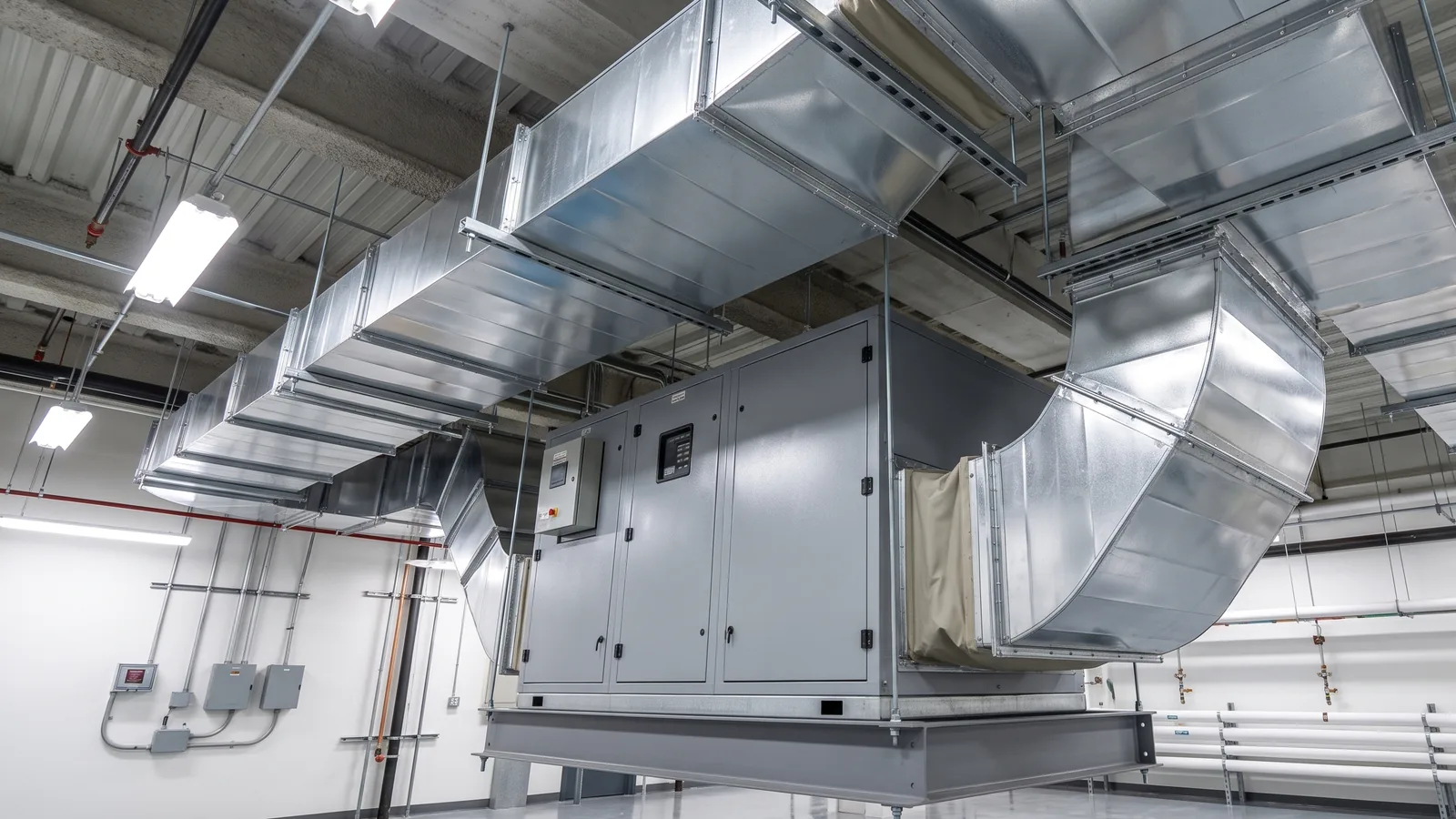
Paint and coating applications in commercial spray booths depend heavily on environmental conditions, with humidity being one of the most critical factors affecting finish quality. Uncontrolled moisture levels cause defects ranging from orange peel texture to adhesion failures, resulting in costly rework and production delays.
Why Humidity Is a Core Process Parameter in Spray Booths
Relative humidity directly controls solvent evaporation rates, coating viscosity and surface tension during application. Unlike temperature alone, humidity determines whether paint droplets reach the substrate in their intended state or degrade mid-flight.
According to the Condair Group’s spray booth research, even minor fluctuations in relative humidity compromise paint adhesion, curing and overall finish quality. Australian manufacturers face particular challenges because seasonal RH can swing from 20% to 90% throughout the year, making active humidity control essential rather than optional.
- Solvent evaporation rate: RH governs how quickly solvents flash off, affecting flow and levelling
- Electrostatic behaviour: Low RH increases static charge, causing paint drift and dust attraction
- Cure chemistry: Moisture-cure coatings (polyurethanes, some epoxies) require specific RH to crosslink
- Substrate condition: Metal surfaces develop condensation above dewpoint, destroying adhesion
Optimal Humidity Ranges by Coating Type
Each coating chemistry requires specific environmental conditions to achieve manufacturer specifications. Operating outside these ranges produces defects that often appear hours or days after application.
| Coating Type | Optimal RH Range | Critical Temperature |
|---|---|---|
| Water-based paints | 55-75% | 20-25°C |
| Solvent-based systems | 40-55% | 18-23°C |
| Powder coatings | 35-50% | 20-22°C |
| Two-pack epoxies | 40-60% | 15-25°C |
| Polyurethane topcoats | 50-60% | 20-24°C |
| Aerospace primer systems | 45-65% | 18-24°C |
Water-based paints benefit from higher humidity levels (up to 75% RH) because moisture in the air slows aerosol evaporation and prevents pigment agglomeration before droplets reach the surface. Solvent-based systems need lower RH to prevent moisture contamination of the curing film.
Industry-Specific Humidity Requirements
Different manufacturing sectors have established humidity benchmarks based on decades of production data and coating manufacturer specifications.
- Automotive refinishing (40-60% RH): Balances fast throughput with consistent finish quality across high-volume production
- Aerospace coatings (45-65% RH): Tighter tolerances for corrosion-preventive primers and topcoats
- General metal finishing (50-70% RH): Accommodates thicker protective coatings on structural steel
- Plastics and composites (50-70% RH): Prevents static-related defects on non-conductive substrates
- Powder coating (35-50% RH): Powder particles clump above 60% RH, blocking spray guns and causing uneven coverage
These ranges reflect published industry research on optimal conditions for each application type. Facilities operating outside these parameters consistently report higher defect rates and material waste.
Production Losses from Humidity Variations
Low humidity below 40% RH creates immediate coating defects that operators recognise as orange peel texture, dry overspray and poor substrate adhesion. These defects occur when solvents evaporate too rapidly, preventing proper flow and levelling of the coating film.
High humidity above 70% RH causes equally damaging problems including runs, sags and solvent popping. Extended cure times from excess moisture can delay production schedules by hours or days, impacting delivery commitments.
Defect Classification by Humidity Range
- Below 35% RH: Severe orange peel, dry spray particles, substrate adhesion failure, static discharge marks
- 35-45% RH: Minor texture issues, slight overspray, acceptable for primer applications
- 45-65% RH: Optimal flow and levelling, proper cure rates, minimal defects
- 65-75% RH: Slow drying, minor sagging on vertical surfaces, extended flash-off times
- Above 75% RH: Severe runs and sags, blushing, solvent entrapment, contamination risks
How Humidity Controls Static Electricity in Spray Booths
Static charge buildup is one of the most overlooked humidity-related problems in spray facilities. Below 40% RH, friction between air molecules, paint particles and booth surfaces generates significant electrostatic charge.
Static electricity causes three specific problems in coating operations:
- Paint particle drift: Charged particles repel from intended paths, increasing overspray waste
- Dust attraction: Charged surfaces pull airborne contaminants onto wet coatings
- Operator discomfort: Static discharge shocks reduce productivity and create safety concerns near flammable solvents
Maintaining RH above 45% dissipates static charge naturally by increasing air conductivity. This eliminates the need for ionising equipment in most applications and reduces contamination-related rework in industrial paint shops.
Temperature and Humidity Interaction
Temperature and relative humidity cannot be managed independently in spray booths. Raising booth temperature by 5°C without adjusting moisture input drops relative humidity by approximately 15 percentage points, potentially pushing conditions outside acceptable ranges.
- Heating without humidification: Drops RH, accelerates solvent flash-off, causes dry spray
- Cooling without dehumidification: Raises RH toward dewpoint, risks condensation on substrates
- Seasonal transitions: Winter heating dries incoming air; summer cooling raises moisture loads
Effective spray booth climate control requires both commercial humidifiers and dehumidification working together, managed by integrated control systems that monitor both parameters simultaneously.
Spray Booth Design for Effective Humidity Control
Effective humidity control starts with proper booth design addressing air circulation patterns, exhaust rates and fresh air intake volumes.
Air handling systems require integration with ducted dehumidification units to precondition incoming air before it enters the booth. Ducted systems provide centralised control while maintaining proper air pressure differentials essential for contamination prevention.
Critical Design Elements
- Fresh air intake positioning away from moisture sources and exhaust streams
- Sealed booth construction preventing uncontrolled air infiltration
- Variable speed exhaust fans matching coating application rates
- Temperature and humidity sensors at operator height and ceiling level
- Automated control systems linking environmental parameters to spray equipment
Cross-draft and downdraft booth configurations each present unique challenges for humidity distribution. Stratification can create zones with significantly different conditions, requiring multiple measurement points and careful air flow management.
Technology Selection for Spray Booth Applications
Choosing the right humidity control technology depends on booth size, production volume and coating type sensitivity.
| Technology | Best Application | Key Advantage | Limitation |
|---|---|---|---|
| Desiccant dehumidifiers | Industrial coating lines, cold environments | Operates -20°C to +50°C, precise low-RH control | Higher energy for regeneration |
| Refrigerant dehumidifiers | Automotive refinishing, moderate climates | Energy-efficient above 15°C | Ineffective below 15°C |
| Ultrasonic humidifiers | Precision humidification zones | Fine droplet size, energy-efficient | Requires treated water |
| Steam humidifiers | Large-volume booths needing rapid response | Precise RH control, sterile output | High energy consumption |
Desiccant systems excel in Australian conditions because ambient temperatures in unheated industrial facilities often drop below 15°C during winter months, where refrigerant dehumidifiers lose effectiveness. YAKE desiccant units operate reliably from -20°C to +50°C, covering the full range of Australian industrial environments.
Monitoring and Automation Strategies
Real-time humidity monitoring provides operators with immediate feedback on booth conditions, enabling proactive adjustments before defects occur. Data logging systems create historical records valuable for quality audits and process improvement.
Essential Monitoring Points
- Booth inlet air: Verifies preconditioned air meets specifications before entering workspace
- Operator breathing zone: Ensures proper coating application environment
- Exhaust plenum: Confirms adequate moisture removal and prevents recirculation
- Flash-off zones: Monitors critical early cure phases where defects develop
- Ambient conditions: Tracks external variables affecting system load requirements
Alarm systems alert operators when conditions drift outside acceptable ranges. Integration with quality management systems enables automatic documentation of environmental conditions for each coating batch, supporting BMS integration for centralised facility management.
Maintenance for Reliable Spray Booth Climate Control
Spray booth dehumidification systems operate in challenging environments with paint overspray, solvents and particulates that compromise performance over time.
Preventive Maintenance Schedule
- Daily: Visual inspection of filters, condensate drains and control displays
- Weekly: Filter pressure drop measurements, sensor calibration verification
- Monthly: Coil cleaning, belt tension adjustment, electrical connection inspection
- Quarterly: Refrigerant charge verification, control valve operation, desiccant wheel condition
- Annually: Complete system performance testing, control calibration, component replacement
Consistent maintenance extends equipment life and prevents the gradual performance decline that leads to unplanned downtime and coating defects.
Frequently Asked Questions
What humidity level should a spray booth maintain?
Most spray booths target 40-60% relative humidity for solvent-based coatings and 55-75% for water-based paints. The exact target depends on the coating manufacturer’s specifications, booth airflow rates and ambient conditions. Powder coating operations typically require lower humidity (35-50%) to prevent powder clumping.
What happens if spray booth humidity is too low?
Humidity below 40% causes rapid solvent evaporation, producing dry spray, orange peel texture and poor substrate adhesion. Static electricity builds up on booth surfaces and substrates, attracting dust contamination and causing paint particles to drift from their intended path. Material waste increases because overspray rates climb significantly in dry conditions.
What happens if spray booth humidity is too high?
Humidity above 70% traps moisture in the coating film, causing blushing (a milky/cloudy appearance), runs, sags and extended cure times. In severe cases, moisture contamination weakens adhesion permanently, requiring complete strip-and-recoat. Production schedules suffer because flash-off and cure times extend significantly.
How does humidity affect water-based paints differently to solvent-based?
Water-based paints perform better at higher humidity (55-75% RH) because moisture in the air slows aerosol evaporation, allowing droplets to reach surfaces intact with proper pigment distribution. Solvent-based systems need lower humidity (40-55% RH) because excess atmospheric moisture interferes with solvent evaporation and chemical curing reactions.
Why do desiccant dehumidifiers suit spray booth applications?
Desiccant dehumidifiers operate effectively across the full temperature range found in industrial spray booths (-20°C to +50°C), unlike refrigerant units that lose capacity below 15°C. They achieve lower target humidity levels consistently, provide precise RH control regardless of ambient temperature, and handle the variable loads created by production scheduling and seasonal changes.
How does humidity cause static electricity problems in spray booths?
Below 40% RH, air becomes a poor electrical conductor, allowing triboelectric charge to accumulate on booth surfaces, substrates and paint particles. This causes paint particles to drift from target paths increasing overspray, charged surfaces to attract airborne dust onto wet coatings, and operators to experience static discharge shocks near flammable solvent vapours.
What maintenance do spray booth humidity systems need?
Spray booth humidity equipment operates in harsh environments with paint overspray and solvent exposure. Daily filter inspections, weekly sensor calibration checks, monthly coil cleaning, quarterly refrigerant or desiccant wheel checks, and annual full-system performance testing prevent the gradual degradation that leads to coating defects and unplanned downtime.
Can one system handle both humidification and dehumidification?
Most spray booth operations require separate humidification and dehumidification equipment because seasonal conditions create opposite demands. Winter heating dries incoming air (requiring humidification), while summer conditions bring excess moisture (requiring dehumidification). Integrated control systems manage both through a single interface to maintain stable booth conditions year-round.
How do spray booth air changes affect humidity control?
Spray booths exchange air 8-12 times per hour for safety compliance, continuously introducing unconditioned outside air. Each air change brings ambient humidity into the controlled space, requiring humidity equipment sized for the full fresh air load rather than just the booth volume. High air change rates demand faster-responding systems with greater capacity.
What is the relationship between humidity and coating cure time?
Higher humidity extends cure times for solvent-based coatings because atmospheric moisture slows solvent evaporation from the film surface. Conversely, moisture-cure coatings (polyurethanes, some primers) require specific humidity levels to initiate crosslinking reactions. Optimising RH for each coating type balances cure speed against film formation quality.
Ready to eliminate humidity-related coating defects in your spray booth operation? Contact Moisture Cure Commercial for a professional site assessment and customised humidity control solution designed for your specific coating requirements.