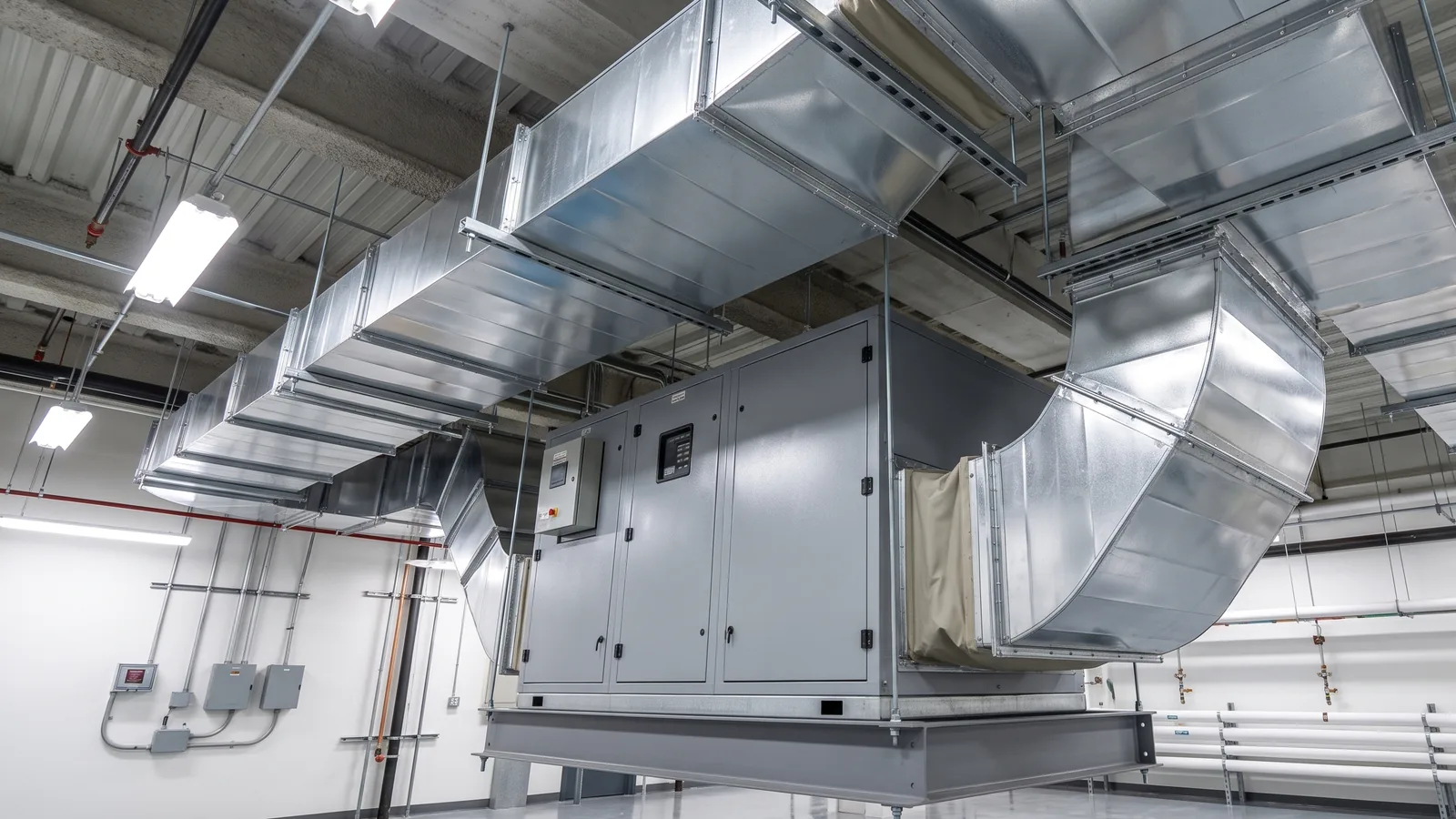
Electronic components start degrading the moment humidity drifts outside their rated range. Manufacturing facilities across Australia need precise moisture control to avoid production failures and warranty claims. Our commercial humidifier range includes units suited to this application, and facilities that also need humidification systems for static-sensitive electronics production lines can explore dedicated solutions.
Critical Humidity Risks for Electronic Components
Different humidity extremes attack electronics in different ways. Knowing which failure mode applies helps facility managers target the right moisture control strategy.
| Humidity Level | Primary Damage | Components at Risk | Control Target |
|---|---|---|---|
| Below 30% RH | Static discharge events | CMOS devices, microprocessors | 45-55% RH |
| Above 65% RH | Corrosion formation | PCB traces, solder joints | 45-55% RH |
| Rapid changes | Condensation | Sealed components, displays | ±5% RH stability |
Corrosion from sustained high humidity is one of the most expensive failure modes in electronics facilities. Facilities storing metal components alongside finished assemblies face compounding risks, which is why understanding how dehumidifiers prevent corrosion in commercial facilities matters for production continuity.
Manufacturing Floor Requirements
Production areas demand different humidity specifications based on process sensitivity. SMT assembly lines require 45% RH ±5% to prevent solder paste drying whilst maintaining ESD protection.
Assembly Line Zones
- Solder paste storage: 35-45% RH at 15-25°C
- Screen printing areas: 45-55% RH for consistent paste transfer
- Reflow zones: 40-50% RH to prevent oxidation
- Wave soldering: 50-60% RH maximum
High-volume production facilities often install ducted humidity control systems to maintain uniform conditions across multiple workstations. These systems integrate with existing HVAC infrastructure to deliver precise moisture removal throughout the production floor.
Protecting Microprocessors and Sensitive Components During Storage
Microprocessors, FPGA dies, and other moisture-sensitive silicon devices absorb ambient water vapour through their plastic encapsulation. When these pre-conditioned parts hit reflow soldering temperatures, trapped moisture expands and can crack the package internally, a defect known as “popcorning.”
Humidity damage to stored microprocessors goes beyond popcorning. Prolonged exposure above 60% RH corrodes lead frames and bond wires inside the package, weakening connections that cannot be inspected without destructive testing. Moisture also degrades the dielectric properties of the mould compound itself, increasing leakage currents that cause intermittent field failures months after assembly.
- Store exposed microprocessors at or below 10% RH in sealed dry cabinets
- Log humidity levels continuously because a single excursion above the MSL floor-life threshold can require a full bake-out cycle (typically 24-48 hours at 125°C)
- Use moisture indicator cards inside barrier bags to verify conditions on receipt
- Track cumulative exposure time; once exceeded, the component must be baked or scrapped
- Maintain storage temperature between 15-25°C; heat above 40°C accelerates moisture diffusion through plastic packaging and barrier bag laminate
Facilities storing high-value silicon devices often combine dry cabinets with room-level dehumidification to limit the humidity spike each time a cabinet door opens.
Moisture Barrier Bag Protocol
Moisture barrier bags (MBBs) are the frontline defence for microprocessors during storage and transit. These aluminium-laminate pouches block water vapour transmission at rates below 0.02 g/m²/day, preserving the component’s MSL floor life until the bag is opened.
- Pack each tray of components with a desiccant sachet sized to the bag volume and a humidity indicator card (HIC) visible through the bag wall
- Heat-seal the bag rather than using clip seals, as clip closures allow slow moisture ingress over weeks
- Label the sealed bag with the seal date and the component’s MSL rating so operators can calculate remaining floor life on opening
- Once opened, the floor-life clock starts immediately; any microprocessors not consumed within the rated window must be returned to dry storage or baked before soldering
IPC/JEDEC J-STD-033 defines the packaging, storage, and handling requirements that govern this process. Facilities managing high-value semiconductor inventory alongside other electronics often benefit from dedicated moisture protection systems for semiconductor and circuit board storage to standardise these protocols across the operation.
Component Storage Classifications
The IPC/JEDEC J-STD-033 standard defines moisture sensitivity levels that determine storage requirements. MSL ratings dictate maximum exposure time before components require baking or immediate assembly.
| MSL Level | Floor Life | Storage Requirement | Typical Components |
|---|---|---|---|
| MSL 1 | Unlimited | ≤85% RH | Ceramic packages |
| MSL 2-3 | 1 year/168 hours | ≤60% RH | SOIC, QFP packages |
| MSL 4-6 | 72 hours or less | ≤10% RH | BGA, CSP devices |
For facilities manufacturing PCB assemblies with mixed MSL components, maintaining the correct humidity at each station is critical. Our guide to humidity control in semiconductor and PCB manufacturing covers the process-specific requirements in more detail.
Choosing Between Desiccant and Refrigerant Dehumidifiers for Electronics
The choice of dehumidification technology directly affects whether a facility can hold its target RH reliably. Desiccant and refrigerant units behave differently under the conditions electronics manufacturers face.
| Factor | Desiccant | Refrigerant |
|---|---|---|
| Operating temperature range | -20°C to +50°C | Above 15°C only |
| Achievable RH | Down to 1% RH | Typically 40-50% RH minimum |
| Best for | Dry rooms, cold storage, MSD cabinets | General factory floor, warm environments |
| Energy profile | Higher per-litre cost, consistent output | Lower running cost above 20°C |
Cold-storage warehouses and cleanrooms that operate below 15°C need desiccant units because refrigerant dehumidifiers fail below 15°C: their evaporator coils ice up and extraction drops to near zero. YAKE desiccant dehumidifiers operate from -20°C to +50°C, making them the standard choice for temperature-variable electronics environments.
Facilities that also handle lithium-ion cell assembly or EV battery pack storage face even stricter dew-point requirements, often down to -40°C or below. Desiccant dehumidifier sizing for lithium battery dry rooms covers the specific capacity and airflow calculations these environments demand.
For applications where ambient temperatures stay above 20°C and the target RH is 45-55%, refrigerant dehumidifiers offer lower running costs with adequate performance.
Cleanroom Environmental Control
ISO Class 5-7 cleanrooms require humidity control to prevent particle adhesion and maintain laminar airflow. Temperature and humidity interact to affect particle behaviour and filtration efficiency. Facilities managing cleanroom and laboratory humidity control must balance tight RH tolerances with air-change rates that keep particle counts within classification limits.
Cleanroom Specifications
- ISO Class 5: 45% RH ±5%, 22°C ±1°C
- ISO Class 6: 45% RH ±10%, 22°C ±2°C
- ISO Class 7: 50% RH ±10%, 23°C ±3°C
- Wafer fabrication: 43% RH ±2%
Test Laboratory Requirements
Calibrated test equipment demands stable humidity to maintain measurement accuracy. Environmental chambers and burn-in rooms need independent humidity control to simulate field conditions.
Equipment-Specific Conditions
- RF test chambers: 40-50% RH, non-condensing
- Thermal cycling equipment: 30-40% RH ambient
- Optical inspection systems: 35-45% RH
- Ion chromatography labs: 45-55% RH
Laboratories handling moisture-sensitive analysis often deploy desiccant dehumidification technology for precise low-humidity control. These units achieve stable conditions below 40% RH without overcooling the space.
Warehouse Storage Challenges
Australian climate zones create distinct moisture control challenges for electronic component warehouses. Tropical regions face year-round high humidity whilst southern facilities deal with seasonal swings that catch operators off guard.
| Climate Zone | Summer RH Range | Winter RH Range | Control Strategy |
|---|---|---|---|
| Tropical North | 75-95% | 65-85% | Continuous dehumidification |
| Subtropical Coast | 65-85% | 55-75% | Seasonal adjustment |
| Temperate South | 50-70% | 60-80% | Winter dehumidification |
| Arid Interior | 20-40% | 30-50% | Humidification required |
Facility managers dealing with these conditions can review warehouse humidity control strategies tailored to Australian conditions for sizing and layout guidance.
Signs of Moisture Damage in Electronic Components
Moisture damage is not always obvious at assembly. Knowing what to look for during incoming inspection and post-reflow QA helps catch problems before they ship.
- Package cracking or delamination: Visible hairline cracks along the mould compound, or separation between the die and encapsulant, indicate moisture absorption followed by thermal shock
- Solder joint discolouration: A dull grey or greenish tint on solder pads suggests oxidation from sustained high-humidity exposure
- Intermittent electrical faults: Components that test within spec at room temperature but fail under thermal cycling often carry latent moisture damage
- White residue on PCB surfaces: Dendritic growth or white crystalline deposits between traces indicate ionic contamination accelerated by moisture
- Swollen or blistered packages: “Popcorning” from trapped moisture expanding during reflow leaves visible deformation on BGA and QFP packages
- Lead frame tarnishing: Darkened or pitted lead frames on incoming components point to poor humidity control during shipping or warehousing, and these parts should be tested or baked before use
If any of these signs appear across a batch, check the storage and handling history against the component’s MSL rating before assuming a manufacturing defect.
Incoming Goods Processing
Components arriving from high-humidity environments require acclimatisation before opening moisture barrier bags. Staging areas need controlled conditions to prevent condensation during temperature equalisation.
Receiving Protocol Requirements
- Quarantine zone: Match warehouse conditions ±5% RH
- Temperature stabilisation: 4-hour minimum hold time
- Moisture indicator verification before opening
- Immediate resealing if MSL floor life exceeded
- Inspect HIC dots on arrival; any pink indication above the rated threshold means the MBB seal failed in transit and the components need bake-out assessment
Dry Cabinet Storage Solutions
MSL 4-6 components require ultra-low humidity storage between production runs. Dry cabinets maintain 1-10% RH using molecular sieve technology or nitrogen purge systems.
Cabinet Selection Criteria
- Recovery time after door opening: <5 minutes to 5% RH
- Temperature uniformity: ±2°C throughout chamber
- Data logging capability for compliance records
- Capacity matched to component turnover rate
Large-scale storage facilities that need to maintain entire rooms at low humidity levels, rather than relying on individual cabinets, benefit from room-scale desiccant dehumidifier systems. This approach provides flexibility for varying component sizes and avoids the cabinet-count problem as inventory grows.
For the highest-value inventory, such as bare wafer lots or advanced packaging substrates, nitrogen purge cabinets displace ambient air with dry nitrogen to achieve near-zero humidity and simultaneously eliminate oxidation. The trade-off is ongoing nitrogen supply cost, which makes desiccant cabinets the more practical choice for most production-volume microprocessor storage.
Monitoring and Compliance
Electronic manufacturing standards require continuous humidity monitoring with traceable calibration. Data logging systems must capture conditions at critical control points throughout the facility. ASHRAE guidelines and IPC standards both specify minimum monitoring intervals and sensor accuracy for electronics environments.
Monitoring System Requirements
- Sensor accuracy: ±2% RH, NIST traceable
- Sampling interval: 5-minute maximum
- Alarm thresholds: ±5% from setpoint
- Data retention: 2 years minimum
- Remote access for off-hours monitoring
Calculating Dehumidification Capacity
Proper equipment sizing requires analysis of moisture loads from ventilation, infiltration, and internal sources. Electronic manufacturing facilities typically need 0.5-1.0 litres per hour removal capacity per 100 square metres of floor space.
Load Calculation Factors
- Outside air ventilation rate and enthalpy
- Building envelope air leakage
- Personnel moisture generation
- Process equipment heat loads
- Material moisture content
Return on Investment Considerations
Humidity control systems reduce component failure rates, warranty claims, and rework costs.
Reported Improvements from Controlled Humidity Environments
- Solder defect reduction through stable paste viscosity and reduced oxidation
- ESD incident reduction when RH is maintained above 40% (per IPC/JEDEC guidelines)
- Extended component shelf life by storing within MSL specifications
- Higher first-pass yield from fewer moisture-related assembly failures
- Lower warranty claim rates on boards assembled in controlled conditions
Moisture Cure Commercial supplies humidity control solutions for electronic manufacturing facilities across Australia. Contact our technical team for a site assessment to identify the optimal dehumidification strategy for your specific production requirements and environmental conditions.
Frequently Asked Questions
What humidity level is safe for storing electronics?
General electronic components should be stored between 30-60% RH. Moisture-sensitive devices rated MSL 4-6 need storage below 10% RH in dry cabinets or controlled rooms. The specific requirement depends on the component’s MSL rating as defined by IPC/JEDEC J-STD-033.
How does humidity cause ESD damage in manufacturing?
Low humidity (below 30% RH) allows static charges to build up on surfaces, equipment, and personnel. A discharge as small as 100 volts can damage CMOS gate oxides, and humans cannot feel discharges below roughly 3,000 volts, so most ESD events go unnoticed until the component fails in testing or the field.
Can high humidity damage a PCB after assembly?
Yes. Sustained exposure above 65% RH accelerates corrosion on copper traces, promotes dendritic growth between closely spaced conductors, and degrades conformal coatings over time. Finished boards awaiting shipment still need controlled storage conditions.
What is popcorning in electronic components?
Popcorning occurs when moisture trapped inside a plastic-encapsulated component vaporises during reflow soldering. The rapid steam expansion cracks the package internally, often causing delamination between the die and mould compound. It is the primary reason MSL classifications and dry storage exist.
Do I need a desiccant or refrigerant dehumidifier for my electronics facility?
If any part of your facility operates below 15°C, or if you need to reach below 40% RH, a desiccant unit is the only reliable option. Refrigerant dehumidifiers work well for general factory floors above 20°C where 45-55% RH is the target. Many facilities use both types in different zones.
How do I size a dehumidifier for an electronics warehouse?
Calculate the total moisture load from outside air infiltration, ventilation requirements, personnel, and process moisture sources. A typical starting point is 0.5-1.0 litres per hour of extraction capacity per 100 square metres, adjusted for your climate zone and target RH.
How should microprocessors be stored to prevent humidity damage?
Exposed microprocessors should be kept in sealed moisture barrier bags with desiccant packs and a humidity indicator card, stored at 15-25°C. For open-tray storage between production runs, place them in dry cabinets that maintain 5-10% RH. Track cumulative exposure time against the component’s MSL floor-life rating and bake any parts that exceed it before soldering.
What are moisture barrier bags and how do they protect components?
Moisture barrier bags (MBBs) are aluminium-laminate pouches that block water vapour at rates below 0.02 g/m²/day. Sealed with a desiccant sachet and a humidity indicator card, they preserve the MSL floor life of enclosed components for months or years. Heat-sealing is critical because clip closures allow slow moisture ingress that can silently reset the floor-life clock.
What temperature should electronic components be stored at?
IPC/JEDEC J-STD-033 specifies storage below 40°C for moisture-sensitive devices in sealed barrier bags, with 15-25°C as the practical best-practice range. Temperatures above 40°C accelerate moisture diffusion through packaging materials and can shorten the effective shelf life of sealed components.
Talk to Moisture Cure Commercial
Moisture Cure Commercial has supplied dehumidifiers and humidifiers to Australian businesses for over 20 years. Whether you need help selecting the right unit, sizing a system for your facility, or troubleshooting an existing setup, our team can help.
Call us on (02) 6584 2511 or browse our full range of humidity control equipment to find the right solution for your operation.