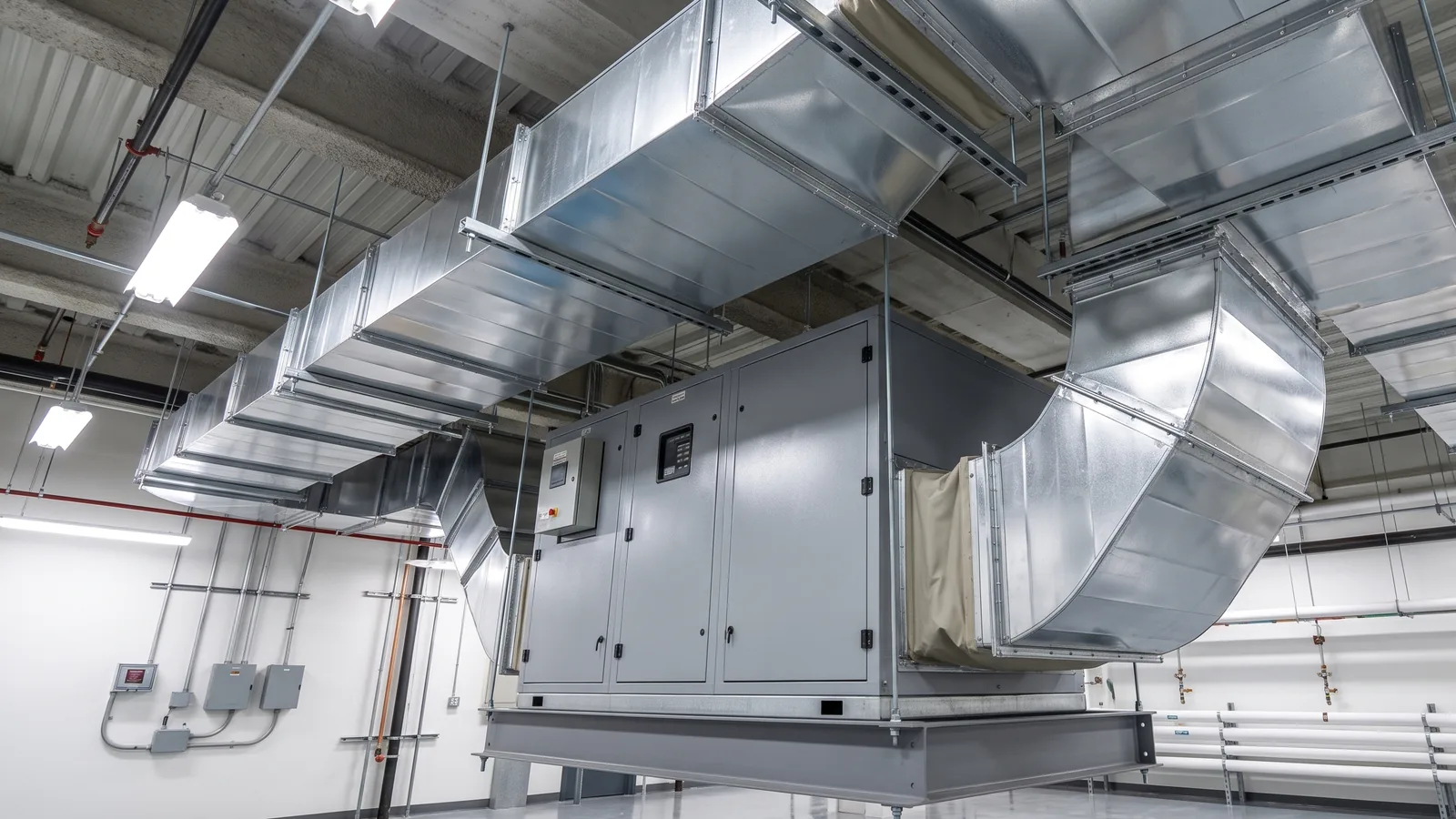
Australian industries face distinct humidity control challenges across diverse climate zones, with seasonal swings and sector-specific regulations that affect both product quality and workplace safety. Moisture Cure Commercial’s commercial humidification range includes units suited to these applications.
Critical Humidity Challenges Across Australian Industries
Humidity problems in Australian facilities show up directly in operational efficiency and product quality. From tropical Queensland warehouses to temperature-controlled pharmaceutical facilities in Melbourne, moisture control determines whether operations run smoothly or come to a stop.
| Industry Sector | Primary Challenge | Operational Impact | Required RH Range |
|---|---|---|---|
| Food Processing | Bacterial growth | Product recalls, waste | 45-55% |
| Electronics Manufacturing | Electrostatic discharge | Component failure | 40-60% |
| Pharmaceutical Storage | Compliance breaches | Stock destruction | 35-50% |
| Data Centres | Condensation risk | Server downtime | 45-55% |
| Museums & Archives | Material degradation | Irreversible damage | 45-55% |
Each percentage point outside optimal humidity ranges translates to measurable losses in productivity, compliance penalties, or irreplaceable asset damage. ASHRAE’s Thermal Guidelines for Data Processing Environments specify the 45-55% RH corridor for server rooms, and the same precision applies across every sector in the table above.
Refrigerant Dehumidification for High-Volume Moisture Removal
Refrigerant technology offers cost-effective moisture extraction for facilities operating above 15°C. These systems draw warm, moist air across chilled coils, condense the moisture out, and return drier air to the space.
Modern refrigerant dehumidification systems provide extraction capacities from 20 to over 500 litres daily, making them a practical fit for warehouses, production facilities, and commercial office buildings where occupant comfort and equipment protection both matter. Hot gas defrost systems extend operation down to approximately 5°C, though performance drops markedly below 15°C as the coils struggle to maintain a temperature differential.
Key Performance Specifications
- Extraction capacity: 20-500+ litres per day (varies by unit size and ambient conditions)
- Effective operating range: approximately 5°C to 35°C ambient temperature
- Target humidity: 40-70% RH achievable in most conditions
- Energy efficiency: typically 2.5-4.0 litres extracted per kWh consumed
- Continuous drainage standard on commercial units
- Hot gas defrost available for sub-15°C operation
Refrigerant units are the standard choice for commercial laundries, food production floors, and gymnasium complexes where temperatures sit comfortably within their operating range.
Desiccant Technology for Extreme Conditions
When facilities require humidity control below 40% RH or operate outside refrigerant system temperature limits, desiccant technology is the answer. These systems remove moisture through adsorption rather than condensation, using a rotating wheel coated with silica gel or molecular sieve material to capture water vapour from the air.
Australian pharmaceutical manufacturers, cold storage facilities, and precision manufacturing operations rely on desiccant dehumidification technology for critical process control. Moisture Cure Commercial’s YAKE desiccant units operate from -20°C to +50°C, well beyond the range where refrigerant systems lose effectiveness.
Desiccant System Advantages
- Deep drying capability: humidity levels as low as 1% RH achievable
- Temperature independence: effective from -20°C to +50°C
- No defrost cycles required at any operating temperature
- Continuous operation without performance degradation in cold conditions
- Silica gel or molecular sieve rotor options for different applications
- Regeneration air temperatures adjustable between 80°C and 180°C depending on target dryness
Desiccant units are the right choice for cold storage, large-scale LNG operations in remote locations like Barrow Island, and any facility where refrigerant coils would ice up and stop working.
Ducted Systems for Facility-Wide Control
Large commercial facilities and multi-zone industrial complexes require centralised humidity control through ducted distribution. These systems integrate with existing HVAC infrastructure or operate independently to maintain precise conditions across multiple areas at the same time.
| System Configuration | Typical Coverage Area | Typical Applications | Control Zones |
|---|---|---|---|
| Single-zone ducted | 500-2,000 m² | Warehouses, production halls | 1 |
| Multi-zone ducted | 2,000-10,000 m² | Multi-level facilities | 2-8 |
| Modular ducted | Scalable | Expanding operations | Unlimited |
| Hybrid ducted | Variable | Mixed-use buildings | Custom |
Professional ducted dehumidification solutions reduce equipment footprint while centralising control. Integration with building management systems allows remote monitoring and automated response to changing conditions. For hotels and aged care facilities that need quiet, unobtrusive climate control, ducted systems keep the mechanical plant out of occupied spaces entirely.
Industrial Humidification for Process Control
Some industries need to add moisture rather than remove it. Textile manufacturers, printing facilities, and timber processors require precise humidity addition to prevent static discharge, material cracking, and dimensional instability.
Industrial humidification systems deliver controlled moisture injection through ultrasonic, high-pressure, or evaporative technologies. Ultrasonic humidification units produce a fine cold mist without heating, making them significantly more energy-efficient than traditional steam systems.
Humidification System Capacities
- Output range: 5-500 litres per hour depending on unit configuration
- Coverage: 100-5,000 m² per unit
- Control precision: ±2% RH achievable with digital controllers
- Integrated water quality monitoring on commercial units
- Stainless steel construction standard for hygiene-sensitive environments
- Energy consumption: ultrasonic units use roughly 90% less energy than boiler-fed steam systems (no heating element required)
Moisture Cure Commercial has deployed ultrasonic humidification across a range of applications, from artisan cheese maturation rooms at Milawa Cheese to large-scale commercial greenhouses where consistent humidity supports crop health.
Maintenance and Lifecycle Considerations
Selecting the right technology is only part of the equation. Ongoing maintenance determines whether a system delivers its rated performance over a 10-15 year service life or degrades within the first few seasons.
- Refrigerant units: require periodic coil cleaning, refrigerant charge checks, and filter replacement. Most commercial units run on a 6-monthly service interval.
- Desiccant units: the rotor is the consumable component. Silica gel rotors typically last 5-8 years before adsorption capacity drops enough to warrant replacement. Seals, bearings, and reactivation heaters need annual inspection.
- Ducted systems: ductwork integrity checks, damper calibration, and sensor recalibration are critical. A drift of just 3-5% RH from setpoint can indicate a sensor fault or duct leak.
- Humidifiers: water quality is the primary maintenance variable. Hard water causes mineral buildup on ultrasonic transducers, reducing output and eventually causing failure if not addressed.
Moisture Cure Commercial provides ongoing maintenance support and can specify service schedules tailored to each facility’s operating conditions and equipment type.
Integration with Building Management Systems
Current humidity control equipment connects to existing BMS platforms through standard protocols including BACnet, Modbus, and LonWorks. This allows centralised monitoring, maintenance scheduling, and coordinated response to environmental changes across a site.
Smart Control Features
- Real-time humidity mapping across zones
- Predictive control algorithms that anticipate load changes based on weather forecasts and production schedules
- Energy optimisation routines that switch between dehumidification modes based on ambient conditions
- Automated fault detection and alerts sent directly to facility managers
- Remote adjustment via web interface or mobile app
- Historical data logging for compliance reporting and trend analysis
Selecting Appropriate Technology for Your Facility
Technology selection depends on operating temperature range, required humidity levels, facility size, and integration requirements. The table below maps each technology against the criteria that matter most to facility managers and engineers.
| Selection Criteria | Refrigerant Systems | Desiccant Systems | Hybrid Solutions |
|---|---|---|---|
| Temperature range | 15-35°C optimal | -20 to +50°C | Full range |
| Target RH | 40-70% | 1-50% | 1-70% |
| Energy efficiency | Highest per litre extracted | Moderate (reactivation heat required) | Variable |
| Initial investment | Lower | Higher | Highest |
| Best for | Moderate climates, standard warehousing | Cold storage, pharma, deep drying | Mixed-use, variable loads |
Moisture Cure Commercial’s full range of commercial and industrial dehumidifiers covers every cell in this table. Their engineering team can assess a facility’s specific conditions and recommend the right combination of technologies.
Compliance and Standards Considerations
Australian facilities in pharmaceutical, food processing, and healthcare sectors must meet specific regulatory requirements for humidity control. Equipment selection should account for the certifications and compliance documentation required in each sector.
Key Compliance Standards
- AS/NZS 3666 for microbial control in air handling systems
- Good Manufacturing Practice (GMP) requirements for pharmaceutical facilities
- HACCP requirements for food processing environments
- AS 2853 for archive and museum storage conditions
- ASHRAE TC 9.9 thermal guidelines for data centre environments
- AS 1668.2 for ventilation design in occupied spaces, which includes humidity provisions (referenced in Safe Work Australia’s indoor air quality guidance)
Moisture Cure Commercial has deployed compliant systems across healthcare, food production, and archival environments, including restoring air quality at Urunga Library to protect irreplaceable collections.
Frequently Asked Questions
What is the difference between a refrigerant and a desiccant dehumidifier?
A refrigerant dehumidifier condenses moisture by passing air over chilled coils, similar to how an air conditioner works. A desiccant dehumidifier uses an adsorption rotor coated in silica gel or molecular sieve to capture moisture chemically.
Refrigerant units are more energy-efficient in warm conditions (above 15°C), while desiccant units perform reliably in cold environments down to -20°C and can achieve much lower humidity levels. Choosing between desiccant dehumidifiers for Australian facilities depends on your operating temperature and target humidity.
What humidity level should a commercial facility maintain?
It depends on the application. Food processing and data centres typically target 45-55% RH, while pharmaceutical storage requires tighter control at 35-50% RH.
Cold storage and lithium battery manufacturing may need levels below 10% RH. The right target balances product protection, energy costs, and regulatory compliance for your specific industry.
Can a dehumidifier be integrated into an existing HVAC system?
Yes. Ducted dehumidifiers are designed to tie into existing ductwork and building management systems via BACnet, Modbus, or LonWorks protocols. Standalone units can also feed conditioned air into return-air plenums. Ducted dehumidifiers in commercial buildings are commonly retrofitted into facilities that were originally built without dedicated moisture control.
How do you size a dehumidifier for a commercial space?
Sizing depends on room volume, ambient temperature, target RH, air change rate, moisture load from processes or occupants, and building envelope quality. A warehouse with loading dock doors opening frequently has a very different moisture load from a sealed pharmaceutical cleanroom.
Pool dehumidifier sizing follows the same principles but adds evaporation rate from the water surface as a major variable. Moisture Cure Commercial provides free engineering assessments to calculate the correct capacity.
Do dehumidifiers work in cold environments like cool rooms or freezers?
Refrigerant dehumidifiers lose effectiveness below about 15°C because the coils ice up. Desiccant dehumidifiers handle cold environments without issue, operating effectively down to -20°C with no defrost cycles needed. For sub-zero applications, desiccant is the only practical dehumidification technology.
What maintenance does a commercial dehumidifier require?
Refrigerant units need coil cleaning, filter changes, and refrigerant checks on a 6-monthly cycle. Desiccant units require annual seal and bearing inspections, with rotor replacement every 5-8 years depending on operating conditions.
Both types benefit from regular sensor recalibration to maintain accuracy. Neglecting maintenance leads to gradual performance loss that often goes unnoticed until humidity-related problems appear.
For a detailed assessment of your facility’s humidity control requirements, contact Moisture Cure Commercial to arrange a site visit and engineering consultation.