Wood is hygroscopic. It absorbs moisture from humid air and releases it when conditions dry out, swelling and shrinking with every shift in relative humidity. For commercial woodworking operations and timber storage facilities, these dimensional changes cause warped panels, failed joints, rejected batches, and production delays that eat into margins.
According to WoodSolutions, timber moisture content must be matched to in-service conditions before processing begins. Our commercial humidifier range includes units built for woodworking and timber storage applications.
How Moisture Affects Commercial Wood Processing
Wood fibres absorb and release moisture continuously, causing expansion and contraction that impacts every stage of production. When relative humidity varies by more than 5%, machining tolerances drift, adhesive bonds weaken, and surface finishes fail.
Operations processing kiln-dried timber need to maintain equilibrium moisture content (EMC) between 8-12% for most Australian hardwoods. Holding ambient conditions at 45-55% relative humidity and standard workshop temperatures of 18-24°C keeps the timber in that range. Timber that arrives from the kiln at the correct moisture content will drift out of specification within days if workshop humidity is not actively managed.
| Wood Type | Target EMC | Required RH Range | Critical Temperature |
|---|---|---|---|
| Hardwood flooring | 9-11% | 45-50% RH | 18-22°C |
| Cabinet timber | 8-10% | 40-45% RH | 20-24°C |
| Structural pine | 10-12% | 50-55% RH | 15-25°C |
| Veneers | 6-8% | 35-40% RH | 22-26°C |
Production Risks from Uncontrolled Humidity
High humidity above 60% RH causes mould on stored timber, adhesive failure in laminated products, and warping. Moisture absorption pushes timber beyond machining tolerances, causing binding during assembly and gaps when conditions dry out later. These same conditions damage commercial buildings and the equipment inside them.
Low humidity below 35% RH is equally destructive. Rapid moisture loss triggers cracking, joint separation, and surface checking. Finishing operations take the worst of it, with lacquers and polyurethanes developing orange peel texture or failing to cure properly.
Machinery suffers too. Uncontrolled moisture corrodes precision tooling, pits jigs and fixtures, and causes electrical faults from condensation on control panels. Facilities that run desiccant dehumidifiers specifically for corrosion prevention report measurably longer service intervals on tooling and fixtures.
- Veneer delamination and bubbling at joints
- Glue line failure in laminated products
- Drawer and door binding from expansion
- Surface cracking in finished products
- Rust and corrosion on precision tooling and saw blades
- Electrical faults from condensation on control panels
Timber Storage Humidity Control
Timber storage is where humidity control pays for itself fastest. Kiln-dried stock arriving at 10% moisture content will absorb ambient moisture within 48 to 72 hours if the storage area sits above 60% RH. Once that happens, the timber has to be re-dried or downgraded, and the schedule slips.
The physics is straightforward: wood reaches equilibrium with its surroundings. A storage shed holding 55% RH and 20°C keeps most Australian hardwoods at 10-11% EMC indefinitely. Push that to 70% RH and the same timber climbs to 13-14% EMC within a fortnight, well outside specification for flooring and cabinetry.
Stacking matters as much as the air around it. Timber stored in tight bundles without spacer sticks traps moisture between boards, creating pockets where mould germinates even when the room average reads fine. Proper stickering (spacers between every layer) with adequate air circulation through the storage area lets the dehumidification system reach every surface.
- Maintain 45-55% RH in covered storage to hold EMC between 8-12%
- Use spacer sticks (25 mm minimum) between every layer of stacked boards
- Position air movement fans to circulate conditioned air through the stack, not just over it
- Seal roller doors and loading bays to limit unconditioned air ingress during deliveries
- Separate freshly received stock from acclimatised inventory to prevent cross-contamination of moisture
Humidity Requirements by Processing Stage
Raw timber storage areas need stable conditions between 45-55% RH to prevent moisture gradient stress while materials acclimatise. Large storage volumes demand high extraction rates and continuous air circulation to hold those conditions consistently.
Machining and assembly areas call for tighter control at 45-50% RH. Dimensional accuracy during cutting, routing, and joining depends on it. Temperature stability matters just as much, since thermal expansion compounds moisture-related movement in the workpiece.
Finishing rooms are the most demanding environment on the floor. Spray booth humidity directly affects coating adhesion and finish quality, and most coating manufacturers specify 50-60% RH for application. Explosion-proof equipment rated for solvent vapours is mandatory, and airflow must be uniform to prevent localised moisture pockets.
| Process Area | Humidity Target | Control Tolerance | Air Changes/Hour |
|---|---|---|---|
| Timber storage | 50% RH | ±5% | 2-4 |
| Machining floor | 45% RH | ±3% | 4-6 |
| Assembly area | 48% RH | ±2% | 6-8 |
| Spray finishing | 55% RH | ±3% | 15-20 |
| Curing room | 50% RH | ±2% | 8-10 |
Humidity Monitoring for Timber Facilities
A dehumidifier without a monitoring system is guesswork. You find out something drifted when a batch fails inspection, not when the problem starts. Continuous humidity monitoring closes that gap and gives the operations team data to act on before timber absorbs enough moisture to cause a reject.
At minimum, install calibrated hygrometers at three points in any timber storage or processing area: near the floor (where cool, moist air settles), at mid-height through the timber stack, and near the ceiling exhaust. The readings will differ. A 5% RH spread between floor and ceiling is common in warehouses with poor air circulation, and that spread is enough to push bottom-layer timber out of specification while top layers read fine.
Data-logging sensors that record readings every 15 minutes build a trend picture that spot checks miss entirely. Facilities running dehumidifiers connected to a building management system can set alerts for drift beyond the target band and trigger automatic extraction increases before conditions reach the damage threshold.
- Calibrate hygrometers annually to maintain accuracy within ±2% RH
- Log readings at 15-minute intervals for trend analysis and audit trails
- Place sensors at floor, mid-stack, and ceiling height to detect stratification
- Set high-RH alerts at 5% above the target setpoint to catch drift early
- Review weekly trend reports to identify seasonal patterns and adjust setpoints proactively
Seasonal Humidity Challenges in Australian Workshops
Australian workshops face wide seasonal swings. Coastal cities like Sydney and Brisbane regularly see outdoor RH above 70% in summer and below 40% in winter, while inland areas experience even greater extremes. Without active humidity control, workshop conditions follow the weather, and timber moisture content shifts with them.
Seasonal drift is the largest single cause of warranty claims in joinery and flooring. A cabinet assembled at 48% RH in autumn will develop gaps or binding if the workshop runs at 65% RH during a humid summer.
Customers rarely connect the defect to workshop conditions months earlier. Mechanical humidity control that holds conditions within the target band year-round is the only reliable fix.
- Summer (coastal): outdoor RH 65-80%, risk of mould and timber swelling indoors
- Winter (inland): outdoor RH 25-40%, risk of cracking and joint separation
- Transition seasons: rapid swings create the most stress on stored timber
- Northern Australia: year-round high humidity demands continuous dehumidification
Heritage Wood Preservation Standards
Museums and heritage facilities maintaining wooden artefacts operate under strict environmental controls. The Australian Institute for the Conservation of Cultural Material (AICCM) recommends 40-60% RH for wooden objects, with daily fluctuations kept within 5% to minimise stress on historic timbers.
Seasonal variation is the biggest threat to preservation. Heating and cooling cycles create moisture gradients within thick timber sections, and repeated expansion-contraction cycles cause joint failure and surface degradation over time.
Facilities housing museum collections and library and archive holdings require year-round mechanical humidity control. Ultrasonic humidification equipment maintains these narrow bands without introducing heat or excessive air movement that could damage fragile surfaces.
- Historic furniture collections: 50% RH ±3%
- Wooden sculptures: 45-50% RH ±5%
- Musical instruments: 45-55% RH ±2%
- Architectural elements: 45-55% RH ±5%
- Maritime artefacts: 55-60% RH ±3%
Selecting Humidity Control Equipment for Woodworking
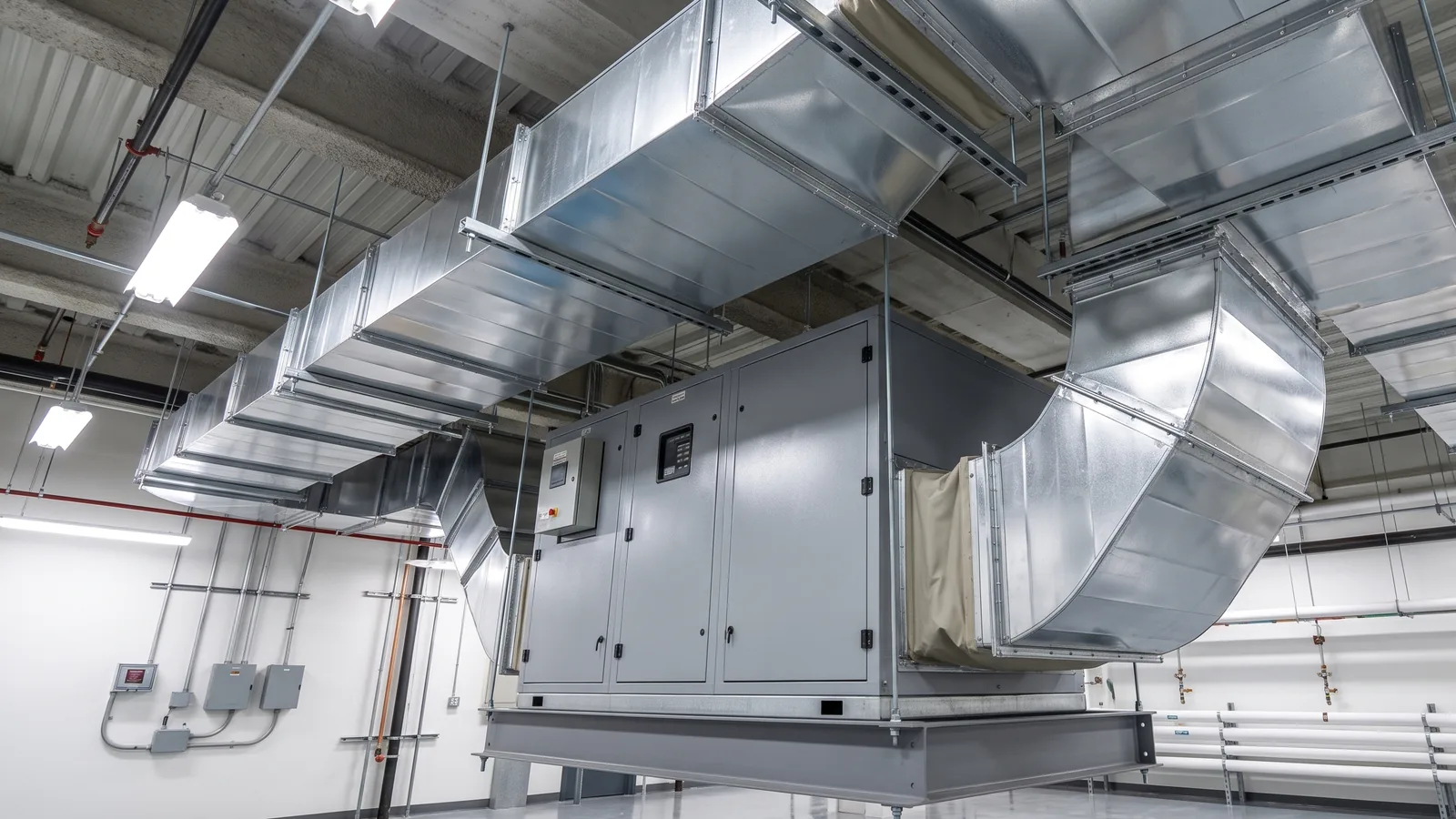
Woodworking facilities need equipment that handles high dust loads and runs around the clock. Ducted dehumidification systems integrate with existing HVAC infrastructure, providing whole-facility control without taking up floor space in the workshop.
For areas operating below 15°C (common in unheated timber storage during winter), desiccant dehumidifiers outperform refrigerant units because they extract moisture through adsorption rather than condensation. YAKE desiccant units operate from -20°C to +50°C, covering the full temperature range a woodworking facility encounters across Australian seasons.
System sizing depends on facility volume, air exchange rates, and moisture loads from timber processing. A 2,000 square metre production floor with 6-metre ceilings typically needs 150-200 litres of daily extraction capacity to maintain stable conditions.
- Extraction capacity matched to peak moisture loads
- Filtration systems rated for wood dust environments
- Automatic humidity control with remote monitoring
- Energy-efficient operation for 24/7 running
- Service accessibility for filter and desiccant wheel maintenance
- Building management system integration for centralised monitoring and alerting
Frequently Asked Questions
What humidity level is best for woodworking?
Most woodworking operations target 45-55% relative humidity, though the exact range depends on the timber species and the process stage. Machining areas typically run tighter at 45-50% RH, while storage areas can tolerate a slightly wider band of ±5%.
Does humidity affect wood furniture?
Yes. Wood absorbs moisture from humid air and releases it in dry conditions, causing it to swell and shrink. In furniture, this movement leads to warped panels, loose joints, cracked surfaces, and binding drawers or doors.
How do you protect wood furniture from humidity damage?
Control the environment rather than treating the wood. Maintaining 40-55% RH in storage and display areas prevents the expansion-contraction cycles that cause damage. Finishing and sealing add a secondary moisture barrier, but they do not eliminate the risk on their own.
Why do refrigerant dehumidifiers struggle in cold workshops?
Refrigerant dehumidifiers cool air below its dew point to condense moisture out. Below about 15°C, the evaporator coils ice up and extraction drops off sharply. Desiccant dehumidifiers use chemical adsorption instead, maintaining full capacity down to -20°C.
How does humidity affect wood glue joints?
PVA and polyurethane adhesives both need specific moisture conditions for proper curing. Humidity above 60% RH slows cure times and weakens bond strength. Most adhesive manufacturers specify 45-55% RH for application.
What causes orange peel texture in wood finishes?
When relative humidity climbs above 60% during spraying or drying, moisture becomes trapped in the coating film. This prevents proper flow-out and levelling, leaving the textured finish known as orange peel. Holding finishing rooms at 50-60% RH avoids the problem.
How often should workshop humidity be monitored?
Continuous monitoring is the standard for commercial operations. Data logging at multiple points tracks trends and catches drift before it reaches stored timber. Sensors should be calibrated at least annually to maintain accuracy within ±2% RH.
Can air conditioning control workshop humidity on its own?
Air conditioning removes some moisture as a byproduct of cooling, but it does not control humidity independently of temperature. A dedicated dehumidification system targets humidity directly and holds the setpoint regardless of the heating or cooling load.
What humidity level should a timber storage facility maintain?
Most timber storage operations target 45-55% RH, which holds kiln-dried Australian hardwoods at 8-12% EMC. Veneers and specialty timbers may need tighter control at 35-45% RH. The target should match the end-use conditions the timber will face after it leaves storage.
What causes mould on stored timber?
Mould spores germinate when timber surface moisture exceeds 20% and relative humidity stays above 65% for sustained periods. Tight stacking without spacer sticks, poor air circulation, and unconditioned loading bays are the most common contributing factors in commercial timber yards.
How long does timber take to acclimatise in a controlled storage area?
It depends on thickness and species, but most 25 mm hardwood boards reach equilibrium within 7 to 14 days in a properly conditioned space. Thicker sections take proportionally longer. Kiln-dried stock that arrives close to target EMC acclimatises faster than air-dried timber brought in from an uncontrolled yard.
What size dehumidifier does a woodworking facility need?
Sizing depends on facility volume, air exchange rate, ambient conditions, and moisture load from stored and processed timber. A 2,000 square metre workshop with 6-metre ceilings typically needs 150-200 litres per day of extraction capacity. A site assessment gives the accurate figure for your specific operation.
Contact Moisture Cure Commercial for a site assessment and humidity control recommendations tailored to your woodworking facility.