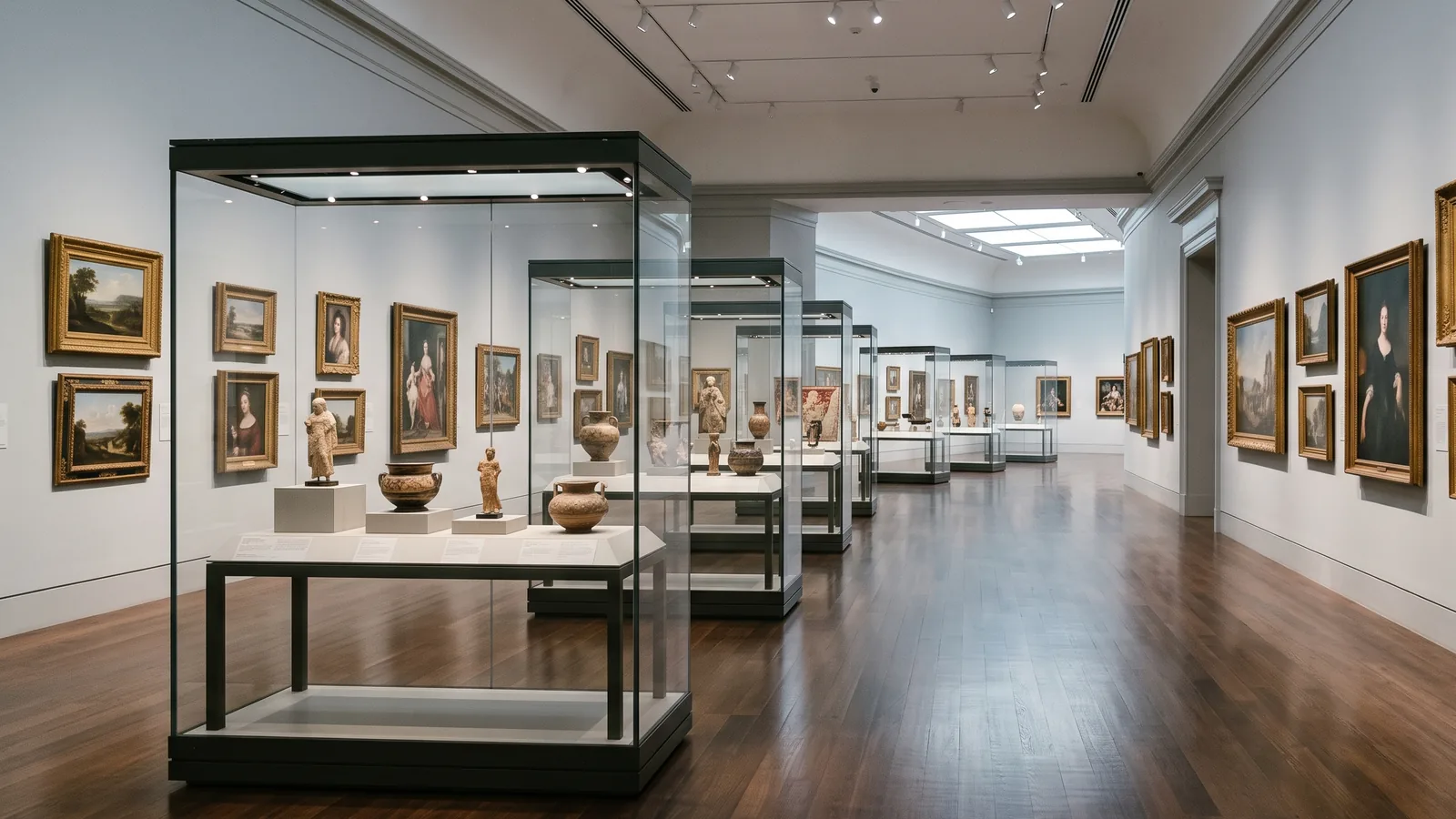
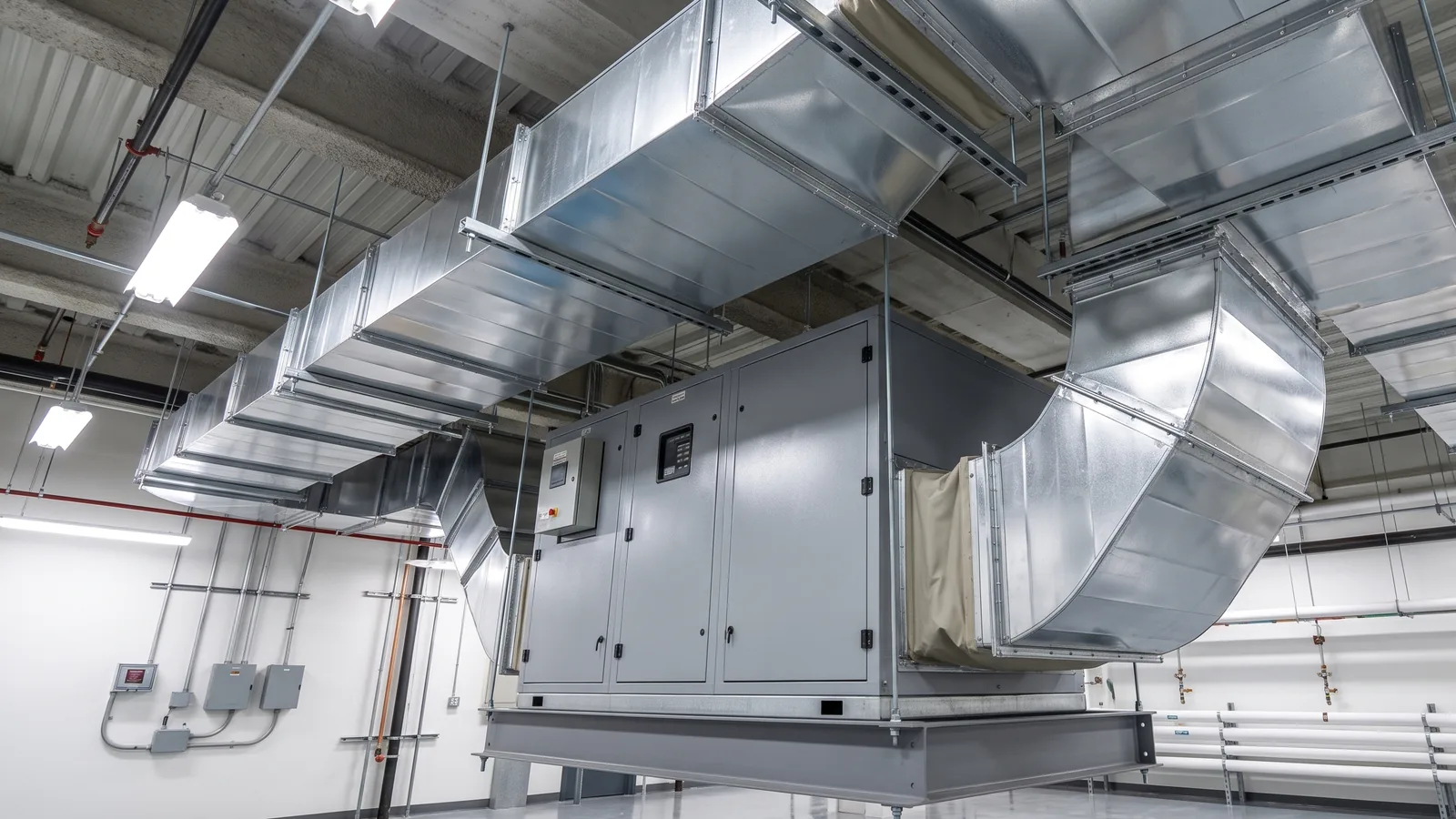
Australian art galleries face extreme seasonal humidity variations that threaten valuable collections year-round. The Australian Institute for the Conservation of Cultural Material (AICCM) recommends maintaining gallery environments between 45 and 55% relative humidity, with daily fluctuations limited to ±5%.
Achieving this stability requires purpose-built humidity control equipment. Both humidification and dehumidification play important roles depending on the season, geographic location, and the materials in the collection.
Why Humidity Stability Matters More Than Precise Levels
Conservation research consistently shows that rapid humidity fluctuations cause more damage to artworks than a consistently slightly-above or below-ideal relative humidity. The IIC and ICOM-CC Declaration on Environmental Guidelines confirms that maintaining steady conditions within a reasonable band protects collections far more effectively than chasing a single target number.
- Rapid RH swings cause organic materials (wood, canvas, paper) to expand and contract, creating cumulative structural stress
- Repeated cycling outside the 45-55% window leads to cracking, delamination, and paint loss that cannot be reversed
- A gallery holding steady at 48% RH performs better for preservation than one fluctuating between 40% and 55%
- The AICCM limits maximum daily fluctuation to ±5% RH and ±4°C temperature
Maintaining this stability is more challenging than hitting a single humidity reading. It demands continuous monitoring and equipment that responds to changing conditions around the clock.
Material-Specific Humidity Risks in Gallery Collections
Each artwork material responds differently to moisture changes. Gallery managers need to understand these vulnerabilities to protect diverse collections.
| Material Type | Humidity Damage Risk | Safe RH Range | Key Concern |
|---|---|---|---|
| Oil paintings on canvas | Cracking, flaking, warping | 45-55% | Canvas stretches and contracts with RH changes |
| Works on paper | Foxing, mould, cockling | 45-50% | Paper absorbs moisture rapidly during humid periods |
| Photographic prints | Fading, emulsion damage, adhesion loss | 30-45% | Requires lower humidity than most collection materials |
| Timber frames and panels | Splitting, joint failure | 45-55% | Wood equilibrium moisture content shifts with ambient RH |
| Metal sculptures | Corrosion, patina loss | Below 40% | Iron and steel require below 15% RH for long-term storage |
| Textile artworks | Brittleness, insect attraction | 45-55% | Mould growth accelerates above 65% RH |
Mixed-media exhibitions present a particular challenge. Metal sculptures requiring below 40% RH share display space with textiles and canvases that need 45-55%, often demanding separate climate zones within the same facility.
Gallery Zone Requirements and System Design
Different gallery spaces require tailored humidity control based on collection types and visitor traffic. Ducted dehumidification systems provide centralised control for multiple exhibition spaces while maintaining consistent conditions throughout the facility.
| Gallery Zone | RH Target | Temperature Range | Air Changes/Hour |
|---|---|---|---|
| Permanent collection | 50% ±3% | 20-22°C | 6-8 |
| Temporary exhibitions | 45-55% | 18-24°C | 4-6 |
| Storage areas | 45% ±2% | 16-20°C | 2-4 |
| Conservation labs | 50% ±2% | 20-22°C | 10-12 |
| Loading docks | 55% ±5% | 15-25°C | 4-6 |
Storage areas demand the tightest humidity control since artworks spend the majority of their time in these spaces. Conservation laboratories need precise conditions for treatment work, often requiring desiccant dehumidifiers for year-round stability regardless of ambient temperature.
Display cases with sealed microclimates offer an additional layer of protection for particularly sensitive items. Passive buffering materials such as silica gel can supplement active climate systems within individual cases.
When Galleries Need Humidification and Dehumidification
Most Australian galleries require both humidification and dehumidification capability to maintain stable conditions across changing seasons.
- Summer and wet seasons: Active dehumidification combats moisture infiltration from high outdoor humidity, visitor traffic, and ventilation systems
- Winter and heated environments: Commercial humidification systems restore the moisture that heating strips from indoor air, preventing RH from dropping below 30%
| Humidification Method | Advantages | Gallery Considerations |
|---|---|---|
| Ultrasonic | Energy-efficient, precise output control | Requires treated water (reverse osmosis) to prevent mineral deposits on artwork surfaces |
| Steam | Highest hygiene standard, no wet surfaces | Higher energy consumption, well-suited to large institutional galleries |
| Evaporative | Low energy, simple maintenance | Slower response time, less suitable for precision-critical environments |
The right approach depends on the gallery’s scale, water quality, and the sensitivity of the collection. Galleries managing both paper-based and metallic collections may require separate climate zones with different humidification and dehumidification strategies.
Choosing Dehumidification Technology for Gallery Environments
Gallery environments present specific challenges that influence the choice between desiccant and refrigerant dehumidification technology.
- Desiccant units maintain full effectiveness at temperatures from -20°C to +50°C, making them reliable in unheated storage areas and cold-climate galleries
- Refrigerant dehumidifiers lose effectiveness below approximately 15°C, limiting their usefulness in cooler Australian climates and temperature-controlled storage areas
- Desiccant technology achieves the lower target RH levels needed for metal and film storage zones requiring below 40% RH
- Desiccant output remains consistent regardless of ambient temperature swings, delivering the stability that conservation demands
For galleries managing mixed collections across multiple climate zones, desiccant dehumidification offers the precision and temperature independence that preservation requires. Understanding why refrigerant dehumidifiers lose performance in cooler conditions helps gallery managers specify the right technology from the outset.
Conservation Standards for Australian Galleries
Two key standards guide humidity control decisions for Australian galleries and museums.
The AICCM interim position recommends:
- Relative humidity: 45-55% with ±5% maximum daily fluctuation
- Temperature: 15-25°C with ±4°C daily fluctuation
- Seasonal drift managed gradually within a broader 40-60% RH range
The Bizot Green Protocol, developed by international museum directors, allows a wider 40-60% RH band and 16-25°C temperature range. This protocol aims to reduce the energy cost and carbon footprint of collection care without compromising preservation outcomes.
Lending institutions typically reference one or both standards when setting loan conditions. Galleries with documented compliance have a measurable advantage when securing international touring exhibitions. Museums face identical preservation requirements and use the same standards framework.
Seasonal Humidity Challenges in Australian Galleries
Australian galleries face particularly demanding conditions compared to their Northern Hemisphere counterparts. Regional variation requires equipment that responds reliably across a wide operating range.
- Brisbane and tropical Queensland: 70-85% RH peaks requiring continuous dehumidification during wet seasons
- Melbourne winter: Heated indoor environments can drop below 30% RH, necessitating active humidification
- Sydney coastal: Salt-laden air accelerates metal corrosion alongside standard humidity damage
- Perth summer: Extreme dry heat can push indoor RH below 20% without humidification
- Hobart and Tasmania: Rapid daily fluctuations of 30% or more, combined with cooler temperatures that challenge refrigerant-based systems
These variations demand both dehumidification and humidification capability within the same facility, often switching between modes as seasons change.
Monitoring and Compliance for Loan Agreements
International lending institutions require documented climate control systems before approving artwork loans. Without verified environmental data, galleries face exclusion from major touring exhibitions.
- Wireless sensors in display cases and storage racks with 24/7 data logging
- Remote monitoring with automated alert notifications when conditions drift outside set parameters
- Monthly climate reports meeting AICCM documentation standards
- Integration with building management systems for centralised oversight
- Minimum five-year data retention to meet conservation compliance requirements
Connecting humidity control equipment to an existing BMS ensures that climate data flows automatically into the gallery’s compliance documentation. Libraries and archives managing similar preservation requirements rely on the same monitoring infrastructure.
Frequently Asked Questions
What is the ideal humidity level for an art gallery?
The AICCM recommends 45-55% RH for mixed collections, with daily fluctuations limited to ±5%. Photographic materials and metals require lower levels (30-45% and below 40% respectively), while most organic materials including canvas, paper, and textiles sit within the 45-55% range.
Why is fluctuating humidity more damaging than a consistently wrong level?
Rapid RH swings cause organic materials to expand and contract repeatedly. This cumulative mechanical stress creates cracking, delamination, and warping that cannot be reversed, making stability the single most important factor in collection preservation.
Does an art gallery need a humidifier or a dehumidifier?
Most Australian galleries need both. Dehumidification handles summer and wet-season moisture, while humidification counters the drying effect of winter heating systems. The balance shifts by season and geographic location.
What humidity standards do artwork lenders require?
International lending institutions typically reference the AICCM interim position (45-55% RH, ±5% daily) or the Bizot Green Protocol (40-60% RH). Galleries must provide documented climate data, usually covering at least 12 months, to demonstrate compliance before artwork loans are approved.
How does Australian climate affect gallery humidity control?
Australia’s climate extremes range from sub-tropical humidity in Queensland (80%+ RH) to arid inland conditions (sub-20% RH) and rapid daily swings in Tasmania. This wide range demands equipment capable of both humidification and dehumidification with reliable performance across varying temperatures.
What type of dehumidifier works best in gallery environments?
Desiccant dehumidifiers are preferred for gallery use because they maintain effectiveness across a wide temperature range (-20°C to +50°C), achieve the low RH levels required for metal and film storage, and deliver consistent output regardless of ambient temperature changes.
Contact Moisture Cure Commercial for a site assessment and customised climate management solution for your gallery or collection space. With over 20 years of experience in commercial and industrial humidity control across Australian conditions, our team can specify the right combination of dehumidification and humidification equipment for your preservation requirements.