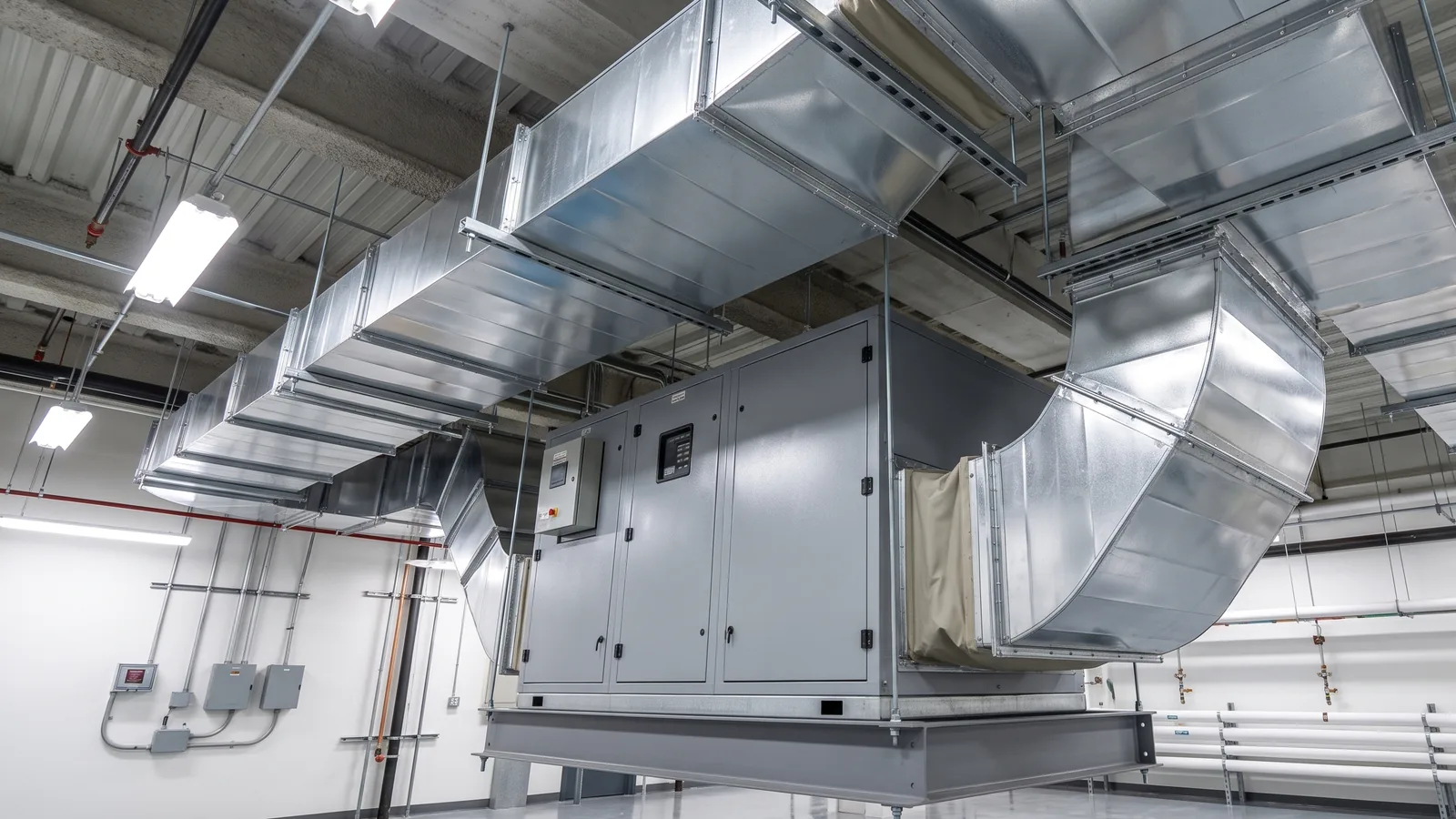
Commercial yoga studios require precise atmospheric control to protect both practitioners and building infrastructure. Different yoga styles demand specific temperature and humidity ranges that directly affect grip stability, breathing efficiency and thermal comfort. Moisture Cure’s commercial humidity control systems are designed to maintain these conditions reliably across class types and seasons.
Industry-Specific Humidity Challenges for Yoga Facilities
Yoga studios face moisture management challenges distinct from standard fitness facilities. The combination of elevated body temperatures, concentrated breathing patterns and varying room temperatures makes moisture control more demanding than in a typical gymnasium or sports hall.
Key operational risks from poor humidity control include:
- Slip hazards from condensation on floors and equipment
- Accelerated deterioration of timber flooring and wall systems
- Mould growth in changing rooms and storage areas
- Client discomfort leading to membership cancellations
- Increased insurance premiums due to moisture-related claims
Optimal Environmental Parameters by Yoga Practice Type
Each yoga discipline requires specific atmospheric conditions. ASHRAE Standard 55 provides baseline thermal comfort guidelines, but yoga studios operate well outside standard occupied-space parameters, particularly heated styles like Bikram.
| Yoga Style | Temperature Range | Target Humidity | Critical Control Factor |
|---|---|---|---|
| Hatha/Restorative | 20-24°C | 40-50% RH | Comfort during static holds |
| Vinyasa/Flow | 24-26°C | 45-55% RH | Sweat evaporation rate |
| Hot Yoga | 35-40°C | 40-60% RH | Heat stress prevention |
| Bikram | 40-42°C | 40% RH | Precise atmospheric replication |
Humidity below 30% RH causes respiratory irritation and increases static electricity on synthetic mats. Above 70% RH, surfaces become dangerously slippery and the body cannot thermoregulate through perspiration.
Why Yoga Studios Need Both Humidification and Dehumidification
Most advice on yoga studio climate focuses solely on adding moisture. In practice, studios face a two-phase cycle that demands both humidification and dehumidification within a single operating day.
Before a heated class, the room needs moisture added to reach target humidity. Ultrasonic humidifiers produce a fine cool mist that raises humidity without adding heat load, making them the preferred option for studios running back-to-back sessions.
After class, the situation reverses. Twenty to thirty practitioners sweating in a heated room can release several litres of moisture per session. Without active dehumidification between classes:
- Residual moisture drives condensation on cooler surfaces like mirrors, windows and structural steel
- Mould spores colonise ceiling cavities and behind wall linings within weeks
- The next class starts in a muggy, stale environment that pushes members to other studios
Desiccant dehumidifiers handle this reset. Unlike refrigerant units, desiccant systems extract moisture effectively at the elevated temperatures found in hot yoga rooms, operating reliably from sub-zero right up to 50°C.
Asset Protection and Infrastructure Longevity
Moisture fluctuations reduce the lifespan of studio infrastructure and equipment. Professional humidity control protects capital investments and cuts unplanned maintenance.
Common moisture-related damage in yoga studios:
- Timber flooring warpage and cupping
- Mirror delamination and fogging
- Prop degradation (blocks, straps, bolsters)
- Wall finish deterioration and paint failure
- HVAC system corrosion and efficiency loss
- Electronic equipment malfunction (sound systems, climate controllers)
Keeping humidity stable between 40% and 60% RH limits the expansion and contraction cycles that cause timber and adhesive failures. Studios that maintain consistent moisture levels between classes see fewer unplanned repairs and longer intervals between refurbishments. The same damage patterns that affect commercial buildings apply to studio infrastructure, just on a faster timeline due to the heat and occupancy extremes.
Health and Safety Compliance
Australian workplace health and safety regulations on heat require businesses to manage heat-related risks for workers and clients. In heated yoga environments, uncontrolled humidity compounds heat stress and creates compliance exposure for studio operators.
Humidity-related incidents documented in fitness facilities include:
- Slip and fall injuries from condensation on floors
- Heat exhaustion in poorly controlled hot yoga rooms
- Respiratory issues from mould exposure in ceiling and wall cavities
- Skin infections from contaminated surfaces in changing areas
Operators who rely on opening windows or running standard air conditioning often overcorrect in one direction. Windows dry the air below comfortable levels for pranayama breathing.
Air conditioning without humidity control can drop RH into the low 20s, causing throat irritation and dehydrating mucous membranes. Purpose-built humidity control maintains the target band without these swings.
Technology Solutions for Multi-Zone Studios
Modern yoga facilities often feature multiple practice spaces with different environmental demands. A studio running Bikram at 40°C and 40% RH in one room and restorative yoga at 22°C and 45% RH in another needs zone-specific control.
For facilities with both heated and ambient-temperature rooms, ducted dehumidification systems offer centralised control with zone-specific delivery. These systems integrate with existing HVAC infrastructure to manage humidity across diverse practice spaces from a single plant room.
Key selection criteria for yoga studio humidity equipment:
- Moisture removal capacity matched to maximum class occupancy
- Temperature tolerance for hot yoga applications (40°C and above)
- Sound output low enough for meditation and savasana
- Energy efficiency ratings for 12 or more hours of daily operation
- Remote monitoring and automated setpoint control
- Maintenance access in confined plant spaces
Sound levels deserve particular attention. Industrial dehumidifier noise output varies significantly between technologies. Desiccant units tend to run quieter than refrigerant compressors, making them a better fit for studios where silence matters.
Studios weighing their options should also understand the practical differences between ducted and portable dehumidifiers before committing to a system layout.
Measuring and Monitoring Studio Humidity
Accurate measurement is the foundation of effective humidity control. Without reliable monitoring, studios cannot verify that conditions meet targets or catch problems before they cause damage.
Practical monitoring steps:
- Install calibrated hygrometers at practitioner height (1.2 to 1.5 metres) in each practice room, away from air vents and external walls
- Log readings before, during and after each class to identify patterns
- Set humidity alarms at the upper and lower boundaries for each room’s yoga style
- Review logged data weekly to catch gradual drift before it causes damage or complaints
Automated controllers that link sensors directly to humidification and dehumidification equipment remove the need for staff to adjust settings between classes. The system adds moisture when levels drop below the setpoint and activates dehumidification when post-class moisture pushes levels above it.
Seasonal Adjustment Strategies
Australian climate variations demand flexible humidity control throughout the year. Summer months bring external moisture infiltration. Winter heating dries studio air well below comfortable practice levels.
| Season | Primary Challenge | Control Strategy | Target Outcome |
|---|---|---|---|
| Summer | External moisture infiltration | Continuous dehumidification | Stable 45-55% RH |
| Autumn | Temperature fluctuations | Adaptive setpoint control | Consistent comfort levels |
| Winter | Heating-induced dryness | Supplemental humidification | Prevent sub-30% RH |
| Spring | Variable outdoor conditions | Combined humidification and dehumidification | Stable target RH regardless of weather |
Geography matters as much as season. Coastal studios in Sydney, Brisbane and the Gold Coast fight persistently high ambient humidity through summer, making dehumidification the dominant concern. Inland studios in cities like Canberra or Toowoomba face dry winter air that drops well below 30% RH without supplemental humidification.
Bureau of Meteorology climate averages for specific locations help studio operators understand their baseline humidity challenge before specifying equipment.
Integration with Existing Building Systems
Successful humidity control requires integration with existing mechanical services. Professional assessment ensures correct system sizing and placement while minimising disruption to studio operations.
Studios in heritage buildings or converted warehouses often lack the ductwork and plant space that purpose-built fitness centres have. Desiccant systems suit these settings because they perform effectively at elevated temperatures without requiring large condensate drains or extensive structural modifications.
Critical integration considerations:
- Electrical capacity and circuit availability
- Condensate drainage routing
- Fresh air intake coordination with the existing HVAC system
- Control system compatibility (BMS integration where applicable)
- Acoustic treatment for noise-sensitive practice spaces
- Service access provisions for routine maintenance
Frequently Asked Questions
What humidity level should a yoga studio maintain?
Most yoga styles perform best between 40% and 55% RH. Bikram studios target 40% RH at 40-42°C.
Hatha and restorative classes suit 40-50% RH at lower temperatures. The right setpoint depends on the style, room volume and peak occupancy.
Do yoga studios need both humidifiers and dehumidifiers?
In most cases, yes. Studios add moisture before heated classes to reach target levels, then need active dehumidification after classes to remove the moisture released by practitioners. Running only one side of the equation leads to either dry, uncomfortable air or persistent dampness and mould.
What type of humidifier works best in a yoga studio?
Ultrasonic humidifiers are the most common choice. They produce a fine mist without adding heat, run quietly enough for meditation-based classes and respond quickly to changing conditions. For larger multi-room facilities, ducted humidification systems provide centralised control.
Can high humidity in a yoga studio cause mould?
Uncontrolled humidity above 60% RH creates conditions for mould growth, particularly in changing rooms, ceiling cavities and behind wall linings. The risk increases when studios run multiple heated classes without dehumidifying between sessions.
How long does it take to humidify a yoga studio before class?
Most studios reach target humidity within 30 to 45 minutes using correctly sized equipment. Studios running back-to-back heated classes often maintain baseline humidity throughout the day rather than starting from scratch each session.
What causes condensation on yoga studio mirrors and windows?
Condensation forms when warm, moist air contacts a cooler surface. In yoga studios, this typically occurs on mirrors, windows and structural steel after heated classes end and the room begins to cool. Dehumidifying the space promptly after class prevents it.
How does humidity affect breathing during yoga?
Air between 40% and 55% RH supports comfortable nasal breathing by keeping mucous membranes hydrated. Below 30% RH, practitioners experience dry throat and nasal irritation, particularly during pranayama. Above 70% RH, the air feels heavy and deep breathing becomes laboured.
Are there Australian regulations for yoga studio humidity?
No specific humidity regulation targets yoga studios directly. However, Safe Work Australia’s heat stress guidance applies to any workplace where elevated temperatures and humidity create health risks. Studio operators have a general duty of care to manage environmental conditions for both clients and staff.
How do I choose the right size dehumidifier for my yoga studio?
Sizing depends on room volume, peak occupancy, class type (heated vs ambient), building envelope tightness and local climate. A 200-square-metre hot yoga room with 30 practitioners needs substantially more dehumidification capacity than a 100-square-metre ambient studio with 15. Professional sizing ensures the equipment matches real operating conditions.
Next Steps
Professional humidity control addresses the full operating cycle of a commercial yoga studio, from pre-class humidification through post-class moisture removal. The right combination of equipment protects infrastructure, supports practitioner comfort and manages the compliance risks that come with heated fitness environments.
Contact Moisture Cure Commercial for a site assessment and humidity control recommendations matched to your studio’s practice types, schedule and building characteristics. With 28 years of experience in commercial humidity control, our technical team can specify systems that handle both sides of the moisture equation.