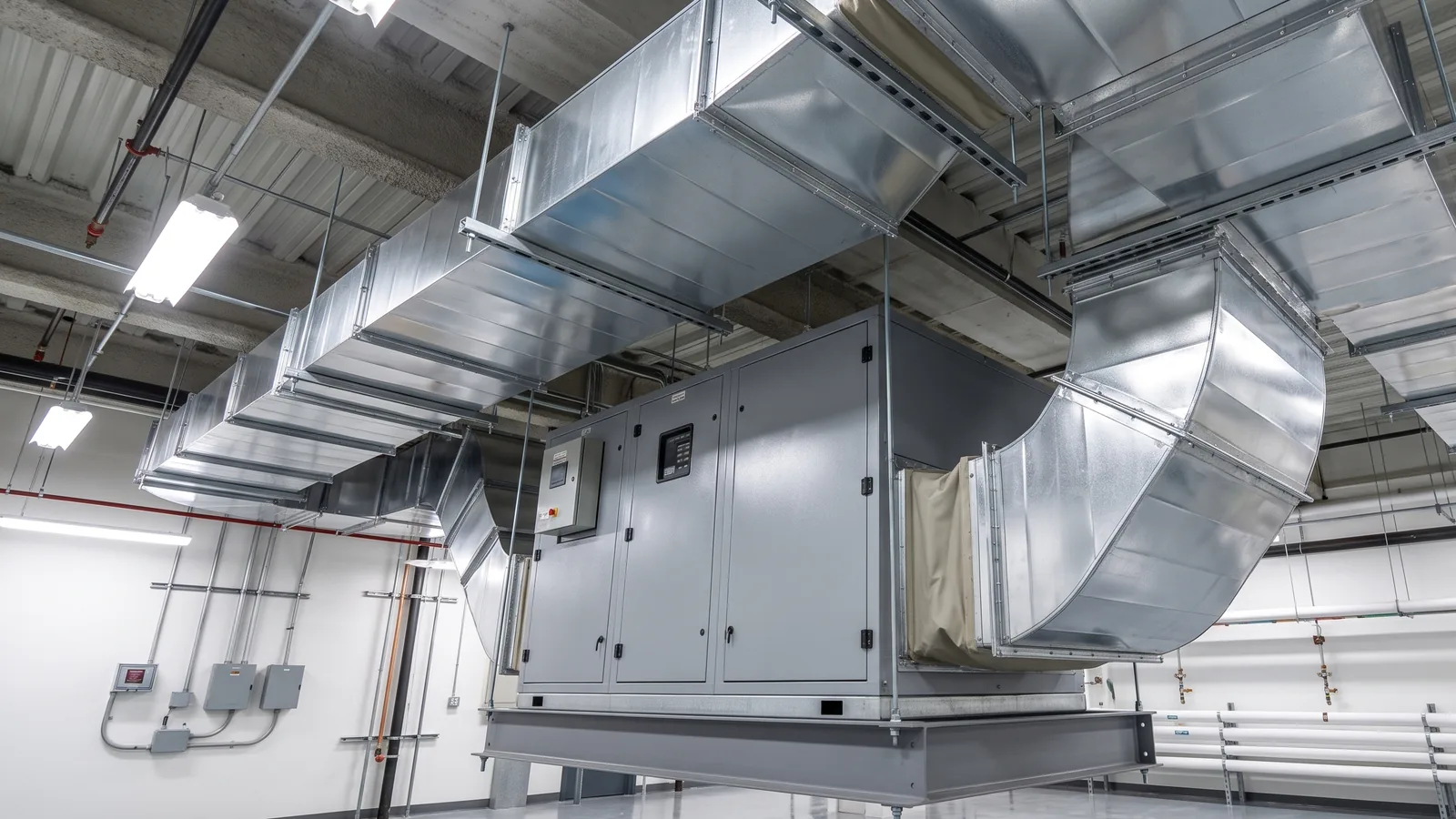
Australian meat processing facilities require precise environmental control to meet stringent quality standards and regulatory requirements. Humidity management directly impacts product weight retention, pathogen control, and operational efficiency across all processing stages. Our commercial humidification solutions include units suited to this application.
Processing Zone Requirements and Operational Impact
Each area within an abattoir serves a distinct function requiring specific humidity parameters. Failure to maintain these conditions results in measurable product losses and potential compliance issues.
| Processing Area | Optimal RH Range | Temperature Range | Critical Control Points |
|---|---|---|---|
| Kill Floor | 65-75% | 15-20°C | Dust suppression, worker safety |
| Evisceration | 70-80% | 12-15°C | Contamination prevention |
| Hot Boning | 75-85% | 10-12°C | Surface moisture retention |
| Chillers | 85-95% | 0-4°C | Weight preservation |
| Ageing Rooms | 75-85% | 0-2°C | Controlled dehydration |
| Packaging | 70-80% | 8-10°C | Surface condition |
Modern commercial humidifiers provide the precision required for these varying conditions. These units handle the high moisture loads generated by wash-down procedures and product processing while maintaining tight tolerances.
The transition zones between processing areas present particular challenges for humidity control. Maintaining consistent conditions while accommodating personnel movement and product flow requires strategic placement of conditioning equipment and proper air curtain systems.
How Condensation Drives Moisture Loss in Chillers
Understanding why carcasses lose weight during chilling starts with the physics of cold air. Refrigerated air entering a chiller at 0-4°C is close to 100% relative humidity, but it holds very little actual moisture at that temperature.
As this cold air absorbs thermal energy from warm incoming carcasses, its temperature rises and its relative humidity drops. Air at 50% RH can absorb twice as much moisture as saturated air, so the warmed air actively draws water from the wettest nearby surface, which is the carcass itself. Industry sources describe this as “thirsty” air that strips moisture from exposed meat.
Humidification systems counter this effect by saturating the warmed air before it reaches the product. The air absorbs moisture from the humidifier rather than from the meat, according to independent testing reported by Beef Central. Facilities that maintain proper humidity in cold storage environments consistently report lower shrinkage rates and faster chill-down times.
Weight Loss Prevention and Revenue Protection
Uncontrolled humidity causes significant financial losses through carcass shrinkage and quality degradation. Without humidification, a typical side of beef can lose roughly 4 kg of product weight during the primary chill-down process alone.
- Carcass weight loss of 1-3% occurs within 24 hours in low humidity environments
- Humidification reduces that loss to below 1%, according to Condair
- Surface darkening reduces grade classification and market value
- Excessive drying creates trimming losses during fabrication
- Product rejection rates increase due to appearance defects
- Extended chilling times required to achieve target temperatures
Maintaining 85-95% relative humidity in chilling areas prevents surface dehydration while allowing proper heat dissipation. This balance preserves both weight and appearance throughout the cooling process. Return on investment is typically rapid for any facility processing more than approximately 40 beef carcasses per week, or equivalent volumes of pork or lamb.
Premium cuts demand particularly careful environmental control as visible dehydration directly affects consumer acceptance. Effective humidity management maintains the fresh appearance that drives higher market positioning and reduces downgrading to lower-value applications.
Pathogen Control Through Environmental Management
Humidity levels directly influence microbial growth patterns and contamination risks. Strategic environmental control creates conditions unfavourable to pathogen proliferation while supporting processing operations.
Low humidity environments (below 65% RH) generate airborne particulates that carry bacterial contamination between zones. Conversely, excessive moisture (above 95% RH) creates condensation points where mould and bacteria multiply rapidly on cold surfaces.
- Optimal ranges inhibit surface bacterial growth on equipment and walls
- Controlled humidity reduces cross-contamination through airborne particles
- Proper moisture levels support effective sanitisation procedures
- Condensation control prevents bacterial multiplication on cold surfaces
- Stable conditions maintain antimicrobial treatment effectiveness
HACCP compliance requires documented environmental monitoring including humidity tracking. Automated control systems provide the data logging and alarm capabilities necessary to demonstrate continuous compliance with food safety protocols set by Food Standards Australia New Zealand.
Worker Safety and Comfort on the Processing Floor
Humidity control in abattoirs is not only a product quality issue. Poorly managed moisture levels create fog, slippery surfaces, and uncomfortable heat stress conditions for processing staff. Workers exposed to sustained high humidity and heat are at increased risk of fatigue, reduced concentration, and heat-related illness.
- Fog and condensation on floors increase slip hazards in high-traffic zones
- Excess humidity compounds heat stress, particularly near the kill floor and hot boning areas
- Maintaining humidity within target ranges improves visibility and reduces accident rates
- Properly conditioned air supports higher productivity and reduces absenteeism
Facilities that invest in humidity control for indoor air quality report measurable improvements in both staff comfort and processing consistency.
Equipment Selection and Capacity Requirements
Selecting appropriate humidity control equipment requires careful analysis of moisture loads, space constraints, and operational demands. Industrial abattoirs generate substantial water vapour from hot carcasses, wash-down procedures, and steam cleaning operations.
Refrigerant dehumidifiers excel in moderate temperature zones but lose efficiency below 5°C. Desiccant dehumidification systems maintain performance across the full temperature range encountered in meat processing, operating reliably from -20°C to +50°C. This makes desiccant units the preferred choice for chiller and cold storage zones where refrigerant technology cannot keep up.
- Calculate total moisture load including products, personnel, and equipment
- Consider peak demand periods during wash-down and cleaning cycles
- Account for infiltration from loading docks and personnel access points
- Evaluate installation space and ductwork routing requirements
- Plan for redundancy in critical processing areas
Ducted systems allow centralised control with zone-specific conditioning. Modular installations provide flexibility for expansion and seasonal demand variations common in export processing facilities.
Australian Regulatory Compliance and Industry Standards
Australian meat processing facilities operate under strict regulatory oversight from the Department of Agriculture and state authorities. Environmental conditions including humidity control form integral components of export licence requirements and domestic processing approvals.
AUSQAP standards specify environmental monitoring and control systems for different processing categories. Export facilities require additional documentation demonstrating continuous compliance with importing country requirements.
- Domestic facilities must meet state food authority environmental control guidelines
- Export-registered establishments must comply with the Australian Meat and Live-stock Industry Act
- Air curtains at processing zone transitions must maintain minimum airstream velocity of 8 m/s per AQIS standards
- Some export markets, including the EU, prohibit direct spray chilling of carcasses, making ambient humidification the only compliant option
- All environmental data, including humidity readings, must be logged and available for audit
Dry Ageing and Maturation Rooms
Dry ageing is a growing segment for premium beef processors in Australia. The process requires a maturation period of at least four weeks at controlled temperature and humidity to develop the concentrated flavour and tenderness that commands higher market prices.
Humidity in dedicated drying and ageing rooms must typically sit between 75% and 85% RH. If humidity drops too low, the outer layer of the meat dries too rapidly, a defect known as case hardening, which traps moisture inside and prevents even maturation.
- Target 75-85% RH to allow controlled surface dehydration without case hardening
- Desiccant dehumidifiers maintain stable conditions regardless of ambient temperature swings
- Excessive humidity above 85% promotes mould growth that damages product quality
- High-fat cuts produce the best results under consistent environmental control
Integration with Existing HVAC Systems
Successful humidity control in abattoir facilities requires careful coordination with existing refrigeration and ventilation systems. Most processing plants already operate complex HVAC networks that must maintain specific temperature zones while managing substantial heat loads from equipment and processing activities.
The key to effective integration lies in understanding how humidity control equipment interacts with your current air handling systems. Poorly coordinated systems can work against each other, creating energy waste and compromising environmental conditions throughout the facility.
- Assess existing ductwork capacity and airflow patterns before installing new humidity control equipment
- Coordinate dehumidifier discharge temperatures with refrigeration system requirements
- Install appropriate controls to prevent simultaneous heating and cooling operations
- Position humidity sensors away from direct airflow to ensure accurate readings
- Consider ducted dehumidifier systems for seamless integration with existing air handling units
- Implement staging controls to balance humidity removal with energy consumption
Maintenance Protocols and System Monitoring
Preventive maintenance schedules are critical for maintaining optimal humidity control in abattoir environments where equipment operates under demanding conditions. Regular maintenance prevents costly breakdowns during peak processing periods and ensures consistent environmental conditions that protect both product quality and regulatory compliance.
Effective monitoring systems provide early warning of potential issues before they impact operations. Modern humidity control equipment offers advanced diagnostic capabilities that help maintenance teams identify problems and schedule repairs during planned downtime. Proper condensate drainage management is particularly important in high-moisture abattoir settings where blocked drains can cause water damage and hygiene violations.
- Establish weekly filter inspection routines and monthly replacement schedules in high-particulate areas
- Monitor refrigerant pressures and temperatures daily to detect potential cooling system issues
- Clean condensate drainage systems monthly to prevent blockages and water damage
- Calibrate humidity sensors quarterly to maintain accurate environmental control
- Document all maintenance activities and system performance data for regulatory audits
- Train multiple staff members on basic troubleshooting procedures to minimise downtime
- Schedule annual professional inspections of electrical connections and safety systems
Frequently Asked Questions
What humidity level should an abattoir chiller maintain?
Chiller rooms should maintain 85-95% relative humidity to prevent carcass surface dehydration while still allowing proper heat dissipation. This range reduces weight loss to below 1% compared with losses of 1-3% in uncontrolled environments.
Why do carcasses lose weight during chilling?
Cold air entering a chiller is nearly saturated, but as it absorbs heat from warm carcasses its relative humidity drops. The warmed, drier air then draws moisture from exposed meat surfaces, causing evaporative weight loss. Humidification systems compensate by adding moisture to the air before it contacts the product.
Can refrigerant dehumidifiers handle sub-zero processing zones?
Refrigerant dehumidifiers lose efficiency below approximately 5°C and are generally unsuitable for freezer rooms or deep-chiller zones. Desiccant dehumidifiers operate effectively from -20°C to +50°C, making them the standard choice for low-temperature meat processing areas.
What return on investment can abattoirs expect from humidification?
ROI depends on throughput and product value. Industry data indicates that facilities processing more than 40 beef carcasses per week see rapid payback from reduced evaporative losses alone. The calculation is straightforward: weight saved per carcass multiplied by the current market price per kilogram.
Does HACCP require humidity monitoring in meat processing?
Yes. HACCP plans for meat processing facilities must include documented environmental monitoring at each critical control point. Humidity tracking, data logging, and automated alarm systems are standard requirements for both domestic and export-registered establishments in Australia.
What maintenance does abattoir humidity equipment need?
At minimum, weekly filter inspections, monthly condensate drain cleaning, quarterly sensor calibration, and annual electrical safety checks. Abattoir environments are harsher than most commercial settings due to high particulate loads from wash-down and processing, so maintenance intervals are shorter than manufacturer defaults.