Cold storage facilities operate in a constant battle against moisture-related damage that threatens inventory worth millions of dollars. Selecting the right commercial dehumidification system for cold environments determines whether products maintain their quality throughout storage or deteriorate into unsaleable waste.
Temperature-Based Humidity Challenges in Cold Storage
Different temperature zones within cold storage facilities create distinct humidity management requirements. Each zone presents specific risks that require targeted control strategies to prevent product damage and equipment strain.
| Storage Zone | Temperature Range | Humidity Risk | Product Impact | Equipment Consequence |
|---|---|---|---|---|
| Deep Freeze | -30°C to -18°C | Ice crystal formation | Freezer burn, texture damage | Excessive defrost cycles |
| Standard Freezer | -18°C to -12°C | Frost accumulation | Surface dehydration | Reduced cooling efficiency |
| Chiller | 0°C to 4°C | Condensation | Mould growth, spoilage | Coil icing |
| Cool Room | 4°C to 12°C | Moisture migration | Weight loss, wilting | Compressor overload |
| Loading Dock | Variable | Rapid condensation | Package damage | Structural corrosion |
The physics of cold air creates an inherent moisture management challenge. As temperature drops, air holds less water vapour. According to the ASHRAE Handbook of Fundamentals, air at 0°C holds roughly half the moisture of air at 10°C. This relationship drives condensation whenever warm, humid air meets cold surfaces or when temperature fluctuations occur during door openings.
Critical Humidity Ranges for Different Products
Each product category stored in cold facilities requires specific humidity levels to maintain quality and prevent deterioration. Facility managers who implement zone-specific controls can protect diverse inventory types stored under the same roof.
Fresh Produce Requirements
- Leafy vegetables: 90-95% RH prevents wilting and maintains crispness
- Root vegetables: 85-90% RH balances moisture retention with rot prevention
- Citrus fruits: 85-90% RH prevents skin dehydration while avoiding mould
- Stone fruits: 90-95% RH maintains texture without surface moisture
- Berries: 90-95% RH with rapid air circulation prevents condensation damage
These ranges align with postharvest handling guidelines published by the UC Davis Postharvest Technology Centre, the global benchmark for produce storage research. Produce storage areas benefit from precise humidity addition systems that maintain these narrow bands. Commercial humidifiers designed for cold environments prevent the rapid moisture loss that occurs in standard refrigeration systems.
Protein Storage Specifications
- Fresh meat: 80-85% RH prevents surface drying without promoting bacterial growth
- Cured meats: 60-70% RH maintains texture while preventing mould
- Fresh seafood: 95% RH preserves quality in short-term storage
- Poultry: 85-90% RH balances moisture retention with safety requirements
- Dairy products: 65-75% RH prevents condensation on packaging
Protein storage often requires low-temperature dehumidification equipment that functions effectively below freezing. Desiccant technology continues removing moisture where refrigerant-based systems lose efficiency. Facilities storing fresh meat and processed products together face additional challenges with humidity control across abattoir and cold chain operations.
Why Desiccant Technology Outperforms Refrigerant Units in Cold Storage
Standard refrigerant dehumidifiers work by cooling air below its dew point to condense moisture. In cold storage environments, this approach hits a fundamental limit: the evaporator coils ice up when intake air is already near or below freezing.
Desiccant dehumidifiers use a different mechanism entirely. A rotating wheel coated in silica gel or similar sorbent material adsorbs moisture directly from the air, regardless of temperature. A separate reactivation stream then heats a portion of the wheel to drive off the captured moisture and exhaust it outside the facility.
| Factor | Refrigerant Dehumidifier | Desiccant Dehumidifier |
|---|---|---|
| Operating range | Above 15°C (loses efficiency below this) | -20°C to +50°C |
| Low-humidity performance | Struggles below 45% RH | Can reach below 1% RH |
| Frost risk on unit | Coils ice up in cold conditions | No coils, no icing risk |
| Cold storage suitability | Cool rooms only (above 10°C) | All zones including deep freeze |
This operating range makes desiccant units the standard choice for cold storage dehumidification. Facilities that need to understand why desiccant dehumidifiers excel in commercial applications will find the technology particularly suited to environments where refrigerant units cannot function reliably.
Operational Consequences of Poor Humidity Control
Inadequate moisture management in cold storage creates cascading problems that extend well beyond product quality. These issues compound over time, driving up operational costs and creating compliance failures that damage commercial buildings and equipment.
Equipment Performance Degradation
| Problem | Cause | Typical Impact | Prevention Method |
|---|---|---|---|
| Excessive defrosting | Uncontrolled humidity and ice buildup | Increased energy draw and thermal cycling stress | Active dehumidification |
| Compressor failure | Continuous high-load operation | Premature replacement | Balanced humidity levels |
| Coil efficiency loss | Ice and frost accumulation on evaporator coils | Reduced cooling capacity | Moisture removal systems |
| Door seal damage | Condensation and repeated freeze-thaw cycles | Warm air infiltration increases | Entrance dehumidification |
Product Loss Mechanisms
Weight loss through dehydration represents the most immediate financial impact of poor humidity control. The UC Davis Postharvest Technology Centre notes that fresh produce stored in low-humidity conditions can lose significant saleable weight within days as cells shrink and surfaces wilt.
- Texture degradation: Cellular damage from ice crystal formation ruins product quality
- Accelerated spoilage: Surface moisture promotes bacterial and fungal growth
- Package integrity failure: Condensation weakens cardboard and compromises labels
- Cross-contamination: Moisture migration spreads contaminants between products
- Regulatory non-compliance: Failure to maintain specified storage conditions
Workplace Safety Risks
Uncontrolled humidity creates direct safety hazards for cold storage workers. Condensation on floors produces slip-and-fall risks, while ice accumulation on overhead surfaces and racking can break free and injure personnel below. Facilities with persistent moisture issues also face increased mould exposure in loading areas, which can trigger respiratory complaints during prolonged shifts.
Managing Loading Dock and Door-Opening Moisture Loads
Loading docks are the single largest source of moisture infiltration in cold storage facilities. Every time a dock door opens, warm, humid external air rushes into the temperature-controlled space. In Australian conditions, where summer ambient humidity can exceed 70% RH, the moisture load from a single door cycle is substantial.
Effective dock moisture management combines physical barriers with active dehumidification.
- Rapid-close doors: Minimise the window of warm air infiltration by reducing open time
- Strip curtains and air curtains: Create a barrier across the opening that separates temperature zones
- Dock seals and shelters: Seal the gap between the trailer and the building envelope to prevent ambient air bypassing the loading area
- Positive pressure in staging areas: Supply dehumidified air to the dock zone so outward airflow resists inward moisture migration
- Dedicated dock dehumidifiers: Station desiccant dehumidification units at loading docks to strip moisture from infiltrating air before it reaches the cold zones
The payoff extends beyond product protection. Dry loading dock floors reduce slip-and-fall incidents, and controlled dock humidity reduces the defrost burden on the main refrigeration plant. Facilities managing condensate drainage from commercial dehumidifiers at loading docks should plan heated drain lines to prevent freeze-ups in adjacent cold zones.
Implementing Zone-Based Humidity Control
Modern cold storage facilities require sophisticated moisture management systems that adapt to different zones and product requirements. Successful implementation involves strategic equipment placement and continuous monitoring.
System Design Considerations
- Air circulation patterns: Design prevents moisture stratification and dead zones
- Sensor placement: Multiple monitoring points capture zone-specific conditions
- Equipment sizing: Capacity matches peak moisture loads during busy periods
- Integration capability: Systems communicate with existing building management
- Redundancy planning: Backup units prevent total system failure
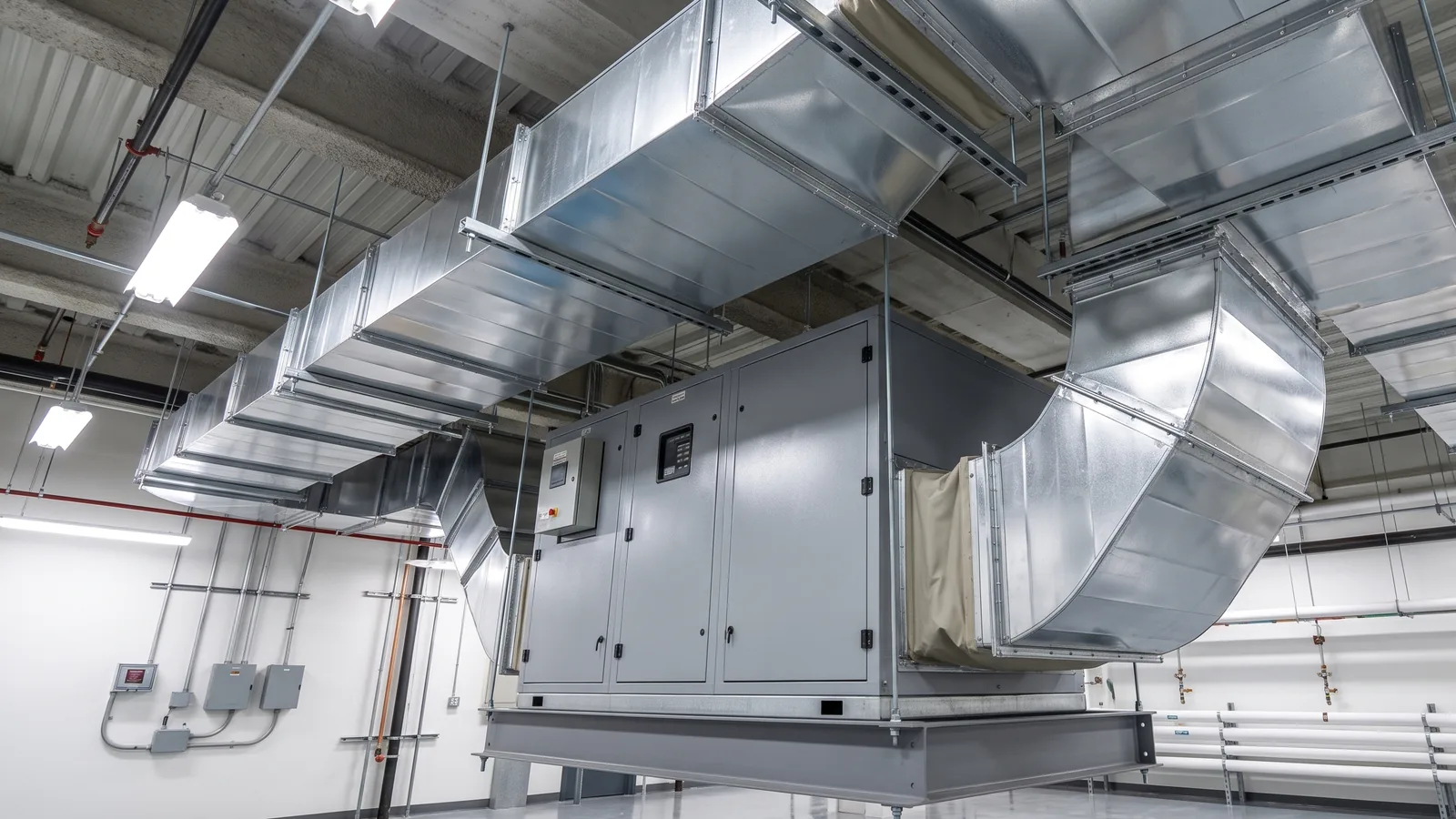
Large facilities benefit from centralised ducted dehumidification systems that provide consistent control across multiple zones. Ducted dehumidifiers integrate with existing HVAC infrastructure to deliver precise moisture removal where needed. Facility managers planning a ducted installation should review the pre-planning essentials for ducted dehumidifier installation before committing to a layout.
Maintenance Requirements for Reliability
Cold storage humidity control equipment requires specific maintenance protocols to ensure continuous operation. Regular servicing prevents failures that can put entire inventory sections at risk.
| Component | Inspection Frequency | Common Issues | Preventive Action |
|---|---|---|---|
| Filters | Monthly | Clogging from frost | Regular replacement schedule |
| Sensors | Quarterly | Calibration drift | Professional recalibration |
| Drainage | Weekly | Freezing blockages | Heated drain lines |
| Controls | Bi-annually | Software updates needed | Firmware maintenance |
Australian Food Safety Compliance and Cold Storage Standards
Cold storage operators in Australia must comply with FSANZ Standard 3.2.2, which requires that potentially hazardous food be stored at 5°C or below. While the standard focuses on temperature, auditors increasingly expect documented humidity monitoring as part of a facility’s food safety management system.
- Environmental data logs (temperature and humidity) support HACCP documentation
- Consistent conditions demonstrate compliance during scheduled and unannounced audits
- Humidity monitoring helps identify early-warning indicators of cooling system degradation
- Automated logging systems reduce the manual record-keeping burden on staff
State and territory food safety authorities may impose additional requirements beyond the national code. Facilities that maintain documented humidity control records alongside temperature logs are better positioned to satisfy auditors across all jurisdictions.
Measuring Return on Humidity Control Investment
Quantifying the benefits of proper humidity control helps justify equipment investments and ongoing operational costs. Facility managers track multiple metrics to demonstrate value to stakeholders.
Direct Financial Benefits
- Product weight retention: Maintaining optimal humidity preserves saleable weight that would otherwise be lost to dehydration
- Extended shelf life: Proper conditions can meaningfully extend storage duration before quality degrades
- Reduced energy consumption: Efficient dehumidification systems lower the cooling load on refrigeration plant
- Lower defrost frequency: Controlled moisture reduces the number of energy-intensive defrost cycles
- Equipment longevity: Proper conditions reduce corrosion and mechanical strain on refrigeration components
Quality and Compliance Advantages
Beyond direct cost savings, humidity control delivers critical quality assurance benefits. Consistent environmental conditions ensure products meet customer specifications and regulatory requirements throughout the storage period.
- Audit compliance: Documented environmental control satisfies inspector requirements
- Customer satisfaction: Consistent product quality reduces complaints and returns
- Insurance benefits: Proper controls may support favourable terms for stored goods coverage
- Certification support: Environmental data supports quality system documentation
- Reputation protection: Prevents quality failures that damage brand relationships
Facilities evaluating system options should understand how effective industrial dehumidifiers are across different operating conditions before sizing equipment for their specific cold storage application.
Frequently Asked Questions
What humidity level should a cold storage facility maintain?
The target depends on what is stored. Fresh produce typically needs 85-95% RH to prevent dehydration, while cured meats and dairy sit lower at 60-75% RH. Freezer zones should maintain the lowest practical humidity to minimise frost buildup on coils and surfaces. There is no single correct number for an entire facility, which is why zone-based control matters.
Why do desiccant dehumidifiers work better than refrigerant units in cold storage?
Refrigerant dehumidifiers remove moisture by cooling air below its dew point. In environments already near or below freezing, their evaporator coils ice up and efficiency drops sharply. Desiccant dehumidifiers use a sorbent material to adsorb moisture directly from the air, a process unaffected by temperature. They operate effectively from -20°C through to +50°C, covering every zone in a cold storage facility.
How do door openings affect humidity in cold rooms?
Every door opening allows warm, humid ambient air to rush into the cold space. The moisture in that air condenses almost immediately on cold surfaces, forming frost on coils, fog in aisles, and condensation on packaging. In busy facilities with frequent loading cycles, door openings can be the single largest source of moisture infiltration.
What causes condensation on cold storage walls and ceilings?
Condensation forms when the surface temperature is below the dew point of the surrounding air. In cold storage, walls, ceilings, and structural steel are all cold enough to trigger condensation whenever humid air is present. Poor insulation, vapour barrier failures, and uncontrolled air infiltration through doors and gaps are the most common causes.
How does humidity control reduce energy costs in cold storage?
Uncontrolled humidity forces refrigeration systems to work harder. Frost buildup on evaporator coils insulates them from the air, reducing heat transfer and triggering more frequent defrost cycles. Each defrost cycle introduces heat that the system must then remove again. Active dehumidification breaks this cycle by preventing frost from forming in the first place.
What maintenance does cold storage dehumidification equipment need?
Monthly filter inspections are essential because cold environments promote frost and particulate buildup. Sensors require quarterly calibration checks since temperature extremes cause drift. Drain lines need weekly monitoring in freezing zones to prevent ice blockages. Control systems should receive bi-annual firmware reviews to ensure accurate setpoint management.
How does humidity affect food safety compliance in cold storage?
Under FSANZ Standard 3.2.2, food businesses must store food in a way that keeps it safe and suitable. While the standard specifies temperature thresholds (5°C or below for cold food), auditors assess overall environmental control. Documented humidity monitoring strengthens HACCP records and demonstrates that the facility manages all variables affecting product safety, not just temperature.
What is the best way to control moisture at loading docks?
A layered approach works best. Rapid-close doors and strip curtains reduce the volume of warm air entering during each loading cycle. Dock seals and shelters close gaps around trailers. Positive-pressure ventilation with dehumidified air pushes outward against incoming moisture. Dedicated desiccant dehumidifiers stationed at the dock strip remaining humidity before it reaches cold zones.
Can high humidity damage cold storage refrigeration equipment?
Yes. Excess moisture causes ice to accumulate on evaporator coils, reducing their efficiency and forcing more frequent defrost cycles. Persistent condensation accelerates corrosion on exposed metal surfaces, electrical connections, and structural supports. Door seals degrade faster when subjected to repeated freeze-thaw cycles from condensation, allowing even more humid air to infiltrate.
Talk to Moisture Cure Commercial
Moisture Cure Commercial has supplied dehumidifiers and humidifiers to Australian businesses for over 20 years. Whether you need help selecting the right unit, sizing a system for your cold storage facility, or troubleshooting an existing setup, our team can help.
Call us on (02) 6584 2511 or browse our commercial dehumidifier range to find the right unit for your facility.