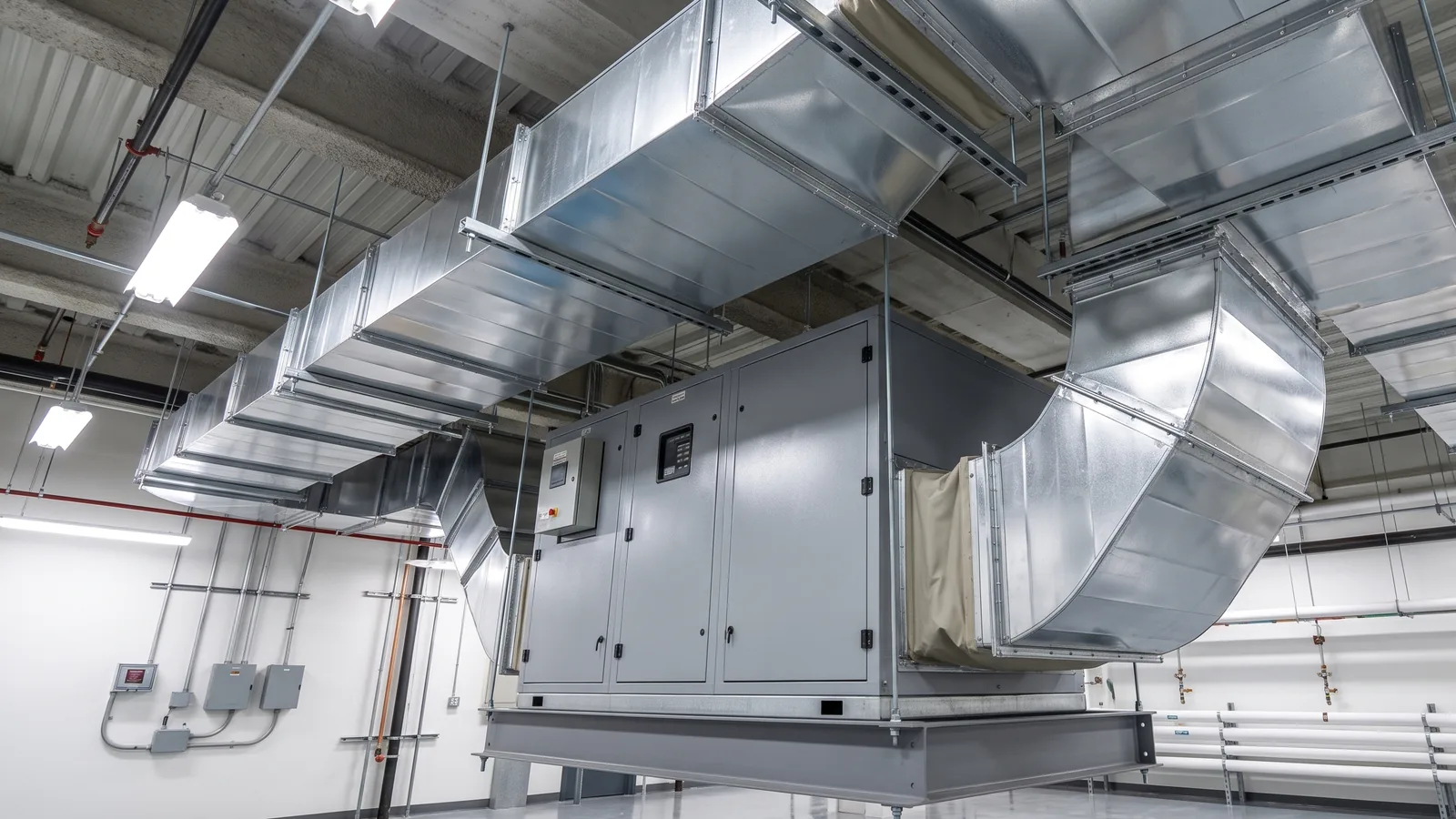
Commercial egg hatcheries require precise environmental control to achieve optimal hatch rates and chick quality. Humidity levels directly impact embryo development, air cell formation, and post-hatch survival rates across thousands of eggs simultaneously. Our commercial humidity control systems include units designed for continuous hatchery operation.
Environmental Requirements Throughout Incubation
Modern hatchery operations manage distinct humidity zones based on embryonic development stages. Each phase demands specific moisture levels to support biological processes and maximise viable hatch percentages.
Research published in BMC Veterinary Research confirms that the optimal relative humidity range for chicken egg incubation sits between 40% and 70% RH, with maximum hatchability observed around 50% RH during the setter phase.
| Development Stage | Duration | Humidity Range | Critical Process |
|---|---|---|---|
| Pre-Incubation Storage | Up to 7 days | 70-80% RH | Albumen preservation |
| Early Incubation | Days 1-7 | 50-55% RH | Embryo formation |
| Mid Incubation | Days 8-18 | 55-60% RH | Air cell development |
| Transfer Phase | Day 18 | 60-65% RH | Preparation for hatching |
| Hatching | Days 19-21 | 65-75% RH | Membrane softening |
| Post-Hatch | 0-24 hours | 50-60% RH | Chick drying |
Temperature and humidity interact to create the microclimate within incubators and hatchers. Wet-bulb temperature readings provide a more reliable measure of actual moisture conditions than standard hygrometers. A wet-bulb reading of 29-30°C corresponds to the target 58-60% RH at standard incubation temperatures.
Monitoring Egg Weight Loss Through Incubation
Egg weight loss is the most reliable indicator of correct humidity in commercial hatcheries. The target for chicken eggs is a total moisture loss of 13-15% of initial egg weight by hatch day. Tracking weight loss at regular intervals lets hatchery managers adjust humidity before problems become irreversible.
- Below 9.1% total weight loss increases embryonic mortality from overhydration
- Above 18.5% total weight loss raises mortality from excessive dehydration
- Weighing sample trays from each setter every three to four days provides more accurate data than relying on hygrometers alone
- Automated load-cell systems can feed weight data directly into building management systems for real-time humidity adjustment
Hatcheries managing multiple species need to account for different weight-loss targets. Duck eggs typically require slightly higher humidity than chicken eggs across the 28-day incubation period, with similar principles applying to humidity management in agricultural storage where controlled moisture loss prevents spoilage.
Impact of Incorrect Humidity on Production
Humidity fluctuations create measurable losses in commercial hatchery operations. Research in Poultry Science journal demonstrates that both low and high humidity manipulation significantly affect embryo physiology, blood gas levels, and growth rates.
Low Humidity Consequences
- Excessive moisture loss through shell pores beyond the 13-15% target
- Enlarged air cells preventing proper positioning for pipping
- Dehydrated chicks with reduced first-week survival
- Increased late-stage mortality from membrane desiccation, a condition known as shrink-wrapping
- Higher energy costs from compensatory misting systems
High Humidity Problems
- Insufficient air cell development restricting lung inflation
- Wet chicks unable to break through membranes
- Bacterial and fungal growth in equipment and on eggshells
- Extended drying times increasing labour costs
- Reduced oxygen exchange through shell pores
Equipment Specifications for Hatchery Applications
Commercial hatcheries operate multiple climate zones requiring coordinated humidity control. Facilities processing thousands of eggs need equipment that delivers precise, continuous moisture regulation. This rules out the manual methods used in small-scale operations.
Setter Room Requirements
- Capacity matched to room volume, ventilation rates, and maximum egg load
- Operating range: 15-35°C ambient temperature
- Control precision: ±2% RH tolerance
- Stainless steel components for washdown compatibility
- Continuous drainage systems for unattended operation
In hatcheries where temperatures drop below 15°C during winter or in cold-room adjacent zones, desiccant dehumidifiers outperform refrigerant units because they maintain extraction capacity regardless of ambient temperature.
Hatcher Room Specifications
- Dual-function units combining dehumidification and humidification
- Rapid response to humidity spikes during mass hatching events
- HEPA filtration options for pathogen control
- Remote monitoring capabilities
- Backup systems for critical production periods
Equipment sizing depends on room volume, ventilation rates, and maximum egg capacity. Professional assessment ensures appropriate capacity without oversizing that increases capital and operating costs.
Integration with Hatchery Management Systems
Modern hatcheries use building management systems (BMS) to coordinate environmental controls across multiple rooms. Humidity control equipment must integrate with these platforms for optimal performance, a process detailed in our guide to connecting industrial dehumidifiers to your BMS.
Control System Features
- Modbus or BACnet communication protocols
- Zone-specific setpoint management
- Predictive control algorithms based on egg load and weight-loss data
- Alarm notifications for out-of-range conditions
- Data logging for quality assurance records
- Energy consumption monitoring
Ducted humidity control systems connect directly to existing HVAC infrastructure, providing centralised management of multiple incubation rooms. This configuration reduces equipment redundancy while maintaining zone-specific control capabilities.
Biosecurity Considerations for Humidity Systems
Humidity control equipment in commercial hatcheries must meet strict biosecurity standards. Poorly maintained humidification systems can harbour Legionella, mould spores, and bacteria that compromise both chick health and food safety compliance.
- Ultrasonic humidifiers require reverse-osmosis or UV-treated water to prevent bacterial aerosolisation
- Condensate trays and drain lines need sanitisation at minimum weekly during production cycles
- Separate air handling for setter rooms and hatcher rooms prevents cross-contamination between egg age groups
- Equipment materials must withstand chemical sanitisation without corrosion
Applying the same principles used in preventing mould and mildew in commercial facilities, hatchery operators should establish sanitisation schedules that align with production cycles and all-in/all-out cleaning between batches.
Maintenance Protocols for Continuous Operation
Hatchery environments present unique challenges for humidity control equipment including high dust loads, sanitisation chemicals, and 24/7 operation schedules. Proper maintenance protocols ensure reliable performance throughout production cycles.
Preventive Maintenance Schedule
| Task | Frequency | Impact on Production |
|---|---|---|
| Filter replacement | Monthly | Maintains airflow efficiency |
| Coil cleaning | Quarterly | Prevents capacity reduction |
| Drain line inspection | Weekly | Avoids overflow shutdowns |
| Sensor calibration | Bi-annually | Ensures control accuracy |
| Component testing | Annually | Identifies wear before failure |
Scheduling maintenance during transfer days minimises disruption to production schedules. Redundant systems allow individual units to be serviced without compromising environmental conditions.
Selection Criteria for Hatchery Humidity Systems
Choosing appropriate humidity control equipment requires evaluation of multiple operational factors. Ultrasonic humidification systems complement dehumidifiers to maintain precise conditions during the high-humidity hatching phase.
Key Evaluation Factors
- Total egg capacity and turnover frequency
- Number and size of climate-controlled rooms
- Existing ventilation system specifications
- Water quality for humidification systems
- Energy efficiency ratings and operating costs
- Service support availability in regional areas
- Compliance with biosecurity protocols
Professional consultation ensures equipment selection matches current needs while accommodating future expansion plans. Oversized systems waste energy, while undersized units fail during peak demand periods.
Return on Investment Considerations
Proper humidity control delivers measurable improvements in hatchery performance metrics. Facilities that upgrade from manual humidity management to automated systems typically observe increased hatch rates, improved chick quality scores, and reduced mortality during the critical first week.
Performance Improvements
- Hatch rate improvements when humidity is optimised within the 50-60% setter and 65-75% hatcher ranges
- Reduction in cull rates due to deformities linked to humidity deviation
- Improved feed conversion ratios in brooded chicks from better hydration at hatch
- Lower medication costs from reduced respiratory issues
- Extended equipment life through controlled environments
- Energy savings from properly sized, automated systems
Documentation of baseline performance before equipment upgrades enables accurate ROI calculations. Facilities that track egg weight loss, hatch rate, and first-week mortality before and after installation can quantify the return precisely.
Frequently Asked Questions
What happens if humidity is too low or too high during incubation?
Low humidity causes excessive egg weight loss, dehydrated embryos, and a condition called shrink-wrapping where the inner membrane dries and traps the chick. High humidity reduces air cell development, leads to wet navels and red hocks in hatched chicks, and increases bacterial contamination risk. Research shows embryonic mortality rises when egg weight loss falls below 9.1% or exceeds 18.5% of initial weight.
What humidity levels are needed for each stage of egg incubation?
Pre-incubation storage requires 70-80% RH to protect the albumen. The setter phase (days 1-18) targets 50-60% RH for proper air cell development. During the hatching phase (days 19-21), humidity increases to 65-75% RH to soften membranes and prevent shell sticking. Post-hatch areas should maintain 50-60% RH for chick drying.
How do commercial hatcheries monitor humidity accurately?
Commercial operations use calibrated hygrometers and wet-bulb thermometers mounted at egg level rather than at room level. The most reliable method combines humidity sensor readings with regular egg weighing to track actual moisture loss against the 13-15% target. Larger facilities feed sensor data into building management systems for automated adjustment.
Why do commercial hatcheries need industrial humidification rather than manual methods?
Manual humidity control using water trays and sponges lacks the precision and consistency that commercial operations demand. Industrial humidification systems deliver ±2% RH accuracy, operate continuously without manual intervention, and integrate with BMS platforms for multi-zone control. These capabilities matter when managing thousands of eggs across multiple setter and hatcher rooms.
What biosecurity risks do humidity systems pose in hatcheries?
Humidification equipment can harbour and distribute Legionella bacteria, mould spores, and other pathogens through aerosolised water droplets. Mitigating these risks requires treated water supply (reverse osmosis or UV sterilisation), regular sanitisation of all water-contact surfaces, and separate air handling for each production zone.
How do humidity requirements differ between chicken and duck eggs?
Duck eggs incubate over 28 days compared to 21 for chickens and generally require slightly higher humidity during the setter phase due to their larger size and thicker shells. Both species follow the same principle of targeting 13-15% total weight loss by hatch day, but the daily loss rate differs because of the longer incubation period. Facilities hatching multiple species need zone-specific humidity control.
Contact Moisture Cure Commercial for a hatchery assessment of your facility. Our specialists analyse your operations and recommend humidity control solutions matched to your production requirements and expansion plans.