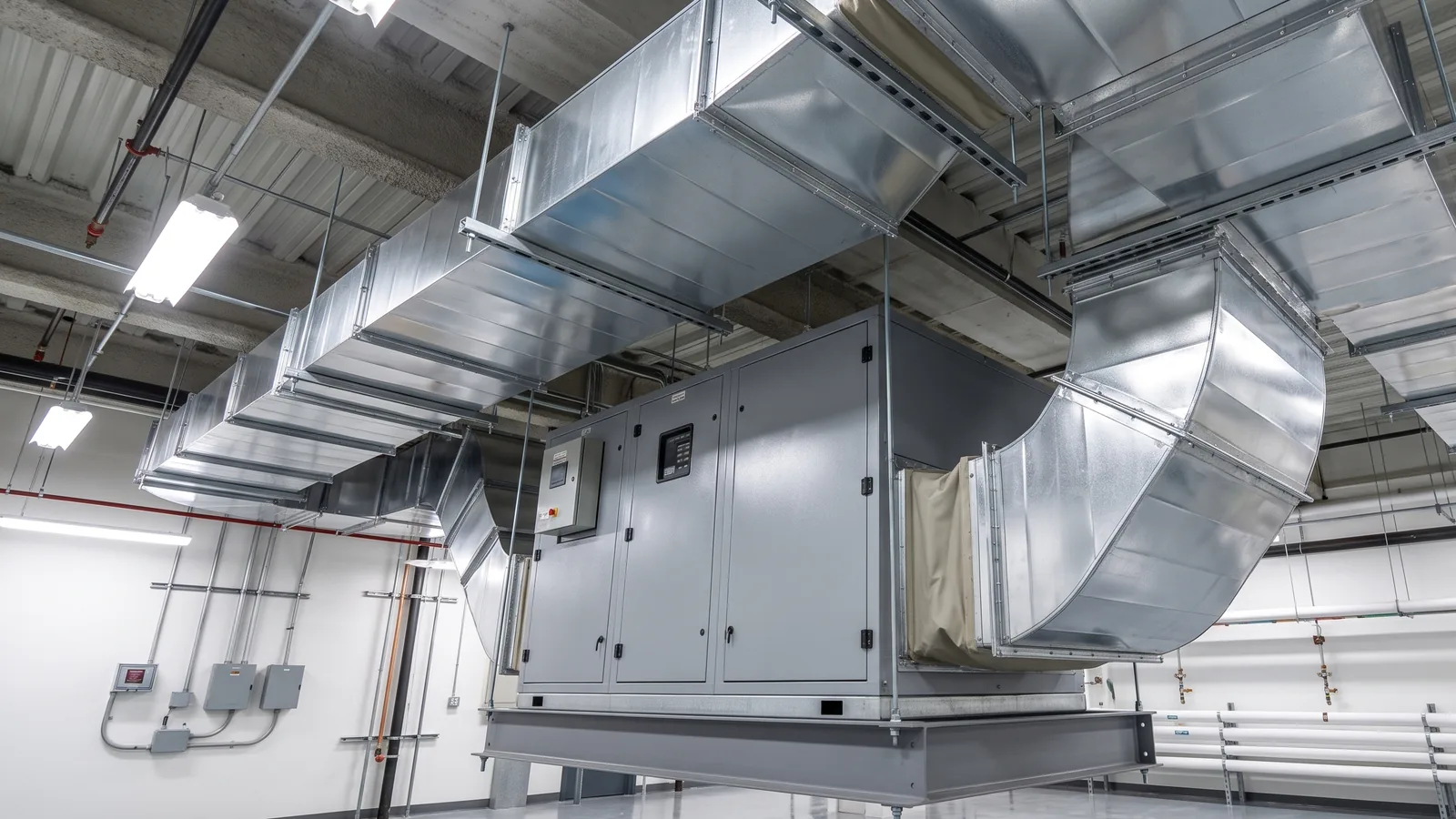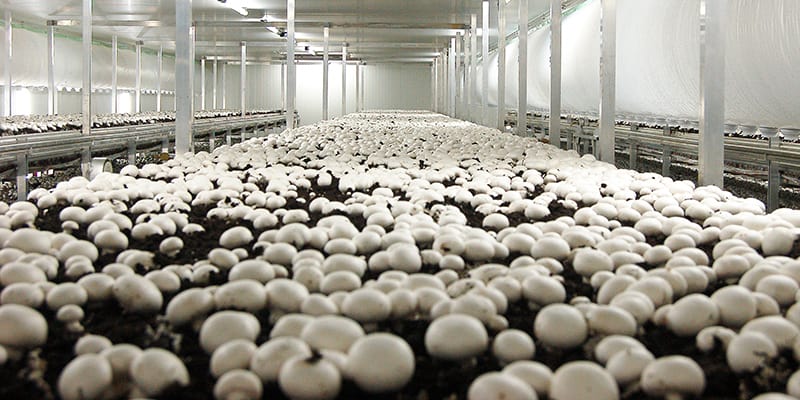
Mushrooms are roughly 90% water and absorb moisture directly from the surrounding air rather than through a root system. A 3% RH drift at canopy height can shift a flush from profitable to contaminated, which is why humidity draws more engineering attention than any other variable in a commercial grow room.
In Australia, the mushroom industry is one of the highest-value horticultural sectors, with research funded through AgriFutures Australia supporting ongoing improvements in cultivation technology.
Each growth stage demands specific humidity levels that directly impact profitability and operational efficiency. Our commercial humidifier range includes units purpose-built for this application.
Critical Humidity Requirements Throughout Production Cycles
Mushroom cultivation follows distinct phases where humidity variations can make or break harvest outcomes. The following parameters, consistent with Penn State Extension mushroom production guidelines, help facility managers implement appropriate control systems.
| Growth Stage | Relative Humidity | Temperature Range | Critical Factors |
|---|---|---|---|
| Substrate Colonisation | 95-100% | 24-27°C | Prevents moisture loss during mycelium growth |
| Pinning Initiation | 90-95% | 18-22°C | Triggers primordial formation |
| Fruit Development | 85-90% | 16-20°C | Supports cap expansion and weight gain |
| Pre-harvest | 80-85% | 14-18°C | Firms tissue for handling and transport |
These parameters vary slightly between species, with oyster mushrooms tolerating wider ranges than button mushrooms. Ultrasonic humidification systems provide the precision control needed to maintain these tight tolerances across growing rooms.
Production Losses from Poor Humidity Management
Inadequate humidity control creates cascading problems that affect both immediate yields and long-term facility performance. These issues compound quickly in commercial operations where thousands of kilograms move through production weekly.
Low Humidity Effects
- Premature cap opening reduces mushroom weight and shortens shelf life
- Surface cracking creates cosmetic defects that downgrade products from premium to processing grades
- Uneven pinning disrupts harvest schedules and increases labour costs
- Substrate drying requires additional watering that introduces contamination risks
Excess Humidity Risks
- Bacterial blotch (caused by Pseudomonas tolaasii) thrives above 95% RH during fruiting, producing brown spots that render crops unsaleable
- Condensation promotes competitor moulds such as Trichoderma and Verticillium
- Waterlogged substrate reduces oxygen availability to mycelium, slowing colonisation
- Standing water creates breeding conditions for fungus gnats and mites
Operational Disruptions
- Variable growth rates complicate workforce scheduling and cold storage planning
- Equipment corrosion accelerates in uncontrolled environments, increasing maintenance costs
- Repeated contamination events can force room shutdowns and full substrate disposal
Humidification Technology for Commercial Mushroom Facilities
Choosing the right humidification method affects moisture uniformity, droplet size, energy consumption, and maintenance burden. Commercial mushroom operations typically evaluate three technologies.
- Ultrasonic humidifiers generate sub-5-micron mist using high-frequency vibration, delivering rapid humidity increases without adding heat. This makes them well suited to mushroom rooms where ultrasonic technology produces fine mist that evaporates before wetting surfaces.
- High-pressure misting systems force water through fine nozzles at 70+ bar, creating a fog that evaporates quickly. These suit large grow rooms but require water treatment to prevent nozzle clogging.
- Evaporative pad systems draw air through wet media, adding moisture through evaporation. They are energy-efficient but offer slower response times and less precise control than ultrasonic or fog-based systems.
The right choice depends on room size, species requirements, and existing ventilation infrastructure. Our guide to selecting the right humidifier for mushroom cultivation covers the decision in detail.
Monitoring and Measuring Humidity in Grow Rooms
A system that cannot detect a 2% RH drift cannot correct for it. In mushroom cultivation that 2% difference separates a clean flush from a contamination event, and most operators only discover the drift after the damage is done.
Sensor Types and Placement
- Capacitive RH sensors are the standard for commercial grow rooms, offering ±1.5% accuracy with fast response times. Place them at crop height in each growing zone, not near air inlets or exhaust vents where readings will not reflect conditions at the substrate surface.
- Wet-bulb/dry-bulb psychrometers remain useful as reference instruments for quarterly sensor calibration. They have no drift and require no electronics, making them a reliable cross-check.
- Data loggers with wireless connectivity allow facility managers to track humidity trends across multiple rooms from a central display. Historical data reveals patterns that spot-checks miss, such as overnight humidity spikes caused by reduced ventilation during off-shift hours.
Sensor drift of 3-4% RH builds up silently over a few months. Without quarterly calibration against a reference hygrometer, the first indication that readings have wandered is usually a contamination outbreak, not a sensor alarm.
System Design Considerations for Mushroom Facilities
Successful humidity control in mushroom production requires understanding the unique challenges these facilities present. Growing rooms operate at high humidity levels continuously, creating demanding conditions for equipment.
Key Design Parameters
- Air exchange rates: 4-6 complete changes per hour during fruiting
- Distribution uniformity: ±2% RH variation across growing surfaces
- Response time: systems must adjust humidity within 5 minutes of setpoint changes
- Filtration requirements: HEPA filtration prevents spore contamination between rooms
- Corrosion resistance: components must withstand constant moisture exposure
Zoned control is worth the added complexity in multi-room operations. A facility running button mushrooms in one room and lion’s mane in another needs independent humidity loops for each, because the 5-10% RH difference between their fruiting targets means a single setpoint cannot serve both.
Integration with Climate Control Systems
Modern mushroom facilities rely on integrated environmental control that coordinates humidity, temperature, CO2, and airflow. Standalone humidity systems rarely deliver the precision required for commercial production. Facilities adopting controlled environment agriculture principles used in vertical farms face similar integration challenges.
Essential Integration Features
- PLC compatibility for centralised monitoring and control
- Multiple sensor inputs to track conditions across room zones
- Automated fresh air dampers that maintain CO2 below 1,000 ppm without compromising humidity
- Variable speed fans that adjust airflow based on growth stage requirements
- Data logging capabilities for quality assurance and troubleshooting
The integration must account for the interaction between humidity control and CO2 management. Fresh air introduction for CO2 reduction typically reduces humidity, requiring systems that can compensate rapidly. In Australian climates, this interaction is more pronounced during dry winters in inland growing regions, where outside air entering at 20-30% RH can pull room humidity down by 10% or more within minutes.
Maintenance Requirements for Continuous Operation
Mushroom production facilities operate year-round with minimal downtime windows for maintenance. Equipment reliability becomes critical when production schedules leave no room for unexpected failures. A detailed walkthrough of maintaining commercial mushroom humidifiers covers each task in the schedule below.
Preventive Maintenance Schedule
| Component | Frequency | Key Tasks |
|---|---|---|
| Humidifier nozzles | Weekly | Clean mineral deposits, check spray patterns |
| Water filters | Monthly | Replace cartridges, flush lines |
| Sensors | Quarterly | Calibrate against reference standards |
| Control valves | Semi-annually | Test operation, replace seals |
| Distribution piping | Annually | Inspect for corrosion, flush systems |
Energy Efficiency at Commercial Scale
In a facility humidifying three or four grow rooms around the clock, the energy gap between technologies becomes a visible line item in the annual budget. Choosing the wrong system does not just cost electricity; it shapes how much cooling the building needs and how often components get replaced.
- Ultrasonic humidifiers consume roughly 10-15% of the energy of steam-based systems per litre of moisture delivered. They add no heat load, so the cooling system does not have to work harder to compensate.
- Evaporative systems use fan energy only, making them the cheapest to run, but their slow response and limited output capacity mean they often need supplementing with a faster technology.
- High-pressure fogging sits between the two, with higher pump energy costs but excellent coverage in large rooms.
Water quality also affects running costs. Hard water requires pre-treatment (reverse osmosis or water softening) to prevent mineral fouling.
Facilities using untreated bore water will replace ultrasonic transducers and fog nozzles at two to three times the normal rate, which erodes the energy savings that justified the system choice in the first place.
ROI Calculations for Humidity System Upgrades
Quantifying the return on humidity control investments helps justify capital expenditures to stakeholders. The financial benefits extend beyond yield improvements to encompass labour efficiency and market positioning.
Measurable Financial Impacts
- Consistent humidity maintains optimal growing conditions, with commercial operators reporting measurable yield improvements after upgrading from manual to automated systems
- Grade improvements shift a greater share of production to premium categories, commanding higher per-kilogram prices
- Labour savings from predictable harvest schedules reduce overtime costs
- Extended equipment life through corrosion prevention
- Reduced contamination losses save entire production runs
Payback periods vary by facility size and existing infrastructure, but most operations recover humidity system investments within one to two years through combined yield and quality improvements. The payback accelerates for operations producing high-value specialty mushrooms where quality premiums are substantial.
Species-Specific Humidity Requirements
Different mushroom varieties demand unique environmental conditions that affect system design and operation. Understanding these variations ensures appropriate equipment selection and control strategies.
Common Commercial Species Parameters
| Species | Colonisation RH | Fruiting RH | Special Considerations |
|---|---|---|---|
| Button (Agaricus) | 95-100% | 85-90% | Requires casing layer moisture monitoring |
| Oyster (Pleurotus) | 90-95% | 80-85% | Tolerates wider humidity ranges |
| Shiitake (Lentinula) | 85-90% | 80-85% | Benefits from humidity cycling for pinning |
| Lion’s Mane (Hericium) | 95-100% | 90-95% | Requires highest sustained humidity |
| King Oyster (Pleurotus eryngii) | 90-95% | 80-90% | Needs lower CO2 during fruiting for stem elongation |
Facilities growing multiple species often zone their production areas with independent humidity control. This approach maximises yields across varieties while preventing cross-contamination between incompatible species. The same zoned approach applies to facilities that also run controlled-environment medicinal cannabis cultivation alongside mushroom production.
Post-Harvest Moisture Management
Humidity control extends beyond the growing room. After harvest, mushrooms must be cooled and stored at 2-4°C with 90-92% RH to maintain weight and shelf life during transport. Too much moisture in cold storage accelerates bacterial soft rot, while too little causes rapid dehydration and weight loss.
For mushroom drying operations (shiitake, wood ear, and specialty varieties), precise humidity control in cold storage environments is equally critical. Desiccant dehumidifiers excel here because they operate efficiently at the low temperatures where refrigerant-based systems lose capacity. A refrigerant unit at 5°C might deliver 30-40% of its rated extraction, while a desiccant unit maintains full performance regardless of temperature.
Frequently Asked Questions
What is the ideal humidity for growing mushrooms?
Most commercial mushroom species require 85-95% relative humidity during fruiting. The exact target varies by species and growth stage: button mushrooms fruit at 85-90% RH, while lion’s mane requires 90-95% RH. During substrate colonisation, all species benefit from near-saturation conditions (95-100% RH).
What type of humidifier is best for commercial mushroom growing?
Ultrasonic humidifiers are the most common choice for commercial mushroom operations. They produce sub-5-micron mist that evaporates before wetting surfaces, add no heat to the growing environment, and respond rapidly to humidity drops. High-pressure fogging systems are an alternative for very large facilities.
What happens if humidity is too low for mushrooms?
Low humidity causes mushroom caps to crack, dry out, and open prematurely, reducing weight and shortening shelf life. Pinning becomes uneven, harvest schedules are disrupted, and substrate dries out, increasing the risk of contamination from competitor moulds.
How does humidity interact with temperature and CO2 in mushroom cultivation?
Humidity, temperature, and CO2 are interdependent in mushroom growing rooms. Introducing fresh air to reduce CO2 also lowers humidity, so the humidification system must compensate. Higher temperatures reduce relative humidity at the same moisture content, while lower temperatures can push humidity above target, causing condensation.
Can you use a dehumidifier in a mushroom growing area?
Yes. Dehumidifiers are essential for managing excess moisture during humid seasons or in post-harvest drying rooms. Desiccant dehumidifiers are particularly effective because they operate efficiently at the low temperatures (2-10°C) common in mushroom cold storage and drying areas.
How do you prevent contamination from excess humidity?
Keep growing room humidity within the target range for each growth stage rather than running at maximum. Maintain air exchange rates of 4-6 changes per hour during fruiting, ensure adequate air circulation to prevent condensation on surfaces, and use HEPA filtration between rooms to stop spore transfer.
How do you maintain humidity in a commercial mushroom growing room?
Sealed rooms, sensors at canopy height, and a controller that responds faster than the ventilation system can equalise. Most commercial operations run ultrasonic or high-pressure fog humidifiers because both respond in under 30 seconds. Sealing doors and wall penetrations reduces passive moisture loss, and fresh air dampers are coordinated with the humidifier so CO2 ventilation does not pull humidity below target.
What humidity do mushrooms need during fruiting compared to spawn run?
Spawn run (colonisation) requires the highest humidity at 95-100% RH to protect the substrate from drying while mycelium establishes. Fruiting humidity is deliberately lower at 80-90% RH depending on species. This controlled drop, combined with a temperature reduction and increased fresh air, is part of the environmental shock that triggers pinning.
Is humidity control important for mushroom drying and storage?
It is critical. Fresh mushrooms stored at 2-4°C need 90-92% RH to prevent dehydration and weight loss during transport. Drying operations for shiitake and specialty varieties need the opposite: low, controlled humidity drawn down by desiccant dehumidifiers that maintain full extraction capacity at cold temperatures where refrigerant units lose performance.
How does mushroom humidity control differ from greenhouse humidification?
Mushroom grow rooms operate at far higher humidity (85-100% RH) than most greenhouses (60-80% RH), run 24 hours a day in enclosed dark rooms rather than sun-lit structures, and require tighter tolerances of ±2% RH. The equipment must also resist constant condensation and the corrosive organic acids released during substrate decomposition, which are not factors in standard greenhouse environments.
If your facility is reacting to humidity alarms rather than preventing drift, the system has gaps worth finding. Contact Moisture Cure Commercial to arrange a site assessment and get a recommendation matched to your species, room layout, and production schedule.