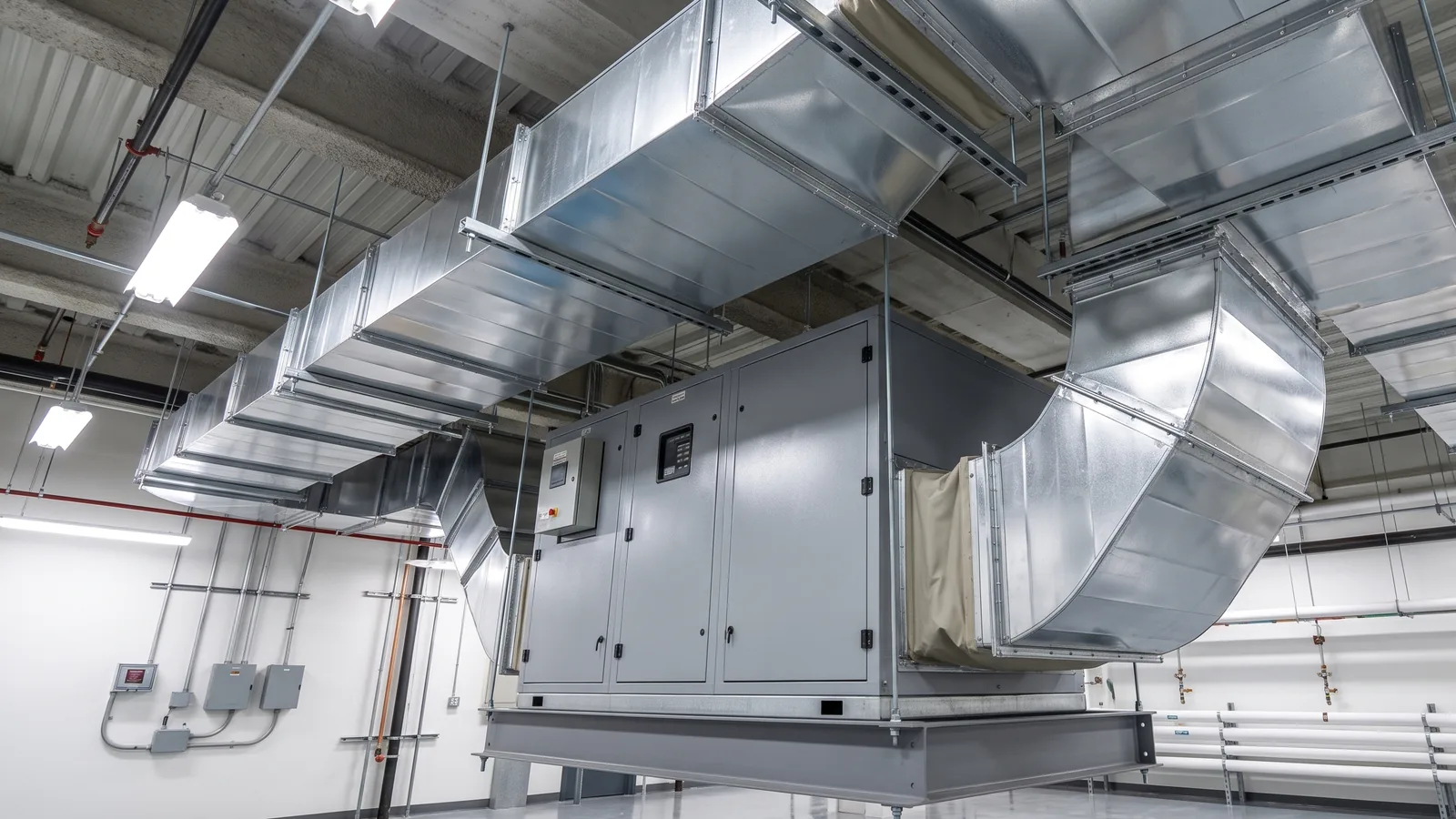
Commercial desiccant dehumidifiers typically last between 8 to 15 years in industrial environments, though this range varies significantly based on operating conditions and maintenance practices. Understanding the factors that influence equipment lifespan helps facility managers and procurement teams make informed decisions about when to service, repair, or replace their humidity control systems.
In warmer environments above 15°C, refrigerant dehumidifiers offer a cost-effective alternative worth considering alongside desiccant units.
Typical Lifespan for Commercial Desiccant Dehumidifiers
The operational lifespan of commercial desiccant dehumidifiers depends heavily on the application and operating environment. Different industries place varying demands on equipment, affecting how long units remain effective and economical to operate.
| Application | Typical Lifespan | Key Factors |
|---|---|---|
| Warehousing | 12-15 years | Moderate duty cycle, controlled environment |
| Cold Storage | 10-12 years | Low temperature operation, consistent humidity loads |
| Pharmaceutical | 8-10 years | Continuous operation, strict humidity tolerances |
| Food Production | 8-12 years | Variable loads, potential contamination exposure |
| Construction Drying | 10-15 years | Intermittent use, harsh conditions when operating |
These ranges are drawn from Moisture Cure Commercial’s field observations across thousands of installations over 20+ years. They assume proper installation, regular maintenance, and appropriate sizing for the application. Units operating beyond their design parameters or in particularly challenging environments may require replacement sooner.
Cold storage facilities face unique demands that can shift these timescales. Selecting equipment rated for sustained low-temperature operation is critical, as covered in our guide to choosing a cold room dehumidifier for Australian conditions.
What Affects How Long a Desiccant Dehumidifier Lasts
Several critical factors determine whether your commercial desiccant dehumidifiers reach their expected service life. Understanding these variables helps optimise equipment performance and predict replacement timing.
- Duty Cycle and Operating Hours: Units running 24/7 experience more wear than those operating intermittently, particularly affecting moving components like fans and rotating desiccant wheels. Understanding how long you can safely leave an industrial dehumidifier running continuously helps set realistic expectations for component wear
- Quality of Desiccant Media: Silica gel wheels typically last 8 to 12 years, while molecular sieve media may require replacement after 5 to 8 years depending on contamination levels
- Reactivation Heater Condition: Proper heater operation ensures complete moisture removal from desiccant material, preventing degradation and maintaining capacity
- Ambient Conditions: High temperatures, corrosive atmospheres, or contaminated air streams accelerate component degradation and reduce overall equipment life
- Filter Maintenance Frequency: Clogged filters force systems to work harder, increasing energy consumption and reducing component lifespan
- Installation Quality: Proper ductwork, electrical connections, and positioning prevent premature failures and ensure optimal airflow patterns
Environmental contamination poses particular risks in food processing and chemical manufacturing facilities. Airborne particles, oils, or chemical vapours can degrade desiccant material and clog internal components more rapidly than in clean environments. In metal fabrication and storage applications, desiccant dehumidifiers play a dual role in corrosion prevention while being subject to the same corrosive conditions they protect against.
How Reactivation Temperature Affects Desiccant Wheel Life
The reactivation (regeneration) cycle drives absorbed moisture out of the desiccant wheel using heated air. Getting this cycle right is one of the most important factors in extending wheel life.
- Correct reactivation temperature: Silica gel wheels typically regenerate between 120°C and 140°C. Running below this range leaves residual moisture that gradually reduces capacity. Running above it can thermally stress the wheel and shorten media life.
- Cycle frequency: Higher humidity loads mean more frequent reactivation cycles, increasing thermal stress on both the desiccant media and the heater elements over time
- Heat recovery: Units with energy-efficient heat recovery systems reduce the thermal load on the wheel during each regeneration cycle, contributing to longer media life
Monitoring reactivation outlet temperatures quarterly helps catch heater degradation before it damages the desiccant wheel. A drop of more than 10°C from the commissioning baseline typically signals a heater element approaching failure.
Signs Your Desiccant Dehumidifier Needs Replacing
Recognising when equipment has reached the end of its useful life prevents costly breakdowns and maintains humidity control reliability. These indicators suggest replacement rather than repair represents the most cost-effective solution.
- Declining Moisture Removal Capacity: Consistent reduction in litres per day output despite proper maintenance and adequate reactivation temperatures
- Energy Consumption Spike: Significant increase in power usage without corresponding improvement in dehumidification performance or capacity. Comparing against published power consumption benchmarks for industrial dehumidifiers helps quantify the gap
- Visible Desiccant Wheel Degradation: Cracking, delamination, or material shedding from the rotating wheel assembly
- Frequent Reactivation Heater Failures: Repeated heater element replacement requirements indicating thermal stress or electrical system deterioration
- Structural Component Corrosion: Rust or corrosion affecting cabinet integrity, ductwork connections, or internal framework
- Control System Unreliability: Frequent sensor failures, programming errors, or communication problems with building management systems
These symptoms often appear gradually, making regular performance monitoring essential for timely replacement decisions. Documenting moisture removal rates, energy consumption, and maintenance frequency helps identify declining performance trends.
For critical facilities where downtime during replacement is not an option, N+1 redundancy planning for industrial dehumidifiers ensures backup capacity is available while a unit is taken offline for replacement or major service.
How to Extend Equipment Lifespan
Proactive maintenance significantly extends desiccant dehumidifier service life and maintains optimal performance. Following a structured desiccant dehumidifier maintenance schedule, in line with general HVAC industry maintenance guidance, prevents minor issues from developing into major component failures.
Monthly Maintenance Tasks
- Inspect and replace pre-filters and post-filters as required
- Check fan operation and unusual noise or vibration
- Monitor control system displays for error codes or alarms
- Verify reactivation temperatures meet manufacturer specifications
Quarterly Maintenance Requirements
- Inspect desiccant wheel for visible damage or material deterioration
- Clean heat exchangers and internal surfaces of dust accumulation
- Check belt tension and alignment on wheel drive systems
- Calibrate humidity sensors and temperature probes
Annual Service Activities
- Comprehensive electrical system inspection including motor current analysis
- Detailed desiccant wheel assessment for capacity degradation
- Reactivation heater element inspection and performance testing
- Control system software updates and backup procedures
Filter selection significantly impacts maintenance intervals and equipment protection. High-efficiency particulate filters protect internal components but require more frequent replacement than standard filters.
Repair vs Replace Decision Framework
Determining whether to repair or replace desiccant dehumidification equipment requires evaluating multiple factors beyond simple repair quotations. A structured approach, using widely applied industry rules of thumb rather than fixed figures, helps justify decisions and optimise long-term operational efficiency.
| Factor | Repair Indicated | Replace Recommended |
|---|---|---|
| Equipment Age | Less than 8 years | Over 12 years |
| Annual Repair Costs | Under 25% of replacement cost | Exceeding 40% of replacement cost |
| Energy Efficiency | Within 15% of original specifications | Degraded beyond 25% of original efficiency |
| Parts Availability | Standard components readily available | Obsolete parts requiring custom fabrication |
| Downtime Impact | Repairs completed within planned maintenance windows | Extended outages affecting production schedules |
Consider total lifecycle costs including energy consumption, maintenance requirements, and productivity impacts when evaluating replacement options. Modern desiccant dehumidifiers typically deliver measurable energy savings compared to units installed a decade or more ago, particularly through improved heat recovery and variable-speed drive technology.
Technology improvements in control systems, heat recovery, and advanced desiccant materials may justify replacement even when existing equipment remains functional. Enhanced monitoring capabilities and integration with building management systems provide additional operational benefits.
Frequently Asked Questions
How long does a commercial desiccant dehumidifier last?
In commercial and industrial settings, a well-maintained desiccant dehumidifier typically lasts 8 to 15 years. Warehousing and construction-drying units often reach the upper end, while continuous pharmaceutical or contaminated-air applications tend to sit lower.
How often does the desiccant wheel need replacing?
Silica gel desiccant wheels generally last 8 to 12 years, while molecular sieve media can need replacement after 5 to 8 years where contamination is higher. Visible cracking, delamination or material shedding signals the wheel is due.
What shortens a desiccant dehumidifier’s lifespan?
Running 24/7, high ambient temperatures, corrosive or contaminated air, clogged filters and poor installation all accelerate wear, particularly on moving parts like fans and the rotating desiccant wheel.
Should I repair or replace an ageing unit?
As a common industry rule of thumb, repair makes sense while annual repair costs stay well below replacement cost and the unit is under about 8 years old. Once a unit passes roughly 12 years, or repairs climb past about 40% of replacement cost, replacement is usually the better long-term decision.
Does running a desiccant dehumidifier continuously reduce its life?
Continuous 24/7 operation puts more hours on fans, drive belts and the desiccant wheel than intermittent use, so duty cycle is one of the biggest factors in how soon a unit needs major service or replacement.
Can you replace just the desiccant wheel instead of the whole unit?
Yes. If the cabinet, fans, heaters and controls are still in good condition, replacing only the desiccant wheel is a cost-effective way to restore moisture removal capacity. Wheel replacement typically costs a fraction of a full unit and can add another 8 to 12 years of service life to the system.
How do Australian conditions affect desiccant dehumidifier lifespan?
Australia’s coastal humidity and wide temperature swings place extra demand on desiccant units. Facilities near the coast face higher salt-laden air exposure, which can accelerate cabinet corrosion. Inland sites with extreme heat may push reactivation systems harder, reinforcing the need for application-specific sizing for Australian conditions and regular maintenance.
How long do the filters in a desiccant dehumidifier last?
Pre-filters in commercial desiccant units typically need replacing every 3 to 6 months, while high-efficiency particulate filters protecting the desiccant wheel last around 6 to 12 months. Contaminated environments like food processing or chemical manufacturing facilities may halve those intervals.
Do desiccant dehumidifiers lose efficiency over time?
Yes, desiccant media gradually loses adsorption capacity over years of continuous operation. Monitoring the gap between rated and actual moisture removal output each quarter reveals the decline curve and helps time wheel replacement before performance drops below acceptable levels.
YAKE Desiccant Dehumidifiers from Moisture Cure Commercial
Moisture Cure Commercial stocks the full YAKE desiccant dehumidifier range, built for continuous commercial and industrial operation across Australia.
- YAKE RY-400M
- YAKE RY-600M
- YAKE RY-1000M
- YAKE RY-1500M
- YAKE RY-2500M
- Browse the full YAKE desiccant range
Talk to Moisture Cure Commercial
With over 20 years of experience in commercial humidity control, Moisture Cure Commercial provides expert guidance on equipment lifecycle management and replacement planning. Our team helps facility managers and engineers evaluate existing dehumidification systems and plan optimal upgrade strategies.
Contact our technical specialists to discuss your specific application requirements and develop a comprehensive humidity control strategy. We provide detailed equipment assessments, maintenance recommendations, and replacement timeline planning tailored to your operational needs and budget constraints.