Commercial bakeries manage humidity across every production zone, from raw ingredient storage through to final packaging. Getting it wrong at any stage creates cascading problems: inconsistent product quality, wasted ingredients, equipment failures, and food safety compliance risks. With over 20 years of experience in commercial humidity control, Moisture Cure supplies commercial humidification and dehumidification systems engineered for the demands of industrial bakery environments.
Critical Production Zones Requiring Humidity Control
Each zone within a commercial bakery operates under specific humidity requirements. These zones interact throughout the production cycle, making zone-by-zone environmental control essential for consistent output.
| Production Area | Target RH Range | Critical Control Factor |
|---|---|---|
| Flour and ingredient storage | 40–50% | Prevents caking and mould growth in hygroscopic ingredients |
| Mixing and scaling stations | 55–65% | Ensures consistent dough hydration batch to batch |
| Fermentation rooms | 75–80% | Controls yeast activity and prevents dough skin formation |
| Proofing cabinets | 80–85% | Maintains surface moisture for even rise |
| Retarder rooms (cold proofing) | 65–75% | Prevents condensation on dough during overnight holds at 2–8°C |
| Oven chamber (initial steam phase) | 70–90% | Promotes oven spring and delays crust set |
| Oven chamber (browning phase) | 30–50% | Drives Maillard browning and crust crispness |
| Cooling tunnels | 40–50% | Prevents surface condensation on warm product |
| Packaging lines | 30–40% | Extends shelf life by preventing trapped moisture |
Flour, sugar, and salt are hygroscopic, meaning they absorb ambient moisture from the air. Without dedicated humidity control in storage areas, these ingredients clump, degrade, and become breeding grounds for mould and mildew that contaminate entire batches.
Temperature and humidity work together to create the right microclimates for each production stage. Fluctuations beyond the specified ranges compromise ingredient performance and product consistency across entire production runs.
How Humidity Affects Baking and Crust Formation
The oven stage is where humidity control has its most visible impact on the finished product. During the first minutes of baking, injected steam or high chamber humidity promotes oven spring, the rapid rise that occurs before the crust sets. This steam also gelatinises surface starches, creating the glossy finish characteristic of artisan breads.
Once the crust has set, humidity must drop to allow Maillard browning, the chemical reaction that produces golden colour, flavour, and crispness. Forced convection ovens typically operate at 30–60% RH during this phase, while natural convection ovens may run at 70–90% RH during the initial steam injection stage.
- Too much humidity during browning: Pale, soft crusts with poor structure
- Too little humidity during oven spring: Premature crust set that restricts rise and splits the loaf
- Inconsistent chamber humidity: Variable crust colour and texture across the same batch
These aren’t cosmetic issues. Inconsistent crust formation drives product rejections and customer complaints that erode margins on already tight bakery operations.
Production Efficiency Losses from Poor Humidity Control
Uncontrolled moisture levels create cascading problems throughout bakery operations. Equipment downtime, product rework, and quality rejections compound when environmental conditions fluctuate beyond acceptable ranges.
- Dough handling issues: Low humidity causes surface crusting that requires additional mixing time and creates texture inconsistencies
- Fermentation problems: Excessive humidity accelerates yeast activity beyond recipe parameters, resulting in overproofed products with poor structure
- Equipment malfunctions: Excess moisture causes flour bridging in hoppers and clogs automated dispensing systems
- Packaging failures: Residual moisture leads to seal integrity problems, while poor humidity control during packaging promotes mould growth and premature spoilage
- Mould contamination: Storage areas above 70% RH create ideal conditions for fungal growth, risking entire ingredient batches
- Compliance risk: Food Standards Australia New Zealand requires food businesses to control environmental factors that affect food safety. Uncontrolled humidity can trigger audit findings under HACCP-based food safety programs
These losses compound during peak production periods when facilities operate at maximum capacity. Each disruption affects downstream processes, creating bottlenecks that reduce overall throughput.
Desiccant vs Refrigerant Dehumidification in Bakeries
Bakeries present a challenge most commercial facilities don’t: production zones ranging from sub-zero cold storage to oven-adjacent areas exceeding 40°C. This temperature spread determines which dehumidification technology works in each zone.
| Factor | Refrigerant Dehumidifier | Desiccant Dehumidifier |
|---|---|---|
| Operating temperature range | 15°C to 35°C | -20°C to +50°C |
| Retarder rooms (2–8°C) | Ineffective: coils ice up | Full performance |
| Proofing and mixing areas | Effective | Effective |
| Packaging and storage | Effective | Effective |
Retarder rooms are the critical application. During overnight cold proofing at 2–8°C, condensation forms on dough surfaces and metal shelving. Standard refrigerant dehumidifiers lose capacity below 15°C as evaporator coils ice over. Desiccant units outperform refrigerant systems in cold storage environments because they use chemical absorption rather than condensation to remove moisture.
Moisture Cure’s YAKE desiccant units operate from -20°C to +50°C, covering every zone in a bakery from retarder rooms through to oven-adjacent spaces. Explore the full desiccant dehumidifier range for specifications suited to bakery applications.
Selecting the Right System for Australian Bakeries
Australia’s climate creates a baseline that many international humidity control guides don’t account for. Coastal cities like Sydney, Brisbane, and Melbourne regularly see ambient relative humidity above 65%, meaning most bakery zones need active dehumidification rather than humidification for the majority of the year.
- Load calculations: Factor in product moisture content, ambient conditions, door openings, and personnel activity levels
- System redundancy: Install backup capacity to prevent production shutdowns during equipment maintenance
- Control integration: Specify equipment that interfaces with existing building automation systems
- Energy efficiency: Select units with variable speed drives and intelligent cycling to minimise operating costs
Proofing rooms are the exception. They typically need precision ultrasonic humidification to maintain elevated moisture levels for controlled fermentation, even in humid coastal environments where other zones are already too wet.
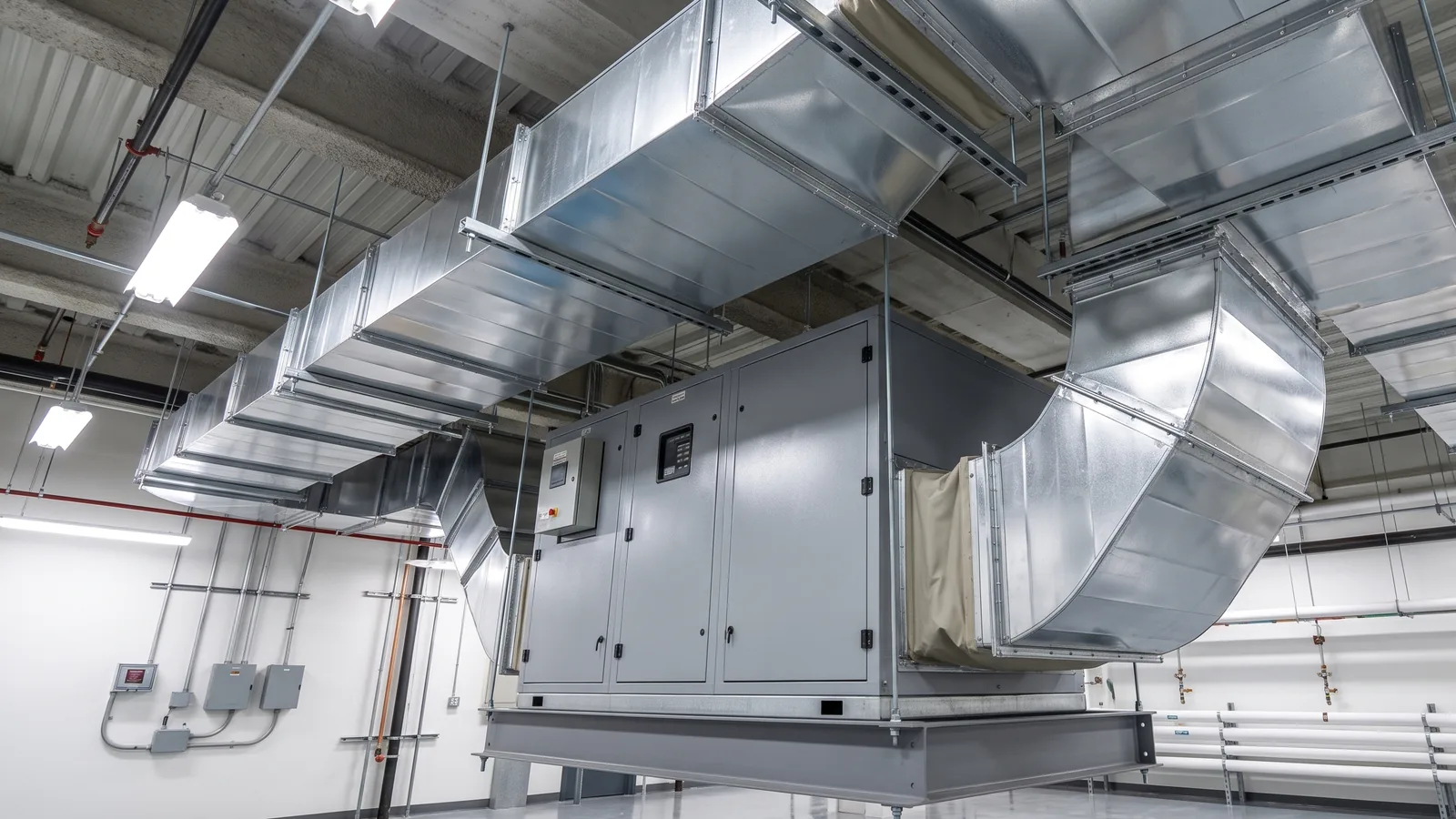
For facilities with complex layouts requiring centralised control, ducted dehumidifier systems manage multiple zones from a single installation, integrating with existing HVAC ductwork and building automation systems.
Warning Signs Your Humidity Control Is Inadequate
Recognising early indicators of humidity control failure prevents costly production losses. Many facilities operate with substandard conditions for months before addressing underlying problems.
- Inconsistent product texture or appearance between production runs
- Visible condensation on equipment, walls, or packaging materials
- Mould growth in storage areas or on finished products
- Equipment cycling constantly without reaching target humidity levels
- Rising energy costs without corresponding increases in production volume
- Increased product waste or customer quality complaints
- Corrosion appearing on metal equipment or fixtures
- Flour or sugar clumping in storage hoppers despite no change in supply
Professional humidity assessments identify root causes and recommend solutions for your specific facility. Early intervention typically requires less capital investment than complete system overhauls.
Frequently Asked Questions
What is the ideal humidity level for a commercial bakery?
There is no single ideal level. Each production zone has a different target: ingredient storage at 40–50% RH, proofing at 80–85% RH, oven chambers alternating between 70–90% (steam phase) and 30–50% (browning phase), and packaging at 30–40% RH. Zone-by-zone control is essential.
What humidity level is needed for dough proofing?
Fermentation rooms typically require 75–80% RH, while proofing cabinets need 80–85% RH. Below these levels, dough surfaces dry out and form a skin that restricts rise and causes cracking. Excessive humidity above 90% can cause over-fermentation and sticky surfaces.
How does humidity affect bread crust formation?
Steam in the oven during the first minutes of baking delays crust set and promotes oven spring. It also gelatinises surface starches for a glossy finish. Humidity must then drop to allow Maillard browning, which produces the golden colour and crisp texture.
Can too much humidity ruin baked goods?
Yes. Excessive humidity in storage causes ingredient clumping and mould. In proofing, it leads to over-fermentation and sticky dough. During cooling and packaging, trapped moisture promotes spoilage and compromises seal integrity.
What type of dehumidifier is best for a bakery cold room?
Desiccant dehumidifiers are the only reliable option for bakery cold rooms and retarder rooms operating at 2–8°C. Refrigerant dehumidifiers lose capacity below 15°C as their evaporator coils ice up, while desiccant units operate effectively from -20°C to +50°C.
How does humidity affect the shelf life of baked goods?
Excess moisture promotes mould growth and bacterial contamination, reducing shelf life significantly. Conversely, too little humidity accelerates staling by drawing moisture from the product. Controlled humidity during cooling and packaging prevents both problems.
Do I need separate humidity control for proofing and cold storage?
Yes. Proofing rooms need humidification (adding moisture to reach 80–85% RH), while cold storage and retarder rooms need dehumidification (removing moisture to prevent condensation). These are opposite requirements that demand separate systems.
How does humidity control protect bakery equipment?
Uncontrolled moisture causes flour bridging in hoppers, clogs automated dispensing systems, corrodes metal components, and creates electrical faults. Maintaining target humidity levels in each zone extends equipment life and reduces unplanned downtime.
What happens to flour and sugar stored in high humidity?
Flour and sugar are hygroscopic and absorb ambient moisture. Flour clumps and promotes mould growth, while sugar hardens into solid blocks. Both become unusable in automated dispensing systems and produce inconsistent results in recipes.
Does bakery humidity control affect food safety compliance?
Yes. HACCP-based food safety programs require food processing facilities to control environmental factors that affect product safety, including humidity. Uncontrolled conditions in storage, proofing, and packaging areas can trigger audit findings and non-compliance notices.
Need a humidity assessment for your bakery? Contact Moisture Cure for a tailored recommendation based on your production layout, climate zone, and target conditions.