Maintaining the right humidity levels in a printing facility is not just a matter of comfort—it directly impacts product quality, production efficiency, and equipment lifespan.
From paper shrinkage to ink adhesion and static electricity, poor humidity control can lead to costly problems. That’s why Moisture Cure provides precision humidity management solutions tailored to the needs of commercial and industrial printing environments across Australia.
Table of Contents
Why Humidity Control Matters in Printing
Paper is hygroscopic, meaning it constantly absorbs and releases moisture depending on the ambient humidity. When humidity fluctuates, paper can curl, shrink, or swell, causing registration issues, misfeeds, jams, and inconsistent print quality.
Key risks in printing environments with improper humidity include:
- Paper curl and deformation
- Poor ink absorption and drying
- Increased static electricity in dry air
- Inconsistent colour reproduction
- Equipment malfunctions and jams
Consistent humidity control helps ensure smoother operation and higher-quality output—particularly in high-volume or high-speed printing operations.
Ideal Humidity Levels for Printing
Most printing experts agree that the ideal relative humidity (RH) range for printing facilities is between 40% and 60%, with some specific processes requiring tighter tolerances. This range helps balance ink performance, paper stability, and the reduction of static charges, especially in dry or air-conditioned environments.
Humidifiers for Dry Print Rooms
In colder or air-conditioned environments, especially during winter, the air inside a print room can become too dry. This can result in static build-up that causes paper to stick together, leading to feeding errors and smudging.
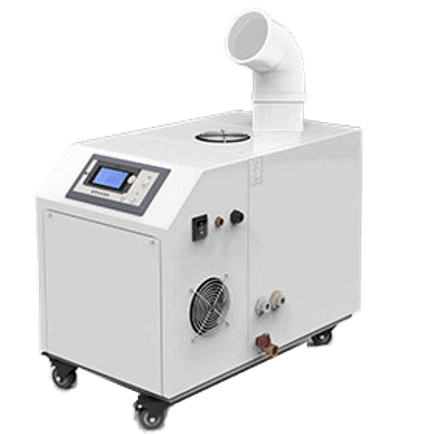
Ultrasonic humidifiers are ideal in these situations. They produce a fine mist without wetting surfaces, allowing for precise control of room humidity and uniform moisture distribution across paper stock.
Dehumidifiers for Moist Climates and Storage
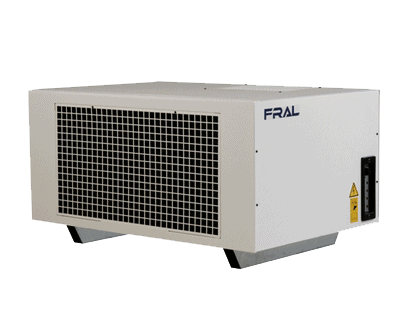
In more humid regions or seasons, especially in coastal areas of Australia, excess moisture can lead to paper warping, ink bleeding, and mould in stored stock. Refrigerant dehumidifiers are a cost-effective option for managing general room humidity, while desiccant dehumidifiers provide reliable performance even in low-temperature environments or where ultra-low humidity levels are required.
Zoned and Ducted Solutions
For larger printing facilities or multi-zone operations, ducted dehumidifiers allow centralised control of humidity throughout press rooms, storage areas, and pre-press rooms. These systems can be integrated into existing HVAC systems to provide quiet, energy-efficient operation across wide spaces.
Benefits of Proper Humidity Management
By maintaining stable humidity levels throughout your printing environment, you can achieve:
- Improved print quality and colour consistency
- Reduced material waste and paper jams
- Increased equipment reliability
- Less downtime and fewer production delays
- Better worker comfort and air quality
Investing in the right humidity solution helps protect your reputation for quality and saves money in the long run.
Partner with Australia’s Humidity Control Experts
Moisture Cure works with printing companies across Australia to deliver bespoke humidification and dehumidification solutions for offset, digital, packaging, and specialty print operations.
From installation to ongoing maintenance, our experienced team ensures your system is optimised for performance and efficiency.
Contact us to learn how we can help you keep your print environment perfectly balanced.