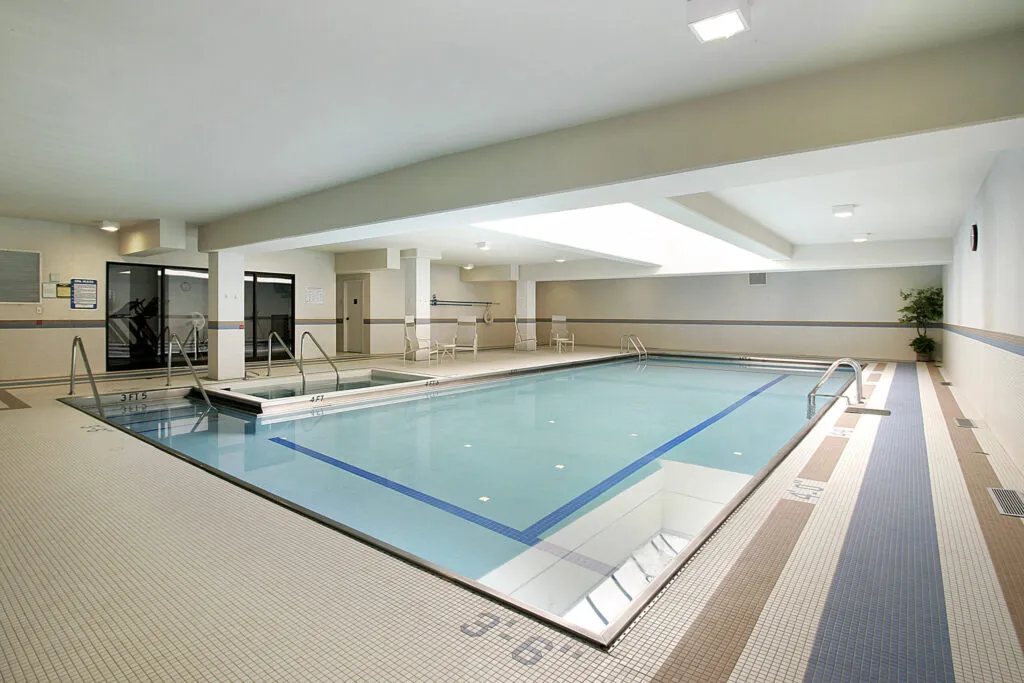
Indoor swimming pools present a unique challenge when it comes to maintaining healthy indoor air quality. The constant evaporation of water creates extremely high humidity levels that can lead to condensation, corrosion, mould growth, and long-term structural damage.
At Moisture Cure, we supply commercial-grade humidity control systems designed for aquatic environments. Our solutions protect your facility, ensure occupant comfort, and improve air quality.
Why Humidity Control Is Crucial for Indoor Pools
Evaporation is constant in any swimming pool. In an indoor facility, the moisture has nowhere to escape, causing the air to become saturated with water vapour.
Without proper humidity solutions, this leads to a range of costly problems:
- Condensation on walls, ceilings, and windows, resulting in damage to finishes and surfaces
- Corrosion of structural steel and HVAC components, accelerated by chloramine vapour in pool air
- Mould and mildew growth, which can pose health risks to staff and swimmers
- Uncomfortable indoor climate, with stuffy, muggy air that discourages repeat visits
- Increased energy consumption, as HVAC systems work harder to regulate temperature and humidity
- Chloramine build-up, where chlorine reacts with organic matter (sweat, skin oils) to produce irritating airborne compounds that attack metal surfaces, ductwork, and building structure far more aggressively than ordinary humid air
Installing the right dehumidification system prevents these issues, prolongs the life of your facility, and ensures a pleasant experience for guests.
Ideal Humidity Levels for Indoor Pool Facilities
The recommended relative humidity for an indoor pool environment is between 50% and 60% RH, per ASHRAE Handbook guidelines. This range balances comfort, building protection, and energy efficiency.
- Above 60% RH: Condensation forms on cool surfaces, mould growth accelerates, and occupants feel uncomfortably clammy
- Below 50% RH: Swimmers experience a chilling effect as water evaporates rapidly from skin after exiting the pool
- 50 to 60% RH: The target range that protects the building envelope while keeping swimmers comfortable
Maintaining the room air temperature approximately 2°C above the pool water temperature also reduces evaporation and helps keep humidity within the target range.
Signs Your Pool Facility Needs Better Humidity Control
Many facility managers only recognise a humidity problem after damage has already occurred. Watch for these warning signs:
- Persistent fogging or dripping on windows and skylights
- Rust or discolouration on metal fixtures, ductwork, or structural supports
- Musty odour or visible mould on walls, ceilings, or grout lines
- Peeling paint, bubbling plaster, or warping timber
- Complaints from swimmers or staff about air quality or comfort
- Higher than expected energy bills from overworked HVAC systems
- A strong, persistent chlorine smell, which indicates poor ventilation and chloramine accumulation rather than excessive chemical use
If any of these are present, a professional site assessment can identify the root cause and recommend the right humidity solution for your facility.
How Pool Dehumidification Works
Pool dehumidifiers differ from standard commercial units because the moisture load is relentless and the air itself is chemically aggressive. Two technologies handle the job.
Refrigerant-based systems draw warm, moist pool air across a cold evaporator coil. The air cools below its dew point, water condenses out, and the dried air passes over a condenser coil where it is reheated before returning to the pool hall.
Desiccant systems pass air through a slowly rotating wheel coated with a moisture-absorbing material. The wheel captures water vapour from the process air, then a separate heated reactivation airstream drives the collected moisture out and exhausts it.
- Heat recovery: Many pool-rated dehumidifiers capture waste heat from the refrigeration cycle and return it to the pool water or the supply air. This offsets heating costs and can reduce total facility energy use compared to running dehumidification and pool heating as separate systems.
- Corrosion-resistant construction: Pool air contains chloramines and, in saltwater pools, sodium chloride vapour. Pool-rated units use coated coils, stainless steel drain pans, and sealed electrical enclosures that standard commercial dehumidifiers lack.
- Continuous duty rating: Unlike standard units designed for intermittent operation, pool dehumidifiers run 24/7 and are built with components rated for that duty cycle.
Reducing Moisture Load in Pool Facilities
Dehumidification handles the moisture that reaches the air, but reducing evaporation at the source lowers the load on the system and cuts operating costs. Several factors drive how much moisture a pool produces.
- Pool covers: A well-fitted cover over the water surface when the pool is not in use reduces evaporation by approximately 90% (per ASHRAE data). No other single measure reduces the moisture load on a dehumidification system by as much.
- Temperature differential: Keeping the room air 1 to 2°C above the pool water temperature slows evaporation. A larger gap in the opposite direction, where air is cooler than the water, drives moisture into the air far more rapidly.
- Water temperature: Warmer water evaporates faster. Hydrotherapy pools at 34°C produce roughly twice the moisture load of a 26°C lap pool with the same surface area.
- Activity level: Swimmers agitate the water surface and increase evaporation. A busy learn-to-swim pool with constant splashing produces more moisture per square metre than a quiet lap pool.
- Ventilation: ASHRAE standards recommend 4 to 6 air changes per hour for indoor pool halls. Adequate ventilation dilutes chloramine concentration and supports the dehumidifier, but over-ventilating with unconditioned outside air can increase the energy load in humid climates.
A properly sized system accounts for all of these variables. Using pool covers, managing temperatures, and controlling ventilation alongside the dehumidifier will lower running costs noticeably.
Humidity Solutions for Different Pool Types
Not every indoor pool facility has the same dehumidification requirements. The right solution depends on pool size, water temperature, building design, and how the space is used.
- Competition and lap pools: Large water surface areas generate significant moisture loads. Ducted dehumidification systems integrated with HVAC provide the capacity needed for these facilities.
- Hydrotherapy and warm-water pools: Higher water temperatures increase evaporation rates substantially. Desiccant dehumidifiers handle these conditions well, maintaining control even in cooler ambient air.
- Hotel and resort pools: Guest comfort is the priority. Quiet, ducted systems that maintain stable conditions without visible equipment are the standard approach.
- Swim schools and leisure centres: Frequent door openings and variable occupancy require responsive systems that adapt to changing conditions throughout the day.
- Residential indoor pools: Smaller pool rooms still require purpose-built dehumidification. Compact refrigerant units suit many residential installations.
- Spa and wellness facilities: Steam rooms, heated plunge pools, and therapy pools in the same building create overlapping humidity zones that need independent control. Facilities with multiple wet areas alongside a pool often require a combination of desiccant and refrigerant units working in different zones.
Choosing the Right Dehumidifier for Your Pool Facility
Selecting the correct system depends on factors like pool size, water temperature, air temperature, building envelope, and ventilation rates. Moisture Cure offers a range of solutions tailored for indoor aquatic environments.
Desiccant Dehumidifiers
Desiccant dehumidifiers excel in environments that require humidity control at low temperatures. They use a moisture-absorbing wheel to extract water vapour from the air, making them suitable for smaller or cooler pool rooms where refrigerant systems may struggle.
Ducted Dehumidifiers
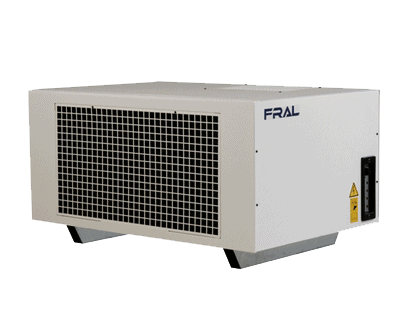
Our ducted dehumidifiers suit larger indoor pool complexes that need discreet, high-volume moisture removal. These units integrate into existing HVAC systems, maintaining target humidity levels while remaining out of sight and quiet in operation.
Refrigerant Dehumidifiers
For warm, humid pool rooms, refrigerant dehumidifiers offer efficient and effective moisture removal. These systems condense moisture from the air and drain it away, keeping condensation under control and helping to regulate the temperature of the space.
Benefits of Proper Indoor Pool Dehumidification
A professionally designed dehumidification system delivers measurable advantages for any pool facility:
- Prevents costly structural damage from rust, rot, and corrosion
- Improves air quality for a healthier, more comfortable experience
- Reduces mould and mildew build-up, ensuring safer conditions for all users
- Maintains pool room aesthetics, preserving paint, plaster, timber, and metal finishes
- Optimises energy use, cutting down on heating and cooling costs
- Protects windows and skylights from condensation and fogging
- Recovers waste heat from the dehumidification process, reducing pool water and air heating costs
Maintaining Your Pool Dehumidification System
Pool dehumidifiers cop chloramine-laden air, constant moisture, and 24/7 run times. Regular maintenance is not optional in this environment.
- Air filters: Check and replace filters monthly during peak season. Clogged filters reduce airflow and force the system to work harder, increasing energy consumption.
- Coils and heat exchangers: Inspect evaporator and condenser coils quarterly for corrosion, scale build-up, or fin damage. Coated coils resist chloramine attack but still need periodic cleaning.
- Condensate drains: Clear drain lines and pans regularly. A blocked drain causes water to back up inside the unit, potentially damaging components and creating a secondary moisture source.
- Humidity sensors and controls: Calibrate sensors annually. A sensor reading 5% low will let humidity climb past 60% RH before the system responds, and by that point condensation damage is already occurring.
- Professional servicing: Schedule a full service at least annually, covering refrigerant charge (for refrigerant units), desiccant wheel condition (for desiccant units), electrical connections, and overall system performance.
Skipping scheduled maintenance is how a facility ends up with a failed unit mid-summer and condensation running down the walls within 48 hours.
Designed for Australian Conditions
A pool facility in Cairns faces a completely different moisture challenge to one in Hobart. The dehumidification system must be sized for the local climate, not just the pool.
- Tropical and subtropical zones (QLD, NT, northern WA): High ambient humidity means the dehumidifier handles a larger total moisture load, because the outside air drawn in for ventilation is already moisture-laden. Desiccant systems perform well here regardless of temperature.
- Temperate and coastal zones (NSW, VIC, SA, southern WA): Seasonal swings from dry winters to humid summers demand systems that adapt across a wide operating range. Coastal salt air adds another corrosion risk on top of pool chemicals.
- Cool climates (TAS, alpine regions): Lower ambient temperatures reduce refrigerant dehumidifier efficiency. Desiccant units maintain full performance in these conditions, operating effectively from -20°C to +50°C.
- All systems are sized for Australian building standards and pool specifications
Whether you are building a new facility or upgrading an existing one, we recommend a solution matched to your local climate and your pool’s specific operating conditions.
Installation and Support
We work closely with pool builders, HVAC specialists, architects, and property owners to ensure every system is correctly specified, installed, and maintained. Our team can also assess whether your current system is underperforming and recommend upgrades.
- Free site assessments and system sizing
- Installation coordination with your HVAC contractor
- Ongoing maintenance support and spare parts
If you are unsure which unit is best for your space, contact our team for a pool dehumidification assessment. You can also read our guide on whether your indoor pool needs a commercial dehumidifier for more detail on choosing the right system.
Frequently Asked Questions
What humidity level should an indoor pool room be?
Indoor pool rooms should maintain relative humidity between 50% and 60% RH, as recommended by ASHRAE. This range prevents condensation and mould while keeping swimmers comfortable when entering and exiting the water.
Why is my indoor pool room always foggy?
Fogging occurs when warm, moisture-laden air contacts cooler surfaces like windows and skylights. It typically means humidity has exceeded safe levels and a dehumidification system is needed, or an existing system is undersized for the space.
Can I use a standard commercial dehumidifier for a pool room?
Standard commercial dehumidifiers are not designed for the sustained high-moisture environment of an indoor pool. Pool-rated systems use corrosion-resistant coils, sealed electrical enclosures, and components rated for continuous operation in chloramine-laden air that standard units cannot handle.
How do I reduce evaporation from my indoor pool?
Using a pool cover when the pool is not in use is the most effective measure, reducing evaporation by approximately 90%. Keeping the room air temperature 1 to 2°C above the water temperature also helps.
Dehumidification is still required to manage the moisture that enters the air during use.
What type of dehumidifier is best for an indoor pool?
It depends on the facility. Ducted systems suit large commercial pools, desiccant units work well for hydrotherapy and cooler pool rooms, and refrigerant dehumidifiers are effective for warm, humid environments.
Contact Moisture Cure for a site-specific recommendation.
Equipment and Maintenance
How does heat recovery work in a pool dehumidifier?
Refrigerant-based pool dehumidifiers capture the waste heat generated during the condensation process. Instead of rejecting this heat to the outdoors, the system redirects it to warm the pool water, the supply air, or both.
The dehumidifier offsets a portion of the pool heating costs while controlling humidity.
Does a pool cover reduce the size of dehumidifier needed?
A pool cover cuts the peak moisture load by reducing evaporation when the pool is unoccupied. However, the dehumidifier must still be sized for the moisture load when the pool is uncovered and in use.
The cover reduces running hours and energy consumption rather than the required unit capacity.
How often should a pool dehumidifier be serviced?
Filters should be checked and replaced monthly during peak use. Coils and drain lines need quarterly inspection.
A full professional service covering refrigerant charge, electrical connections, and overall performance should be carried out at least once a year. Pool environments are harsher than standard commercial spaces, so maintenance intervals are shorter.
What causes the strong chlorine smell in indoor pool rooms?
The smell is usually chloramines, not chlorine itself. Chloramines form when free chlorine reacts with organic matter such as sweat, oils, and urine.
Poor ventilation and high humidity trap these compounds in the air. A properly sized dehumidification system combined with adequate ventilation (ASHRAE recommends 4 to 6 air changes per hour for pool halls) reduces chloramine concentration.
How do I calculate the right size dehumidifier for my indoor pool?
Sizing depends on pool surface area, water temperature, room air temperature, expected activity level, building envelope tightness, and local climate. Evaporation rate calculations from the ASHRAE Applications Handbook are the standard starting point.
Because undersizing is the most common mistake in pool dehumidification, we recommend a professional site assessment to confirm the calculations before specifying a unit.