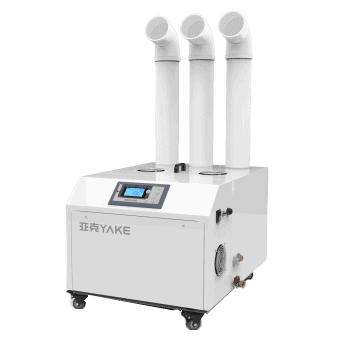
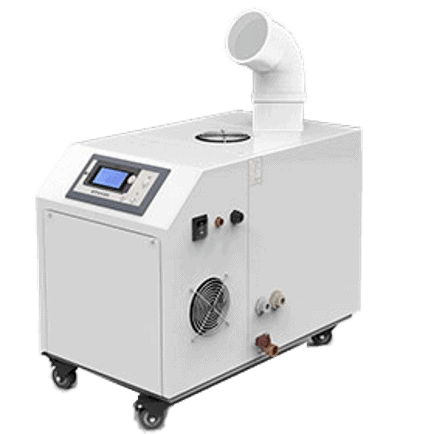
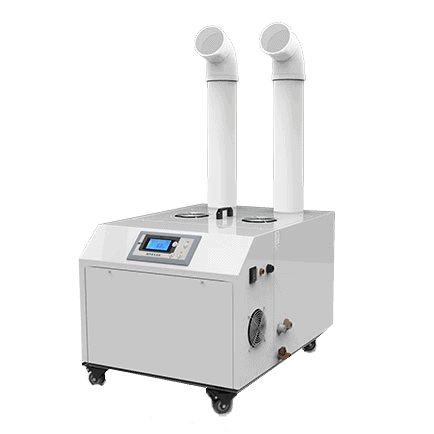
What Is a Commercial Humidifier?
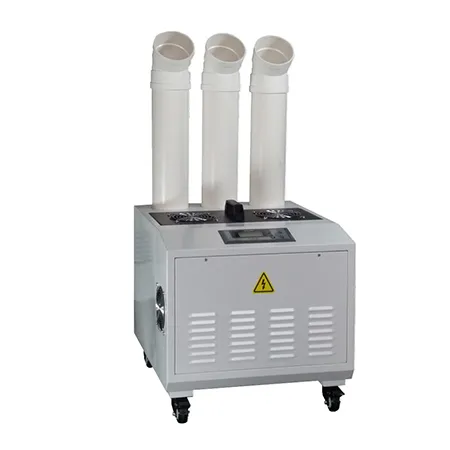
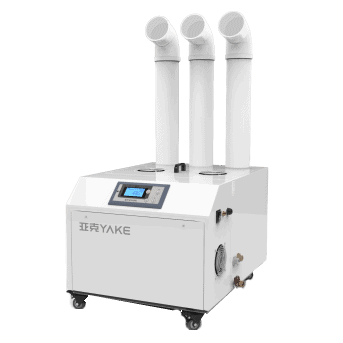
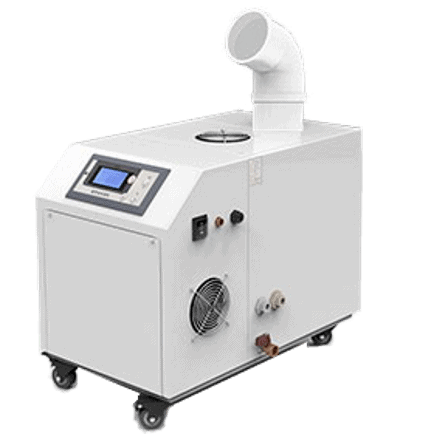
A commercial humidifier is a moisture-adding system built for the duty cycles and capacities of business operations. It adds water vapour to air that is too dry for comfort, product quality, or process requirements, using one of several technologies.
Moisture Cure Commercial supplies YAKE commercial humidification across ultrasonic, spray, and evaporative technologies, sized to the specific facility and application.
- Primary technology: ultrasonic piezoelectric atomisation
- Capacity: a few litres/hour up to tens of litres/hour per unit
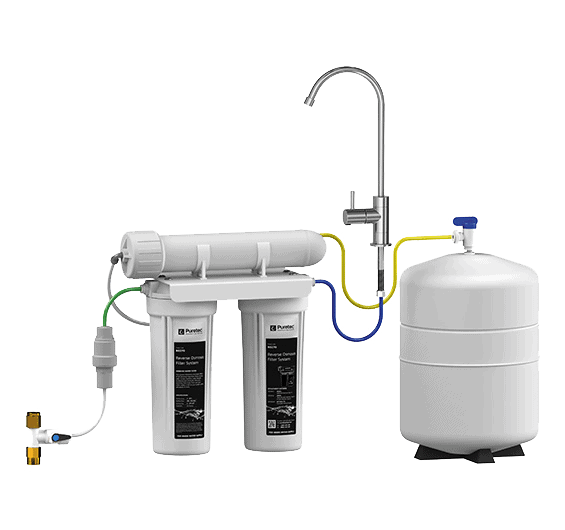
- Water quality: demineralised or treated water required for most commercial units
- Control: precision humidistats, BMS integration available
- Duty: continuous operation supported
When Commercial Humidification Is Required
Many commercial environments suffer from dry air that damages products, occupants, or processes. Air conditioning, winter heating, and arid climates all strip moisture from indoor air, often well below comfort and product-safe levels.
| Target RH range | Why it matters |
|---|---|
| 40 to 60% | Occupant comfort, respiratory health, static control |
| 50 to 65% | Paper, timber, and furniture dimensional stability |
| 60 to 75% | Wine cellars, food ageing, and preservation |
| 80 to 95% | Mushroom farms, propagation, and wet processing |
Commercial Humidifier Applications
Commercial humidification is specified wherever dry air causes tangible problems. The problems are usually invisible until they become expensive.
- Office and retail spaces: occupant comfort and respiratory health in heated or air-conditioned environments
- Printing and paper handling: dimensional stability prevents misalignment and product rejects
- Museums and galleries: artefact preservation at controlled RH
- Wine cellars and barrel rooms: prevents barrel evaporation loss
- Humidors: cigar and premium tobacco preservation
- Data centres: static control supplementary to cooling
- Hospitals and clinics: patient comfort and airborne pathogen control
- Cold storage: prevents produce dehydration and weight loss
- Textile and fibre handling: static control and dimensional stability
Commercial Humidifier Technologies
Choice of technology depends on capacity, water quality, energy cost, and whether heat addition is acceptable. Ultrasonic is the default for most modern commercial applications.
- Ultrasonic humidifiers: low-energy, precise, suitable for most commercial applications with proper water treatment
- Spray and misting systems: high-capacity industrial applications like mushroom farms and greenhouses
- Evaporative pad: simpler systems, slower response, generally replaced by ultrasonic in new installations
Sizing a Commercial Humidifier
Humidification sizing calculates how much water the space is losing and matches output to that rate. Under-sized units never reach target, while over-sized units can cause condensation on cold surfaces.
- Room volume: cubic metres of conditioned space
- Air changes per hour: tight or leaky envelope
- Current and target RH: grain gain required
- Temperature: warm air holds more moisture, so target at temperature matters
- Water supply: demineralised preferred for ultrasonic, softened minimum
- Fresh air load: outside air condition adds or removes moisture demand
Commercial Humidifiers Across Australia
Moisture Cure Commercial supplies and supports commercial humidifier installations nationwide, including water treatment specification.
- Commercial humidifiers Sydney
- Commercial humidifiers Melbourne
- Commercial humidifiers Brisbane
- Commercial humidifiers Perth
- Commercial humidifiers Adelaide
- Commercial humidifiers Canberra
- Commercial humidifiers Newcastle
- Commercial humidifiers Gold Coast
- Commercial humidifiers Hobart
- Commercial humidifiers Darwin
Frequently Asked Questions
Why do commercial spaces need humidification?
Heating and air conditioning both strip moisture from indoor air, often well below comfortable and product-safe levels. Commercial humidification restores the air to the target RH for the specific application.
What is the best type of commercial humidifier?
For most modern commercial applications, ultrasonic units offer the best combination of efficiency, precision, and quiet operation. The main requirement is proper water treatment.
Do commercial humidifiers use a lot of water?
Consumption depends on room size and target RH, ranging from a few litres per hour for small spaces up to tens of litres per hour for large or very dry applications. A continuous mains feed is standard.
How is a commercial humidifier installed?
Installation depends on the unit and application. Portables need power, water feed, and a humidistat location. Ducted and in-duct units require more extensive commissioning. We provide installation guidance with every supply.
Can commercial humidifiers damage the building?
Over-sized or poorly controlled systems can cause condensation on cold surfaces, which risks building damage. Correct sizing and good humidistat placement eliminate this for virtually all installations.
How long do commercial humidifiers last?
Commercial ultrasonic humidifiers routinely operate for 8 to 12 years with correct water treatment and routine maintenance. Skipping water treatment is the main cause of premature failure.
Get Expert Sizing Advice
Every commercial humidifier we supply is sized to the specific space, target conditions, and water supply. Twenty-eight years of commercial installations across Australia informs every recommendation we make.
Contact Moisture Cure Commercial on (02) 6584 2511 or through our contact page for a no-obligation sizing assessment including water treatment specification.