How Ultrasonic Humidifiers Work
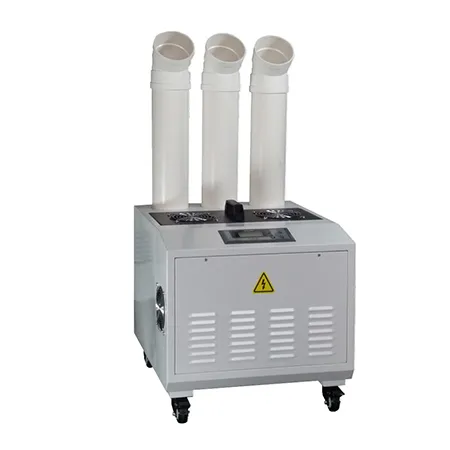
Ultrasonic humidifiers use a high-frequency piezoelectric transducer to vibrate water into an ultra-fine mist of droplets. The mist is carried into the conditioned space by a fan, where it evaporates into the air and raises humidity.
Unlike steam humidifiers, ultrasonics use no heat, which makes them efficient and safe around sensitive processes. Unlike evaporative pad humidifiers, they respond quickly to setpoint changes and deliver precise RH control.
- Technology: piezoelectric ultrasonic atomisation
- Energy use: low, no heating element
- Droplet size: 1 to 10 microns, evaporates on contact with air
- Response: near-instant on and off cycling
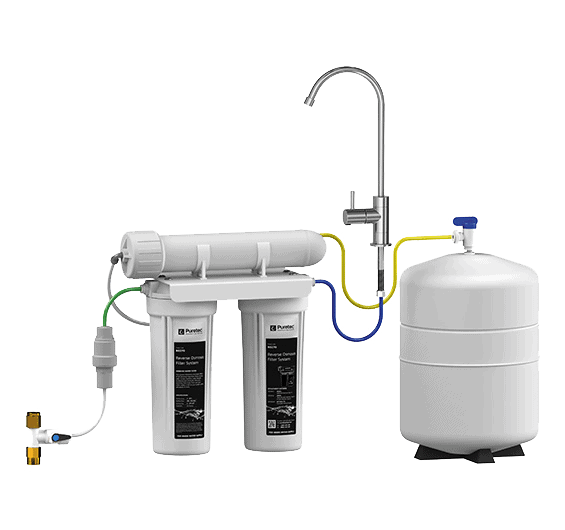
- Water quality: demineralised or treated water recommended
When to Specify Ultrasonic Humidification
Ultrasonics suit applications where precise humidity control is required without adding heat, and where demineralised water is available or can be plumbed in. They are the default choice for most modern commercial humidification.
| Requirement | Ultrasonic | Steam | Evaporative Pad |
|---|---|---|---|
| Low energy use | Best | Worst | Good |
| No added heat | Yes | No | Yes |
| Precise RH control | Excellent | Excellent | Limited |
| Fast response | Excellent | Good | Slow |
| Water treatment required | Yes | No | Yes |
| Hygiene | Good with treatment | Excellent | Requires maintenance |
Industrial and Commercial Applications
Ultrasonic humidifiers are specified across any commercial or industrial setting where precise humidity control matters for product quality, process integrity, or occupant comfort.
- Mushroom farms: maintains the 85 to 95% RH required for fruiting
- Greenhouses and propagation: plant growth optimisation and transpiration control
- Printing and paper handling: dimensional stability of paper and card stock
- Textile manufacturing: fibre handling, static control, and product quality
- Wine cellars and barrel rooms: prevents evaporation loss from barrels
- Humidors and cigar storage: precise RH for product preservation
- Museums and galleries: artefact preservation at controlled RH
- Electronics assembly: static control on production floors
- Cold stores and refrigeration: prevents produce dehydration
- Data centres: supplementary humidification for static control
Sizing an Ultrasonic Humidifier
Humidification sizing calculates the moisture the space is losing and matches output to that rate. Under-sized units cannot reach target RH, while over-sized units short cycle and can cause condensation on cold surfaces.
- Room volume: length × width × height in cubic metres
- Air changes per hour: building tightness and ventilation
- Current and target RH: determines grain gain required
- Temperature: warm air holds more moisture, so target RH at specific temperature matters
- Moisture losses: transpiration, product drying, ventilation exhaust
- Water supply: demineralised preferred, softened minimum
Moisture Cure Commercial sizes every installation against these inputs and specifies water treatment where required. Skipping water treatment is the single most common cause of ultrasonic humidifier failure.
Commercial Ultrasonic Humidifier Range
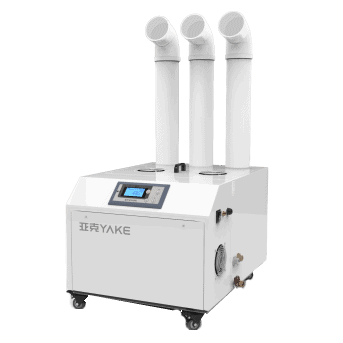
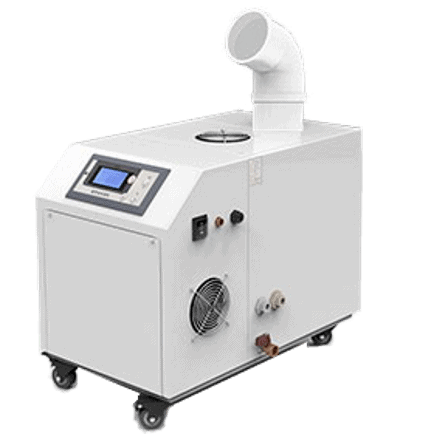
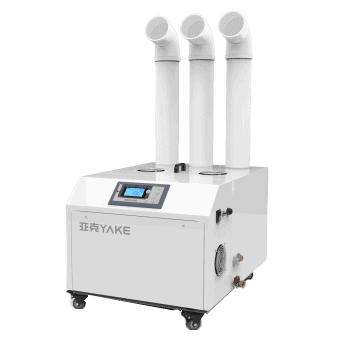
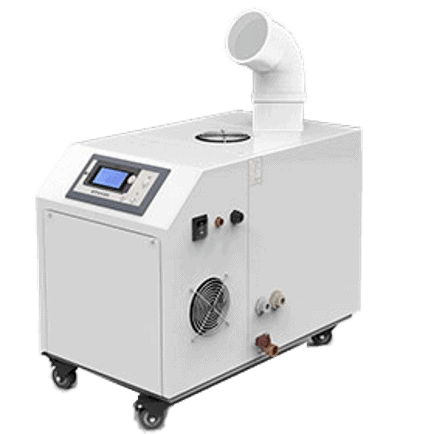
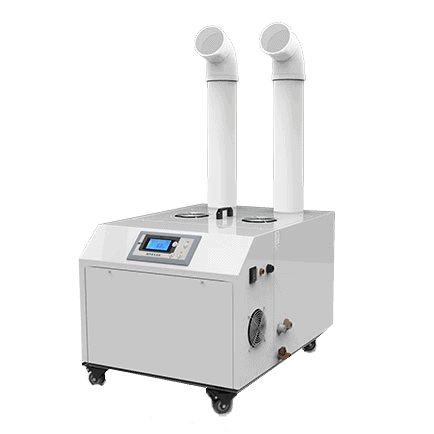
Our YAKE ultrasonic humidifier range covers small process applications through to large industrial installations. All units are commercial duty-rated with serviceable transducers and long-life fan assemblies.
- Portable units: for single rooms and process areas
- In-duct: integrated into existing HVAC supply ductwork
- Standalone industrial: high-output units for greenhouses, mushroom farms, and large facilities
- Multi-transducer arrays: scalable output for the largest applications
For dehumidification requirements across the same facility, see our desiccant, refrigerant, and ducted dehumidifier ranges.
Ultrasonic Humidifiers Across Australia
Moisture Cure Commercial supplies and supports ultrasonic humidifier installations nationwide, including full water treatment specification and sizing advice.
- Ultrasonic humidifiers Sydney
- Ultrasonic humidifiers Melbourne
- Ultrasonic humidifiers Brisbane
- Ultrasonic humidifiers Perth
- Ultrasonic humidifiers Adelaide
- Ultrasonic humidifiers Canberra
- Ultrasonic humidifiers Newcastle
- Ultrasonic humidifiers Gold Coast
- Ultrasonic humidifiers Hobart
- Ultrasonic humidifiers Darwin
Frequently Asked Questions
Why do ultrasonic humidifiers need demineralised water?
Dissolved minerals in tap water are atomised along with the water and deposited as fine white dust across the conditioned space. Demineralisation removes the minerals before atomisation and prevents the dust problem entirely.
Are ultrasonic humidifiers more efficient than steam?
Yes, significantly. Ultrasonics use a small fraction of the energy of steam humidifiers because no heat is required to vaporise the water. The trade-off is stricter water quality requirements.
How much water does a commercial ultrasonic humidifier use?
Consumption depends on output and duty cycle, ranging from a few litres per hour for small units up to tens of litres per hour for industrial installations. A continuous mains feed is standard for commercial duty.
Can ultrasonic humidifiers cause condensation?
Over-sized or poorly controlled systems can. Correct sizing, good air circulation, and a properly placed humidistat eliminate the risk for almost all commercial installations.
What humidity levels can an ultrasonic humidifier maintain?
Commercial ultrasonics routinely maintain 40 to 95% RH depending on room conditions and output capacity. Mushroom farms at 90% and museums at 50% are both straightforward targets.
How often do ultrasonic humidifiers need maintenance?
Routine maintenance includes water system cleaning, transducer inspection, and water treatment media replacement. Intervals depend on water quality and duty but are typically monthly to quarterly.
Get Expert Sizing Advice
Every ultrasonic humidifier we supply is sized against the specific application, target RH, and water supply. Twenty-eight years of commercial and industrial installations across Australia informs every recommendation we make.
Contact Moisture Cure Commercial on (02) 6584 2511 or through our contact page for a no-obligation sizing assessment, including water treatment specification.