


How Refrigerant Dehumidifiers Work
Refrigerant dehumidifiers pull humid air across a cold evaporator coil, where moisture condenses and drains away, then reheat and return the dry air to the room. They are the most energy-efficient technology in warm humid conditions and are the default choice for general commercial dehumidification above 15°C.
The same refrigeration cycle used in air conditioning drives the process, but the unit is optimised for moisture removal rather than cooling. Commercial models use robust compressors, serviceable coils, and high-capacity fans rated for continuous duty.
- Operating range: effective above approximately 15°C
- Efficiency: highest of any dehumidifier technology in warm humid air
- Target RH: practical down to about 40%
- Water removal: continuous gravity drain or condensate pump
- Duty cycle: commercial-grade continuous operation
When to Choose Refrigerant Over Desiccant
In warm, humid Australian conditions, refrigerant units will always beat desiccant on running cost per litre of moisture removed. The exceptions are low temperature and low target humidity, where refrigerant performance collapses.
| Condition | Refrigerant | Desiccant |
|---|---|---|
| Above 20°C, 60%+ RH | Most efficient | Efficient |
| 15 to 20°C | Good | Good |
| Below 15°C | Declining fast | Preferred |
| Cold storage | Not suitable | Required |
| Target RH 50 to 70% | Ideal | Overkill |
| Target RH below 40% | Cannot reach | Required |
For the vast majority of Australian commercial applications, the ambient is warm and the target RH is 50 to 60%. Refrigerant is the correct specification in every one of those cases.
Commercial and Industrial Applications
Refrigerant dehumidifiers are the workhorse of commercial humidity control. They handle any application where ambient temperature is warm enough for efficient condensation and target humidity is moderate.
- Warehousing and logistics: protects stored goods from moisture damage and mould
- Manufacturing floors: general moisture control for production areas
- Gymnasiums and indoor sports: occupant comfort and building fabric protection
- Commercial laundries: speeds drying and controls wet-room humidity
- Basements and subfloors: ongoing moisture protection in enclosed spaces
- Swimming pool halls: protects building structure from condensation damage
- Printing and paper handling: dimensional stability of paper stock
- Office and retail: comfort control in humid coastal climates
- Water damage restoration: rapid drying of structures above 15°C
Sizing a Refrigerant Dehumidifier
Refrigerant sizing depends on the moisture load, the ambient conditions, and the target RH. Under-sized units cannot keep up and run continuously, while over-sized units short cycle and stress the compressor.
- Room volume: length × width × height in cubic metres
- Air changes per hour: building tightness and ventilation rate
- Moisture load: occupants, wet processes, open water, ingress
- Ambient temperature range: coldest expected operating temperature matters most
- Target RH: realistic targets are 50% and above for refrigerant
- Duty cycle: continuous or intermittent operation
Commercial Refrigerant Dehumidifier Range
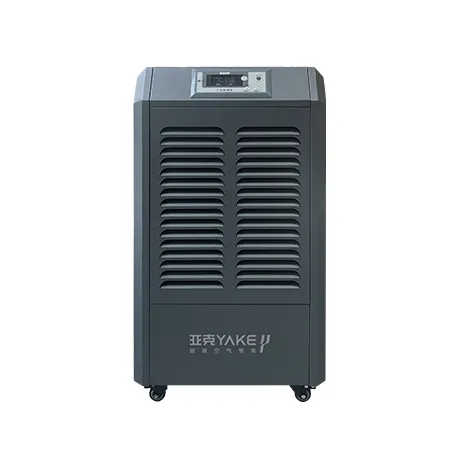
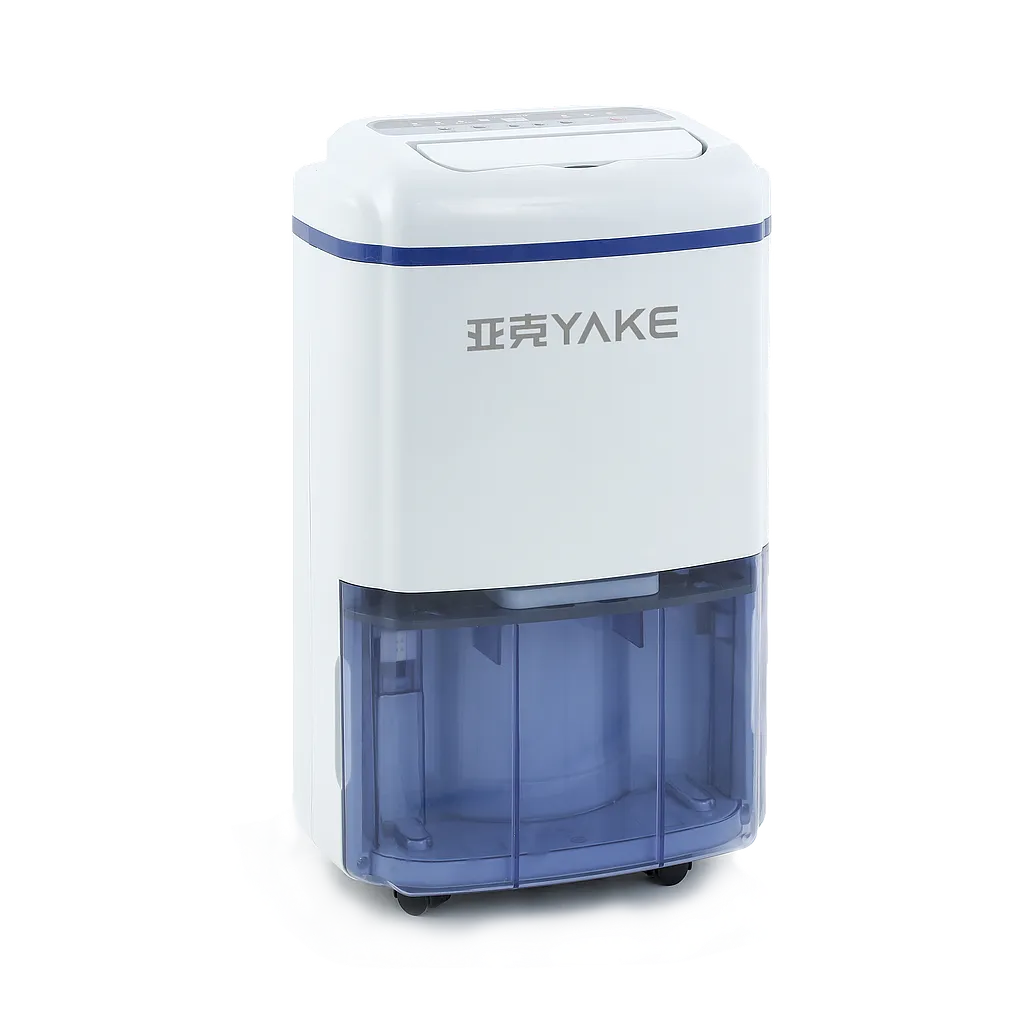
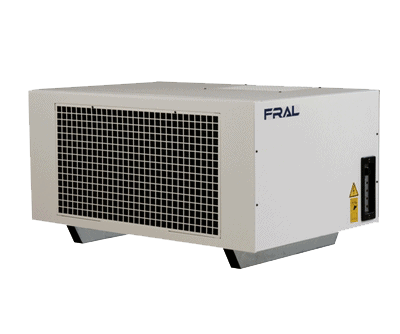
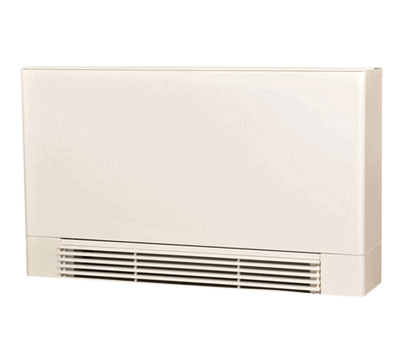
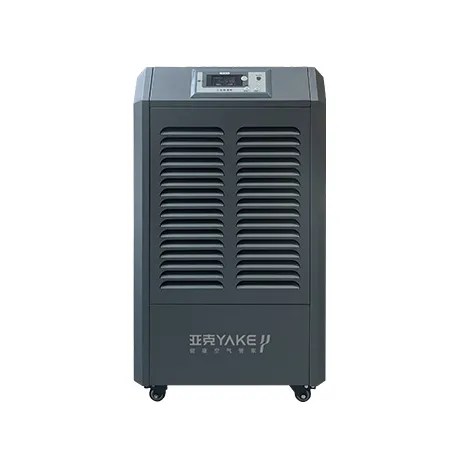
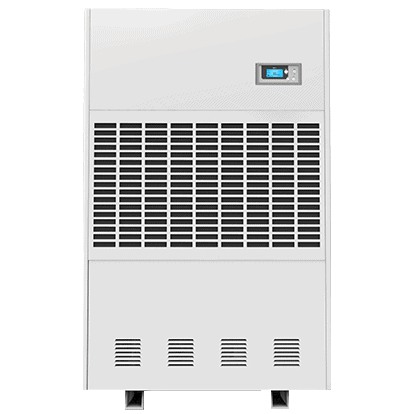
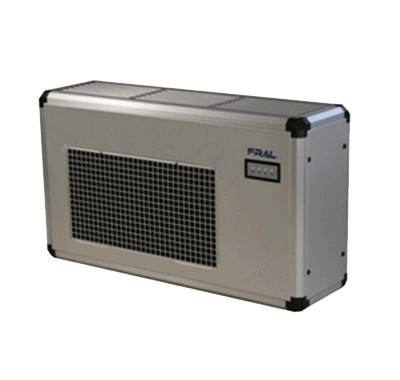
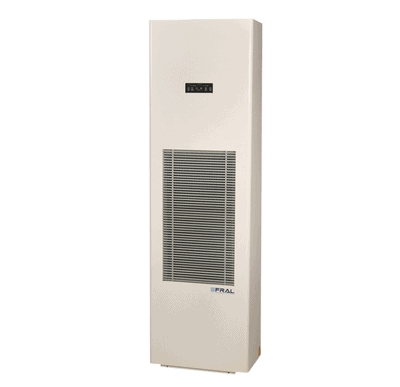
Our YAKE refrigerant range spans portable commercial units through to large industrial plant. Every unit is built for commercial duty cycles with serviceable components, not disposable consumer internals.
- Portable commercial: for single rooms, restoration, and general facility use
- Wall-mounted: out-of-the-way installation for rooms where floor space matters
- High-capacity industrial: for warehouses, pools, and large production areas
- Low-temperature rated: extended operating range for cooler applications
For cold-environment or low-humidity applications, use our desiccant dehumidifier range. For whole-building distribution, our ducted dehumidifier range integrates with existing HVAC.
Refrigerant Dehumidifiers Across Australia
Moisture Cure Commercial supplies and supports refrigerant dehumidifier installations in every Australian capital and major regional centre. Every enquiry includes sizing advice at no cost.
- Refrigerant dehumidifiers Sydney
- Refrigerant dehumidifiers Melbourne
- Refrigerant dehumidifiers Brisbane
- Refrigerant dehumidifiers Perth
- Refrigerant dehumidifiers Adelaide
- Refrigerant dehumidifiers Canberra
- Refrigerant dehumidifiers Newcastle
- Refrigerant dehumidifiers Gold Coast
- Refrigerant dehumidifiers Hobart
- Refrigerant dehumidifiers Darwin
Frequently Asked Questions
What temperature does a refrigerant dehumidifier need to work?
Refrigerant dehumidifiers are most efficient above 20°C and remain effective down to about 15°C. Below that, capacity drops quickly and a desiccant unit becomes the correct choice.
How low can a refrigerant dehumidifier take humidity?
Practical lower limit is around 40% RH for commercial refrigerant units. For targets below that, a desiccant dehumidifier is required.
How much moisture can a commercial refrigerant dehumidifier remove per day?
Capacity depends on model and conditions, ranging from tens of litres per day for small commercial units to several hundred litres per day for industrial plant. Rated capacity assumes standard test conditions and will vary with actual ambient.
Can a refrigerant dehumidifier run continuously?
Yes, commercial-grade units are designed for continuous duty. Residential-grade units are not and will fail prematurely in commercial service.
Do refrigerant dehumidifiers need a drain?
Yes, either a gravity drain to a floor waste or a condensate pump if the unit sits below the drain point. Large commercial units can produce hundreds of litres per day, so reliable drainage is essential.
How long do commercial refrigerant dehumidifiers last?
With correct sizing and routine maintenance, commercial refrigerant units typically last 8 to 12 years in continuous service. Compressor life is the main determinant of unit longevity.
Get Expert Sizing Advice
Every refrigerant dehumidifier we supply is sized to the specific facility, ambient conditions, and process load. Twenty-eight years of commercial and industrial installations across Australia informs every recommendation we make.
Contact Moisture Cure Commercial on (02) 6584 2511 or through our contact page for a no-obligation sizing assessment and quote.