Humidity plays a pivotal role in textile manufacturing. From yarn processing to weaving, knitting, and finishing, every stage of production is affected by air moisture levels. Too much or too little humidity can cause fibres to break, shrink, or swell—leading to increased waste, machinery inefficiencies, and compromised fabric quality.
At Moisture Cure, we provide high-performance humidifiers and dehumidifiers tailored to the specific needs of textile plants across Australia. Whether you’re operating in a high-output facility or a boutique production environment, precise humidity control ensures consistent results and smooth operations.
Table of Contents
Why Humidity Matters in Textile Production
Fibres—natural or synthetic—react to moisture in the air. Cotton, wool, and other natural fibres tend to absorb moisture and become more pliable, while synthetic fibres may become brittle in overly dry environments.
If humidity levels are too low:
- Fibres dry out and become more prone to breakage
- Static electricity increases, disrupting weaving and spinning
- Finished fabrics can shrink or deform
If humidity levels are too high:
- Fibres swell, causing tension inconsistencies
- Bacteria or mould may develop in storage areas
- Fabric finishing becomes uneven or delayed
Maintaining stable relative humidity—typically between 55% and 65% depending on the process—helps control fibre behaviour, machine performance, and finished product quality.
Key Areas Where Humidity Control Is Essential
Textile facilities benefit from humidity regulation across several departments:
- Spinning rooms – consistent humidity reduces yarn breakage and enhances fibre cohesion
- Weaving and knitting areas – moisture control ensures smooth machine operation and dimensional stability
- Dyeing and finishing units – stable humidity improves chemical absorption and colour uniformity
- Storage zones – appropriate dehumidification prevents mildew, discolouration, and spoilage
- Quality control labs – controlled environments reduce testing variance
Moisture Cure systems can be tailored for each area, helping maintain productivity and reduce material waste.
Best Systems for Textile Humidity Management
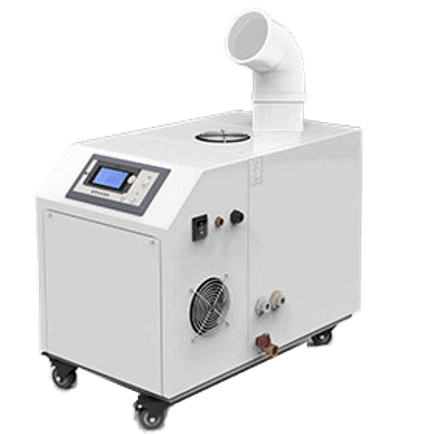
For facilities needing to raise humidity levels quickly and cleanly, ultrasonic humidifiers are ideal. These systems produce a fine mist without wetting surfaces, ensuring optimal distribution throughout production floors.
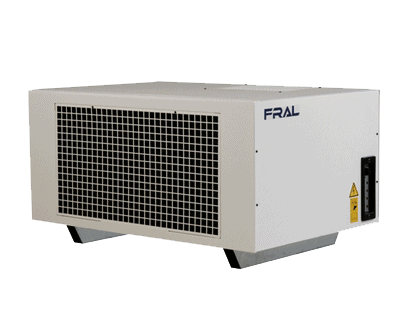
In areas requiring moisture removal—such as storage or fibre drying rooms—refrigerant dehumidifiers or desiccant dehumidifiers are commonly used. Refrigerant models suit warm environments, while desiccant units perform well in cooler conditions or when ultra-low humidity is needed.
For fully integrated operations, ducted dehumidifiers can be installed as part of centralised HVAC systems, providing zone-specific control throughout large textile plants.
Benefits of Proper Humidity Management
Introducing reliable humidity control into your textile production delivers long-term operational and quality advantages:
- Reduced fibre breakage and less machine downtime
- Improved consistency in dyeing and finishing
- Fewer production defects and higher first-pass yield
- Better static control for improved safety
- Extended equipment life through reduced wear and tear
With rising energy and material costs, controlling your internal environment helps preserve profits and reduce waste.
Built for Australian Textile Facilities
Whether you manufacture garments, technical fabrics, or upholstery materials, our humidity control systems are built to meet Australian conditions. From humid tropical zones to dry inland environments, we offer robust systems tailored to your location, facility size, and production method.
Let our team recommend the right balance of humidification and dehumidification to optimise your textile operations. Contact Moisture Cure for a no-obligation consultation.