



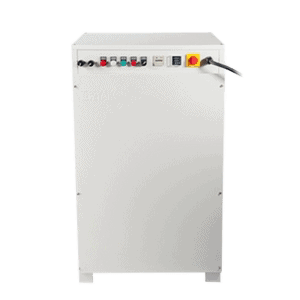
How Desiccant Dehumidifiers Work
Desiccant dehumidifiers use a rotating silica gel wheel to adsorb water vapour directly from the air stream. Unlike refrigerant units, they have no compressor and no cooling coil, so performance does not collapse at low temperatures.
A secondary heated air stream regenerates the wheel, driving captured moisture out of the unit and returning the wheel to service. The result is stable dehumidification across a far wider temperature range than any compressor-based system.
- Operating range: -20°C to +50°C (YAKE commercial units)
- Refrigerant units fail below: approximately 15°C
- Target humidity: down to 1% RH achievable with correctly sized systems
- Process: adsorption on silica gel, no phase change, no condensate below dewpoint
When to Choose Desiccant Over Refrigerant
The decision almost always comes down to temperature and target humidity. Refrigerant dehumidifiers are efficient in warm, moderately humid conditions but lose capacity rapidly as the air gets colder or drier.
| Condition | Refrigerant | Desiccant |
|---|---|---|
| Above 20°C, 60%+ RH | Efficient | Efficient |
| 10 to 20°C | Declining capacity | Full capacity |
| Below 10°C | Largely ineffective | Full capacity |
| Target below 40% RH | Cannot reach | Designed for it |
| Target below 20% RH | Not possible | Standard operation |
| Cold storage, freezers | Not suitable | Required |
If any part of your operation runs below 15°C or requires humidity below 40% RH, desiccant is the only practical choice. Refrigerant units in these conditions frost over, short cycle, and consume energy without removing meaningful moisture.
Industrial and Commercial Applications
Desiccant dehumidifiers are specified across any sector where humidity control is critical to product quality, process integrity, or asset protection. The common thread is either low temperature, low target humidity, or both.
- Cold storage and blast freezers: prevents frost build-up on evaporator coils and product surfaces
- Pharmaceutical manufacturing: maintains tablet and powder stability during processing and packaging
- Food processing: controls moisture in drying rooms, confectionery, dairy powder, and meat curing
- Lithium battery production: critical dry rooms operating below 1% RH
- Electronics assembly: protects moisture-sensitive components and soldering processes
- Museums and archives: long-term preservation of paper, textiles, and timber artefacts
- Ice rinks and sports facilities: prevents ceiling drip and fog above the ice surface
- Water damage restoration: structural drying at any ambient temperature
- Defence and equipment storage: corrosion prevention for vehicles and electronics
Sizing a Desiccant Dehumidifier
Correct sizing is the single largest determinant of performance, energy cost, and unit lifespan. Under-sized units run continuously and never reach setpoint, while over-sized units short cycle and waste regeneration energy.
Moisture Cure Commercial sizes every installation against six inputs: room volume, construction tightness, target humidity, ambient temperature range, moisture load from processes and occupants, and any ventilation or make-up air.
- Room volume: length × width × height in cubic metres
- Air changes per hour: tight new builds 0.5, older industrial buildings 1 to 3
- Moisture load: people, wet processes, open water surfaces, ingress
- Target RH and temperature: determines required grain depression
- Operating schedule: continuous duty vs intermittent
Sizing from floor area alone is unreliable for commercial applications. Contact us with these details and we will run the calculation and recommend a specific YAKE model.
Commercial Desiccant Dehumidifier Range
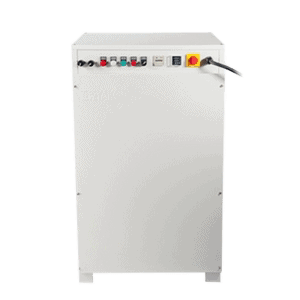
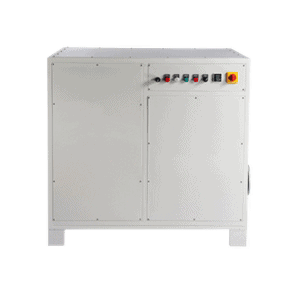
Our YAKE desiccant range covers everything from small process rooms through to large industrial dry rooms and cold storage facilities. All units are rated for continuous commercial duty cycles, not residential use.
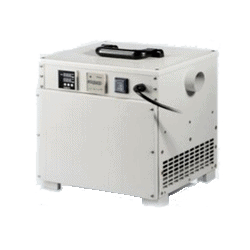
- Portable units: for temporary installations, restoration work, and small rooms
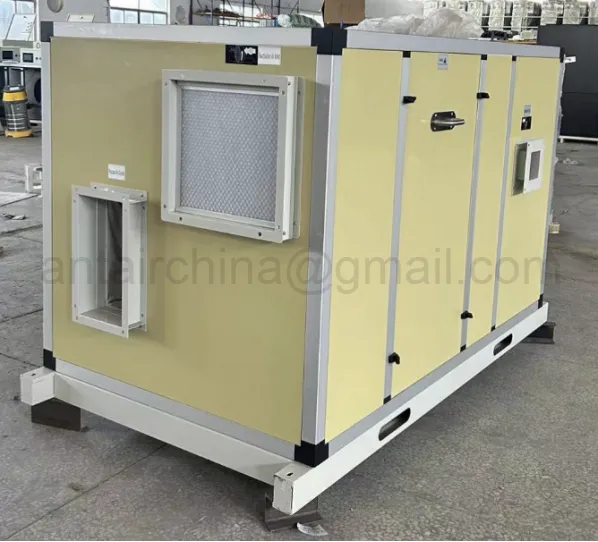
- Ducted units: centralised dehumidification distributed through existing HVAC or dedicated ductwork
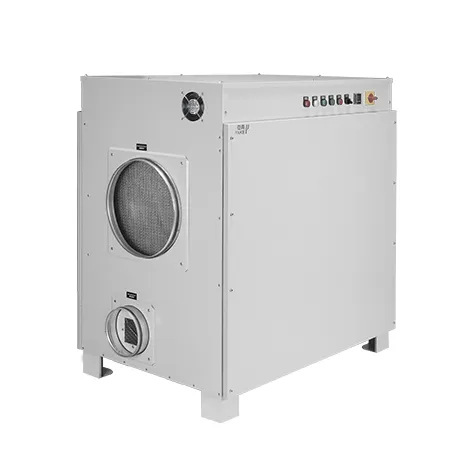
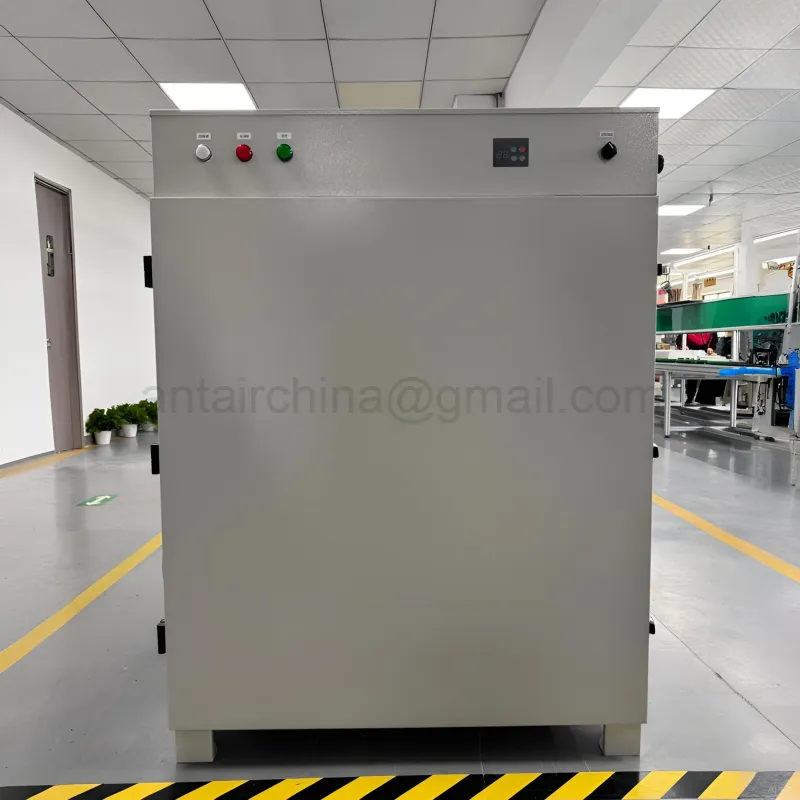
- High-capacity industrial: for dry rooms, battery manufacturing, and large cold storage
- Outdoor-rated: weather protected enclosures for external plant rooms
If you also need to cover warmer, more humid applications, our refrigerant dehumidifier range handles above-15°C duties more economically. For whole-building central control, our ducted dehumidifier range integrates with existing HVAC.
Desiccant Dehumidifiers Across Australia
Moisture Cure Commercial supplies and supports desiccant dehumidifier installations in every Australian capital city and major regional centre. Freight is handled directly to site, and sizing advice is included on every enquiry.
- Desiccant dehumidifiers Sydney
- Desiccant dehumidifiers Melbourne
- Desiccant dehumidifiers Brisbane
- Desiccant dehumidifiers Perth
- Desiccant dehumidifiers Adelaide
- Desiccant dehumidifiers Canberra
- Desiccant dehumidifiers Newcastle
- Desiccant dehumidifiers Gold Coast
- Desiccant dehumidifiers Hobart
- Desiccant dehumidifiers Darwin
Frequently Asked Questions
What is the main advantage of a desiccant dehumidifier over a refrigerant model?
Desiccant units maintain full dehumidification capacity at low temperatures and can reach humidity levels far below what a refrigerant unit can achieve. Below roughly 15°C, refrigerant dehumidifiers lose most of their effectiveness, while desiccant units continue to operate normally down to -20°C.
How low can a desiccant dehumidifier take the humidity?
Correctly sized commercial desiccant systems routinely achieve below 10% RH, and specialist dry room installations reach below 1% RH. Refrigerant dehumidifiers cannot practically go below about 40% RH.
Are desiccant dehumidifiers more expensive to run?
Per litre of moisture removed, desiccant units use more energy than refrigerant units in warm conditions, because the regeneration heater consumes power. In cold or very dry conditions the comparison reverses, because refrigerant units stop working entirely while desiccants continue at full capacity.
Can a desiccant dehumidifier work in a cold store or freezer?
Yes, and it is the only viable technology for humidity control in cold storage and freezer applications. The low operating temperature range is precisely what desiccant units are designed for.
How long do commercial desiccant dehumidifiers last?
With correct sizing and routine maintenance, commercial YAKE desiccant units operate reliably for 10 to 15 years or more. The silica gel wheel itself is long life and replacement is rarely required within that window.
Do I need a ducted or portable desiccant unit?
Portable units suit single rooms, temporary installations, and restoration work. Ducted units are preferred for whole-facility control, multiple zones, or when the unit needs to sit in a separate plant room away from the conditioned space.
Get Expert Sizing Advice
Every desiccant dehumidifier we supply is sized to the specific conditions and process loads of your facility. Twenty-eight years of commercial and industrial installations across Australia informs every recommendation we make.
Contact Moisture Cure Commercial on (02) 6584 2511 or through our contact page for a no-obligation sizing assessment and quote. Provide your room dimensions, target humidity, operating temperature range, and process details, and we will recommend the right YAKE unit for the job.