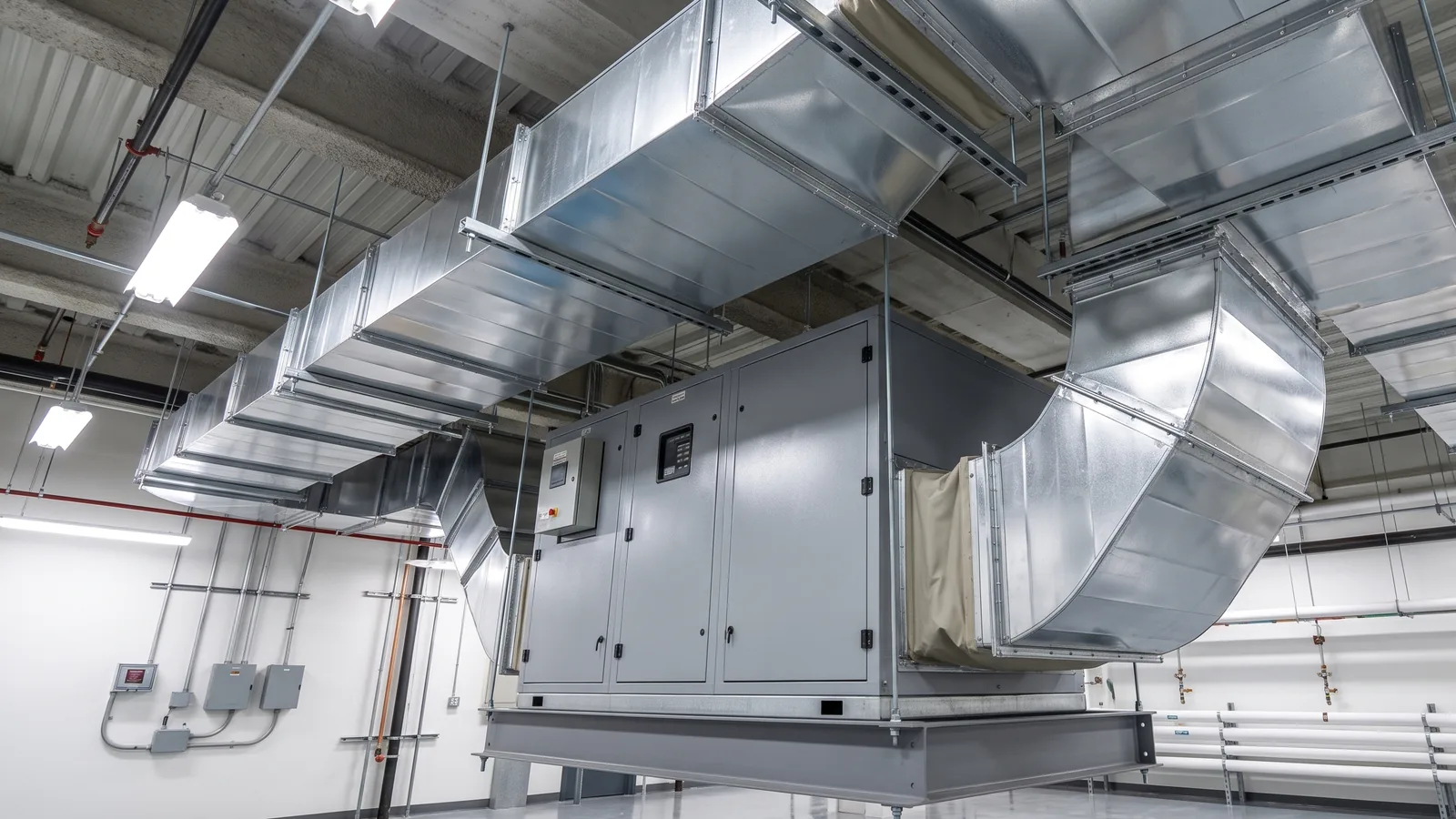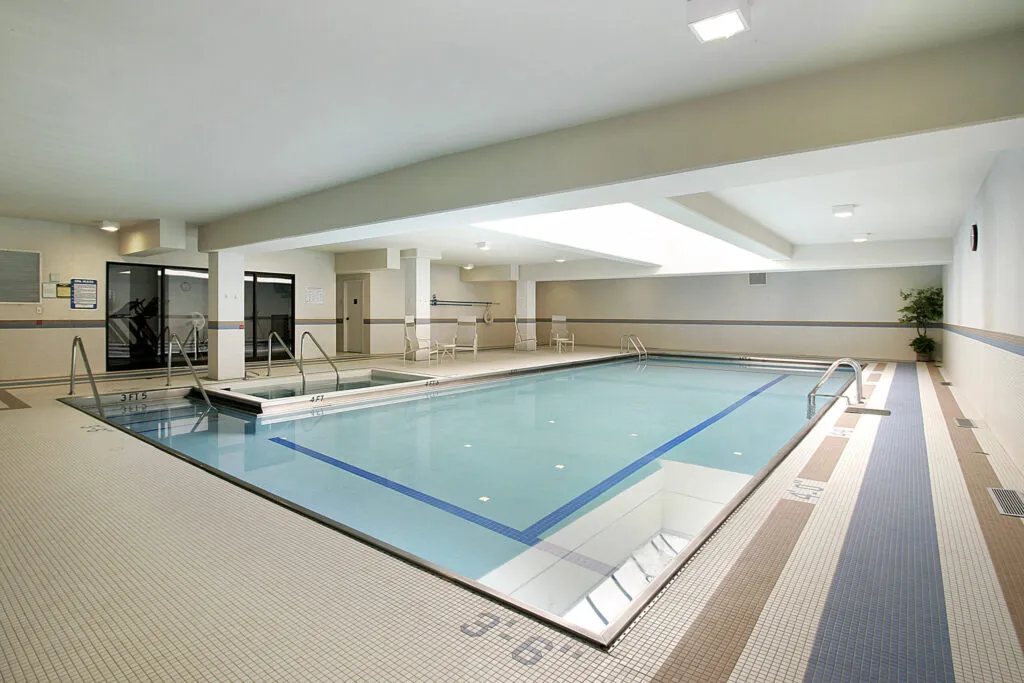
A commercial dehumidifier for an indoor pool is not optional equipment. It is the primary control mechanism for a moisture environment that damages buildings and harms air quality.
The moisture load in an enclosed aquatic facility is unlike any other commercial space. Water surface evaporation, occupant respiration, and wet surfaces all push humidity well above levels that building materials, mechanical systems, and pool users can tolerate.
Standard split systems and ventilation alone cannot manage the continuous moisture output of an operating pool. Without purpose-built dehumidification, the facility will exceed ASHRAE’s recommended 50–60% relative humidity target within hours of opening.
Looking for equipment? Browse our full range of commercial dehumidifiers, including desiccant models and ducted configurations suited to aquatic facilities.
Why Indoor Pools Generate Extreme Humidity Loads
An indoor pool does not produce a single moisture source. It produces three simultaneous loads that compound throughout the day.
- Water surface evaporation – a standard 25-metre pool evaporates hundreds of litres per day, driven by water temperature, air temperature, and air movement
- Occupant moisture – swimmers entering and exiting the water carry surface moisture, and wet pool decks contribute to ongoing evaporation
- Respiration and exertion – a busy aquatic centre with 50+ users adds significant vapour from breathing and perspiration
These loads operate simultaneously during pool hours, meaning relative humidity climbs continuously unless active dehumidification is running. Intermittent operation does not work in this application.
The American Society of Heating, Refrigerating and Air-Conditioning Engineers (ASHRAE) sets the accepted benchmark at 50–60% relative humidity for indoor pool spaces. Outside that band, the problems multiply quickly.
What Goes Wrong When Humidity Exceeds 60% RH
High humidity in an enclosed pool hall is not a comfort issue. It is a structural and health issue.
- Condensation on cold surfaces – walls, windows, structural steel, and ductwork accumulate moisture, accelerating corrosion and mould growth
- Chloramine off-gassing – elevated humidity concentrates chloramine compounds at the air-water interface, causing respiratory irritation and corrosion of electrical and HVAC components
- Mould and bacterial growth – surfaces above 70% RH support mould colonies within 24–48 hours; changerooms, plant rooms, and ceiling voids are particularly vulnerable
- Structural timber degradation – roof trusses, wall framing, and any embedded timber absorbs moisture and begins to degrade, often invisibly until failure
- Mechanical failure – moisture infiltration into switchboards, motor housings, and control panels shortens equipment lifespan significantly
The Safe Work Australia guidance on indoor air quality identifies high humidity as a contributing factor to poor air quality outcomes in workplaces. For an aquatic centre, that means both users and staff are affected.
Chloramines are the greater risk. Combined chlorine compounds off-gas more intensely when pool water is warm and humidity is high, creating both a health hazard and a WHS compliance obligation for facility operators.
Why Low Humidity Causes Problems Too
Below 50% RH, the evaporation rate from the pool surface increases. This causes rapid evaporative cooling that makes the water feel colder than it is, which discourages use and increases heating costs.
- Swimmer discomfort – the evaporative cooling effect on wet skin is pronounced below 50% RH, particularly for competitive swimmers and rehabilitation users
- Increased pool heating costs – the pool heating system must compensate for accelerated surface heat loss
- Dry air complaints – staff and users report dry eyes, skin irritation, and respiratory discomfort in excessively low humidity environments
The 50–60% band reflects the operational balance between structural protection and occupant comfort.
A commercial dehumidifier for an indoor pool must hold within that band continuously, operating through occupied and unoccupied hours alike.
Desiccant vs Refrigerant Dehumidifiers for Pool Halls
Technology choice is one of the most consequential decisions in a pool dehumidification project. Both desiccant and refrigerant systems can work in aquatic environments, but their performance profiles differ significantly.
| Refrigerant Dehumidifier | Desiccant Dehumidifier | |
|---|---|---|
| Operating principle | Condenses moisture by cooling air below dew point | Absorbs moisture into a desiccant wheel, regenerated by heat |
| Best air temperature range | Above 15°C | Wide range including sub-10°C |
| Energy profile | More efficient at higher temperatures | Higher energy use but consistent across temperatures |
| Pool hall application | Suitable for heated pools with stable air temp | Preferred for variable or lower temp pool halls |
| Condensate output | High, requires drainage provision | Lower liquid condensate, moisture expelled as warm humid air |
| Corrosion resistance | Verify housing and coil ratings for chlorinated air | Generally good; verify for corrosive pool environments |
For most Australian indoor pools operating at standard water temperatures (26–28°C), a refrigerant dehumidifier delivers strong efficiency. Facilities with cooler operating conditions, such as hydrotherapy pools or outdoor-adjacent halls, often benefit from a desiccant dehumidifier.
In both cases, the unit must be rated for corrosive environments. Chlorinated pool air degrades standard aluminium coils and mild steel housings; epoxy-coated or stainless components are the practical minimum for this application.
How to Size a Commercial Dehumidifier for an Indoor Pool
Undersizing is the most common mistake in pool dehumidification. It results in continuous operation at maximum load, premature failure, and chronic humidity problems.
Accurate sizing requires calculating the total moisture load, which includes all three sources described above. The key variables are:
- Pool surface area – the primary driver of evaporation load
- Water temperature – higher water temp means higher evaporation rate
- Air temperature – the difference between water and air temperature affects evaporation intensity
- Occupancy profile – peak simultaneous bathers and their activity level
- Wet deck area – surrounding pool deck, splash zones, and wet changeroom areas
- Ventilation rate – make-up air introduction affects both the moisture load and the dehumidification capacity required
Pool dehumidification sizing is typically calculated using the ASHRAE or equivalent methodology, expressed in litres per day or kilograms per hour of moisture removal. A facility manager should request a formal load calculation from their equipment supplier, not a rule-of-thumb figure based on floor area alone.
Make-up air matters. Every volume of outdoor air introduced for ventilation carries its own moisture load, and in a humid Australian summer that can account for 30–40% of the total dehumidification requirement, which must be included in the equipment specification.
Integrating Pool Dehumidification with HVAC Systems
A standalone dehumidifier handles moisture removal, but an indoor pool also requires positive pressure management, exhaust air handling, and condensate drainage. These systems interact, and poor integration creates new problems.
- Positive pressure in pool hall – the pool hall should be maintained at slight negative pressure relative to adjacent occupied spaces to prevent humid air migrating into corridors, changerooms, and plant rooms
- Exhaust and make-up air – a balanced ventilation strategy removes chloramine-laden air at the pool surface level while introducing fresh air above the occupant zone
- Heat recovery – many commercial pool dehumidifiers include heat recovery coils that transfer heat from the condensation process to the pool water or the supply air stream, improving overall efficiency
- Condensate drainage – refrigerant dehumidifiers produce significant condensate volumes; drainage must be sized and routed to a suitable drain point, not discharged to the pool
- BMS integration – connecting the dehumidifier to a building management system allows setpoint control, alarm monitoring, and data logging for maintenance and compliance records
The Australian Building Codes Board (ABCB) National Construction Code sets minimum ventilation requirements for public swimming pools as Class 9b buildings. HVAC and dehumidification design must meet these requirements as a baseline.
A ducted dehumidifier is typically the most practical option for integrating with existing HVAC ductwork in a pool building. It allows the dehumidified air to be distributed evenly across the pool hall rather than concentrated at one discharge point.
Operational Requirements for Pool Dehumidifiers
Pool dehumidifiers operate in a demanding environment. The combination of chlorinated air, constant humidity, and extended run hours creates maintenance requirements that differ from standard commercial dehumidification.
- Continuous operation – pool dehumidifiers run during all occupied hours and often overnight to prevent overnight humidity rise; they are not switched off between uses
- Coil cleaning – chlorinated air deposits residue on heat exchanger coils; regular cleaning prevents performance degradation and corrosion
- Filter maintenance – filters must be checked and replaced on a schedule suited to the facility’s occupancy level
- Condensate drain inspection – blocked condensate drains cause water overflow and potential equipment damage
- Refrigerant checks – annual refrigerant pressure checks confirm system integrity
- Corrosion inspection – housing, coils, and ductwork connections should be inspected annually for early-stage corrosion in pool environments
Planned maintenance agreements with the equipment supplier are standard practice for aquatic facility operators. Unplanned dehumidifier failure during a busy period can push humidity to damaging levels within hours.
Specifying the Right Equipment for Your Facility
Indoor pool dehumidification is not a discretionary upgrade. The moisture loads generated by an operating pool will degrade the building fabric, create WHS issues, and shorten the lifespan of every mechanical system in the facility if left uncontrolled.
The right approach starts with a proper load calculation, follows ASHRAE and NCC guidelines, and selects equipment rated for corrosive pool environments. Technology choice, whether refrigerant or desiccant, should follow from the facility’s specific operating conditions rather than from cost alone.
Moisture Cure Commercial supplies and supports commercial-grade dehumidification equipment across Australian aquatic and industrial facilities. View our full commercial dehumidifier range or contact our team to discuss the requirements for your facility.