Preventing mould and mildew in commercial spaces starts with finding where moisture enters, fixing the source and keeping affected materials dry. Dehumidification supports that work when humidity remains high, but equipment alone cannot repair a leaking roof or remove established contamination.
Moisture Cure’s commercial dehumidifiers for ongoing moisture control remove water vapour where a building or process creates a persistent load. The right selection depends on measured conditions, operating hours and the areas that need protection.
Understanding mould and mildew in commercial environments
For a facilities team, the useful starting point is the damp location and its cause, rather than the colour of the growth. Include areas outside the normal cleaning route when planning an inspection.
- Warehouses and storage facilities with obstructed airflow around stock.
- Food processing plants and commercial kitchens with washdown or steam.
- Pharmaceutical facilities with moisture-sensitive materials and controlled rooms.
- Swimming pool complexes, changing rooms and leisure centres.
- Basements, plant rooms and enclosed subfloors.
- Textile stores, museums and archives holding absorbent materials.
Health and operational impacts
WorkSafe Queensland’s mould guidance identifies higher health risks for people with asthma, mould allergies or weakened immunity. Workplace concerns need assessment; a humidity reading cannot establish whether an affected room is suitable for occupation.
| Area to review | What to record |
|---|---|
| People | Reports of dampness or odour, affected work areas and escalation to the responsible manager. |
| Stock and building fabric | Wet packaging, stained finishes and materials requiring assessment. |
| Operations | Restricted rooms, relocated stock and disruption during repairs. |
| Follow-up | Repair completion, drying evidence and any recurrence. |
Our discussion of humidity control and indoor environmental conditions gives wider context for occupied facilities.
The science of humidity control
The US EPA’s prevention guidance for commercial buildings recommends keeping relative humidity below 60%, ideally 30–50% where possible. This is general prevention guidance, not a universal setpoint for every industrial process or an Australian compliance limit.
- Agree room targets with the people responsible for the process, stored materials and building services.
- Log temperature alongside relative humidity to help interpret changing readings.
- Inspect cold surfaces even when the room sensor appears within target.
- Investigate repeated excursions instead of simply lowering the controller setting.
Condensation depends on surface temperature as well as airborne moisture. The EPA recommends addressing it through warmer surfaces or lower air moisture, with insulation, suitable ventilation or dehumidification chosen for the conditions.
How commercial dehumidification works
A dehumidifier removes water vapour from air passing through it. Its rated capacity must be checked against the conditions in the affected space, rather than treated as a fixed output in every building.
| System | How it removes moisture | What to check |
|---|---|---|
| Refrigerant | Air passes over a cooled coil and moisture condenses for drainage. | Extraction capacity at the actual room temperature and humidity; condensate route. |
| Desiccant | A desiccant captures water vapour and is regenerated. | Required dryness, regeneration energy and the model’s moisture exhaust arrangement. |
| Ducted installation | Distributes treated air through a designed air path. | Supply and return paths, pressure losses and control across separate rooms. |
Ducting describes how air is distributed, not a separate moisture-removal principle. Neither technology replaces removal of mould-contaminated material where remediation is required.
Selecting the right dehumidification solution
Floor area alone is an incomplete sizing basis. A frequently opened loading door or a wet production process can change the moisture load without changing the room dimensions.
- Total area and volume of the controlled space.
- Moisture generated by processes, cleaning and occupants.
- Door openings, outdoor-air supply and operating hours.
- Seasonal temperature range and agreed humidity target.
- Available power, drainage and installation space.
- Access for servicing and responsibility for responding to faults.
For occupied premises, planning dehumidification for office buildings also involves noise, placement and HVAC schedules. Include those constraints in the equipment brief before comparing capacities.
Refrigerant dehumidifiers for commercial spaces
refrigerant dehumidifiers for warmer commercial rooms are worth assessing where operating conditions support condensation at the coil. Request performance information at the proposed room conditions rather than assuming the largest advertised extraction figure applies.
- Check condensate drainage and whether a pump is needed.
- Confirm the operating range and defrost arrangements.
- Review noise and heat release for occupied areas.
- Allow access for filter and coil maintenance.
Desiccant dehumidifiers for specialised applications
desiccant dehumidifiers for cold storage and low-humidity duties are relevant when cold conditions or the required dryness limit refrigerant selection. Specify the duty using measured conditions and product requirements, not a generic humidity figure for an entire industry.
| Application | Specification question |
|---|---|
| Cold storage | Where does moist air enter, and which surfaces show condensation or frost? |
| Pharmaceutical production | What environmental limits apply to this product and process? |
| Electronics storage | How will moisture protection fit the site’s electrostatic-control requirements? |
| Archives | What conditions and permitted fluctuations does the collection require? |
Ducted systems for whole-facility control
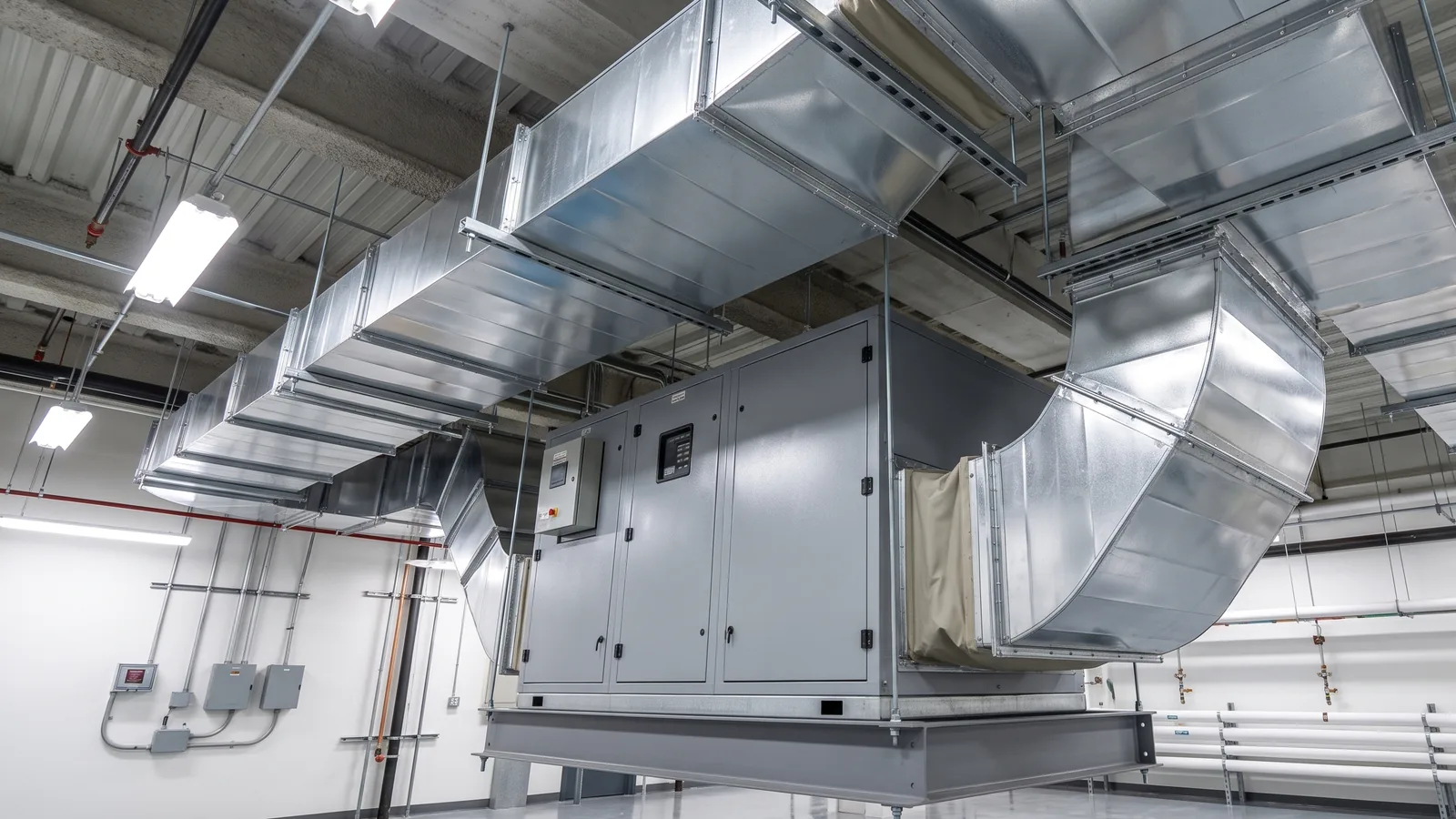
A ducted dehumidification system for a commercial facility can place equipment away from occupied rooms while delivering treated air through ducts. Uniform control still depends on the air paths and commissioning, particularly where doors separate zones.
- Identify the rooms served and the route for return air.
- Check compatibility with existing HVAC controls.
- Provide service access and suitable drainage or exhaust provisions.
- Verify conditions in remote rooms, not only beside the unit.
Implementing a humidity control strategy
Begin with a moisture audit before selecting equipment. Moisture Cure’s investigation of mould at Bellingen council chambers used monitoring to inform dehumidifier placement in the subfloor and records room.
- Map the affected areas and likely moisture entry paths.
- Assign responsibility for building repairs and remediation assessment.
- Define target conditions for each controlled zone.
- Calculate the remaining moisture load and select suitable equipment.
- Install sensors in representative locations and document their positions.
- Commission the system through normal operating and unoccupied periods.
- Set an escalation process for alarms, leaks and recurring odours.
Maintenance and ongoing management
Use the manufacturer’s service schedule and adjust inspection frequency to the site’s dust, duty cycle and history of water ingress.
| Trigger | Suggested management check |
|---|---|
| Routine site walk | Review alarms, drainage, visible dampness and blocked air paths. |
| Scheduled equipment service | Maintain filters and coils as specified; check sensors and controls. |
| Heavy rain or a leak | Inspect known entry points and record the affected materials. |
| Shutdown or operating change | Review humidity logs and whether the control schedule still fits the load. |
Additional moisture control measures
Address the building and process alongside the equipment. Plan repairs around the actual water path so a new finish does not conceal an unresolved defect.
- Repair plumbing, roof and envelope leaks.
- Review external drainage and recurring subfloor dampness.
- Capture process moisture near its source.
- Keep storage clear of supply and return air paths.
- Check insulation at cold pipes, ducts and surfaces.
- Keep HVAC drain pans and outlets unobstructed.
For wet materials, WorkSafe Queensland advises prompt clean-up within 24–48 hours. Treat that as a response window, not a guarantee that materials remain unaffected until it expires.
When prevention needs a remediation response
Visible growth, recurring odour or suspected hidden contamination calls for an assessment of the affected materials. WorkSafe Queensland advises professional help for medium-to-large mould jobs and where the source is unclear.
- Report the location and restrict access as appropriate to the assessment.
- Avoid disturbing suspected contamination during routine inspection.
- Have the assessor define containment, cleaning and material removal.
- Record the moisture repair and criteria for returning the area to use.
The regulator’s remediation guidance should inform this response alongside advice for the specific workplace. Confirm that repairs and remediation meet the assessment’s criteria before returning the area to use.
Climate considerations across Australia
Outdoor conditions matter, but the building’s actual moisture history should drive the specification. The EPA distinguishes ventilation with cold, dry outside air from dehumidification where outdoor air is warm and humid.
- In humid weather, assess the moisture entering through doors and ventilation.
- In cooler conditions, investigate condensation on cold surfaces.
- After seasonal changes, compare logs with the conditions used for sizing.
Evaluating the investment in prevention
Build the business case from site records. Do not assume equipment will eliminate remediation, reduce sick leave or change insurance premiums.
- Record previous stock damage and interruptions linked to moisture.
- Compare equipment performance at the same operating conditions.
- Include servicing, energy use and staff response requirements.
- Review whether repairs and monitoring reduce repeat incidents.
Frequently asked questions
Does a dehumidifier remove existing mould?
No. It removes moisture from air, while existing contamination requires assessment and suitable remediation.
What humidity should a commercial building target?
The EPA recommends below 60% RH, ideally 30–50% where possible. Agree a site-specific target where processes or stored materials have different requirements.
Can air conditioning prevent mould?
Air conditioning removes some moisture, but may not control humidity when cooling demand is low. Pay particular attention to periods when cooling demand falls or the air conditioning is switched off.
Should we open windows to dry a damp commercial room?
Check outdoor conditions and the building’s ventilation design first. Introducing humid air can work against drying, so the HVAC team should assess the proposed change.
Why does mould return after cleaning?
A recurring patch warrants investigation of the moisture source and the extent of previous contamination. Repeated cleaning without resolving those issues leaves the cause unaddressed.
Is a dry room reading proof that wet materials have dried?
No. Room humidity and material moisture are different measurements, so the drying assessment should include affected materials and concealed areas where relevant.
Can anti-mould paint replace moisture control?
Plan repairs and remediation before redecorating. A coating does not repair a leak or establish that the material beneath it is dry.
Which dehumidifier is best for preventing mould?
Select by temperature, humidity target, moisture load and installation constraints. Compare model performance at the site conditions instead of choosing solely by room area.
Who should respond to a humidity alarm?
Name a facilities contact and backup in the operating procedure. Record the reading, affected area, equipment status and action taken so recurring faults can be investigated.
Professional assessment and system design
Give the assessor the evidence already collected rather than only the room dimensions. Ask for a proposal that explains how performance will be verified after installation.
- Provide the moisture history, photographs and available sensor logs.
- Document process schedules, cleaning routines and shutdown periods.
- Confirm repairs needed before commissioning.
- Agree equipment locations, service access and control settings.
- Request operating instructions and instructions for monitoring the system.
Talk to Moisture Cure Commercial
Contact Moisture Cure Commercial for a consultation or site assessment focused on the cause of dampness and the humidity control needed after repairs. The commercial humidity control equipment range provides options for different moisture loads and operating conditions, with selection based on the assessment.
- Describe where mould, condensation or odour occurs.
- Share room dimensions, operating temperatures and any monitoring records.
- Explain access constraints and when the facility operates.