Client: Bellingen Shire Council
Industry: Government and public sector facilities
Application: Council chambers, records room and subfloor
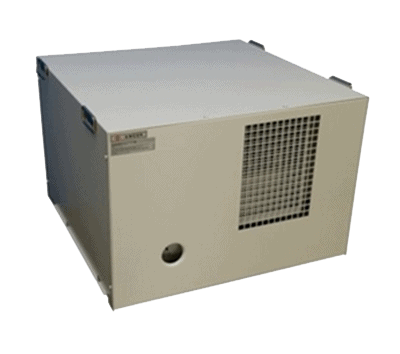
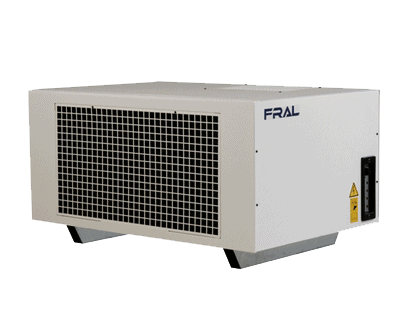
Solution: 3 x FDK 100 commercial subfloor dehumidifiers, 2 x Inovaair E20 Plus air purifiers
Location: Bellingen, New South Wales
In service since: 2018
Bellingen Shire Council is the local governing body for communities across the Bellingen region on the New South Wales Mid North Coast.
In 2018 the council engaged Moisture Cure to diagnose a mould and dampness problem in its chambers and archive rooms. The system installed that year is still operating.
Results at a Glance
- 8 years of continuous operation since 2018
- 5 units installed: 3 subfloor dehumidifiers, 2 air purifiers
- Several weeks of continuous moisture monitoring before specification
- Zero mould odour reported in the chambers since
The Challenge
The council building sits on and partly into the bank of a creek. Subterranean moisture was moving into the subfloor and the enclosed spaces above it.
The result was persistent mould growth and an odour strong enough that staff refused to work in parts of the building. Council records held in the archive rooms were at risk of moisture damage.
Council needed an outcome that addressed three things at once:
- Remove the source of excess moisture rather than mask the odour
- Restore indoor air quality to a standard staff would accept
- Protect documents, flooring and building fabric from further damage
Our Approach: Building Health Evaluation
Moisture Cure carried out a Building Health Evaluation before recommending any equipment. This included continuous moisture monitoring across several weeks rather than a single spot reading.
Continuous logging matters in a building like this one. A single dry-day reading in a creek-bank subfloor tells you very little about the seasonal load the equipment actually has to handle.
The evaluation established:
- The severity of moisture ingress, measured against recommended industry thresholds
- The pathways carrying moisture from the creek bank into the subfloor
- Which enclosed spaces were contributing to the odour reaching occupied areas
The Solution
Equipment was specified from the evaluation data, not from a standard package.
The installed system:
- Three FDK 100 commercial subfloor dehumidifiers. Two placed in the subfloor and one in the records room, extracting moisture from the enclosed and subterranean spaces feeding the problem
- Two Inovaair E20 Plus air purifiers. Manufactured in New South Wales and installed in the councillors’ chambers to filter the air and clear residual mould odour
- Staff training on correct ongoing use, so the system kept working after the installers left
Subfloor dehumidification was the right tool here because the moisture load was continuous and coming from below. Portable units in the occupied rooms would have treated the symptom while the source kept running.
Results After Eight Years
Reported outcomes:
- Staff work in the chambers with no mould odour present
- Archive rooms remain dry and free of mould damage
- Air purifiers and dehumidifiers have run continuously for eight years with minimal maintenance
- Council staff and councillors report high satisfaction with the indoor environment
- Council has advised that it could not operate the facility without the system
Eight years of continuous duty on a subfloor application is the useful number in this case study. It says more about specification and placement than any commissioning report could.
Why This Matters for Councils and Public Buildings
Older public buildings near waterways, or with restricted subfloor ventilation, carry a moisture risk that is easy to miss until it reaches the occupied floor.
Left untreated, the cost lands as mould remediation, records loss, building fabric damage and staff complaints at the same time.
A Building Health Evaluation gives a facilities team:
- Measured moisture diagnostics instead of assumptions
- A remediation strategy targeted at the source
- Long-term protection for infrastructure and archives
- A defensible position on staff health and building compliance
Related Solutions
- moisture management for libraries and archives. Council records rooms carry the same preservation requirements as a library collection.
- climate control for schools and public buildings. Occupied public buildings share the same air quality expectations as this project.
Moisture or Mould in Your Council Facility
If a public building on your books has damp, mould odour or an archive room you are worried about, the first step is measurement rather than equipment.
Contact Moisture Cure Commercial to arrange a Building Health Evaluation and a specification based on what the building is actually doing.
Contact Moisture Cure Commercial for expert sizing advice on your application.