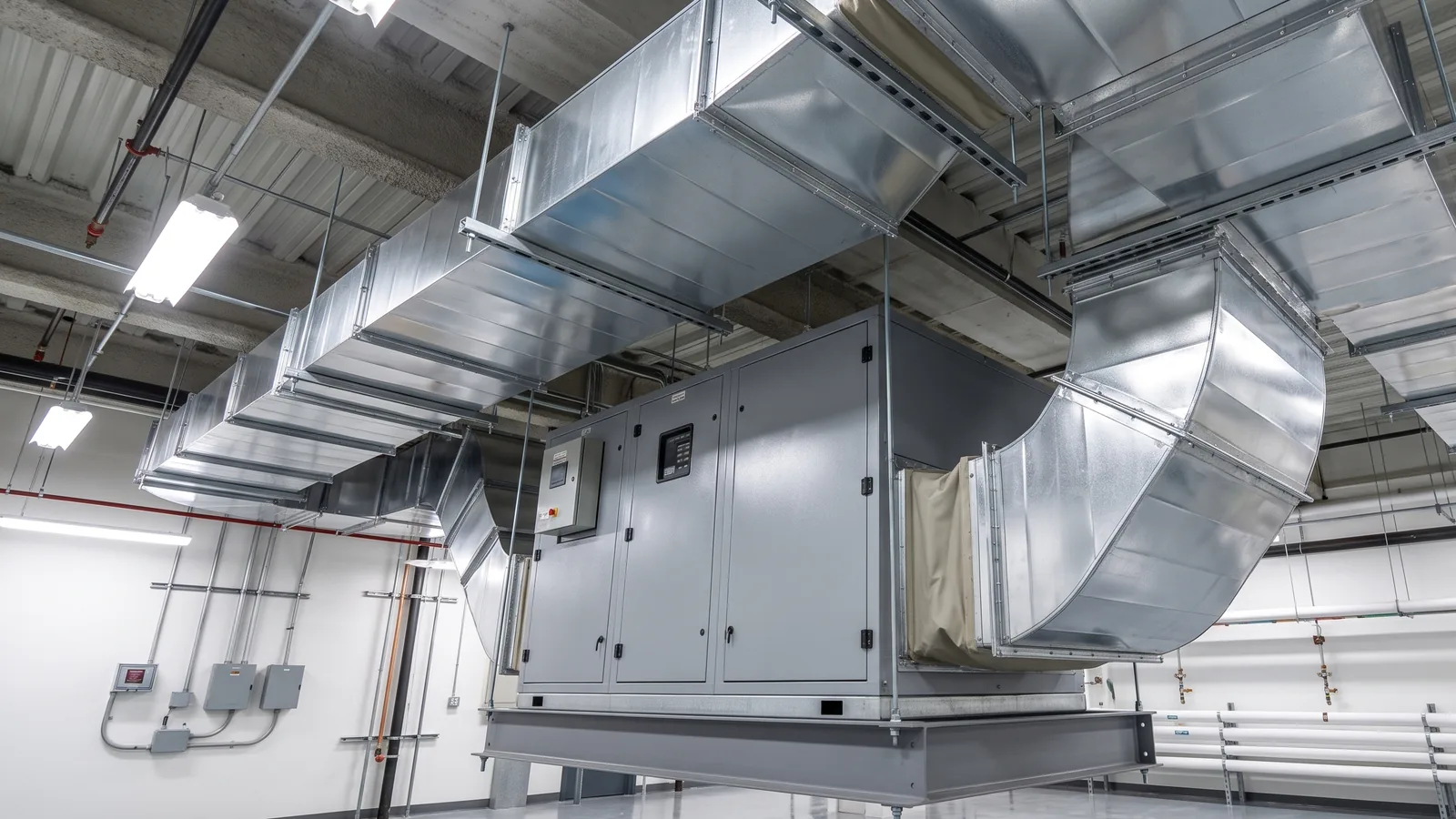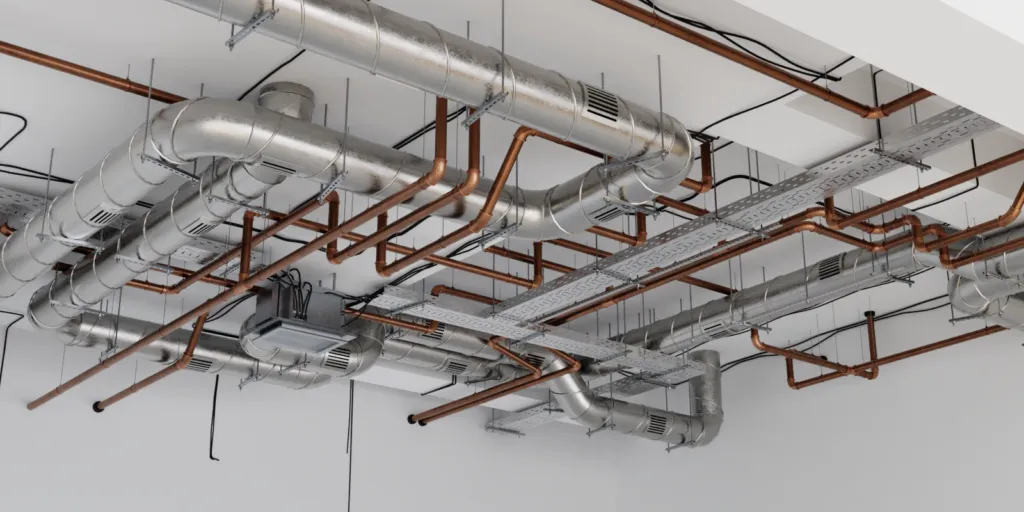
Refrigerant dehumidifiers handle most commercial basement and subfloor environments where temperatures stay above 15°C.
Basements, car parks, plant rooms and subfloor voids collect moisture faster than most other areas of a commercial building. Poor ventilation, ground-contact concrete and limited airflow create conditions where relative humidity sits above 70% RH for months at a time.
This article covers how refrigerant dehumidifiers perform in these spaces, when a desiccant unit is the better option, and how to size and install systems for subfloor and basement environments.
Moisture Cure Commercial supplies both refrigerant and desiccant dehumidifiers for Australian commercial and industrial facilities.
Why Basements and Subfloors Accumulate Moisture
Below-grade spaces sit in direct contact with soil moisture. Even with a vapour barrier beneath the slab, moisture migrates through concrete at rates between 3 and 15 litres per 100m² per day.
Subfloor voids under suspended floors face a similar problem. Ground moisture evaporates into the cavity and has nowhere to go if ventilation is restricted.
- Ground-contact concrete wicks moisture through capillary action
- Limited natural ventilation prevents moisture from escaping
- Temperature differentials between the slab and indoor air cause condensation
- Plumbing penetrations and service entries introduce additional moisture paths
- Seasonal water table rises push moisture levels higher in winter and spring
Left uncontrolled, sustained humidity above 60% RH leads to mould growth on surfaces, corrosion of steel reinforcement, and degradation of stored goods and equipment.
The National Construction Code requires adequate ventilation for enclosed subfloor spaces. Where natural ventilation cannot meet the requirement, mechanical dehumidification is the standard solution.
How Refrigerant Dehumidifiers Perform in Basements
Refrigerant dehumidifiers work by drawing air across a cold evaporator coil. Moisture condenses on the coil, drains into a collection point, and the dried air passes back into the space.
This process is efficient when the ambient temperature stays above 15°C. Most commercial basements in Australian climates, particularly those in sydney, brisbane, melbourne and Perth, sit within this range for most of the year.
| Condition | Refrigerant Performance | Action Required |
|---|---|---|
| Above 20°C, 50-80% RH | Peak efficiency, high extraction rate | Standard sizing applies |
| 15-20°C, 50-80% RH | Good efficiency, moderate extraction | May need slight oversizing |
| Below 15°C | Ice forms on coils, extraction drops sharply | Switch to desiccant technology |
| Target below 40% RH | Refrigerant cannot reach this level | Desiccant required |
The critical threshold is 15°C. Below that temperature, ice builds on the evaporator coil and the unit spends most of its cycle in defrost mode rather than extracting moisture.
The Australian Institute of Refrigeration, Air Conditioning and Heating (AIRAH) publishes guidance on selecting refrigeration-based systems for enclosed spaces. Their sizing methodologies align with the approach Moisture Cure uses for basement applications.
When to Use Desiccant Instead
Not every basement stays warm enough for refrigerant technology. Underground car parks, unheated storage areas and subfloor cavities in southern Australia regularly drop below 15°C in winter.
Desiccant dehumidifiers use a chemical rotor rather than a refrigeration circuit. They maintain consistent extraction rates across a temperature range from below 0°C up to 35°C.
- Basements in Melbourne, Hobart or Canberra that fall below 15°C for extended periods
- Cold storage areas or underground archives requiring humidity below 40% RH
- Subfloor spaces with minimal insulation where ground temperatures dominate
- Any application where the dewpoint target is below what refrigerant can achieve
If you are unsure whether your basement temperature stays above or below the 15°C threshold, a data logger running for two to four weeks will give you the answer. Moisture Cure Commercial can advise on logger placement and interpret the results.
Sizing a Dehumidifier for Basement and Subfloor Spaces
Basement sizing differs from open-plan commercial spaces. The moisture load comes primarily from ground contact rather than occupancy or ventilation, and the space geometry often includes low ceilings and limited air circulation.
Factors That Affect Sizing
- Volume of the space (length x width x ceiling height in cubic metres)
- Moisture ingress rate from slab, walls and any water table influence
- Ambient temperature range across the year
- Target humidity level (typically 50-55% RH for general storage, lower for sensitive equipment or archives)
- Ventilation rate and whether fresh air is introduced mechanically
A rough starting point for commercial basements is 1 litre of extraction capacity per 10m³ of space per day. High water table sites or uncoated concrete slabs may need double that figure.
Soil moisture levels vary significantly across Australian regions and seasons. Data from the Bureau of Meteorology landscape water balance can help estimate the moisture load at a specific site before equipment is specified.
Moisture Cure Commercial provides sizing calculations as part of every enquiry. Provide the space dimensions, temperature data and intended use, and the team will recommend the right unit from the commercial dehumidifier range.
Ducted Systems for Subfloor Applications
Subfloor cavities rarely have enough headroom to install a freestanding unit. Ducted dehumidifiers solve this by sitting in a plant room or accessible area and running ductwork into the subfloor void.
The dehumidifier draws humid air from the cavity through a return duct, processes it, and pushes dried air back in through a supply duct. This creates positive air movement within the subfloor space.
- Position the dehumidifier in a plant room, cupboard or accessible service area
- Run a return air duct to the far end of the subfloor cavity
- Run a supply air duct to the opposite end to create cross-flow
- Install a condensate drain line to the nearest floor waste or external outlet
- Set the target humidity on the built-in humidistat (typically 50-55% RH)
For large subfloor areas, multiple supply and return points may be needed to avoid dead zones where air stagnates. A site assessment determines the duct layout before any equipment is ordered.
Installation Considerations for Below-Grade Spaces
Basements and subfloors present specific installation challenges that do not apply to above-grade spaces. Addressing these upfront avoids performance problems after commissioning.
- Condensate drainage: gravity drain to a floor waste is ideal, but many basements require a condensate pump to lift water to a discharge point
- Power supply: commercial units draw 10-15A on a dedicated circuit, and the switchboard must be accessible for maintenance isolation
- Access for servicing: filters need replacement every 3-6 months, so the unit must be reachable without scaffolding or confined space entry
- Air sealing: seal any unnecessary openings to the outside, otherwise the dehumidifier works against a constant fresh moisture load
- Monitoring: a remote humidity sensor connected to the building management system (BMS) allows facility managers to track performance without entering the space
The most common mistake in basement installations is under-sizing the unit because the moisture load from ground contact was not factored into the calculation.
A unit sized only for the air volume will run continuously without reaching the target. Ground moisture ingress adds a constant load on top of the air volume requirement.
For basement car parks and loading docks, exhaust ventilation systems already installed for vehicle emissions can work against the dehumidifier by pulling in humid outside air. Coordinate the dehumidification strategy with the existing ventilation design.
Getting the Right System for Your Facility
Basement and subfloor dehumidification requires matching the technology to the temperature profile and the moisture load.
Refrigerant handles most Australian commercial basements. Desiccant is the right choice when temperatures or humidity targets fall below the refrigerant threshold.
Moisture Cure Commercial has 28 years of experience sizing humidity control solutions for Australian commercial and industrial facilities. Contact the team for a consultation or site assessment to determine the right dehumidifier type and capacity for your space.