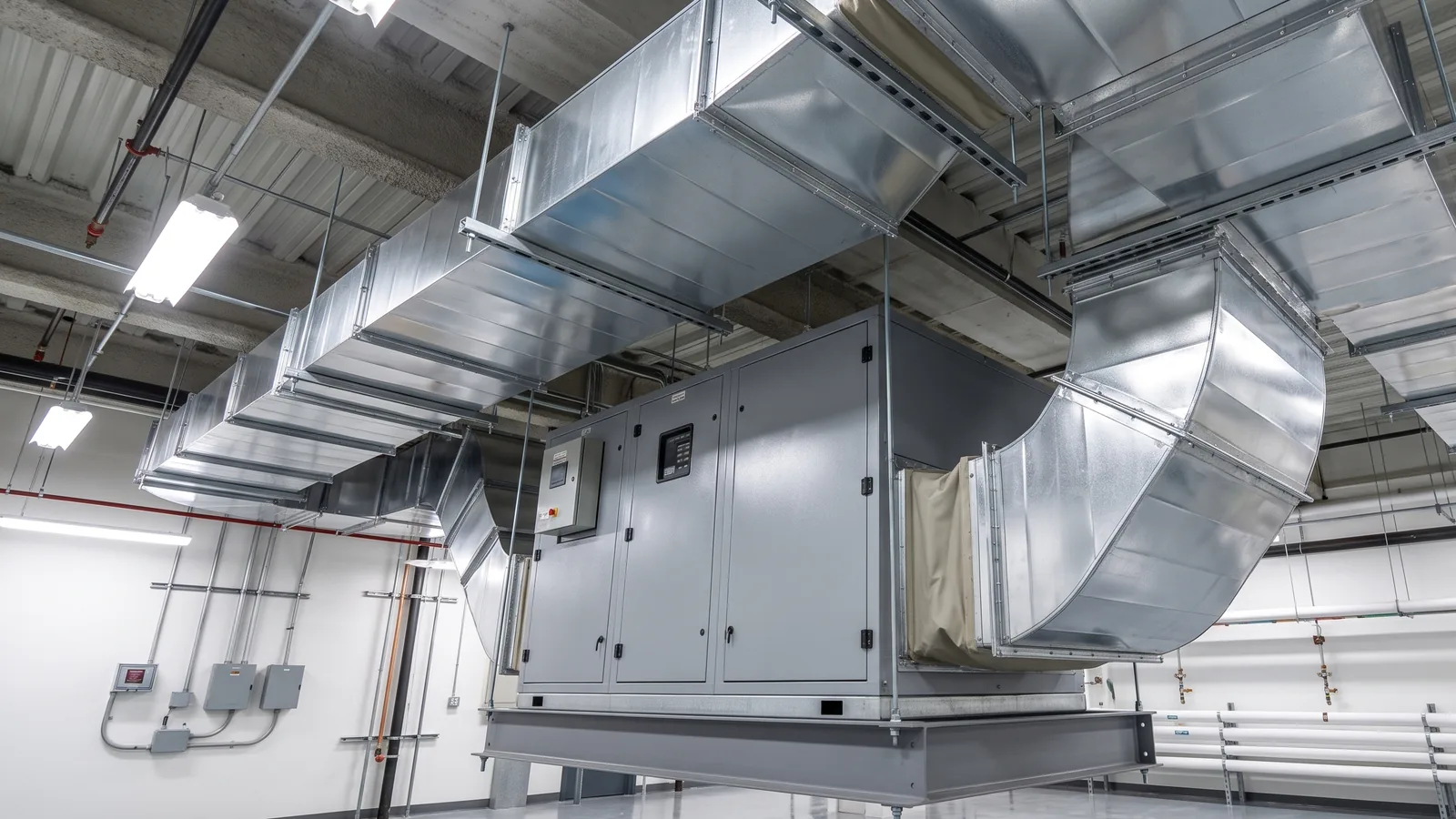
The health benefits of proper humidity control in commercial environments depend on the problem being addressed: excessive dryness, persistent damp or uncomfortable working conditions. For facility managers, the first step is measuring humidity and finding the moisture source before specifying equipment.
Where air is persistently too dry, commercial humidification solutions for dry indoor spaces add moisture under controlled conditions. Damp buildings need moisture removal and investigation of leaks, drainage or ventilation.
Business Impact of Poor Humidity Control
A humidity problem may first appear as occupant complaints, condensation or damaged finishes. Treat these as reasons to investigate indoor air quality in commercial spaces, rather than assuming humidity explains every complaint.
| Observation | What to investigate | Useful record |
|---|---|---|
| Dryness complaints | Humidity, temperature and supply-air draughts | Room, time and operating conditions |
| Musty odours or visible damp | Leaks, wet materials and concealed spaces | Inspection findings and moisture readings |
| Hot, uncomfortable work areas | Heat sources, workload and ventilation | Conditions during the affected shift |
Build the investment case around measured conditions, remediation needs and maintainable controls. A generic percentage reduction in sick leave or a promised payback period cannot establish what a particular building will achieve.
Respiratory Health Protection Through Moisture Management
Controlling persistent damp addresses a recognised environmental health concern. NSW Health explains that mould exposure can cause nasal, eye and skin irritation, and can trigger asthma attacks in susceptible people.
Humidity control should not be sold as a way to prevent workplace infections. The CDC’s ventilation FAQ says it is unclear whether increasing humidity meaningfully reduces respiratory virus transmission beyond good ventilation and filtration.
- Investigate reported symptoms alongside building conditions.
- Keep ventilation and filtration in the indoor-air-quality plan.
- Address damp materials and moisture sources rather than masking odours.
- Do not use laboratory virus-survival findings to promise fewer staff infections.
Healthcare and aged care projects require additional scrutiny of equipment hygiene and air distribution. A humidity reading alone cannot establish that an occupied space is suitable for vulnerable people.
Preventing Mould and Biological Contamination
The US EPA’s moisture-control guidance recommends indoor relative humidity below 60%, ideally 30–50% where possible. This is mould-prevention guidance, not a universal Australian compliance range or a guarantee that concealed surfaces are dry.
Relative humidity describes moisture relative to saturation at the measured temperature. Cold surfaces can experience condensation even when a sensor elsewhere in the room looks acceptable, so inspect the location of the problem.
- Trace roof, plumbing and subfloor moisture sources.
- Inspect cold pipes, wall junctions and poorly ventilated storage areas.
- Arrange appropriate remediation of existing mould and wet materials.
- Recheck affected areas after repairs and during wet weather.
Moisture Cure’s moisture remediation at Bellingen Shire Council chambers combined monitoring, subfloor dehumidification and air purification, with reported removal of mould odour. It demonstrates a building-specific response, rather than a measured reduction in illness.
Skin and Eye Comfort in Workplace Environments
Excessively dry air can contribute to discomfort in the eyes, skin and mucous membranes, as described by the Canadian Centre for Occupational Health and Safety. Humidity is only part of comfort: air movement, temperature, clothing and activity also matter.
- Compare complaints with readings at occupied workstations.
- Check whether supply air blows directly across faces or hands.
- Review temperature settings before adding moisture.
- Refer persistent symptoms for appropriate health advice.
For a confirmed moisture deficit, ultrasonic humidifiers for controlled moisture addition may suit an engineered commercial application. Selection must include water quality, maintenance access and control of where the mist is absorbed.
Productivity and Cognitive Performance Links
Comfort complaints deserve attention without assuming that humidity control improves concentration or productivity. Use the site’s own operational records to identify whether environmental changes make work more comfortable.
In hot workplaces, Safe Work Australia’s heat-risk guidance identifies humidity alongside temperature, airflow and work demands. High humidity makes it harder for a person to cool down.
- Assess hot production areas during actual workloads.
- Consider cooling, rest arrangements and task changes as part of heat-risk controls.
- Record complaints before and after changes.
A dehumidifier is not a complete heat-risk control plan. Its installation also needs assessment of heat discharge and the effect on the occupied space.
Industry-Specific Health Requirements
Specify occupied-space conditions alongside process requirements, rather than applying an industry-wide percentage from a general article.
| Setting | Health-focused design question |
|---|---|
| Healthcare and aged care | What room-specific ventilation, hygiene and environmental requirements apply? |
| Food processing and pharmaceutical facilities | How will process moisture be contained without compromising occupied areas? |
| Museums, archives and offices | Are damp collection spaces or concealed voids affecting occupied rooms? |
| Manufacturing and warehouses | Where do heat, washdown or incoming humid air affect staff? |
Planning humidity control for hospitals and healthcare settings requires coordination with the facility’s engineering and infection-prevention teams. Confirm applicable room requirements before changing setpoints or introducing water-based equipment.
Implementation Strategies for Health-Focused Humidity Control
Successful humidity management requires systematic planning and appropriate equipment selection. Building size, occupancy patterns and existing HVAC infrastructure all influence the approach.
- Log temperature and humidity in representative occupied areas and problem locations.
- Record operating hours, cleaning, door openings and weather alongside the readings.
- Fix identifiable moisture entry and drainage problems.
- Set a documented operating range with the facility’s designer.
- Commission controls under representative loads and assign maintenance responsibility.
Where measurements show excess moisture, industrial dehumidifiers sized for the facility’s moisture load provide moisture removal. Capacity should be assessed at the intended operating conditions, with drainage and service access included.
- Refrigerant dehumidifiers for warm, damp work areas remove moisture by cooling air over a coil, making them an option where temperature and moisture load suit that process.
- Desiccant dehumidifiers for colder or drier process conditions use moisture adsorption, which can suit duties where refrigerant capacity is insufficient.
- Ducted dehumidifiers for coordinated control across multiple rooms distribute treated air through ductwork, with airflow and zone balancing included in the design.
Maintenance belongs in the specification. The EPA’s building-maintenance guidance calls for checks of HVAC systems and condensate pans, which can become contamination reservoirs when poorly maintained.
Assign someone to inspect drains, filters, sensors and water systems, using the equipment manufacturer’s maintenance instructions. A neglected humidity system can introduce the moisture problem it was intended to address.
Measuring Health Improvements from Humidity Control
Start by demonstrating that the building conditions have improved. Health outcomes need separate interpretation because occupancy, seasonal illness and other workplace changes can affect the same records.
- Compare humidity trends and time outside the agreed operating range.
- Document whether condensation or dampness recurs in previously affected areas.
- Keep a consistent record of occupant comfort complaints.
- Record maintenance completion and sensor checks.
- Review aggregated absence data cautiously, without attributing changes to humidity alone.
Choose monitoring periods that cover representative operations, including shutdowns and wet weather where relevant. Repeat the review after maintenance or changes to ventilation, occupancy or production.
Frequently Asked Questions
Use humidity readings to guide investigation, alongside temperature, surface conditions and the room’s purpose.
What humidity should a commercial building maintain?
For mould prevention, the EPA recommends below 60% RH, ideally 30–50% where possible. Confirm the site’s operating range against its building design and room requirements.
Is sustained high humidity a health concern?
It warrants investigation for dampness and mould, especially where occupants report symptoms. NSW Health identifies people with asthma and allergies as more sensitive to mould exposure.
Can humidity control prevent colds or flu at work?
A humidity setpoint alone does not establish protection against colds or flu. The CDC does not recommend controlling humidity to reduce virus survival; ventilation and filtration remain important.
Does the workplace need a humidifier or a dehumidifier?
A humidifier adds moisture; a dehumidifier removes it. Decide from logged conditions and the agreed operating range, rather than symptoms or season alone.
Is air conditioning enough to control humidity?
Check whether the installed system maintains the specified humidity under actual loads. Temperature control alone does not demonstrate moisture control, particularly when occupancy or outside-air conditions change.
Why is there condensation when the room reading looks normal?
The sensor may not represent conditions at a cold surface. The EPA recommends addressing condensation by reducing moisture or increasing surface temperature, depending on the cause.
Can any humidifier be used in a healthcare facility?
No, equipment and water-system hygiene need specialist assessment. CDC healthcare guidance warns about contaminated humidifier aerosols, so obtain facility-specific engineering and infection-prevention approval.
How should facility managers monitor humidity?
Log temperature and RH in representative occupied zones and affected areas, using checked sensors. Note operating changes so readings can be interpreted against what the building was doing.
How can a business confirm the changes worked?
Compare logged conditions, recurrence of dampness and occupant complaints before and after the work. Treat any change in sick leave as an observation requiring further assessment, rather than proof of a health benefit.
Contact Moisture Cure Commercial for a consultation or site assessment. Share your humidity records, building layout and occupant concerns so the team can assess the moisture problem and recommend suitable controls.