Client: Swim Central
Industry: Aquatic facilities, sport and recreation
Application: Humidity and condensation control in an indoor swim academy
Solution: RYDZ-168A and RYCM-138 commercial dehumidifiers
Location: Hobart, Tasmania
Operation: Year-round
Swim Central is one of Tasmania’s largest indoor swim academies, serving beginners through to elite swimmers.
It operates year round in a region with cold winters, which is the hardest combination for an indoor pool to manage.
Results at a Glance
- 2-part zoned system across pool hall and support rooms
- Year-round operation through Tasmanian winters
- Condensation reduced on windows, ceilings and fittings
The Challenge
Indoor pools in cold climates run a permanent condensation risk.
Warm, moisture-laden air from the pool surface meets cold building surfaces, and the moisture drops out of the air onto whatever it touches.
The specific exposures:
- Continuous evaporation from the pool surface loading the air
- Cold exterior temperatures chilling glazing and structure through winter
- Persistent condensation on windows, ceilings and walls
- Moisture damage risk to building fabric, alongside comfort and air quality concerns
Our Solution
Moisture Cure installed a two-part system, because a pool hall and its support rooms are different problems.
The configuration:
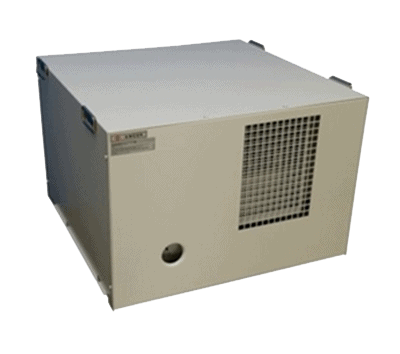
- RYDZ-168A providing high-capacity extraction across the large open pool area
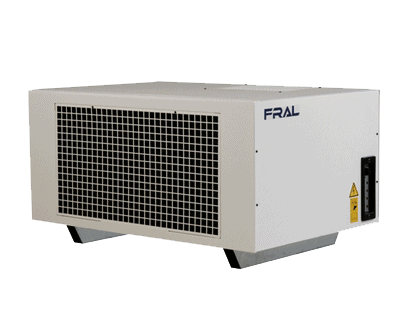
- RYCM-138 handling change rooms, offices and smaller auxiliary zones
Splitting the system this way avoids over-treating the support spaces while still holding the pool hall, which carries almost all of the evaporative load.
A ducted unit suits the pool hall because the treated air has to reach the glazing and ceiling surfaces where condensation forms, not just the space near the equipment.
Results and Impact
Reported outcomes:
- Noticeable reduction in condensation, improving safety and visibility
- Improved air quality for swimmers, staff and spectators
- Structural finishes protected, including windows, ceilings and fittings
- Reliable year-round performance through the Tasmanian winter
Why Pool Halls Need Dedicated Dehumidification
An indoor pool is a continuously operating evaporator, and the building has to remove everything it produces.
The load is larger and more constant than most operators expect:
- Evaporation continues around the clock, including when the pool is closed and unheated air is not being supplied
- Water agitation from swimmers increases the surface evaporation rate well above the still-water figure
- Warm humid air migrates into wall and roof cavities, where interstitial condensation damages structure out of sight
- Ventilating with cold outside air controls humidity but exports the heat the pool has paid to produce
Dedicated dehumidification is what allows the hall to hold humidity without dumping heated air outside, which is where the operating cost sits in a cold climate.
Related Solutions
- indoor swimming pool dehumidification. Evaporation rate calculations and target conditions for pool halls.
- spa and wellness centre humidity control. Wet leisure areas adjoining a pool hall need their own treatment.
- RYDZ-168A ducted dehumidifier. This is the high-capacity unit used on the main pool hall.
Condensation in an Aquatic Facility
Condensation on glazing and ceilings is the visible symptom. The damage happens inside the building fabric.
Contact Moisture Cure Commercial for an evaporation load assessment on your pool hall.
Contact Moisture Cure Commercial for expert sizing advice on your application.