A car wash dehumidifier solves the moisture problem that blower systems and ventilation fans leave behind: the air itself.
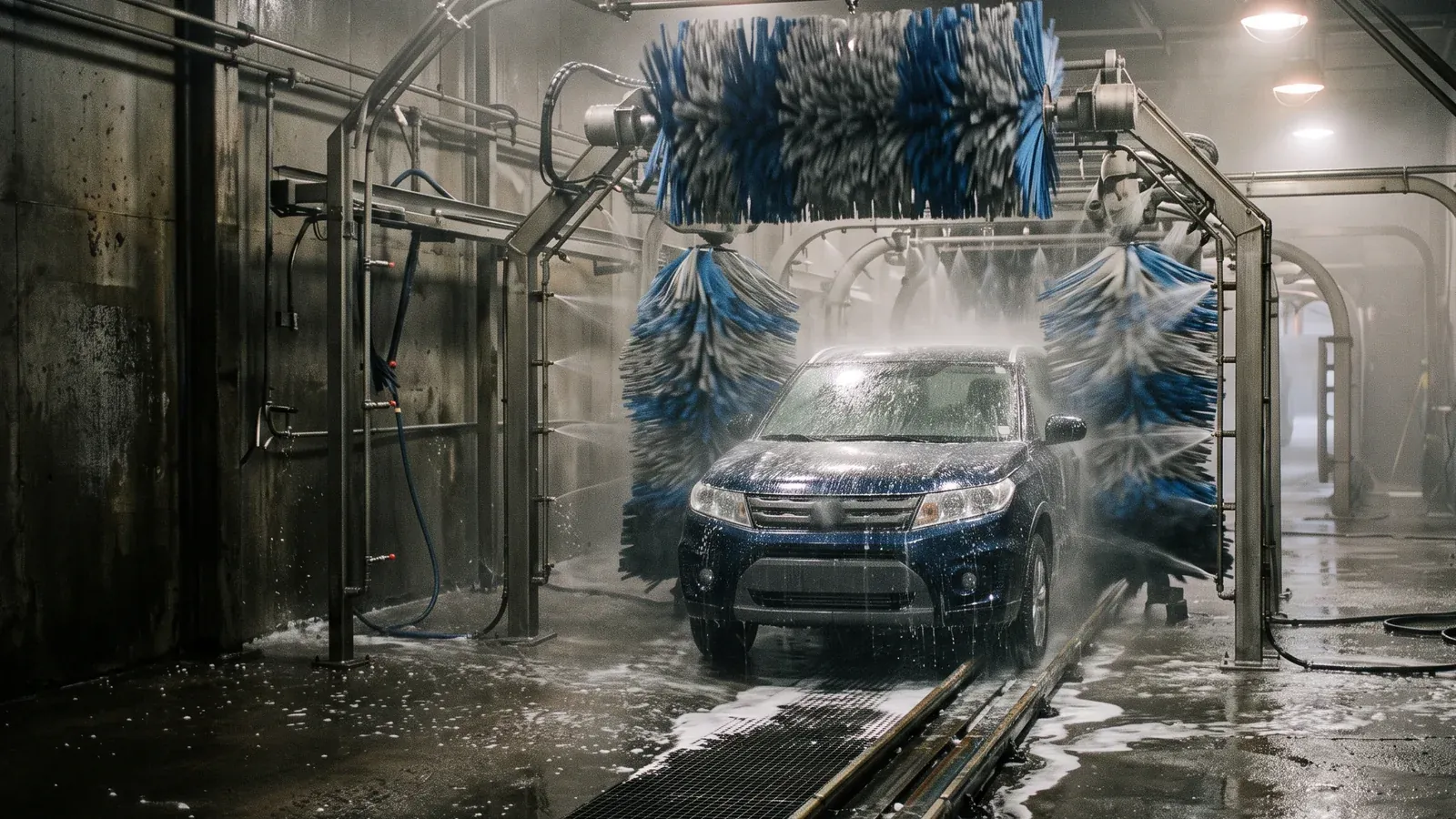
Commercial car washes generate enormous volumes of airborne moisture. Every vehicle sprayed adds litres of water vapour to the enclosed bay, and that moisture settles on walls, ceilings, electrical systems and structural steel.
Blowers dry cars. Refrigerant dehumidifiers dry the building. This article covers why car wash facilities need dedicated humidity control, what happens when they skip it, and how to select the right commercial refrigerant dehumidifier for the job.
Not sure whether refrigerant or desiccant technology suits your facility? Read our comparison of desiccant vs refrigerant dehumidifiers before making a decision.
Why Car Washes Have a Humidity Problem
A typical tunnel or in-bay automatic wash uses 150 to 300 litres of water per vehicle. High-pressure nozzles atomise that water into fine droplets, and a large portion becomes airborne mist rather than draining away.
The enclosed, heated environment of a commercial car wash creates conditions where relative humidity routinely exceeds 80 to 90%. That is well above the 50% threshold where corrosion, mould and structural damage accelerate.
- Water spray from pre-soak, wash and rinse stages generates continuous aerosol
- Heated bays (typically 18 to 25°C) keep moisture in vapour form rather than condensing it out
- Vehicle movement pushes humid air into adjacent prep areas, offices and equipment rooms
- Concrete floors and walls absorb moisture and release it slowly, sustaining high humidity between washes
- Drainage channels cannot remove airborne moisture, only surface water
Ventilation fans exchange air, but in humid Australian climates (particularly coastal and subtropical regions), the replacement air is already carrying significant moisture. The Bureau of Meteorology humidity maps show that average afternoon relative humidity in coastal Queensland and northern NSW sits above 60% for most of the year. On a 30°C day at 75% RH, exhaust fans swap one batch of wet air for another.
What Uncontrolled Humidity Does to a Car Wash Facility
The financial and operational consequences of running a car wash without humidity control are predictable and measurable.
| Problem | What happens | Typical timeline |
|---|---|---|
| Structural corrosion | Steel framing, fasteners and guide rails corrode from sustained moisture exposure | 6 to 18 months |
| Electrical faults | Moisture enters switchboards, control panels and sensor housings | Ongoing risk |
| Mould growth | Walls, ceilings and sealant joints develop visible fungal colonies | 3 to 6 months |
| Surface delamination | FRP panels and coatings peel, warp or lose adhesion | 12 to 24 months |
| Equipment wear | Bearings, motors and mechanical components degrade faster in humid air | Accelerated by 30 to 50% |
| Slip hazards | Condensation drips onto walkways and customer areas | Immediate and ongoing |
Mould is the most visible symptom, but corrosion does the most expensive damage. Replacing corroded structural steel in an operating car wash means shutting down bays, and the repair costs far exceed what a properly specified commercial dehumidification system would have cost upfront.
The Safe Work Australia guidelines on slips, trips and falls apply directly. Condensation dripping onto customer walkways is a workplace health and safety liability.
Why Refrigerant Dehumidifiers Suit Car Washes
Car washes are one of the applications where refrigerant dehumidifiers outperform desiccant units. The reason is temperature.
Refrigerant dehumidifiers work by drawing warm, humid air across cold evaporator coils. Moisture condenses on the coils, drains into a collection tray, and dry air returns to the space. They are at their most efficient in warm, humid environments, which is exactly what a car wash bay provides.
- Car wash bays are heated (typically 18 to 25°C year-round), well above the 15°C floor where refrigerant technology loses efficiency
- The high moisture load means the evaporator coils extract large volumes of water per hour, keeping energy cost per litre low
- Continuous drainage is straightforward because car washes already have floor drainage infrastructure
- Refrigerant units have lower capital cost than equivalent-capacity desiccant systems
Desiccant dehumidifiers make sense in cold environments where refrigerant coils ice up. But in a heated car wash bay, you would be paying more for a capability you do not need.
Refrigerant dehumidifiers lose effectiveness below roughly 15°C. If your car wash bays are unheated and you operate through cold winters, talk to Moisture Cure Commercial about whether a desiccant dehumidifier is the better fit for your conditions.
Sizing a Car Wash Dehumidifier
Under-sizing is the most common mistake. A unit rated for a warehouse or office will not cope with the moisture load inside a commercial car wash, where water input is continuous rather than ambient.
The sizing calculation accounts for four variables:
- Bay volume: Length x width x height of the enclosed wash area in cubic metres
- Moisture load: Litres of water sprayed per hour, multiplied by the fraction that becomes airborne (typically 15 to 25% in a well-drained bay)
- Air exchange rate: How many times per hour the air volume turns over through ventilation and door openings
- Target RH: The relative humidity you want to maintain (40 to 55% is typical for car wash facilities)
A single-bay automatic wash with a 200 m³ enclosed volume, processing 10 vehicles per hour at 200 litres each, generates roughly 300 to 500 litres of airborne moisture per day. That requires a dehumidifier capable of extracting 30 to 60 litres per day at operating temperature, with headroom for peak demand.
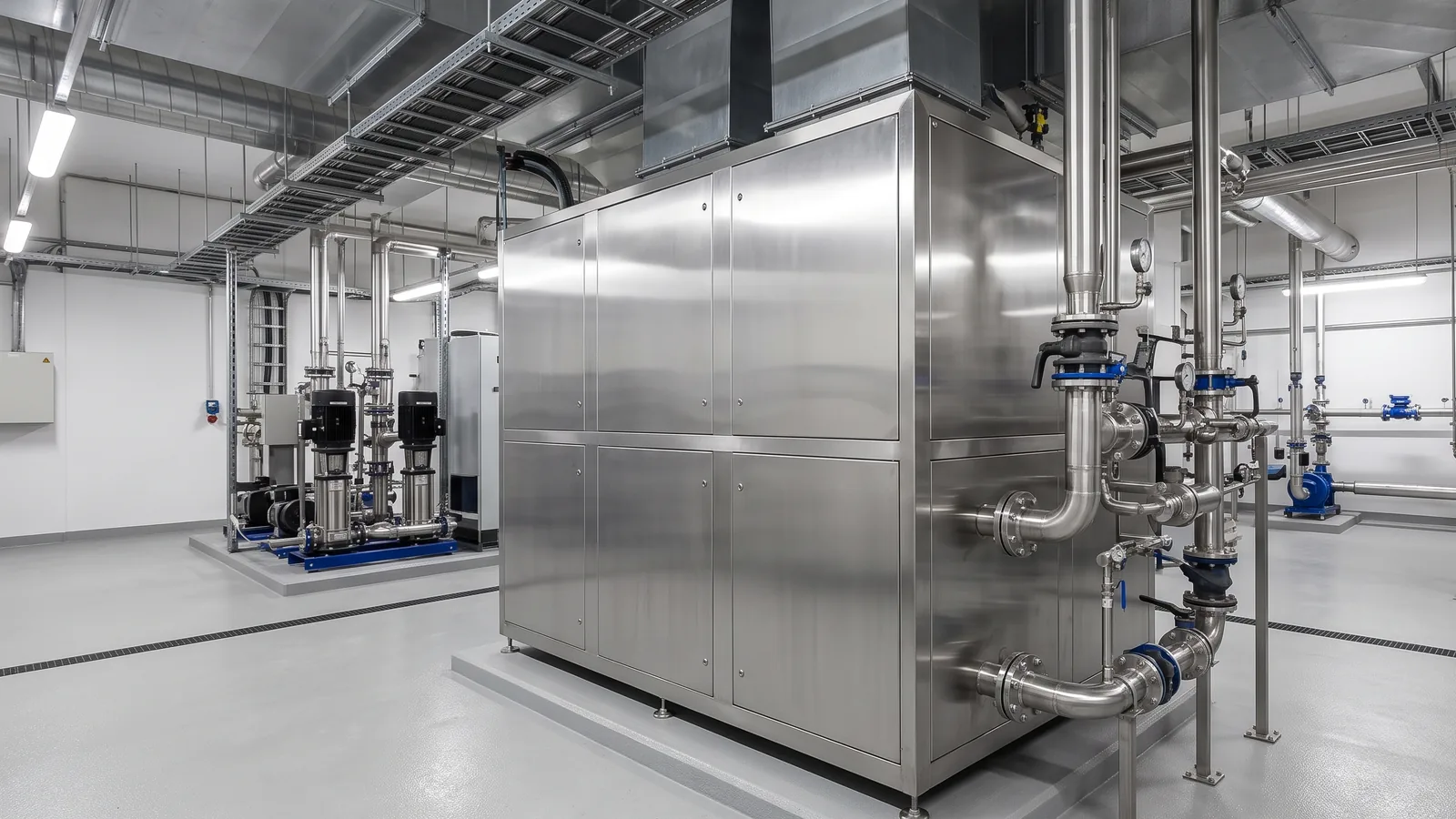
Multi-bay tunnel operations need proportionally larger systems, and the FRAL range of commercial refrigerant dehumidifiers includes units from the FRAL FD360 at 36 L/day through to the FRAL FSDV8000 for large-scale industrial extraction.
Moisture Cure Commercial provides free sizing consultations. Getting this right avoids paying for an oversized unit or, worse, installing one that runs at capacity 24 hours a day without reaching your target humidity.
Installation and Placement Considerations
Where you place the dehumidifier in a car wash matters as much as which unit you choose. Poor placement means the unit treats a pocket of air near the ceiling while the occupied zone stays humid.
- Position at the exit end: Vehicles carry the most residual moisture as they leave the wash tunnel. Placing the dehumidifier here captures the highest concentration of humid air.
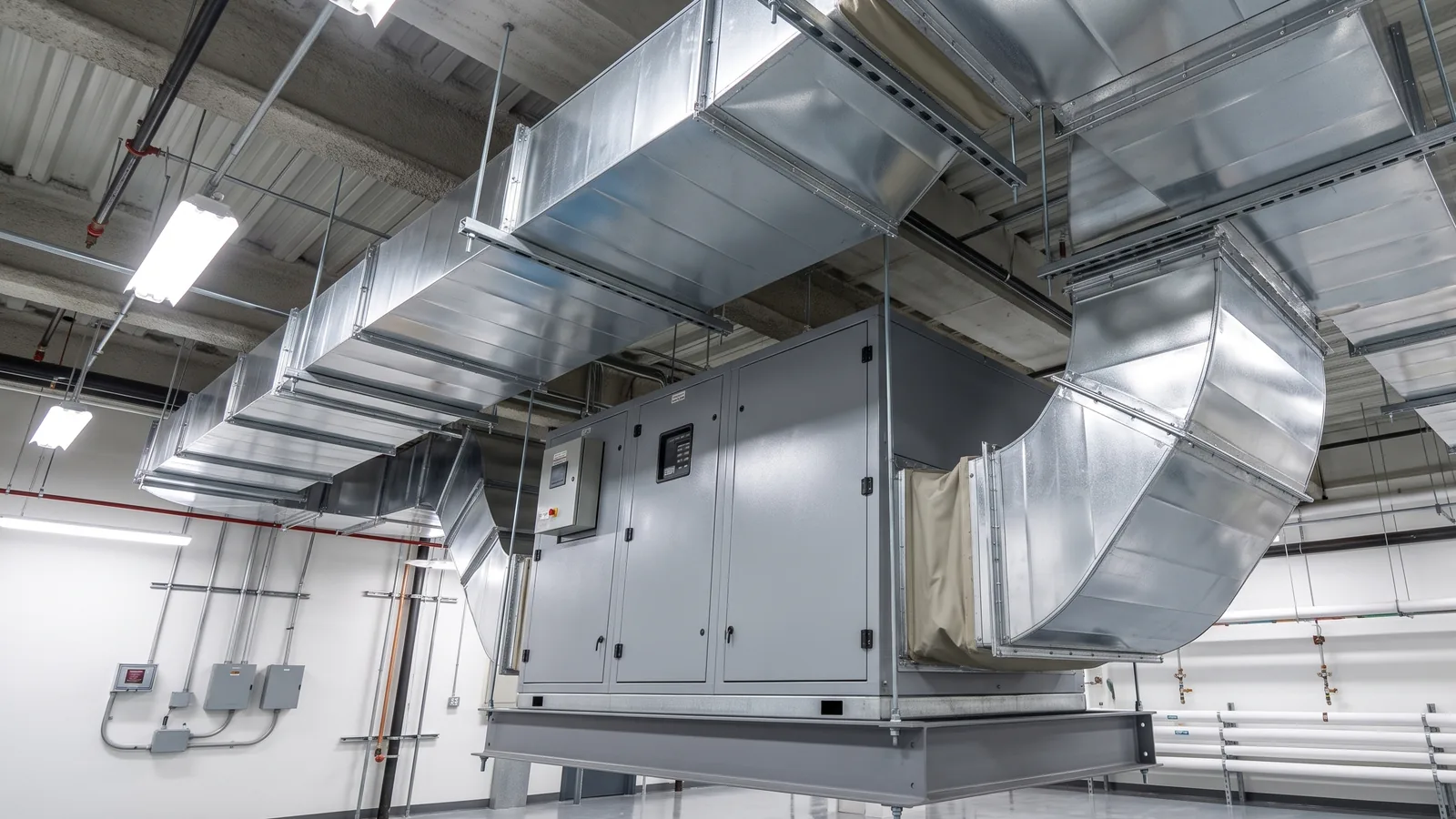
- Integrate with existing ducting: Ducted dehumidifier systems connect directly to the car wash’s HVAC ducting, treating air throughout the building rather than just the area around the unit.
- Ensure condensate drainage: Refrigerant dehumidifiers produce a steady stream of liquid water. Route the drain line to an existing floor drain or sump.
- Protect from direct spray: Mount the unit or its intake above spray height, or install splash guards. Direct water contact will damage the evaporator coils.
- Allow airflow clearance: Keep at least 300 mm clear around intake and exhaust ports for proper air circulation.
For multi-bay operations, a single large ducted system is usually more effective and energy-efficient than placing individual portable units in each bay. Ducted systems also keep the equipment in a protected plant room, away from water and chemicals.
Maintenance for Car Wash Environments
Car washes are harsh environments for any equipment. The combination of water, detergent residue, wax overspray and road grime means dehumidifiers need more frequent attention than they would in a warehouse or office.
- Clean or replace air filters every 2 to 4 weeks (detergent aerosol clogs filters faster than dust)
- Inspect evaporator coils monthly for chemical buildup and rinse with clean water if needed
- Check condensate drain lines weekly for blockages from detergent residue
- Inspect electrical connections quarterly for signs of corrosion
- Schedule a professional service every 6 to 12 months to check refrigerant charge and compressor health
Moisture Cure Commercial offers maintenance guidance for commercial dehumidifiers and can advise on service intervals specific to car wash conditions.
Frequently Asked Questions
What type of dehumidifier works best in a car wash?
Refrigerant dehumidifiers are the best fit for heated car wash bays. They perform at peak efficiency in warm, humid conditions (above 15°C) and have lower capital costs than desiccant alternatives for this application.
How much moisture does a commercial car wash produce?
A single-bay automatic wash processing 10 vehicles per hour can generate 300 to 500 litres of airborne moisture per day. Tunnel operations handling higher volumes produce proportionally more.
Can ventilation fans replace a car wash dehumidifier?
Ventilation helps move air but does not remove moisture from it. In humid climates, exhaust fans may bring in air that is already at 70 to 80% relative humidity. A dehumidifier actively extracts water from the air regardless of outside conditions.
Where should a dehumidifier be placed in a car wash?
At the exit end of the wash tunnel or bay, where vehicles carry the most residual moisture. Ducted systems connected to existing HVAC ducting provide more even coverage across the full facility.
How often does a car wash dehumidifier need servicing?
Filters need cleaning every 2 to 4 weeks due to detergent aerosol and chemical residue. Full professional servicing should happen every 6 to 12 months, including refrigerant charge and coil inspection.
Does a car wash dehumidifier reduce energy costs?
It can. Removing moisture from the air means heating systems work less hard to maintain bay temperature, because dry air heats more efficiently than humid air. The energy savings partially offset the dehumidifier’s running costs.
Protect Your Car Wash Investment
Moisture damage is the biggest hidden cost in running a commercial car wash. It corrodes the structure, destroys equipment and creates safety hazards that put your business at risk.
Moisture Cure Commercial has been solving humidity problems across Australian commercial and industrial facilities for over 28 years. If your car wash is showing signs of condensation, mould or accelerated corrosion, contact us for a consultation. We will assess your facility, recommend the right refrigerant dehumidifier for your bay layout and throughput, and provide a system that is sized to actually work.