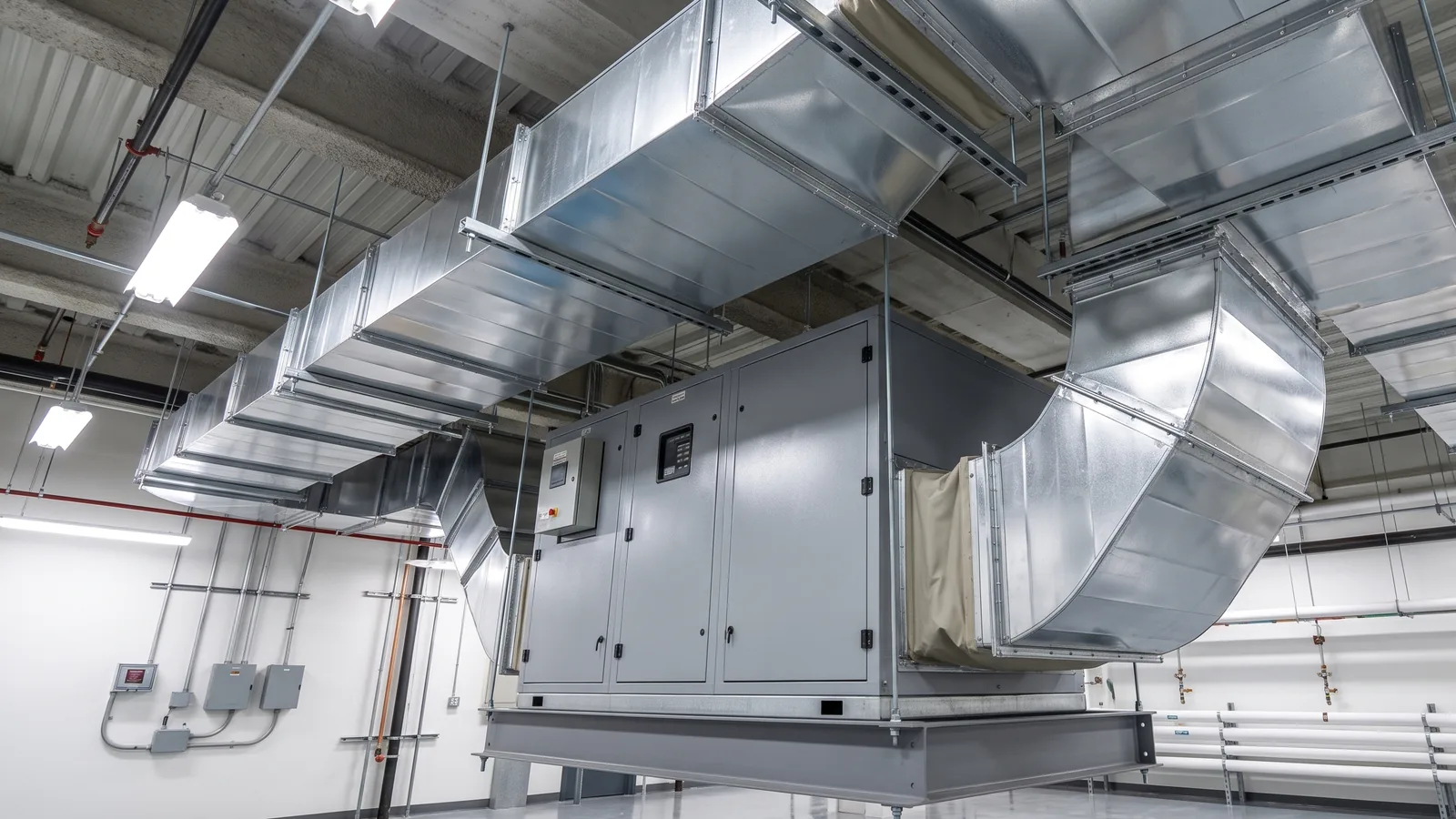
Industrial dehumidifiers can reduce construction drying time from months to days.
Wet concrete, freshly plastered walls, and water-damaged structures all need to reach specific moisture targets before the next trade can start work. Natural drying depends entirely on weather, and in Australia that means unpredictable delays during humid summers or cold winters when evaporation slows to almost nothing.
Mechanical construction drying with industrial dehumidifiers removes that dependency. This article covers which dehumidifier types work for construction sites, how to size them, and the moisture targets you need to hit before flooring and coatings go down.
Moisture Cure Commercial supplies desiccant and refrigerant dehumidifiers for construction drying projects of any scale. Browse the full range or contact us for site-specific sizing advice.
Why Construction Sites Need Mechanical Drying
A standard 100mm concrete slab contains roughly 20 litres of water per square metre at the time of pouring. Under natural conditions, that slab takes 1 to 2 months per 25mm of thickness to dry to an acceptable level for flooring installation. A 150mm slab poured in winter could take 6 months or longer before it reaches the required relative humidity of 75% or below, which is the threshold specified under Australian Standard AS 1884 for resilient floor coverings.
That timeline delays every trade scheduled after the slab pour. Painters, floor layers, cabinetmakers, and fit-out crews all wait. An industrial dehumidifier operating on the same slab can pull that drying time down to 1 to 3 weeks depending on conditions.
The financial argument is straightforward:
- Each week of delay on a commercial build carries holding costs, extended plant hire, and contractor scheduling penalties
- Flooring installed over concrete that has not dried sufficiently fails, bubbles, or delaminates within months
- Insurance claims for moisture-related flooring failure are common and preventable
- Dehumidifier hire or purchase costs are a fraction of a single week’s delay on most projects
The alternative to mechanical drying is gambling on the weather. On a commercial project, that gamble rarely pays off.
Desiccant vs Refrigerant for Construction Drying
Refrigerant dehumidifiers work by cooling air below its dewpoint and collecting the condensation. They perform well in warm, humid conditions above 15°C. Below that temperature, the evaporator coil ices up, the unit cycles into defrost mode, and effective moisture removal drops sharply. On an unheated construction site in melbourne during July, a refrigerant unit may spend more time defrosting than dehumidifying.
Desiccant dehumidifiers use a rotating silica gel wheel to adsorb moisture from the air. They operate effectively from -20°C to +50°C and are not affected by temperature drops. For construction drying, this makes them the better option on any site that is not climate-controlled.
| Factor | Refrigerant | Desiccant |
|---|---|---|
| Operating temperature range | 15°C to 35°C (effective) | -20°C to +50°C |
| Performance below 15°C | Drops significantly, frequent defrost cycles | Unaffected |
| Energy consumption | Lower at warm temperatures | Higher, but consistent across range |
| Best suited for | Enclosed warm spaces, summer drying | Unheated sites, cold weather, fast turnaround |
| Noise level | Moderate | Moderate to low |
| Typical construction use | Internal fit-out drying in warm months | Slab drying, structural drying, all seasons |
On most Australian construction sites, desiccant units are the default choice. They work regardless of season and deliver consistent extraction rates without temperature-related drop-off.
How to Size a Dehumidifier for a Construction Site
Sizing depends on three variables: the volume of the space being dried, the moisture load (how much water needs to be removed), and the ambient conditions. A common mistake is selecting a unit based on room volume alone without accounting for the moisture content of the materials. A 500 square metre warehouse with a freshly poured slab has a very different moisture load to the same warehouse with dry walls and a leaking roof.
The general approach:
- Calculate the total water volume in the wet materials (slab, plaster, screed)
- Determine the target relative humidity, typically 75% RH or below for flooring
- Measure or estimate ambient temperature and humidity on site
- Select a dehumidifier with an extraction rate that can achieve the target within your project timeline
- Factor in air movement, as dehumidifiers work faster when paired with air movers directing airflow across wet surfaces
Under-sizing is the most common error. A unit rated at 50 litres per day in a test chamber at 30°C and 80% RH will extract far less on a 10°C construction site. Always size based on worst-case site conditions, not catalogue ratings at ideal temperatures.
Need sizing advice? Moisture Cure Commercial provides expert consultation on every enquiry. Contact the team with your site dimensions, materials, and timeline for a recommendation matched to your project.
Construction Drying for Concrete Slabs
Concrete slab drying is the most common construction drying application. The slab must reach a stable internal relative humidity before any flooring, coating, or adhesive is applied. For resilient flooring under AS 1884, that target is 75% RH measured at 40% depth of the slab using in-situ probes.
Surface moisture meters give a reading of the top few millimetres only. They are not reliable indicators of the moisture state deeper in the slab, which is where the problem hides. A slab can feel dry on top while still holding 90% RH at depth.
Factors that affect concrete slab drying speed:
- Slab thickness: drying time increases exponentially, not linearly, with thickness
- Water-to-cement ratio: higher ratios mean more water to remove
- Ambient conditions: temperature, humidity, and airflow on site
- Vapour barrier: a slab on ground with no vapour barrier can absorb moisture from below indefinitely
- Curing compounds: membrane-forming curing compounds seal the surface and slow evaporation
If a curing compound has been applied, it may need to be mechanically removed before dehumidification can work effectively. The compound prevents moisture migration to the surface, and no amount of airflow or dehumidification will overcome a sealed surface.
Construction Drying After Water Damage
Flood damage, burst pipes, and storm water ingress on active construction sites require a different approach to new-build slab drying. The moisture has penetrated materials that were already dry or partially cured, including timber framing, plasterboard, insulation, and concrete. The goal shifts from initial curing to restoration drying, where speed matters because mould growth can begin within 48 to 72 hours in warm conditions.
For water damage recovery, industrial dehumidifiers are paired with high-velocity air movers to maximise evaporation from affected surfaces. The dehumidifier removes moisture from the air while the air movers direct dry air across wet materials, accelerating the transfer of moisture from the material surface into the air stream.
- Extract standing water first with pumps or wet vacuums
- Position air movers to direct airflow across the wettest surfaces
- Place the dehumidifier centrally and seal the space as much as possible to prevent re-humidification from outside air
- Monitor relative humidity daily and adjust equipment placement as drying progresses
Leaving water-damaged materials to dry naturally on an active construction site almost always results in mould. The 48-hour window is not generous. On a site where the building envelope is not yet sealed, humidity levels inside can match or exceed outside conditions, making natural drying even slower.
Monitoring Moisture During Construction Drying
Running a dehumidifier without monitoring is guesswork. You need to track the relative humidity of both the air and the materials being dried to know when the job is done. For concrete, the standard method is in-situ relative humidity testing at 40% slab depth using calibrated probes. Surface readings from pin-type or impedance meters are useful for timber and plasterboard but unreliable for concrete.
A practical monitoring setup includes:
- A data-logging hygrometer placed in the drying zone, recording air temperature and RH at hourly intervals
- In-situ RH probes installed in the concrete slab at the required depth
- A moisture meter for spot-checking timber, plasterboard, and other materials
- A daily log of dehumidifier water extraction rates, which should decrease as drying progresses
When extraction rates plateau and the target RH has been reached, the drying is complete. Removing equipment too early because the surface feels dry is a common and expensive mistake on commercial projects.
Get the Right Equipment for Your Build
Construction drying is one of the most common applications for commercial and industrial dehumidifiers. Whether you are drying a new slab before flooring goes down or recovering from water damage mid-build, the right equipment and correct sizing make the difference between staying on schedule and losing weeks.
Moisture Cure Commercial has 28 years of experience supplying humidity control equipment for Australian construction projects. Contact the team for a consultation on your site requirements. We provide expert sizing advice on every enquiry, from single-slab residential pours through to multi-level commercial developments.