Uncontrolled humidity in defence storage facilities causes corrosion, mould, and electronic failure in equipment worth millions of dollars.
Military vehicles, weapons systems, communications equipment, and spare parts all require specific humidity levels during long-term storage. Without active humidity control, metal surfaces corrode, rubber seals degrade, and circuit boards develop conductive moisture films that cause intermittent faults.
This article covers the humidity requirements for defence equipment storage, why desiccant dehumidifiers are the preferred technology, and how to size a system for different facility types.
Moisture Cure Commercial has 28 years of experience in humidity control for Australian conditions. Contact us for a consultation on defence and government storage requirements.
Why Humidity Damages Defence Equipment in Storage
Most defence equipment is built to operate in harsh conditions. But operational use and long-term storage create very different corrosion risks.
In operation, equipment is regularly inspected, cleaned, and maintained. In storage, moisture damage accumulates silently over months or years.
- Steel and iron components begin corroding when relative humidity exceeds 50%. At 60% RH, corrosion rates increase significantly.
- Aluminium alloys develop pitting corrosion in humid, salt-laden environments. Coastal storage facilities in northern Australia are particularly vulnerable.
- Electronic circuit boards absorb moisture through conformal coatings and PCB substrates. Moisture films between traces cause signal leakage and intermittent faults.
- Optical systems (scopes, sensors, targeting systems) develop internal fogging when humidity cycles cause condensation inside sealed housings.
- Rubber seals and hoses degrade faster in high humidity, leading to premature cracking and loss of seal integrity.
The Australian Defence Force stores equipment across climate zones ranging from tropical (Darwin, Townsville) to temperate (Canberra, Adelaide). Each zone presents different humidity challenges.
Target Humidity Levels for Defence Storage
The specific humidity target depends on what is being stored. These ranges are based on international defence storage standards.
| Equipment type | Target RH range | Critical threshold |
|---|---|---|
| Vehicles and armoured equipment | 40% to 50% RH | Corrosion accelerates above 55% |
| Weapons and ammunition | 30% to 45% RH | Propellant degradation above 65% |
| Electronics and communications | 30% to 50% RH | Moisture absorption above 60% |
| Optical and precision instruments | 35% to 45% RH | Internal fogging risk above 50% |
| Spare parts and general stores | 40% to 55% RH | Rust and mould above 60% |
| Textiles and parachutes | 40% to 50% RH | Mildew growth above 65% |
Maintaining these conditions continuously is the challenge. Storage facilities often have poor insulation, large door openings for vehicle access, and minimal HVAC.
Why Desiccant Dehumidifiers Suit Defence Applications
Desiccant dehumidifiers remove moisture using a chemical drying agent (silica gel rotor), not refrigerant coils. This gives them several advantages over refrigerant units in defence storage.
- Operate effectively at low temperatures (down to -20°C), critical for unheated warehouses and field storage
- Achieve lower humidity levels (below 30% RH) than refrigerant systems can reach
- No condensate drainage required, simplifying installation in remote facilities
- Consistent performance regardless of ambient temperature fluctuations
- Can be ducted to deliver dry air directly into sealed containers, vehicles, or weapon racks
Refrigerant dehumidifiers lose effectiveness below 15°C as their coils ice up. In unheated defence storage buildings, winter temperatures regularly drop below this threshold.
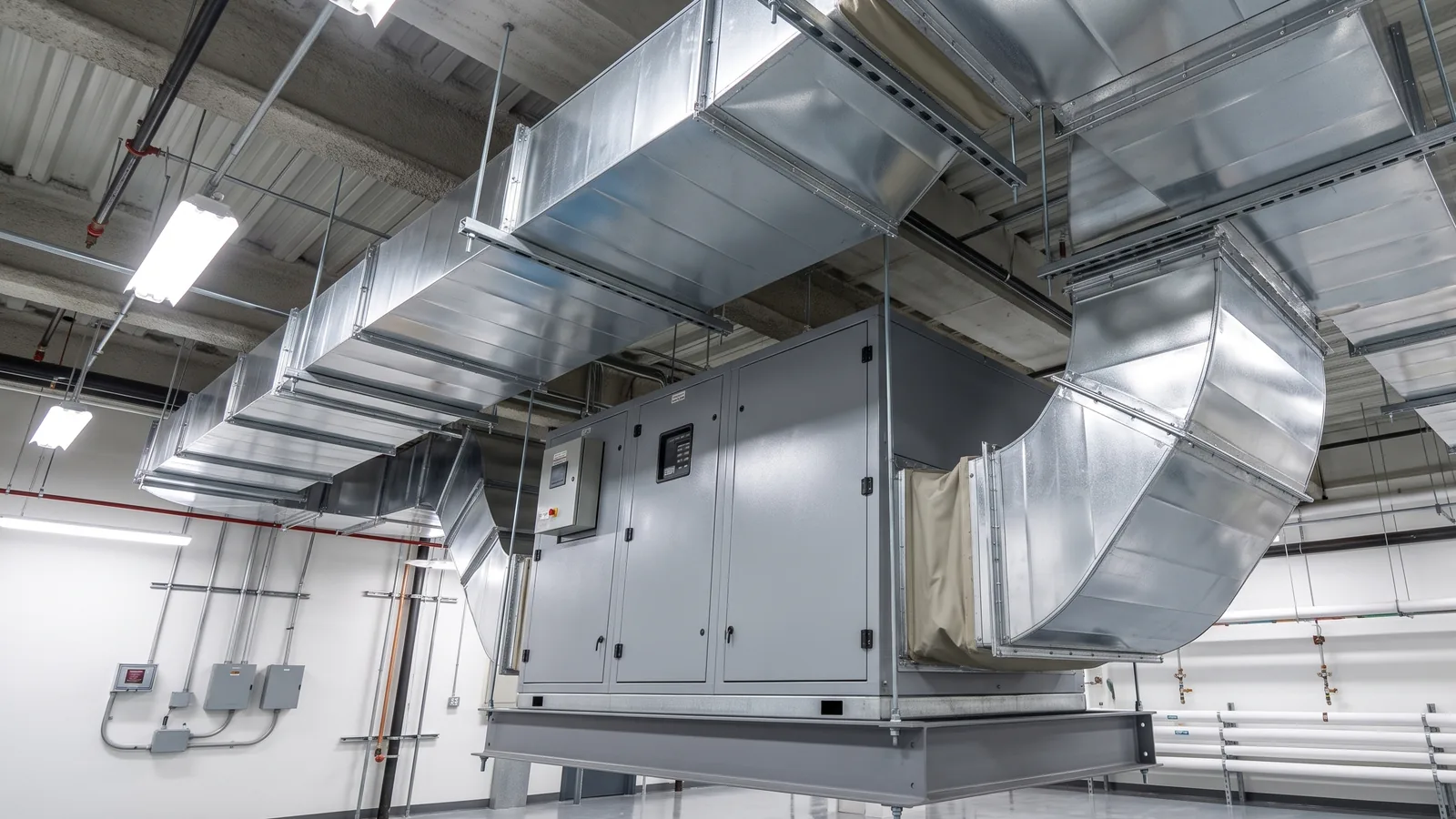
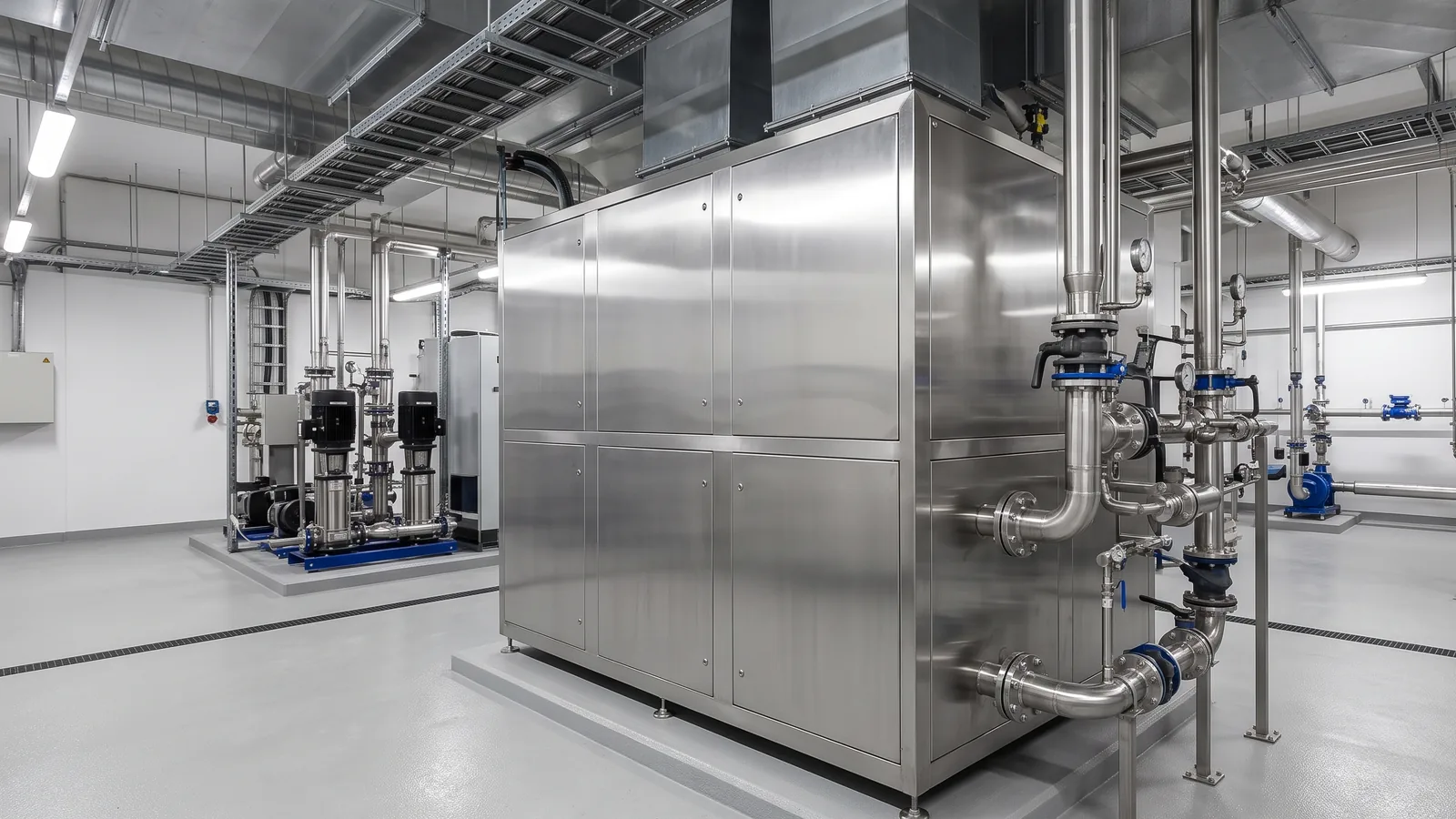
Moisture Cure Commercial supplies desiccant units from YAKE (operating -20°C to +50°C), Antair industrial plant handling 10,000+ m³/h airflow, and FRAL European-engineered systems achieving -60°C dewpoint. View the full range.
How to Size a Desiccant Dehumidifier for Defence Storage
Sizing depends on the building volume, air exchange rate, target humidity, and the local climate. A facility in Darwin with open loading bays has very different requirements to a sealed warehouse in Adelaide.
- Calculate the building volume. Length x width x height in cubic metres. Include any connected spaces that share airflow.
- Determine the air exchange rate. How often does outside air enter through doors, vents, or leaks? Frequently opened vehicle bays may have 2 to 4 air changes per hour.
- Set the target humidity. Based on the equipment types being stored (see table above).
- Factor in the local climate. Tropical locations with 70% to 90% ambient RH need significantly larger units than temperate locations averaging 50% to 60%.
- Consider ducting requirements. If dry air needs to be delivered to specific zones, containers, or sealed racks, the unit must have sufficient static pressure.
Moisture Cure Commercial provides free sizing consultations for government and defence projects. Contact the team with your facility details and we will recommend the right configuration.
Installation Options for Defence Facilities
The installation approach depends on whether you are protecting an entire building, individual containers, or specific equipment racks.
| Approach | Best for | How it works |
|---|---|---|
| Whole-building dehumidification | Large warehouses, hangars | Central unit with ducted distribution throughout the building |
| Zone control | Mixed-use facilities | Separate units for different storage zones with independent humidity targets |
| Container dehumidification | ISO containers, shipping containers used as field stores | Small desiccant unit mounted externally, ducted into the sealed container |
| Equipment-level drying | Vehicles, weapon systems in long-term preservation | Dry air ducted directly into sealed vehicles or cases via flexible hose |
Container-level dehumidification is increasingly common for ADF deployable stores. A single compact desiccant unit can maintain conditions inside a sealed 20-foot container indefinitely.
Get Expert Advice on Defence Storage Humidity Control
Moisture Cure Commercial has supplied humidity control systems to Australian government and defence facilities for over 28 years. We understand the specific requirements of long-term equipment preservation.
Contact us for a free consultation. We will assess your facility, recommend the right equipment, and provide a detailed proposal including sizing, installation, and ongoing maintenance.