An ice rink is one of the most demanding humidity control environments in any commercial or industrial setting. The ice surface acts as a massive cold plate, pulling moisture from the surrounding air and creating condensation on every surface above it.
Fog rolling across the ice, water dripping from ceiling structures, and frost forming on steelwork are all symptoms of uncontrolled humidity in an ice arena. These problems affect ice quality, spectator comfort, structural integrity, and operating costs.
Refrigerant-based dehumidifiers lose effectiveness in the cold air temperatures above ice surfaces, typically between 8°C and 12°C. That makes desiccant dehumidification the only technology that performs reliably in these conditions year-round.
What Causes Fog and Condensation in Ice Rinks
An ice sheet maintained at -3°C to -7°C creates an enormous temperature differential with the surrounding air. Warm, humid air entering through doors, ventilation systems, and spectator areas meets this cold surface and rapidly reaches its dewpoint.
Once the air hits dewpoint, moisture condenses. Where it condenses depends on air circulation patterns and the temperature of surrounding surfaces.
- Fog above the ice occurs when the air layer directly over the surface drops below dewpoint, forming a visible mist that obscures sight lines for players, officials, and spectators
- Ceiling drip happens when warm, moist air rises and contacts cold roof structures, forming water droplets that fall onto the ice and disrupt skating surfaces
- Structural condensation forms on steel beams, ductwork, lighting rigs, and any uninsulated cold surface, leading to corrosion and long-term structural damage
- Frost on boards and glass builds up around the rink perimeter where cold air meets warmer boundary layers
- Ice quality degradation results from uncontrolled moisture depositing as frost or water on the playing surface, requiring more frequent resurfacing
The problem intensifies during warmer months and in humid climates. An Australian venue in a coastal or subtropical region faces significantly higher moisture loads than one in a dry inland area.
Why Refrigerant Dehumidifiers Fail in Ice Arenas
Refrigerant dehumidifiers work by cooling air below its dewpoint on a cold evaporator coil, causing moisture to condense and drain away. This process relies on a temperature difference between the coil and the incoming air.
In an ice rink, the air above the ice is already cold, often sitting between 8°C and 12°C at rink level. A refrigerant dehumidifier trying to cool this air further hits two problems simultaneously.
| Factor | Refrigerant dehumidifier | Desiccant dehumidifier |
|---|---|---|
| Performance at 10°C air temp | Severely reduced (50-70% capacity loss) | Full rated capacity |
| Performance at 5°C air temp | Near zero moisture removal | Full rated capacity |
| Coil icing risk | High, requires defrost cycles | Not applicable |
| Dewpoint achievable | Limited to 10-15°C in cold air | Down to -40°C or lower |
| Energy use in cold conditions | High per litre removed (poor COP) | Consistent regardless of air temp |
| Maintenance in ice rink | Frequent defrost, coil cleaning | Rotor replacement at long intervals |
When a refrigerant coil ices up, the unit enters defrost mode and stops removing moisture entirely. In an ice rink running 16 to 24 hours a day, these defrost cycles create windows where humidity spikes and fog returns.
How Desiccant Dehumidifiers Solve the Ice Rink Problem
A desiccant dehumidifier uses a rotating wheel impregnated with a moisture-absorbing material, typically silica gel or a lithium chloride compound. Air passes through one sector of the wheel where moisture is adsorbed. A separate heated airstream passes through another sector, driving the collected moisture out and exhausting it to the outside.
This process is entirely thermal and mechanical. It does not depend on refrigeration, which is why desiccant units maintain full performance from -20°C to +50°C.
- Continuous operation with no defrost cycles, even in sub-zero conditions above the ice
- Dewpoint delivery of 0°C to 2°C, which is the target range for preventing condensation in ice arenas
- Consistent moisture removal rate regardless of inlet air temperature or outdoor conditions
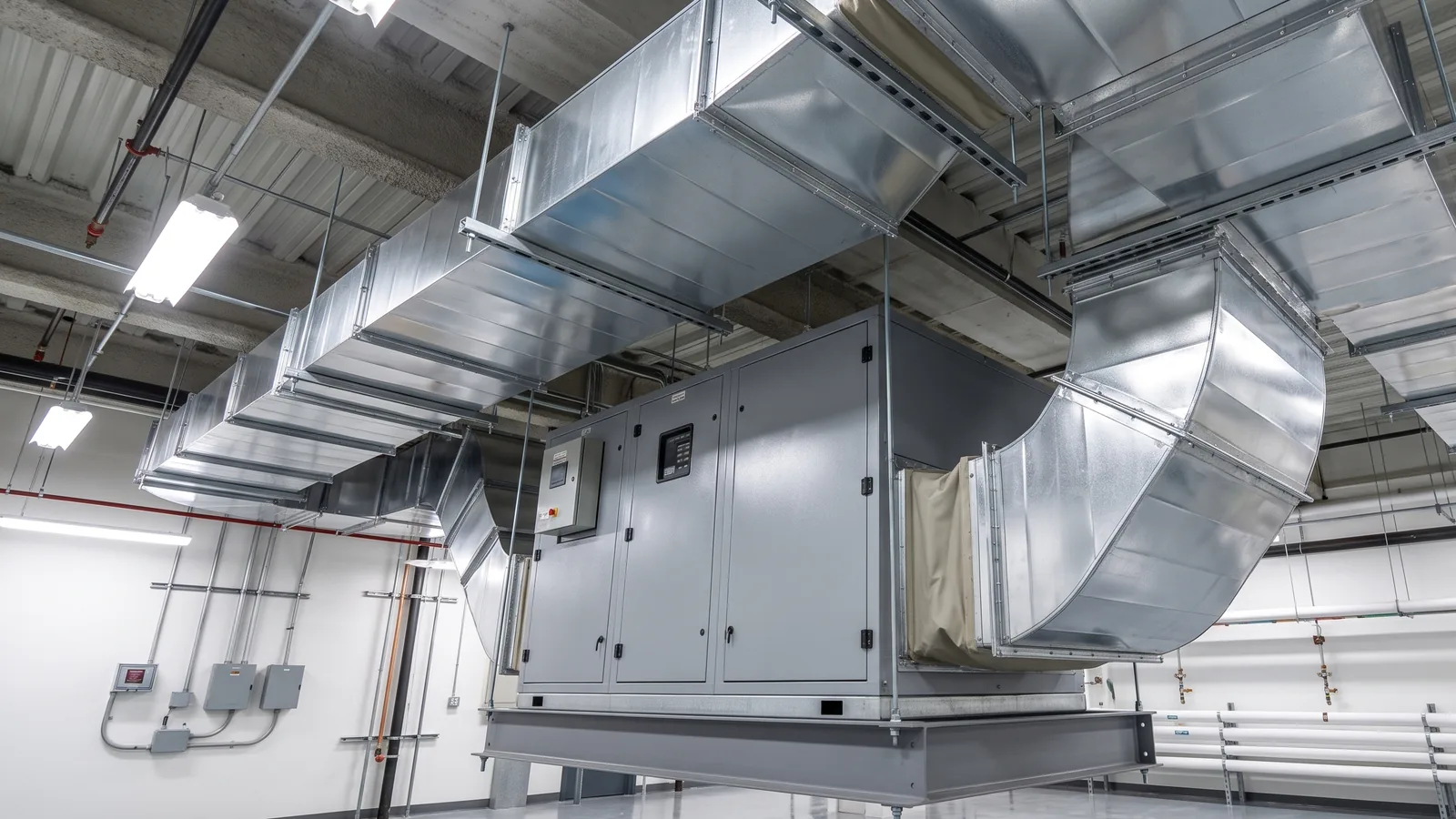
- Ducted air delivery allows treated air to be directed precisely where condensation is worst, such as above the ice surface and along ceiling structures
- Scalable capacity from small curling clubs to full-size Olympic arenas
Moisture Cure Commercial supplies industrial-grade desiccant units rated for continuous duty in demanding environments. The YAKE range operates from -20°C to +50°C, making it suitable for ice arena applications where temperature swings are extreme. View the full product range or contact the team for sizing advice.
Sizing a Desiccant System for an Ice Rink
Sizing humidity control for an ice arena is not the same as sizing for a warehouse or factory. The moisture load in an ice rink comes from multiple sources simultaneously, and each one needs to be quantified.
- Infiltration air through doors, gaps in the building envelope, and ventilation openings brings in ambient humidity from outside
- Spectator moisture from breathing and perspiration adds a significant load during events, with each person contributing roughly 40-60 g/h of moisture
- Resurfacing operations introduce large volumes of hot water onto the ice surface, creating sudden moisture spikes that the dehumidification system must handle
- Ventilation air required by building codes introduces fresh outdoor air that needs to be dehumidified before entering the arena space
- Ice surface sublimation adds a baseline moisture load that varies with ice temperature and air velocity over the surface
A typical community ice rink with a single sheet of ice (approximately 1,500 m²) requires enough dehumidification capacity to maintain a dewpoint of 0°C to 2°C at rink level. The exact capacity depends on building construction, location, occupancy, and operating schedule.
| Facility type | Approximate ice area | Typical moisture load range |
|---|---|---|
| Community rink (single sheet) | 1,500 m² | 20-40 kg/h |
| Twin-sheet arena | 3,000 m² | 40-70 kg/h |
| Olympic/international arena | 1,800 m² (larger spectator volume) | 50-90 kg/h |
| Curling club (4 sheets) | 1,800 m² | 25-45 kg/h |
These figures represent peak load conditions during high-occupancy events in humid weather. A properly sized system handles worst-case demand, not average conditions.
Air Distribution and Ductwork for Ice Arena Dehumidification
Where the dry air enters the arena matters as much as how dry it is. Poor air distribution is one of the most common reasons dehumidification systems underperform in ice rinks, even when the unit itself is correctly sized.
The goal is to deliver dehumidified air to the zones where condensation occurs, primarily along the ceiling plane and in the air layer immediately above the ice. Ducted dehumidification systems allow precise placement of supply air outlets to target problem areas.
- Ceiling-level supply directs dry air along the roof structure where warm moist air naturally rises and condenses, preventing drip before it forms
- Low-level return draws humid air from just above the ice surface where fog tends to develop
- Perimeter delivery around the rink boards addresses frost buildup on glass and dasher panels
- Separate spectator zone supply handles the higher moisture load from occupied seating areas without over-drying the ice surface
- Zamboni bay isolation prevents the massive moisture spike from resurfacing operations from overwhelming the main arena system
Air velocity over the ice surface must be kept low. High-velocity air currents increase sublimation from the ice, adding to the moisture load and increasing refrigeration costs.
Operating Costs and Energy Considerations
Desiccant dehumidifiers use thermal energy (gas or electric heat) to regenerate the desiccant wheel. This energy cost is offset by several factors that make desiccant the more economical choice over the life of the system in an ice arena.
- Reduced refrigeration load because less moisture reaches the ice surface, which means the ice plant works less to maintain surface temperature
- No defrost energy waste since desiccant units never ice up, unlike refrigerant coils that waste energy cycling between cooling and defrost
- Lower resurfacing frequency as drier air means less frost depositing on the ice between cuts, extending intervals between Zamboni runs
- Reduced structural maintenance because eliminating ceiling condensation prevents corrosion on steel structures, lighting, and mechanical systems
- Longer equipment life for the ice plant, boards, glass, and building structure when humidity is properly controlled
| Cost factor | Without dehumidification | With desiccant dehumidification |
|---|---|---|
| Ice plant energy | Higher (compensating for moisture load) | Lower (reduced sublimation and frost) |
| Resurfacing frequency | Every 60-90 minutes | Every 90-120 minutes |
| Structural steel maintenance | Annual rust treatment | Standard inspection only |
| Ceiling repair | Regular drip damage repair | Minimal |
| Event cancellations (fog) | Possible during humid weather | Eliminated |
ASHRAE research indicates that desiccant dehumidification in ice arenas can reduce total facility energy consumption compared to attempting humidity control with refrigerant systems alone. The savings come from reduced ice plant loading, not from the dehumidifier itself.
Get the Right System Specified for Your Ice Facility
Every ice rink has a different combination of building construction, climate zone, occupancy pattern, and operating schedule. A dehumidification system sized and configured for one venue will not necessarily suit another, even if the ice area is similar.
Moisture Cure Commercial has 28 years of experience supplying commercial and industrial humidity control equipment for Australian conditions. The team provides expert sizing advice on every enquiry, including moisture load calculations, ductwork layout recommendations, and equipment selection from the YAKE and Antair ranges.
- Free consultation and moisture load assessment for new and existing ice facilities
- Units rated for continuous operation from -20°C to +50°C
- Ducted and standalone configurations to suit any arena layout
- Supply, installation support, and ongoing technical backup across Australia
Contact Moisture Cure Commercial to discuss dehumidification requirements for your ice rink, arena, or cold-surface facility.