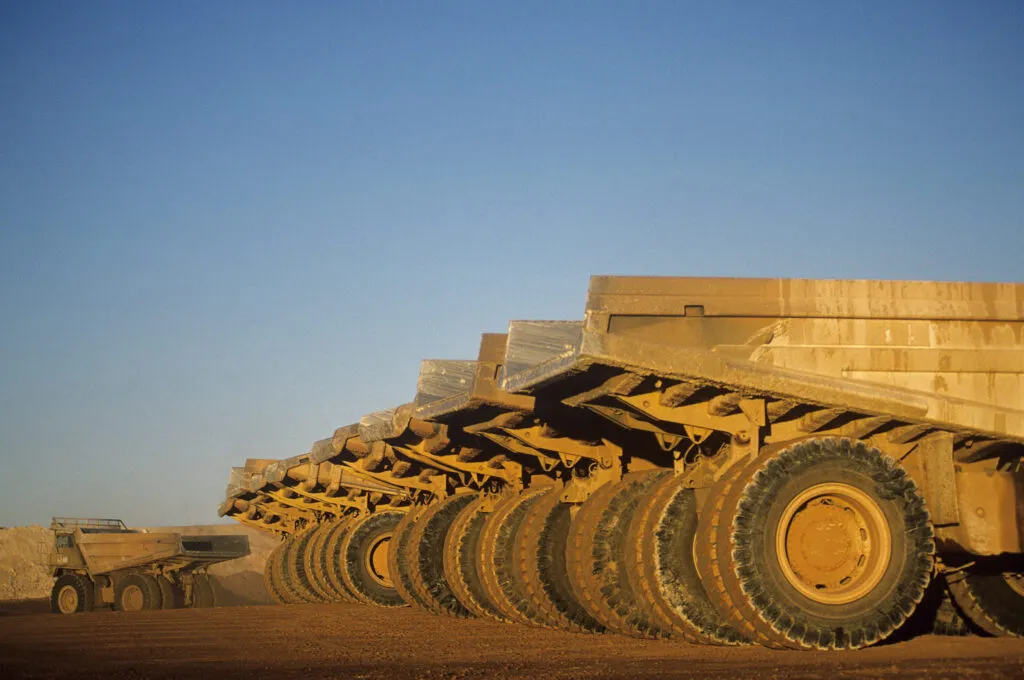
Mining equipment left in storage without humidity control corrodes, develops electrical faults, and costs more to recommission than it should.
Idle haul trucks, drill rigs, crushers, conveyors, and spare parts are all vulnerable to moisture damage during shutdowns, seasonal layups, and long-term preservation. Underground storage areas face even higher humidity levels due to groundwater seepage and limited ventilation.
This article covers why desiccant dehumidifiers are the preferred technology for mining storage environments, what humidity targets to aim for, and how to size a system for different storage scenarios.
Moisture Cure Commercial supplies desiccant dehumidification systems for mining and heavy industry across Australia and New Zealand. Contact us for a site assessment.
Why Mining Equipment Corrodes in Storage
Steel begins corroding at around 40% relative humidity. Above 60% RH, corrosion rates increase rapidly and become a serious threat to structural integrity and mechanical function.
In operation, mining equipment is regularly maintained, lubricated, and inspected. In storage, moisture damage accumulates silently over weeks and months with nobody watching.
- Engine internals and hydraulic cylinders develop surface rust that causes scoring and premature wear on recommissioning
- Electrical systems absorb moisture through insulation and connector housings, leading to short circuits and sensor failures when powered up
- Bearings and gearboxes develop corrosion pitting on rolling surfaces, reducing service life significantly even after relubrication
- Brake systems seize as disc and drum surfaces oxidise in humid air, requiring replacement rather than simple service
- Hydraulic hoses and seals absorb moisture that degrades rubber compounds, causing premature cracking and blowouts under pressure
- Spare parts and components stored on open shelving or in shipping containers degrade before they are ever installed
Australian mining operations face conditions ranging from tropical humidity in the Pilbara and Far North Queensland to cold, damp environments in Tasmanian and Victorian underground mines. Each presents different moisture challenges during equipment layup.
Underground storage compounds the problem. Groundwater seepage, limited ventilation, and stable cool temperatures create conditions where relative humidity sits above 80% unless actively managed. Equipment stored underground without dehumidification is constantly exposed to moisture far above safe thresholds.
The cost of recommissioning corroded equipment routinely exceeds the cost of humidity control by a large margin. A single hydraulic cylinder rebuild can cost more than running a desiccant dehumidifier for an entire shutdown period.
Target Humidity Levels for Mining Storage
The target relative humidity depends on what is being stored and how long it will remain idle. Short-term shutdowns (weeks) require less aggressive control than multi-year preservation programmes.
| Storage scenario | Target RH | Why |
|---|---|---|
| Heavy mobile equipment (trucks, loaders, excavators) | 40% to 50% | Prevents surface corrosion on exposed steel and protects engine internals |
| Electrical switchgear and control panels | 30% to 45% | Avoids moisture film on PCBs and connector pins that causes tracking failures |
| Spare parts warehouse | 40% to 55% | Protects unpainted machined surfaces and packaged components |
| Underground equipment bays | 40% to 50% | Counteracts groundwater-driven humidity in enclosed underground spaces |
| Drill rigs and exploration equipment | 35% to 50% | Prevents corrosion on precision hydraulic components and instrumentation |
| Conveyor systems in shutdown | 45% to 55% | Stops belt mildew and idler bearing corrosion during seasonal closures |
Maintaining these conditions continuously is the challenge. Mine sites are remote, often unoccupied during shutdowns, and storage facilities range from purpose-built warehouses to shipping containers and open sheds.
Without active humidity control, conditions inside a sealed storage building can swing from 30% RH during a hot, dry afternoon to 90% RH overnight as temperatures drop and moisture condenses on cold metal surfaces. It is these daily cycles that cause the most damage.
Corrosion is not just a cosmetic issue in mining. A corroded bearing surface that goes undetected during recommissioning can fail under load, creating a safety risk and unplanned downtime. Electrical faults from moisture-damaged wiring are equally dangerous in underground operations where reliable communication and control systems are essential.
Why Desiccant Dehumidifiers Suit Mining Environments
Desiccant dehumidifiers use a silica gel rotor to adsorb moisture directly from the air stream. They do not rely on refrigeration coils, which gives them critical advantages in mining storage applications.
| Factor | Desiccant dehumidifier | Refrigerant dehumidifier |
|---|---|---|
| Operating temperature range | -20°C to +50°C | +5°C to +35°C |
| Achievable RH | Below 30% | 40% to 50% minimum |
| Performance in cold conditions | Full capacity maintained | Severely reduced, coils ice up below 15°C |
| Condensate drainage required | No (moisture exhausted as vapour) | Yes (drainage plumbing needed) |
| Dust tolerance | Industrial pre-filtration available | Coils clog in high-particulate air |
| Unattended operation | Weeks to months with minimal servicing | Requires regular coil cleaning and drain checks |
The temperature independence is the deciding factor for most mining applications. Underground storage bays sit at 10°C to 15°C year-round, which is below the effective range of refrigerant coils.
Refrigerant dehumidifiers lose effectiveness below 15°C as their coils ice up and require defrost cycles. During those defrost cycles, humidity spikes and moisture settles on the equipment you are trying to protect.
Moisture Cure Commercial supplies YAKE desiccant units rated for -20°C to +50°C continuous operation, Antair industrial plant handling 10,000+ m³/h airflow, and FRAL European-engineered systems achieving -60°C dewpoint. View the full range.
Common Mining Storage Scenarios
Different storage situations call for different dehumidification approaches. The right configuration depends on the building type, equipment value, and duration of storage.
| Scenario | Approach | How it works |
|---|---|---|
| Purpose-built equipment shed | Whole-building dehumidification | Central desiccant unit with ducted distribution maintaining uniform conditions across the entire space |
| Shipping container stores | Container-mounted units | Compact desiccant unit mounted externally, ducted into the sealed container through a small port |
| Underground equipment bays | Zone dehumidification | Units positioned to counteract groundwater humidity, with ducted delivery to each storage bay |
| Open-sided sheds | Localised enclosure | Temporary sealing of the structure combined with desiccant dehumidification inside the enclosure |
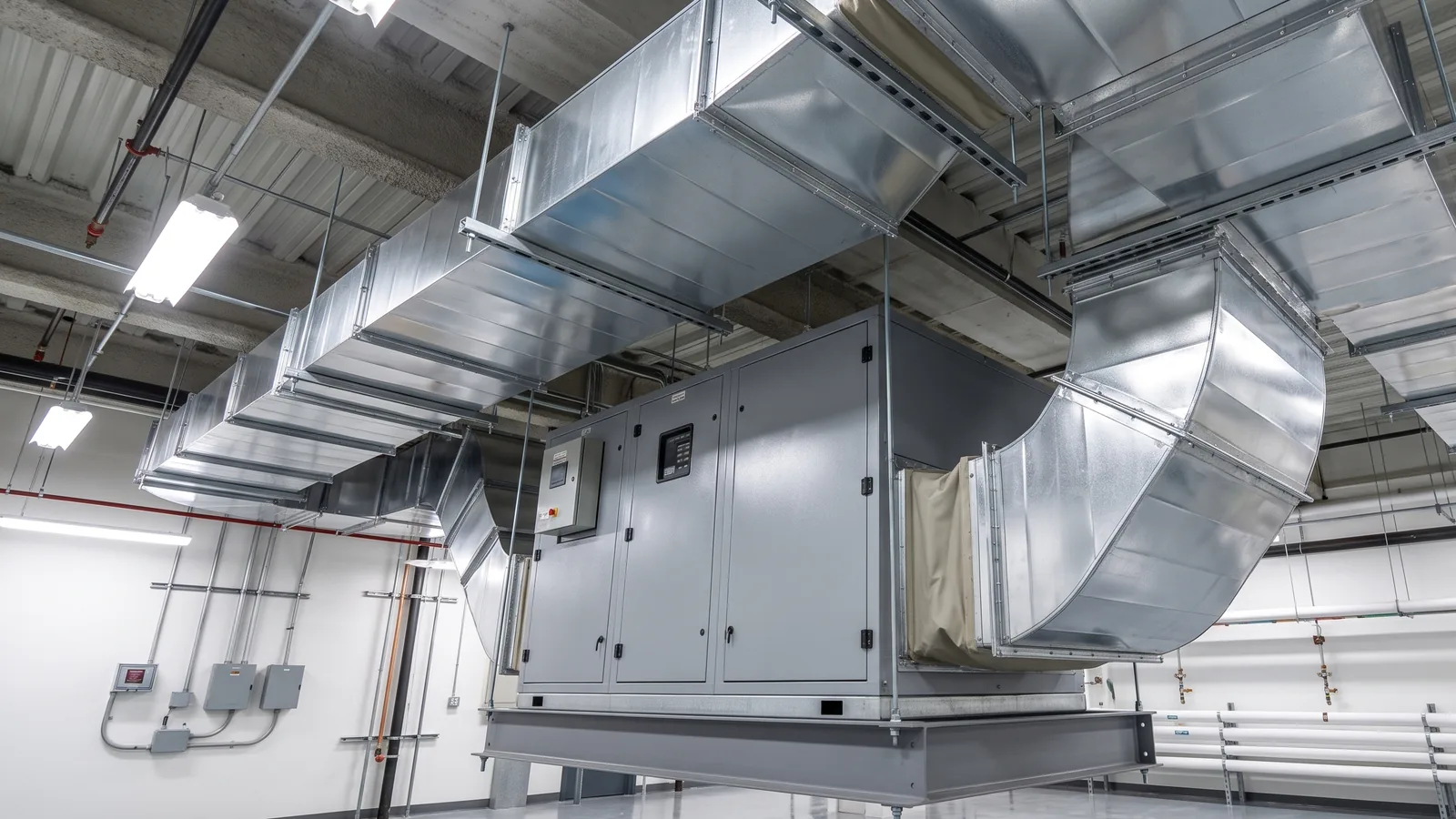
| Individual high-value machines | Equipment-level drying | Dry air ducted directly into sealed engine compartments and cab interiors via flexible hose |
Container-level dehumidification is increasingly common for remote mine sites where spare parts sit in shipping containers for months between use. A single compact unit can maintain protective conditions inside a sealed 20-foot container indefinitely.
For high-value individual machines, equipment-level drying is the most targeted approach. The machine is sealed with temporary covers or shrink wrap, and dry air from a ducted desiccant unit is fed directly into the engine bay, cab, and electrical compartments through flexible ducting.
This method uses a smaller unit than whole-building dehumidification because only the volume inside the sealed enclosure needs to be treated. It is particularly effective for drill rigs, excavators, and haul trucks that are too large to store in a controlled building.
Underground storage bays present a unique challenge because the moisture source is continuous. Groundwater seeps through rock walls and the surrounding ground maintains high humidity levels regardless of surface weather. Desiccant units in underground applications must be sized to handle this constant baseline moisture load on top of any air exchange from ventilation systems.
Sizing a Desiccant Dehumidifier for Mine Site Storage
Undersizing is the most common mistake in mine storage dehumidification. The unit needs to handle the peak moisture load, not the average.
Key variables that determine the right unit capacity:
- Building volume: total cubic metres of the storage space, including any connected areas that share airflow
- Air exchange rate: how often outside air enters through doors, vents, and gaps in the building envelope, with frequently opened vehicle bays typically seeing 2 to 4 air changes per hour
- Ambient climate: tropical sites with 70% to 90% ambient RH need substantially larger units than arid inland locations
- Target humidity: the RH range required based on equipment type (refer to the table above)
- Temperature range: seasonal temperature swings affect moisture load calculations, especially in underground environments where rock face moisture adds a continuous baseline humidity load
- Occupancy pattern: how often doors open for equipment access or personnel entry during the storage period
A common sizing error is calculating for average ambient conditions rather than peak. A tropical site may average 65% RH annually, but during the wet season it regularly exceeds 85%. The dehumidifier must handle that peak, or equipment will corrode during the worst months of the year.
Moisture Cure Commercial provides free sizing consultations for mining and heavy industry projects. Contact the team with your facility details for a recommendation matched to your specific storage requirements.
Protect Your Mining Investment During Downtime
A haul truck that costs millions to purchase should not lose years of service life to preventable corrosion during a shutdown. Proper humidity control during storage protects your capital investment and reduces recommissioning costs when the equipment is needed again.
Moisture Cure Commercial has 28 years of experience supplying commercial and industrial humidity control equipment for Australian conditions. We work with mining operations, maintenance contractors, and asset management teams across the country.
- Free site assessment and moisture load calculation for any storage facility
- Units rated for -20°C to +50°C continuous operation across all Australian climate zones
- Ducted and standalone configurations for sheds, containers, and underground bays
- Expert sizing advice included on every enquiry
- Ongoing service and maintenance support nationally
Contact Moisture Cure Commercial to discuss humidity control for your mining equipment storage requirements.