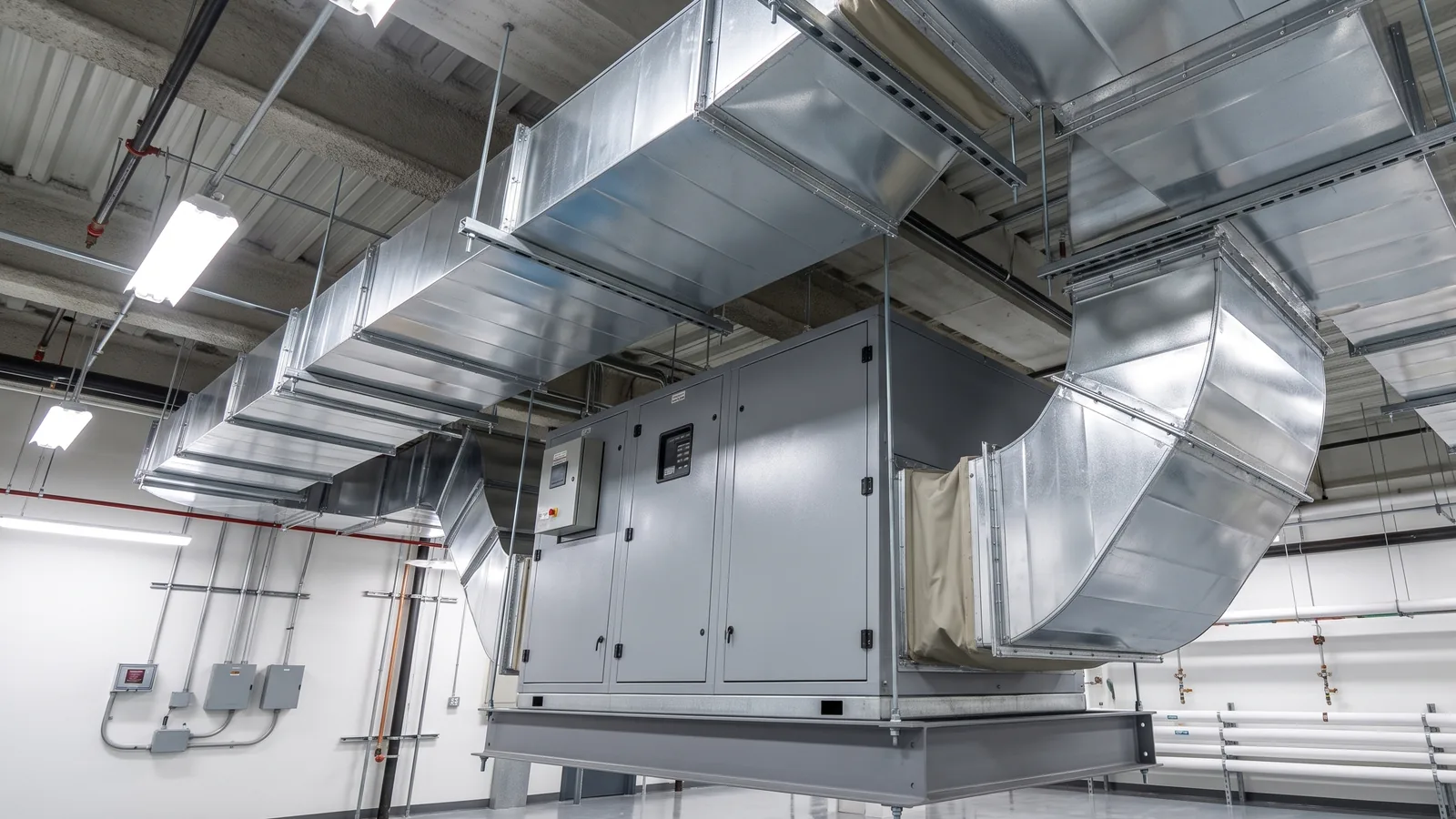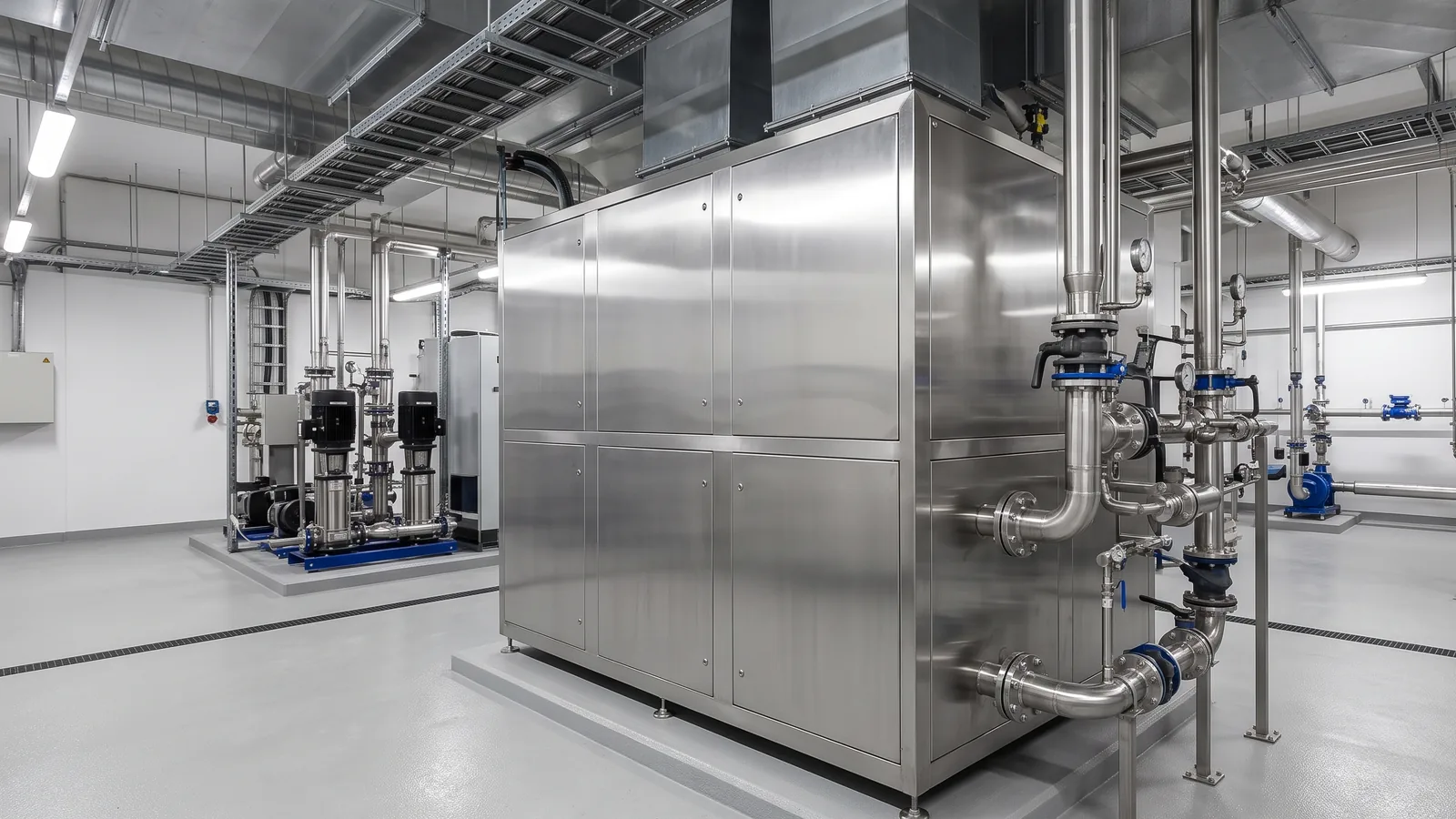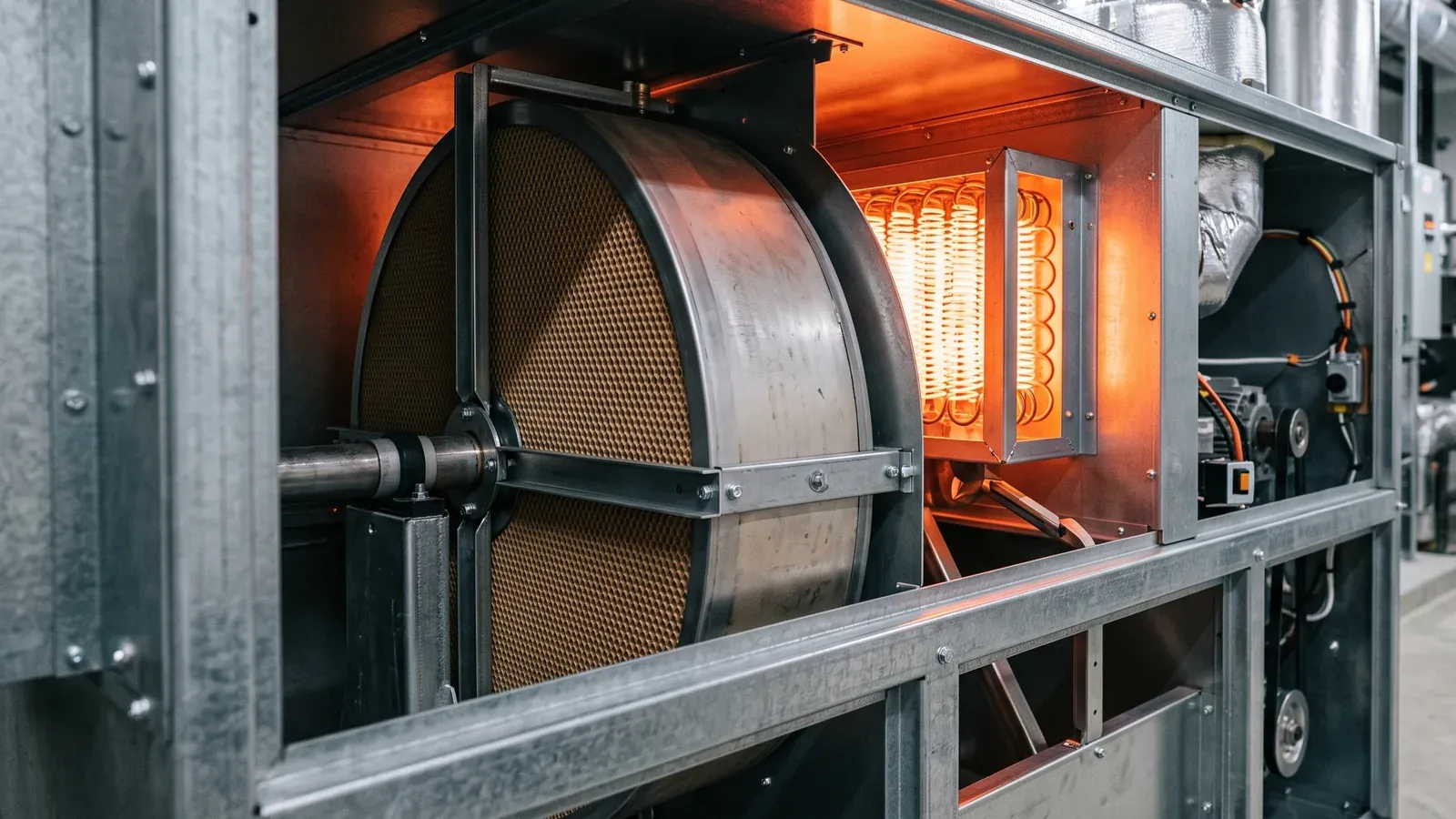
Every desiccant dehumidifier relies on a desiccant dehumidifier reactivation heater to regenerate its moisture-laden rotor. Without this heater, the silica gel wheel would saturate within hours and stop removing humidity from your facility.
For facilities managers and engineers running commercial or industrial humidity control systems, understanding how this heater works is essential. It directly affects energy consumption, unit performance, and long-term maintenance costs.
What a Reactivation Heater Does Inside a Desiccant Dehumidifier
A desiccant dehumidifier works in two simultaneous airstreams. The process airstream passes through the silica gel rotor, which adsorbs moisture.
The reactivation airstream passes through a separate sector of the same rotor, heated to between 90 and 140 degrees Celsius.
The reactivation heater supplies enough thermal energy to break the molecular bond between water vapour and the silica gel. This drives the adsorbed moisture out of the desiccant media and into the reactivation exhaust, which is vented outside.
- Primary function: Heats reactivation air to 90 – 140 °C to regenerate saturated desiccant media
- Energy share: Approximately 90% of total unit energy consumption goes to reactivation heating
- Outcome: Continuously restores the rotor's capacity to adsorb moisture from the process airstream
- Exhaust: Warm, humid reactivation air is ducted outside the building
How the Desiccant Rotor Works and Why It Needs Reactivation
The desiccant rotor is a honeycomb wheel impregnated with silica gel. It rotates slowly and continuously through two zones: the process zone (typically 75% of the rotor face) and the reactivation zone (the remaining 25%).
As humid air passes through the process zone, silica gel adsorbs water vapour from the air. The rotor then rotates into the reactivation zone, where the heater drives moisture off the gel and out through the exhaust duct.
| Parameter | Process Zone | Reactivation Zone |
|---|---|---|
| Rotor coverage | 60 – 75% of face area | 25 – 40% of face area |
| Air temperature | Ambient (facility conditions) | 90 – 140 °C (heated) |
| Purpose | Adsorbs moisture from process air | Drives moisture out of desiccant |
| Air direction | Into facility (dry air out) | Exhausted outside (wet air out) |
| Achievable RH | Near 0% RH in process outlet | N/A |
Without continuous reactivation, the silica gel saturates. A saturated rotor cannot adsorb further moisture, which means the unit effectively stops dehumidifying.
The reactivation heater is what keeps the cycle running 24/7.
Types of Desiccant Dehumidifier Reactivation Heaters
Commercial and industrial desiccant dehumidifiers use four main heater types. The choice depends on facility infrastructure, energy costs, and unit size.
- Electric resistance heaters: Standard on most single-phase and smaller three-phase units. Simple to install and control. Higher operating cost per kWh in most Australian states.
- Direct-fired gas (natural gas or LPG): Common on larger industrial units. Lower operating cost than electric in most regions. Requires gas supply infrastructure and compliance with AS/NZS 5601.
- Steam coil heaters: Used where a facility already has a steam supply (manufacturing plants, food processing). Very efficient when steam is available as a byproduct.
- Hot water coil heaters: Similar to steam but uses hot water circuits. Suitable for facilities with existing hydronic heating infrastructure or waste heat recovery systems.
Note: On larger commercial dehumidifiers, switching from electric to gas or steam reactivation can significantly reduce ongoing operating costs. Contact Moisture Cure Commercial for advice on the best heater type for your facility.
Reactivation Heater Energy Consumption and Efficiency
Reactivation heating accounts for roughly 90% of a desiccant dehumidifier's total energy consumption. This makes the heater the single most important component for operational efficiency.
Several design features reduce reactivation energy demand without sacrificing moisture removal performance.
- Purge sector (heat recovery zone): A small section of the rotor between the process and reactivation zones. Hot air from the rotor preheats the incoming reactivation air to approximately 70 °C before it reaches the heater, reducing the energy the heater needs to supply.
- Closed-loop purge: Recycles heat from the reactivation exhaust back to the reactivation inlet. Reduces both process-cooling and reactivation-heating requirements.
- Waste heat integration: Facilities with existing heat sources (boilers, process exhaust, CHP plants) can feed waste heat into the reactivation circuit, cutting heater demand substantially.
- Variable temperature control: Modulating reactivation temperature based on actual humidity load rather than running at a fixed setpoint. In most installations, reactivation airflow is set at a constant volume and drying capacity is controlled by regulating air temperature.
According to HPAC Engineering research, optimising reactivation control parameters (airflow, temperature, wheel speed) can deliver energy savings of 10 – 60% depending on climate and application.
How Heater Capacity Affects Unit Performance
The reactivation heater must be correctly sized relative to the desiccant rotor and the target moisture removal rate. An undersized heater cannot fully regenerate the rotor, which means the silica gel enters the process zone still partially saturated.
- Undersized heater: Incomplete regeneration. The rotor carries residual moisture into the process zone, reducing dehumidification capacity. Outlet air is wetter than specification.
- Correctly sized heater: Full regeneration at the design reactivation temperature (typically 120 – 140 °C at nominal airflow). The unit achieves its rated moisture removal capacity.
- Oversized heater: Wastes energy by heating beyond what is needed for full regeneration. Can also degrade desiccant media over time if temperatures exceed manufacturer limits.
Key sizing factors include the rotor diameter, rotor depth, desiccant type, reactivation airflow volume (m³/h), and the target inlet/outlet humidity differential (%RH).
Important: Heater capacity should always be specified alongside the full unit specification. A high-capacity rotor paired with an undersized heater will underperform.
Moisture Cure Commercial can help you match heater output to your specific application requirements.
Common Failure Modes and Warning Signs
Reactivation heaters are the hardest-working component in a desiccant dehumidifier. Recognising early warning signs prevents unplanned downtime and protects downstream processes that depend on controlled humidity.
- Burned-out heating elements: The most common electric heater failure. Ohm readings across element legs become unbalanced or open-circuit. Amperage draw drops on the affected phase.
- Thermocouple drift or failure: Vibration can shift the thermocouple position over time, causing inaccurate temperature readings. The controller may call for more or less heat than needed.
- Contactor failure: The definite purpose contactor that switches the heater on and off can wear out, preventing the heater from engaging.
- Seal degradation: Six seals within the desiccant wheel cassette prevent cross-contamination between process and reactivation airstreams. Worn seals allow hot reactivation air to leak into the process stream, reducing efficiency and raising outlet temperatures.
- Gas burner issues (gas-fired units): Flame sensor fouling, ignition failure, or gas pressure irregularities. Requires compliance checks per AS/NZS 5601 gas installation standards.
Warning signs that the reactivation heater needs attention include rising outlet humidity (%RH higher than design), lower-than-expected reactivation exhaust temperature, unbalanced amperage readings on electric units, and the controller not calling for heat when it should be.
Maintenance Considerations for Reactivation Heaters
Preventive maintenance on the reactivation heater extends equipment life and maintains consistent dehumidification performance. Most facilities should schedule heater inspections alongside general unit servicing.
- Quarterly element testing (electric units): With power off, measure ohms between each pair of element legs (1 and 2, 2 and 3, 1 and 3). Readings should be equivalent unless the design uses an intentionally unbalanced load.
- Quarterly amperage check (electric units): With power on, measure amperage on each leg. Uneven readings indicate a failing element.
- Thermocouple inspection: Confirm the thermocouple is securely positioned and providing accurate temperature readings. Recalibrate or replace if drift exceeds +/- 5 °C.
- Seal inspection: Check all six desiccant wheel cassette seals for wear, compression set, and air leakage. Replace as a set if any seal shows degradation.
- Controller verification: Confirm the temperature controller calls for heat at the correct setpoint and shuts off at the high-limit safety threshold.
- Reactivation airflow check: Measure airflow volume (m³/h) and compare to commissioning values. Restricted airflow forces the heater to work harder for less regeneration.
For ducted dehumidifiers with long reactivation duct runs, also check for duct leakage that can reduce reactivation airflow and waste heated air before it reaches the rotor.
Choosing the Right Reactivation Heater for Your Application
The best heater type depends on your facility's energy infrastructure, the unit size, and the operating environment. Refrigerant dehumidifiers avoid this consideration entirely but cannot operate below approximately 15 °C, which is where desiccant units excel.
| Heater Type | Best For | Key Advantage | Key Consideration |
|---|---|---|---|
| Electric | Smaller units, sites without gas | Simple installation, precise control | Higher operating cost per kWh |
| Direct-fired gas | Large industrial units | Lower operating cost | Requires gas supply and compliance |
| Steam | Manufacturing with existing steam | Very low marginal cost | Requires steam infrastructure |
| Hot water | Sites with hydronic or waste heat | Integrates with existing systems | Lower reactivation temperatures |
Desiccant units with gas or steam reactivation are particularly cost-effective for large facilities running 24/7, such as pharmaceutical manufacturing, food processing, and cold storage operations. With over 28 years of experience in commercial and industrial humidity control, Moisture Cure Commercial can advise on the optimal heater configuration for your specific requirements.
Frequently Asked Questions
What temperature does a desiccant reactivation heater reach?
Most commercial desiccant reactivation heaters operate between 90 and 140 °C. The exact temperature depends on the desiccant media type, rotor design, and required moisture removal rate.
Some industrial units can reach up to 160 °C for high-capacity applications.
Why does the reactivation heater use so much energy?
Breaking the molecular bond between water vapour and silica gel requires significant thermal energy. Approximately 90% of a desiccant dehumidifier's total energy consumption goes to heating the reactivation air.
Heat recovery features like purge sectors and closed-loop systems can substantially reduce this figure.
How do I know if the reactivation heater is failing?
Common indicators include rising outlet humidity above the design specification, lower-than-expected reactivation exhaust temperatures, unbalanced amperage readings across heater phases (electric units), and the controller failing to call for heat. Regular quarterly element testing catches most issues early.
Can I use waste heat for reactivation instead of a dedicated heater?
Yes. Facilities with boilers, combined heat and power (CHP) plants, or high-temperature process exhaust can feed waste heat into the reactivation circuit. The heat source needs to consistently deliver air at 90 – 140 °C at the required airflow volume (m³/h) for this to work effectively.
Is electric or gas reactivation more cost-effective?
For larger industrial units running continuously, gas reactivation (natural gas or LPG) typically costs less to operate than electric. For smaller units or facilities without gas infrastructure, electric reactivation is simpler and avoids the compliance requirements of gas installation.
The break-even point depends on local energy tariffs and unit runtime hours.
How often should reactivation heater elements be tested?
Quarterly testing is recommended for most commercial installations. This includes ohm readings across element legs with power off and amperage checks with power on.
High-duty applications (continuous operation, harsh environments) may warrant monthly inspections. Contact Moisture Cure Commercial for a maintenance schedule tailored to your unit and operating conditions.