Shipping container moisture control is one of the most overlooked risks in logistics and warehousing. An estimated 10% of containerised shipments worldwide suffer moisture-related damage, costing the global supply chain between $6 billion and $8 billion every year.
For Australian exporters and warehouse operators, the problem is particularly acute. Containers moving between tropical northern ports and temperate southern destinations pass through extreme temperature differentials that trigger condensation inside sealed steel boxes.
This article covers the causes of container condensation, the moisture control methods available, and how to match the right solution to your cargo and route profile.
Why Shipping Containers Develop Condensation
The phenomenon is known in the freight industry as "container rain" or "cargo sweat." It occurs because warm air holds more water vapour than cool air.
For every 10°C drop in temperature, the air inside a container loses roughly half its moisture-carrying capacity. That surplus moisture condenses on the coldest surfaces, typically the container ceiling and walls, in the same way condensation forms in any uncontrolled commercial environment.
A Practical Example
A container loaded at a Southeast Asian port at 30°C and 80% relative humidity holds approximately 24 grams of water per cubic metre of air. When that container reaches a temperate port at 10°C, the air can hold only 9.4 grams per cubic metre.
In a standard 76 m³ container, the difference produces over 1,100 grams of free water. That water drips from the ceiling, pools in corners, and soaks into cargo.
- Cargo sweat: Moisture migrates from warm cargo into cooler surrounding air, then condenses on container walls
- Container rain: Moisture in the air condenses on cold ceiling panels and drips directly onto cargo below
- Diurnal cycling: Day-to-night temperature swings of 15–20°C cause repeated condensation and evaporation cycles, even during land transport
- Surface heating: Container surfaces exposed to direct sunlight can exceed 60°C, amplifying internal humidity when temperatures drop overnight
Cargo Types Most Vulnerable to Container Moisture
Not all freight faces the same risk. Hygroscopic materials absorb moisture from the air, while metal goods corrode once relative humidity exceeds roughly 70%.
| Cargo type | Primary risk | Critical RH threshold |
|---|---|---|
| Steel, machinery, automotive parts | Surface corrosion and rust | ~70% RH |
| Electronics, circuit boards | Short circuits, oxidised contacts | ~60% RH |
| Paper, cardboard, printed goods | Warping, mould, ink bleeding | ~65% RH |
| Food, coffee, grains, spices | Mould, caking, flavour loss | ~65% RH |
| Textiles, leather, garments | Mildew, staining, odour | ~70% RH |
| Pharmaceuticals | Reduced efficacy, packaging failure | ~60% RH |
| Timber, furniture, flooring | Swelling, warping, fungal growth | ~75% RH |
Mould growth accelerates above 80% relative humidity. Once mould establishes on cargo, it is difficult to remediate and often results in total write-off of the affected goods.
The International Union of Marine Insurance identifies humidity-related damage as one of the leading contributors to cargo loss claims in marine underwriting.
Passive Moisture Control Methods for Shipping Containers
Passive methods require no power source and are the most common approach for individual container shipments. They work by absorbing, blocking, or venting moisture.
Desiccant Bags and Strips
Calcium chloride desiccants are the most widely used passive solution. They absorb up to 300% of their own weight in moisture under high-humidity conditions, outperforming silica gel and clay-based alternatives by a significant margin.
- Industry guidance recommends 4 to 6 kg of desiccant per 20-foot container and 8 to 12 kg per 40-foot container
- Calcium chloride operates effectively across a broad temperature range, unlike silica gel (best at room temperature) and clay (which loses capacity above 30°C)
- Hanging strips maximise air contact and prevent pooling of absorbed liquid at the container floor
- Desiccant cost typically sits at 0.1% to 0.3% of cargo value, making it one of the cheapest forms of freight insurance available
Over-saturated desiccants can re-release absorbed moisture if temperatures rise sharply. Select products with a gelling agent that locks absorbed water in place.
Insulation and Thermal Liners
Reflective thermal blankets and insulating liners reduce the temperature differential between container walls and internal air. This limits the conditions that trigger condensation.
- Most effective for short voyages or domestic transport where temperature swings are moderate
- Less effective on long ocean crossings through multiple climate zones
- Often used in combination with desiccants for layered protection
Ventilation
Standard shipping containers include small passive vents designed to equalise pressure. These vents allow a limited exchange of air, which can reduce humidity if the external air is drier than the internal air.
- Ventilation works best when the container moves from a humid environment to a dry one
- It is unreliable on routes where external humidity remains consistently high
- Forced ventilation is rarely practical for sealed ocean freight
Vapour Barriers and Protective Packaging
Wrapping individual pallets or cargo units in polyethylene sheeting or aluminium-laminated barrier film creates a micro-environment around the goods. This prevents ambient container moisture from reaching the cargo surface.
- Barrier bags with integrated desiccant sachets provide double-layer protection for sensitive electronics and metals
- Stretch wrap alone does not constitute a vapour barrier because standard wrap is permeable to water vapour
- Vacuum-sealed barrier packaging is the gold standard for corrosion-sensitive components shipped over long distances
Active Shipping Container Moisture Control with Dehumidification
For high-value cargo, long-term container storage, or container yards handling ongoing throughput, passive desiccant bags may not provide sufficient protection. Active dehumidification offers continuous, controlled humidity management.
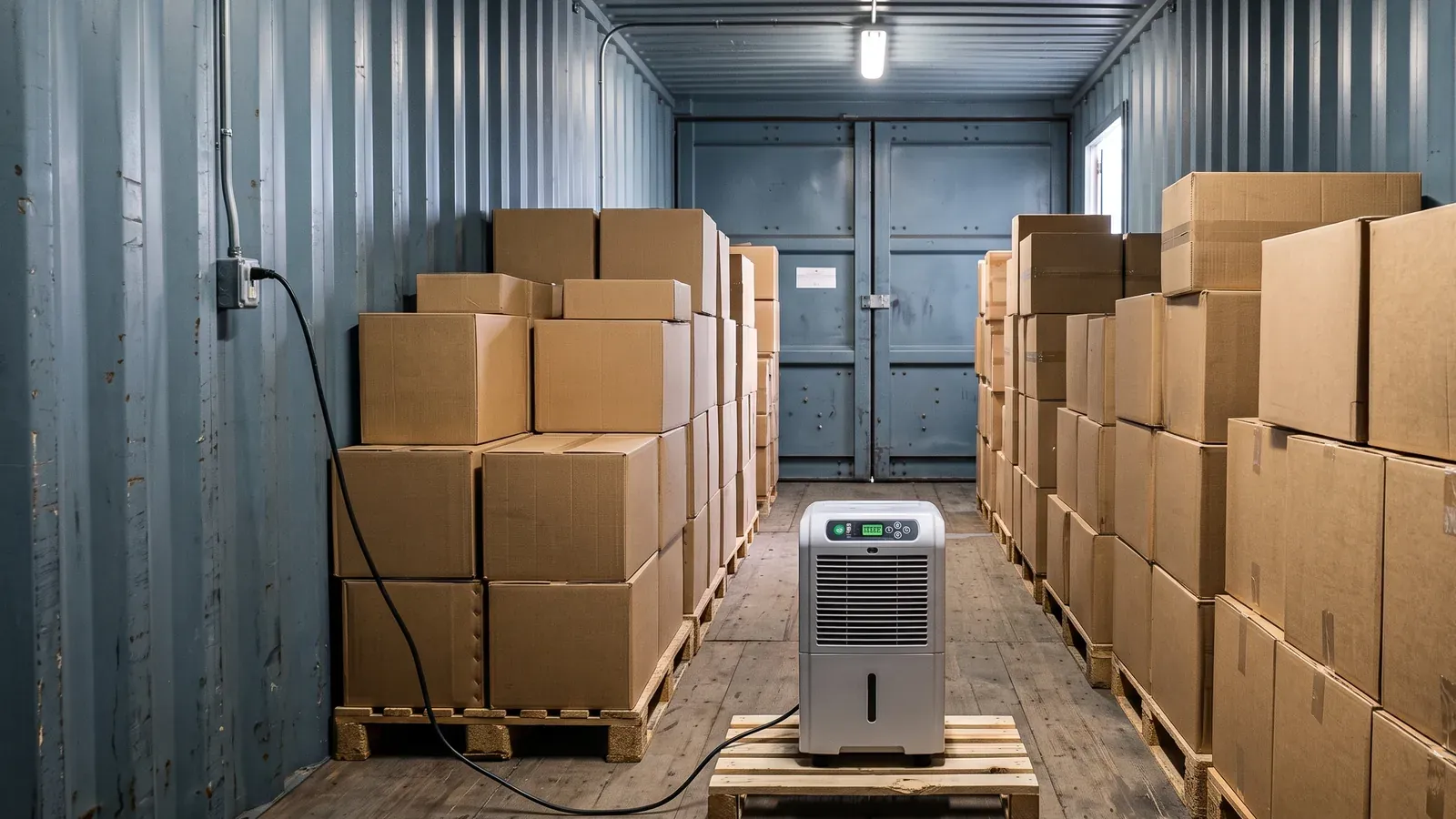
Portable Desiccant Dehumidifiers
Portable desiccant dehumidification units operate effectively at temperatures from -20°C to +50°C. This makes them suitable for cold-chain logistics, unheated warehouses, and container staging areas where refrigerant systems lose efficiency.
- No compressor means reliable performance in sub-zero conditions where refrigerant dehumidifiers stall
- Units can be positioned at container doors during loading and unloading to pre-dry the internal environment
- Suitable for drying containers between shipments at port or warehouse level
- Continuous drainage connections eliminate the need for manual emptying
Ducted and Fixed Dehumidification
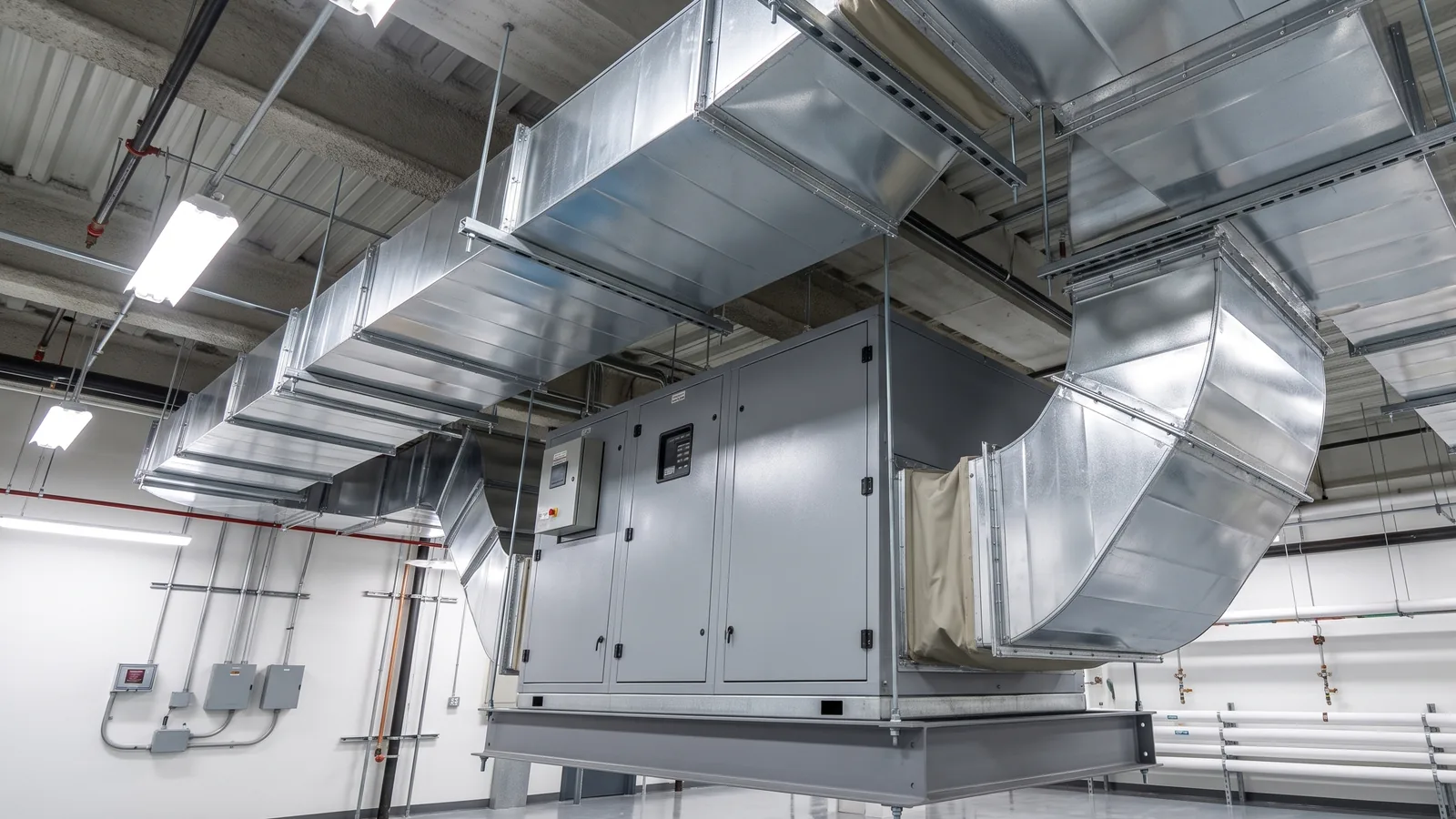
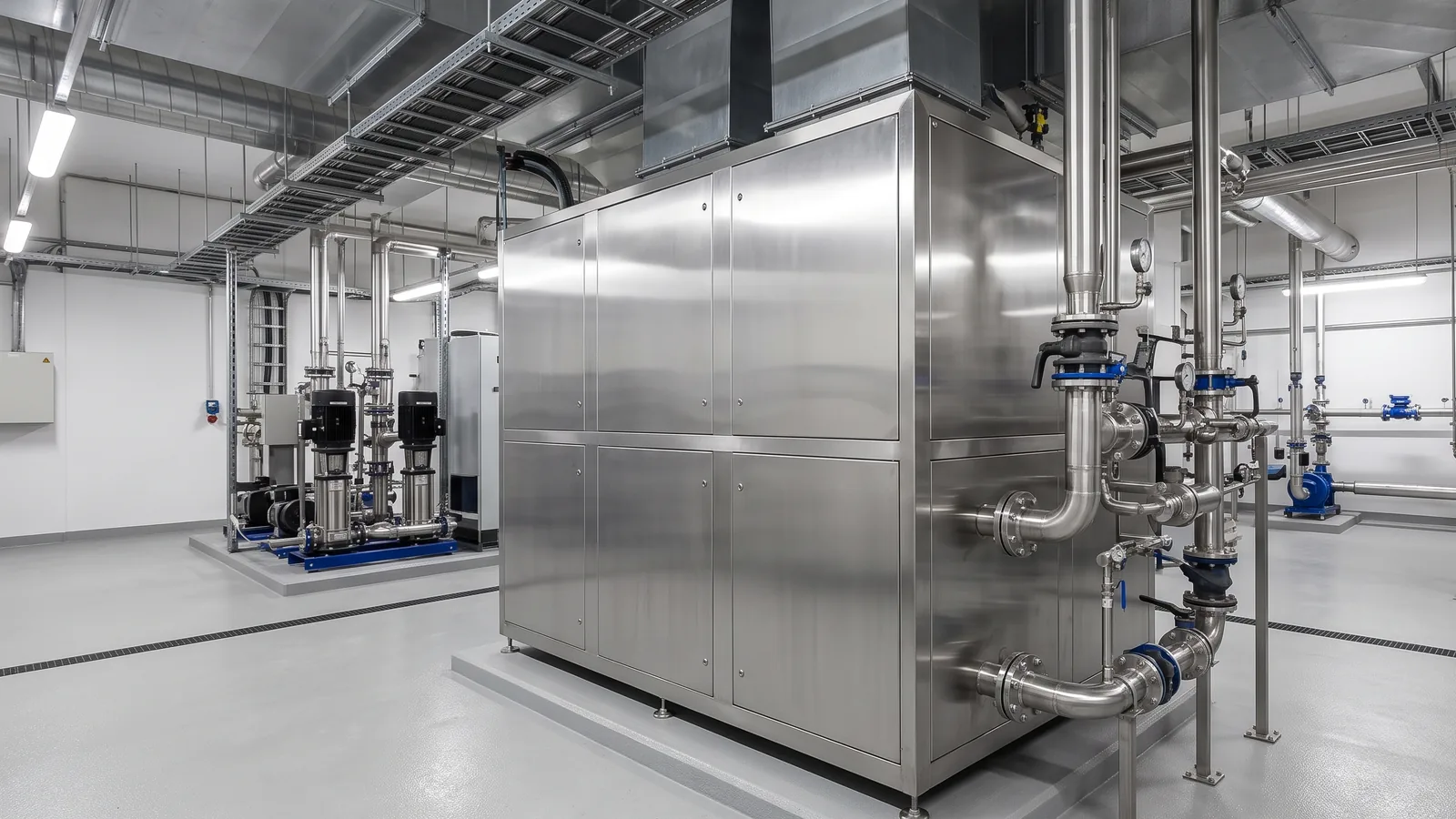
Warehouses and distribution centres that stage containers before dispatch can integrate ducted dehumidification systems into the loading environment. This pre-conditions the air entering containers during packing.
- Reduces the initial moisture load inside the container before it is sealed
- Particularly effective for hygroscopic cargo such as paper, textiles, and food products
- Pair with desiccant bags inside the container for layered protection during transit
When the warehouse environment sits above 70% RH during loading, even well-placed desiccant bags start their journey partially consumed. Pre-drying the loading area with an industrial dehumidification system extends the effective life of in-container desiccants significantly.
Monitoring and Measuring Container Humidity
You cannot manage what you do not measure. Temperature and humidity data loggers placed inside containers provide an objective record of conditions throughout transit.
- Battery-powered loggers: Record temperature and RH at set intervals (typically every 15 to 60 minutes) for the duration of the voyage
- IoT-enabled sensors: Transmit real-time data via satellite or cellular networks, allowing remote monitoring of in-transit conditions
- Indicator cards: Low-cost humidity indicator strips that change colour at specific RH thresholds (typically 30%, 40%, 50%, 60%)
- Post-arrival inspection: Check logger data immediately on arrival to identify whether damage occurred during transit or after unloading
The ISO 12944 standard for corrosion protection of steel structures classifies environments by humidity exposure. Container interiors on ocean voyages often reach C4 or C5 corrosivity categories, which demand active moisture management rather than passive coatings alone.
Data logger records serve as evidence for insurance claims. Without them, proving that damage occurred in transit rather than during storage or handling is significantly harder.
Best Practice Loading Procedures to Reduce Moisture Risk
Equipment alone does not solve the problem. How cargo is prepared and loaded has a direct impact on how much moisture ends up inside the container.
- Inspect the container before loading. Reject any container with visible water damage, holes, or damaged door seals. A dry floor is the minimum standard.
- Check pallet moisture content. Timber pallets can carry 35% to 60% moisture content by weight. Use heat-treated or plastic pallets where possible.
- Avoid loading in rain or high humidity. If you must load during wet conditions, run a portable dehumidifier inside the container throughout the process.
- Leave airflow gaps. Pack cargo away from container walls and ceiling to allow air circulation around desiccants and reduce direct contact with cold metal surfaces.
- Place desiccants strategically. Distribute desiccant strips or bags evenly throughout the container, not just at the door end. Hang units at ceiling height where warm, moist air rises.
- Seal and record. Log the container seal number, loading conditions (temperature, RH), and desiccant quantity. This documentation supports insurance claims if damage occurs.
Shipping Container Moisture Control for Australian Exporters
Australia's geography creates specific moisture control challenges. Containers loaded in Darwin, Cairns, or Townsville during the wet season face extreme humidity at origin.
- Northern exports: Containers loaded at tropical ports during summer regularly exceed 85% RH internally before sealing. Pre-drying is critical.
- Trans-Pacific routes: Cargo heading to North America passes through multiple climate zones over 14 to 21 days. Temperature differentials of 25°C or more are common.
- Domestic freight: Road freight from Queensland to Victoria or Tasmania crosses climate boundaries that trigger the same condensation cycles as ocean shipping.
- Container storage yards: Containers left in open yards experience daily heating and cooling cycles. Extended dwell times multiply moisture exposure.
The Australian Department of Agriculture, Fisheries and Forestry enforces strict biosecurity inspections on incoming containers. Containers arriving with visible mould, condensation, or water-damaged packaging may be held for treatment or rejected, adding cost and delay at the import end.
Moisture Cure Commercial works with exporters and logistics operators across Australia to size humidity control systems for specific routes and cargo profiles. The right combination of passive desiccants and active dehumidification depends on what you ship, where it goes, and how long it sits before dispatch.
Frequently Asked Questions
What causes container rain in shipping containers?
Container rain occurs when warm, moist air inside the container cools as external temperatures drop. The surplus moisture condenses on the container ceiling and walls, dripping onto cargo below.
How much desiccant do I need per container?
Industry guidance suggests 4 to 6 kg of calcium chloride desiccant for a 20-foot container and 8 to 12 kg for a 40-foot container. High-moisture cargo or long voyages may require more.
Can a dehumidifier be used inside a shipping container?
Yes. Portable desiccant dehumidifier units are commonly used to pre-dry containers before loading and to control humidity in container storage facilities.
What is the ideal humidity level inside a shipping container?
Most cargo types remain safe below 60% relative humidity. Steel and metal goods begin corroding above 70% RH, and mould growth accelerates above 80% RH.
Does ventilation prevent container condensation?
Ventilation can help when external air is drier than internal air, but it is unreliable on routes through consistently humid climates. Desiccants and dehumidification provide more consistent results.
How do I prove moisture damage occurred in transit?
Place calibrated temperature and humidity data loggers inside the container before sealing. The recorded data provides objective evidence for insurance claims and carrier disputes.
Get the Right Moisture Control for Your Containers
Whether you need passive desiccants for individual shipments or active dehumidification for a warehouse staging area, Moisture Cure Commercial can help you match the solution to the problem.
Contact Moisture Cure Commercial for a consultation on container moisture control. We provide expert sizing advice on every enquiry, backed by 28 years of experience in commercial and industrial humidity control across Australasia.