Maintaining 40 to 60% relative humidity with an ultrasonic humidifier is one of the most effective ways to prevent electrostatic discharge on an electronics production floor.
Electrostatic discharge (ESD) costs the global electronics industry billions annually in damaged components and latent defects. Most of that damage happens when relative humidity drops below 30% and static charges build up on surfaces, tools and personnel.
This article covers how ultrasonic humidifiers prevent ESD in electronics assembly, what humidity levels to target, and how to size a system for your production environment.
Need help specifying a humidification system for ESD-sensitive production? Browse Moisture Cure Commercial’s full range or contact the team for a site-specific consultation.
Why Static Electricity Threatens Electronics Assembly
Static charges as small as 25 volts can damage integrated circuits and sensitive components. A person walking across a vinyl floor in low humidity can generate over 10,000 volts without feeling it.
The ESD Association estimates that 25% of all electronics damaged for unknown reasons can be attributed to electrostatic discharge. The total annual cost to the industry runs into billions of dollars globally.
ESD causes two types of damage, and the less obvious one is the bigger problem. Catastrophic failure destroys the component immediately and gets caught in quality control.
Latent damage is worse. The component passes every inspection step, ships to the customer, then fails weeks or months later in the field.
Latent defects generate warranty claims, field service visits, and reputation damage that far exceeds the cost of the original part. In safety-critical applications like medical devices or automotive electronics, latent ESD damage can have consequences well beyond financial loss.
- Below 20% RH:static charges exceed 35,000V on common flooring materials
- 20-30% RH:charges still reach dangerous levels for sensitive ICs
- 30-40% RH:charge buildup reduced but not eliminated
- 40-60% RH:the recommended operating range for ESD-safe assembly
- Above 60% RH:static is minimal but condensation risk increases
How Ultrasonic Humidifiers Prevent Static Buildup
Ultrasonic humidifiers use high-frequency vibrations (typically 1.7 MHz) to break water into a fine mist of droplets around 1 to 5 microns in diameter. These micro-droplets evaporate rapidly into the surrounding air, raising relative humidity across the production space.
The moisture in the air forms a thin conductive film on surfaces. This film allows static charges to dissipate naturally rather than building up to dangerous levels.
Ultrasonic systems respond faster than steam or evaporative alternatives because the mist is already airborne. There is no heating element and no boiling delay, which means humidity levels stabilise within minutes of the system activating.
- Droplet size of 1-5 microns ensures rapid evaporation without wetting surfaces
- No heat generation, keeping ambient temperature stable on the production floor
- Low energy consumption compared to steam-based humidification
- Modular design allows zoned humidity control across different assembly areas
- Near-silent operation suitable for clean room and laboratory environments
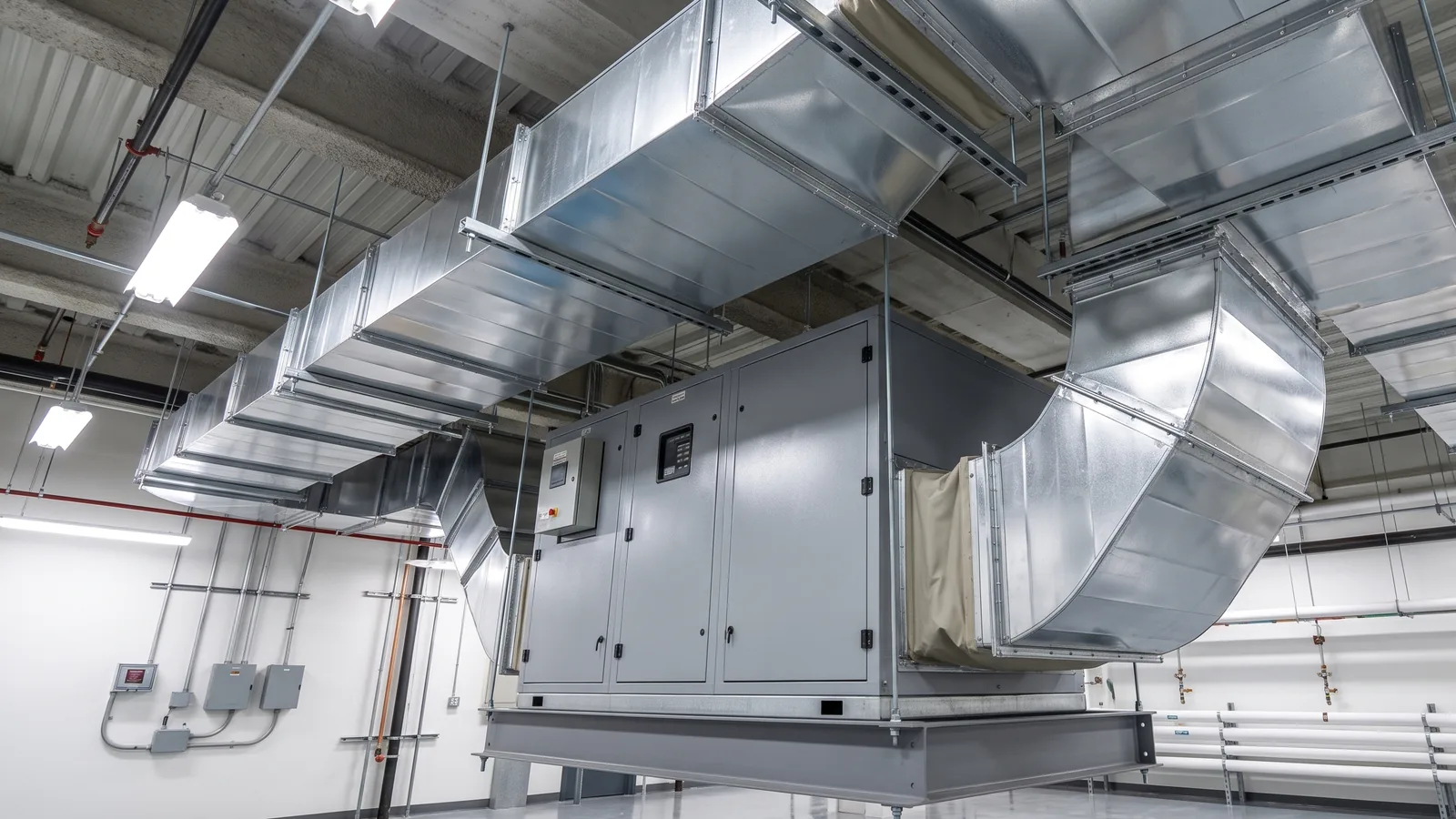
For facilities that already use ducted environmental controls, ultrasonic humidifiers integrate directly into the existing HVAC ductwork for whole-facility coverage.
Target Humidity Levels for Electronics Assembly
The IEC 61340-5-1 standard and most electronics manufacturers specify 40 to 60% relative humidity for ESD-safe production environments. Below 40%, the risk of static buildup increases rapidly with each percentage point drop.
Above 60%, condensation becomes a concern, particularly on cold metal surfaces and solder connections. The sweet spot for most Australian electronics assembly facilities is 45 to 55% RH.
Australian conditions make this harder than it sounds. Winter air in melbourne, sydney and brisbane regularly drops below 30% RH indoors when HVAC heating is running, which pushes most production environments well into the danger zone without active humidification.
| Production Area | Target RH Range | Critical Factor |
|---|---|---|
| PCB assembly / SMT lines | 40-55% | Solder paste shelf life and ESD prevention |
| IC handling and packaging | 40-50% | Component sensitivity to both moisture and static |
| Final assembly | 45-55% | ESD safety across mixed materials |
| Quality control / testing | 45-55% | Consistent measurement conditions |
| Clean rooms (Class 100-10000) | 45-50% | Particle control alongside humidity |
| Component storage | 30-50% | Moisture-sensitive device (MSD) shelf life |
Note that component storage areas often run drier than assembly areas. Moisture-sensitive devices (MSDs) rated to IPC/JEDEC J-STD-033 have strict moisture exposure limits that override ESD humidity targets.
This creates a practical challenge: the storage room needs low humidity to protect MSD shelf life, while the adjacent assembly floor needs higher humidity for ESD control. Zoned humidification with proper room partitioning solves both requirements.
Sizing an Ultrasonic Humidifier for Static Control
Undersizing is the most common mistake in production-floor humidification. A unit rated for a 200 m² office will not maintain target RH in a 200 m² factory with constant air exchange, heat-generating equipment and open loading doors.
The required humidification capacity depends on four variables. Get any one wrong and the system will struggle to hold target RH during production hours.
- Room volume:floor area multiplied by ceiling height in cubic metres
- Air change rate:how many times per hour the HVAC system replaces the room air (each air change removes moisture)
- Heat load:equipment, lighting, and personnel all raise temperature and lower relative humidity
- Infiltration:dock doors, personnel entries, and building leakage introduce dry outside air
A rough starting point: multiply room volume (m³) by air changes per hour by the moisture deficit (g/m³) to get the required output in litres per hour. For precise calculations, contact Moisture Cure Commercial for a site assessment.
Zoned systems often make more sense than a single large unit. Place humidifiers near the most ESD-sensitive workstations (SMT lines, IC handling) and let less critical areas run at slightly lower RH.
Monitoring and Control
Pair any humidification system with continuous RH monitoring at workstation level, not just a single sensor at the HVAC return. Humidity can vary by 10% or more across a production floor depending on air distribution and heat sources.
Dataloggers with alarm thresholds at 35% and 65% RH give operators early warning before conditions drift outside the safe range. This data also feeds into quality management systems for ESD compliance auditing.
Water Quality for Ultrasonic Humidifiers in Electronics
Water quality is non-negotiable in electronics production. Ultrasonic humidifiers atomise everything in the water, including dissolved minerals, and deposit it as fine dust across every surface in the room.
In a standard office, mineral dust is a cosmetic nuisance. On a PCB assembly line, it causes solder defects, bridging between traces, and long-term corrosion.
- Reverse osmosis (RO) water:minimum standard for electronics assembly humidification
- Deionised (DI) water:preferred for clean room and high-density PCB production
- UV sterilisation:prevents biofilm and bacterial growth in the humidifier reservoir
- Regular filter changes:contaminated filters reintroduce the particles you are trying to eliminate
Factor water treatment into the total cost of ownership when specifying a humidification system. An RO unit paired with an ultrasonic humidifier costs less to run annually than dealing with a single batch of rework caused by mineral contamination.
Establish a maintenance schedule for filter replacement and reservoir cleaning. Biofilm growth in standing water is a common problem in ultrasonic systems that do not have UV sterilisation or regular drain-and-clean cycles.
Ultrasonic vs Other Humidification Methods for ESD Control
Ultrasonic is not the only option for production-floor humidity control. Steam, evaporative, and high-pressure fog systems all have applications, but they come with trade-offs that matter in electronics environments.
| Method | Response Time | Energy Use | Mineral Risk | Best For |
|---|---|---|---|---|
| Ultrasonic | Fast (minutes) | Low | High without water treatment | Small-medium production, zoned control |
| Steam (electrode/resistive) | Moderate | High | None (distilled output) | Large facilities with existing steam infrastructure |
| Evaporative | Slow | Very low | Low | Warehouses, non-critical areas |
| High-pressure fog | Fast | Low-moderate | Moderate | Large open spaces, warehouses |
For most Australian electronics assembly operations under 5,000 m², ultrasonic humidifiers offer the best balance of response speed, energy efficiency, and precision. The key requirement is pairing them with proper water treatment to avoid mineral contamination.
Steam systems make sense for very large facilities (over 10,000 m²) that already have a boiler plant. For everything else, ultrasonic wins on running costs and installation simplicity.
Facilities already running desiccant dehumidifiers for moisture-sensitive storage areas can run ultrasonic humidifiers in adjacent assembly zones without the two systems working against each other, provided the zones are properly partitioned.
This dual-zone approach is common in Australian contract electronics manufacturers. The storage room runs dry to protect MSD shelf life while the production floor maintains 45 to 55% RH for static control.
Specify the Right System for Your Production Floor
Static control in electronics assembly starts with maintaining the right humidity throughout the production cycle. An ultrasonic humidifier sized and installed correctly will hold 40 to 60% RH across your production floor with lower energy costs than steam alternatives.
Moisture Cure Commercial has supplied humidity control solutions to Australian commercial and industrial facilities for 28 years. The team works with facility managers and engineers to specify, size and commission systems for ESD-sensitive environments.
Contact Moisture Cure Commercial for a site assessment and consultation on the right humidification system for your electronics production floor.