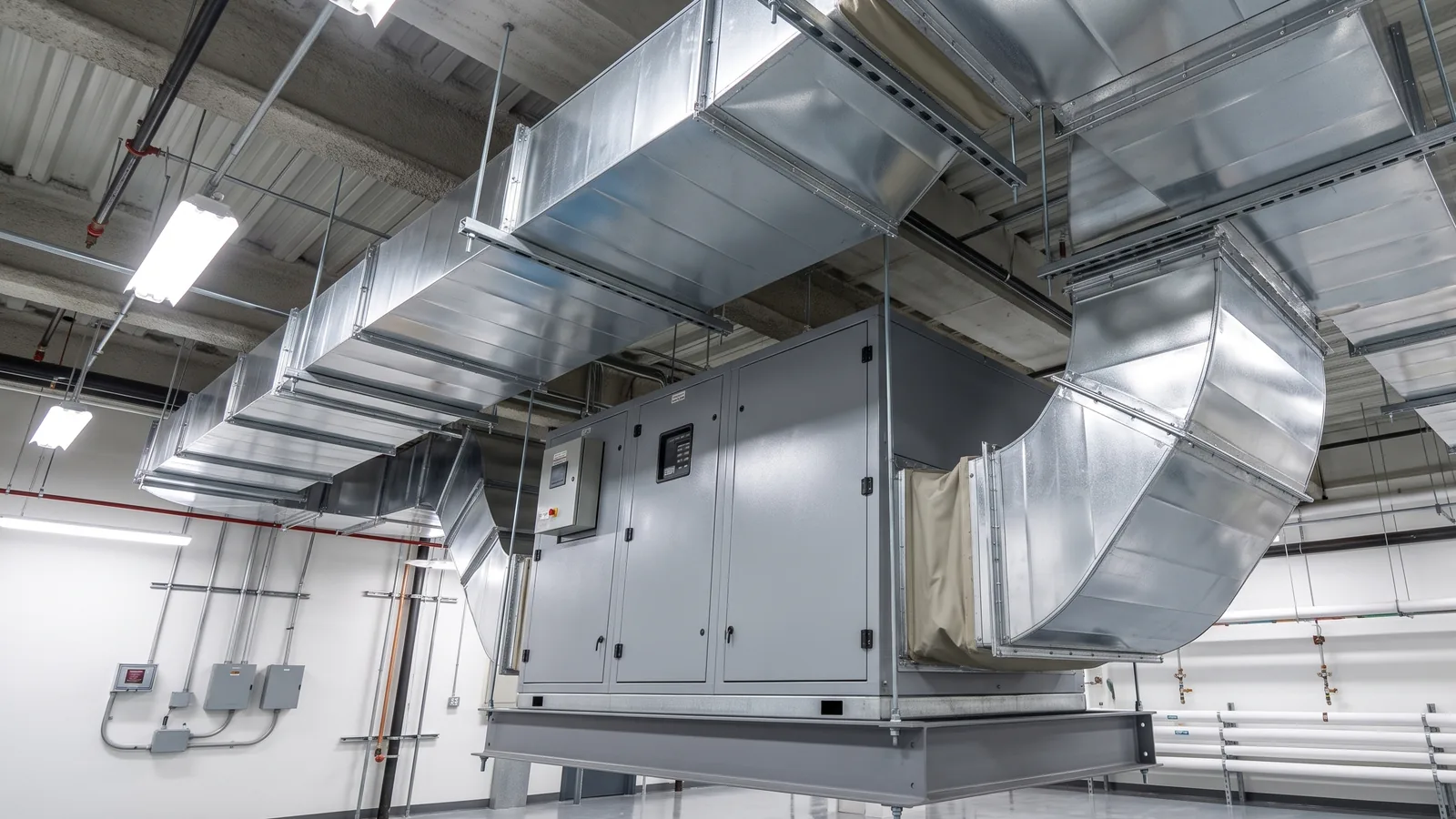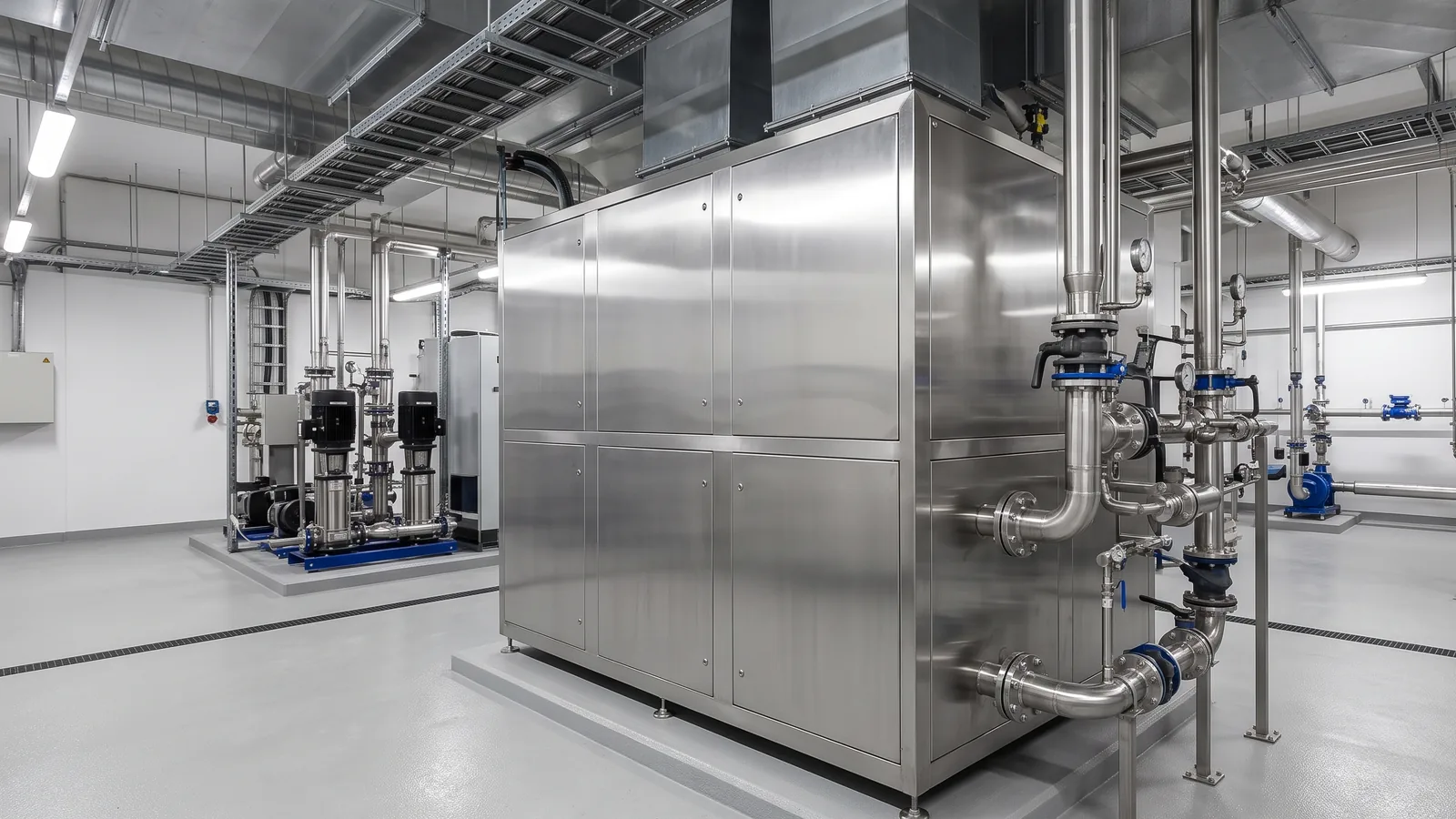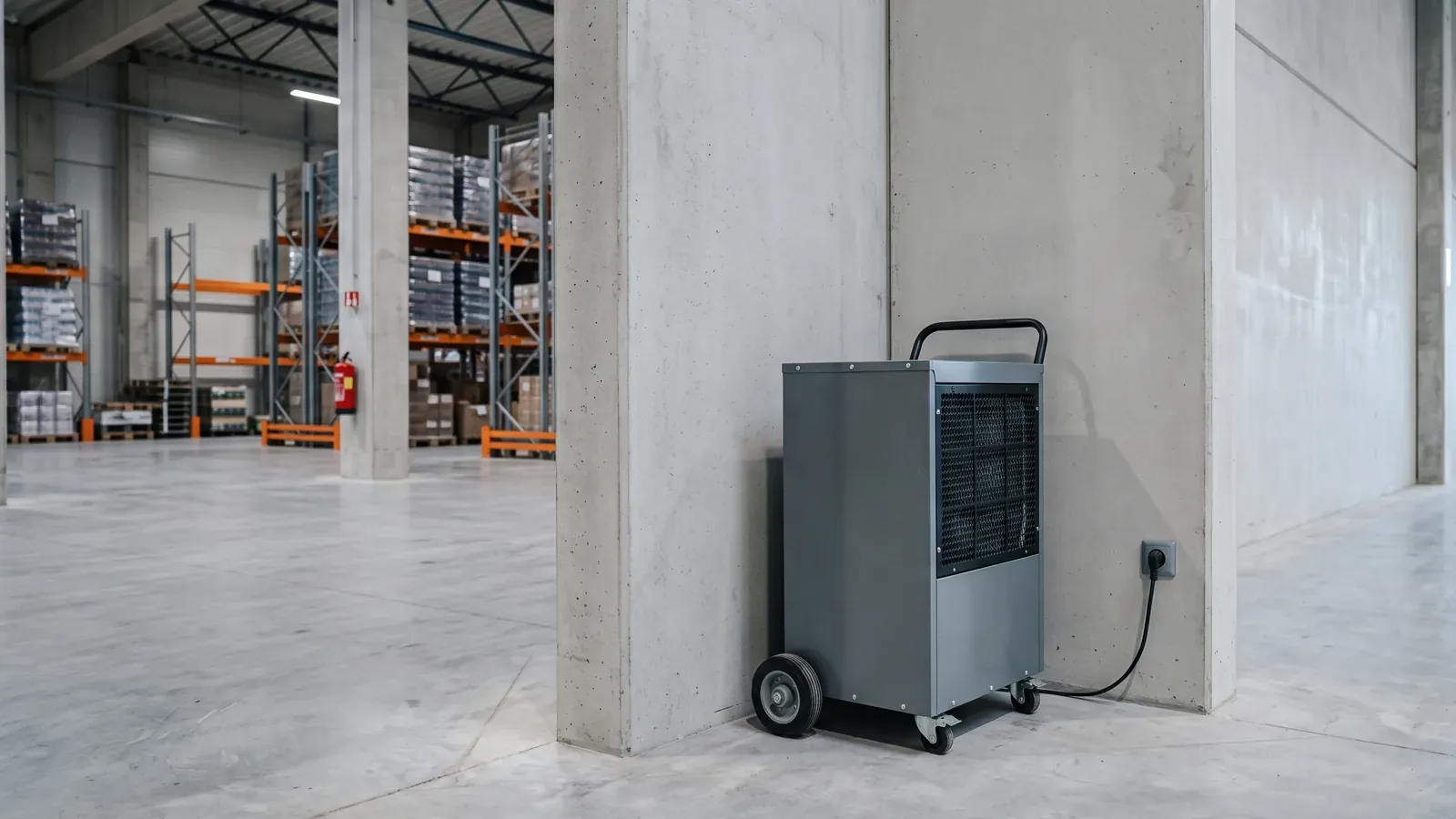
Understanding desiccant dehumidifier energy consumption is essential before committing to a commercial or industrial humidity control system. Desiccant units use a heated rotor to strip moisture from the air, and that regeneration heat is where most of the electrical draw sits. The running cost depends on unit size, operating hours, reactivation temperature and the local electricity tariff.
This guide breaks down the real-world power draw of commercial desiccant dehumidifiers, compares their costs against refrigerant alternatives and explains how to bring operating expenses down without sacrificing performance.
Looking for a unit? Browse the full desiccant dehumidifier range or contact Moisture Cure Commercial for sizing and running cost estimates.
How Desiccant Dehumidifiers Use Energy
A desiccant dehumidifier passes process air through a slowly rotating wheel coated in silica gel or another hygroscopic material. A separate reactivation air stream is heated and blown through a segment of the wheel to drive off the captured moisture.
The reactivation heater is the single largest energy consumer. It typically accounts for 70 to 85 per cent of the total electrical draw, with the process fan and drive motor making up the remainder.
- Reactivation heater: electric element or gas-fired, 70 to 85 per cent of total power draw
- Process fan: moves air across the desiccant wheel, 10 to 20 per cent of draw
- Drive motor: rotates the wheel at 8 to 20 revolutions per hour, under 5 per cent of draw
- Controls and sensors: negligible draw, typically under 50 watts
Unlike refrigerant dehumidifiers, desiccant units do not have a compressor. This means they avoid the compressor cycling losses that refrigerant systems experience in cold environments, but they carry a constant thermal load from the reactivation heater instead.
Typical Desiccant Dehumidifier Energy Consumption by Unit Size
Power draw varies significantly across the commercial and industrial range. The table below shows representative figures for electric reactivation units operating at full load.
| Unit class | Moisture removal (L/day) | Typical power draw (kW) | Daily kWh at 24h operation |
|---|---|---|---|
| Small commercial | 14 to 30 | 0.5 to 1.2 | 12 to 29 |
| Medium commercial | 30 to 80 | 1.2 to 3.0 | 29 to 72 |
| Large commercial | 80 to 200 | 3.0 to 6.0 | 72 to 144 |
| Industrial | 200 to 600 | 6.0 to 15.0 | 144 to 360 |
| Heavy industrial | 600 plus | 15.0 to 40.0 | 360 to 960 |
These figures assume electric reactivation at full load. Gas-fired reactivation reduces electrical draw by 60 to 70 per cent but adds a gas cost. Part-load operation with modulating controls can cut consumption by 30 to 50 per cent.
Running Costs for Desiccant Dehumidifiers in Australia
Australian commercial electricity rates sit between 25 and 42 cents per kWh depending on state, tariff structure and time of use, according to the Australian Energy Regulator. The cost per day of running a desiccant dehumidifier depends on the unit's power draw and how many hours it operates.
The formula is straightforward. Multiply the unit's kW rating by the hours of operation and then by the electricity rate.
- Identify the unit's total power draw in kW from the data plate or spec sheet
- Multiply by daily operating hours (for example, 16 hours for a single-shift warehouse)
- Multiply by the electricity rate in dollars per kWh
- Multiply by 365 (or actual operating days) for the annual figure
Worked Example
A medium commercial desiccant dehumidifier drawing 2.5 kW runs 16 hours a day in a Sydney warehouse at a commercial rate of $0.32/kWh.
- Daily cost: 2.5 kW x 16 hours x $0.32 = $12.80 per day
- Monthly cost (22 operating days): $281.60
- Annual cost (250 operating days): $3,200
A larger industrial unit drawing 10 kW running 24/7 in a cold store at $0.28/kWh would cost roughly $67 per day or $24,500 per year. This is where energy efficiency measures make a measurable difference to the bottom line.
Desiccant vs Refrigerant Dehumidifier Energy Consumption
Refrigerant dehumidifiers generally draw less power per litre of moisture removed when operating above 15 degrees Celsius. Below that threshold, the balance shifts dramatically in favour of desiccant technology.
| Factor | Desiccant | Refrigerant |
|---|---|---|
| Power draw at 25C / 60% RH | Higher (reactivation heat) | Lower (compressor only) |
| Power draw at 10C / 60% RH | Stable, no defrost losses | Up to 67% lost to defrost cycling |
| Power draw at 5C or below | Stable | Unit cannot operate effectively |
| Cost per litre removed (warm) | Typically 30 to 50% higher | Baseline |
| Cost per litre removed (cold) | Baseline | 2x to 5x higher or inoperable |
| Waste heat | Significant, can offset heating costs | Moderate |
In cold environments, a refrigerant unit spends the majority of its cycle defrosting its evaporator coil rather than removing moisture. The effective energy cost per litre removed can be two to five times higher than a desiccant unit at the same conditions.
For a detailed explanation of how each technology works, see how does a dehumidifier work.
Factors That Affect Desiccant Dehumidifier Running Costs
The headline kW figure on the data plate tells only part of the story. Several operational and environmental factors push the actual running cost up or down.
- Ambient humidity: higher incoming moisture loads mean more reactivation energy is needed
- Target RH: drying to 30 per cent RH costs more per litre than drying to 50 per cent
- Reactivation type: gas-fired reactivation cuts electrical cost but adds a gas bill
- Part-load controls: modulating heaters and variable-speed fans reduce consumption at lower loads
- Air leakage: poorly sealed ductwork lets humid air back in, forcing the unit to work harder
- Maintenance condition: dirty filters and degraded desiccant wheels increase energy draw by 15 to 25 per cent
- Electricity tariff: time-of-use tariffs mean the same unit costs more to run at peak rates
Regular maintenance directly affects energy consumption. See desiccant dehumidifier maintenance and service intervals for the full schedule.
How to Reduce Desiccant Dehumidifier Energy Costs
There is no single fix, but stacking several measures together can cut running costs by 30 to 50 per cent compared to a poorly optimised installation.
- Right-size the unit: an oversized unit wastes energy at part load, and an undersized unit runs flat out continuously
- Use modulating reactivation: heaters that ramp down when the moisture load drops save 20 to 40 per cent
- Seal the ductwork: every air leak is moisture re-entering the space, which the unit must remove again
- Maintain the wheel: clean or replace desiccant segments on schedule to maintain rated efficiency
- Replace clogged filters: dirty filters restrict airflow and force the fan to draw more power
- Consider heat recovery: reclaim waste heat from the reactivation exhaust to offset building heating, a practical option in desiccant systems
- Shift to off-peak tariffs: run the unit during off-peak hours where possible, using a timer or BMS schedule
- Insulate the space: reducing the vapour load from walls, floors and openings means less work for the dehumidifier
The best results come from combining correct sizing with modulating controls and good building envelope management. A well-specified system can deliver the same moisture removal at half the energy cost of a poorly specified one.
When a Desiccant Dehumidifier Is the More Cost Effective Choice
Despite drawing more power in warm conditions, desiccant dehumidifiers are the lower-cost option in several common commercial and industrial scenarios.
- Cold storage and refrigerated warehouses: refrigerant units cannot operate effectively below 15C, making desiccant the only viable option
- Low-RH manufacturing: lithium battery rooms, pharmaceutical drying and electronics assembly need humidity levels that only desiccant equipment can reach
- Heritage buildings and archives: stable low humidity is critical and the waste heat from desiccant units can help with climate control
- Sites with cheap gas: gas-fired reactivation drops the electrical cost dramatically, making desiccant competitive even in warm environments
- Seasonal cold climates: sites that face winter temperatures below 15C for several months benefit from a system that maintains capacity regardless of temperature
The decision between desiccant and refrigerant should be based on the conditions at the site, not on headline power draw alone. The Australian Government energy efficiency guides provide a useful starting framework for evaluating commercial HVAC equipment costs.
Getting the Running Cost Right From the Start
Desiccant dehumidifier energy consumption is a function of unit size, reactivation method, operating hours and maintenance condition. In warm environments, refrigerant units draw less power per litre removed. In cold or low-RH environments, desiccant is not just the better performer but often the cheaper option over the life of the system.
The running cost is decided at the specification stage. Right-sizing, modulating controls and good ductwork practice can cut energy costs by 30 to 50 per cent compared to a standard installation.
Need help estimating running costs for your facility? Contact Moisture Cure Commercial for a consultation and quote. Browse the full commercial dehumidifier range to find the right unit for your application.