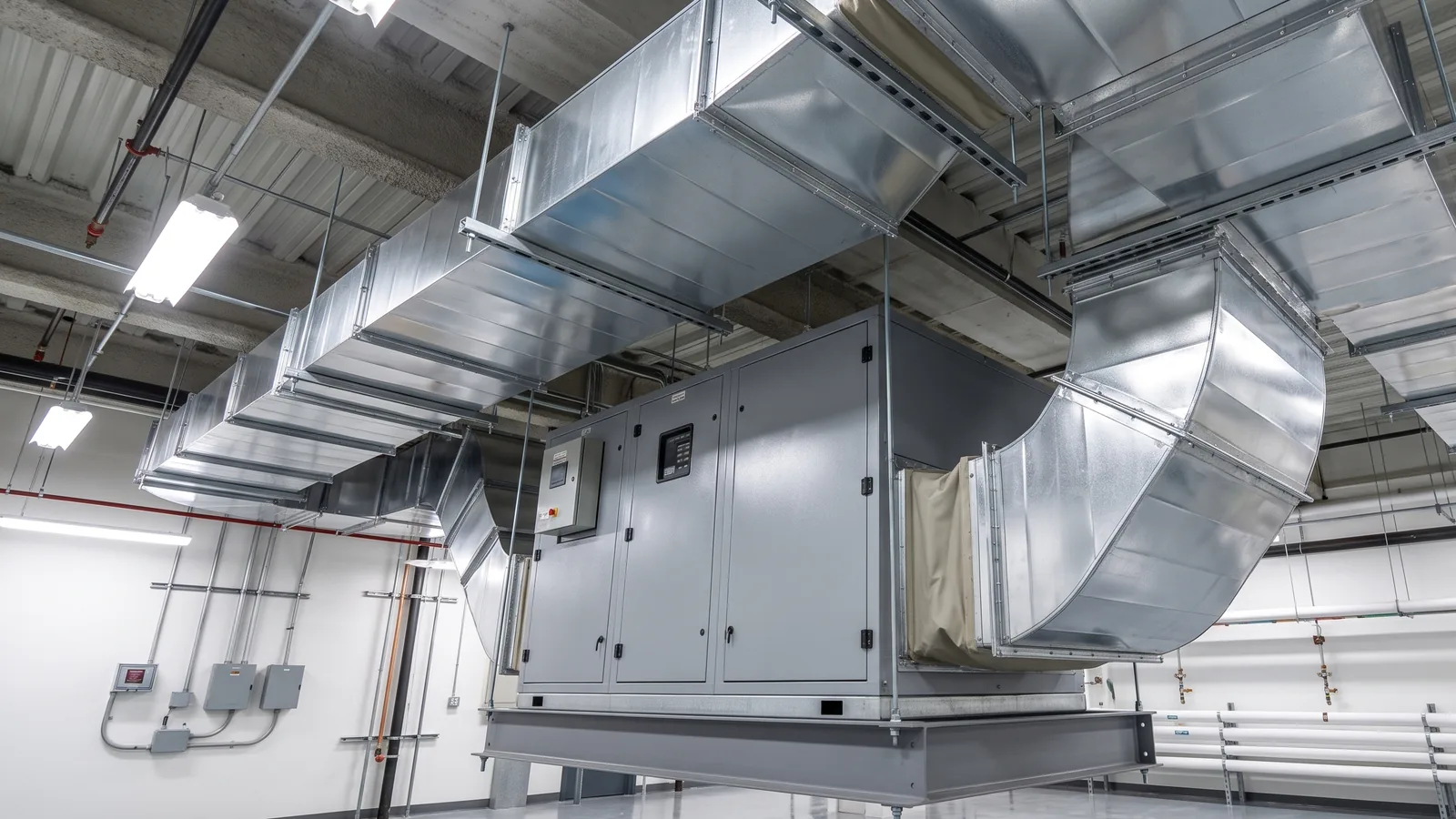
A well-maintained desiccant dehumidifier lasts 15 to 20 years. A neglected one fails in under five.
Commercial desiccant dehumidifiers run continuously in demanding environments, from cold storage facilities to pharmaceutical clean rooms. The silica gel rotor, filters and drive components all need regular attention to maintain rated performance.
This article provides a complete desiccant dehumidifier maintenance schedule for facility managers and engineers. It covers daily checks through to annual service intervals, with specific guidance on wheel cleaning and common mistakes that shorten equipment life.
Moisture Cure Commercial supplies commercial desiccant dehumidifiers with expert sizing advice and ongoing technical support for Australian facilities.
Why Maintenance Matters for Desiccant Dehumidifiers
Desiccant dehumidifiers work differently from refrigerant units. The silica gel rotor continuously adsorbs moisture from the process air stream while a separate heated reactivation air stream drives that moisture out.
This means maintenance is focused on airflow, rotor condition and heat management rather than compressor and refrigerant circuits. When any of these degrade, moisture removal capacity drops before the unit shows obvious signs of failure.
- A dirty pre-filter increases pressure drop across the rotor, reducing airflow by 10 to 30%
- Contaminated rotor surfaces reduce adsorption efficiency, meaning higher outlet humidity
- Worn drive belts cause inconsistent rotor speed, creating uneven drying across the air stream
- Blocked reactivation heaters increase energy consumption without improving performance
- Seal wear allows process and reactivation air streams to mix, reducing effective capacity
The difference between a unit running at 60% capacity and 95% capacity is often nothing more than a filter change and a rotor inspection. Maintenance is where the operational savings are.
Desiccant Dehumidifier Maintenance Schedule
The schedule below applies to commercial and industrial desiccant dehumidifiers running standard duty cycles. Adjust intervals shorter for dusty environments, high-contamination processes or 24/7 operation.
| Frequency | Task | Who |
|---|---|---|
| Daily | Check control panel for error codes and alarms | Operator |
| Daily | Confirm process and reactivation fans are running | Operator |
| Weekly | Inspect pre-filter condition, replace if visibly loaded | Operator |
| Monthly | Check rotor drive belt tension and alignment | Maintenance tech |
| Monthly | Inspect rotor seals for wear or gaps | Maintenance tech |
| Monthly | Verify reactivation temperature against setpoint | Maintenance tech |
| Quarterly | Clean or replace pre-filters and post-filters | Maintenance tech |
| Quarterly | Inspect desiccant wheel surface for contamination or damage | Maintenance tech |
| Quarterly | Check ductwork connections for air leaks | Maintenance tech |
| Annually | Full rotor cleaning (vacuum and wash if required) | Service engineer |
| Annually | Inspect and test reactivation heater elements | Service engineer |
| Annually | Check electrical connections and motor condition | Service engineer |
| Annually | Calibrate humidity sensors and controls | Service engineer |
Units operating in food production, pharmaceutical or clean room environments typically need quarterly intervals halved. Contamination from airborne particles, oils or volatile organic compounds accelerates rotor degradation.
Desiccant Wheel Cleaning and Inspection
The desiccant wheel is the most expensive component in the unit. A silica gel rotor in good condition lasts 8 to 12 years before needing replacement.
Contamination shortens that lifespan significantly. Grease, oil vapour, dust and chemical residues coat the silica gel surface and block the microscopic pores that adsorb moisture.
Quarterly Visual Inspection
- Open the access panel and inspect the rotor face with a torch
- Look for discolouration, which indicates contamination buildup
- Check for physical damage such as cracks, chips or delamination at the edges
- Run a finger across the surface. Clean silica gel feels dry and slightly gritty. Contaminated surfaces feel smooth or oily
Annual Wheel Cleaning
- Vacuum both faces of the rotor with a soft brush attachment to remove loose particulate
- If contamination remains, wash with warm water and a mild detergent (pH neutral, no solvents)
- Rinse thoroughly and allow to dry completely before running the reactivation cycle
- Run the reactivation heater at full temperature for 2 to 4 hours to drive out residual moisture from washing
- Measure outlet humidity after cleaning and compare to the unit’s rated specification
If outlet humidity does not return to within 10% of the rated specification after cleaning, the rotor may need professional regeneration or replacement. Moisture Cure Commercial can advise on whether a rotor is recoverable or needs replacing.
Filter Maintenance and Replacement
Filters protect the desiccant wheel from airborne contaminants. A blocked filter does not just reduce airflow. It forces the fans to work harder, increases energy consumption and allows bypass air to find alternative paths into the unit.
| Filter Type | Location | Replacement Interval | Notes |
|---|---|---|---|
| Pre-filter (G4/M5) | Process air inlet | Monthly to quarterly | First line of defence. Replace more often in dusty environments |
| Post-filter (F7+) | Process air outlet | Quarterly to biannually | Protects downstream equipment and conditioned space |
| Reactivation filter | Reactivation air inlet | Quarterly | Often overlooked. Dirty reactivation filters reduce heating efficiency |
Keep spare filters on site. Waiting for a delivery while running a unit with loaded filters causes more damage to the rotor in a week than normal operation causes in a year.
Signs Your Desiccant Dehumidifier Needs Service
Desiccant units rarely stop working suddenly. Performance degrades gradually, which makes it easy to miss until humidity targets are no longer being met.
- Outlet humidity rising above setpoint despite no change in inlet conditions
- Reactivation exhaust temperature dropping below normal operating range
- Unusual noise from the rotor drive or fan bearings
- Visible moisture or condensation inside the unit casing
- Higher than normal energy consumption with no change in load
- Error codes or alarms appearing on the control panel
- Uneven humidity readings across the conditioned space
If you notice any of these, do not wait for the next scheduled service. A small issue caught early, such as a worn seal or a slipping belt, costs far less to fix than the rotor damage it causes if left.
Common Maintenance Mistakes That Shorten Equipment Life
These are the mistakes that facility managers and maintenance teams make most often with commercial desiccant dehumidifiers.
- Running without pre-filters: Saves filter costs in the short term, destroys the rotor in months
- Using solvent-based cleaners on the rotor: Solvents dissolve the silica gel binder and permanently damage the wheel structure
- Ignoring the reactivation side: The reactivation air circuit needs the same filter and airflow attention as the process side
- Over-tightening drive belts: Excessive tension wears bearings faster than a slightly loose belt
- Skipping humidity sensor calibration: Drifted sensors mask real performance problems because the control system reports false readings
Every one of these mistakes is avoidable with a structured maintenance schedule. The schedule above exists specifically to prevent them.
A desiccant dehumidifier maintenance schedule is not optional for commercial operations. The cost of regular servicing is a fraction of the cost of premature rotor replacement or uncontrolled humidity damaging product, equipment or facility infrastructure.
If you are unsure whether your current maintenance program is adequate, or if your unit is underperforming despite regular filter changes, contact Moisture Cure Commercial for a consultation. Expert advice on sizing, maintenance and unit selection is included with every enquiry.