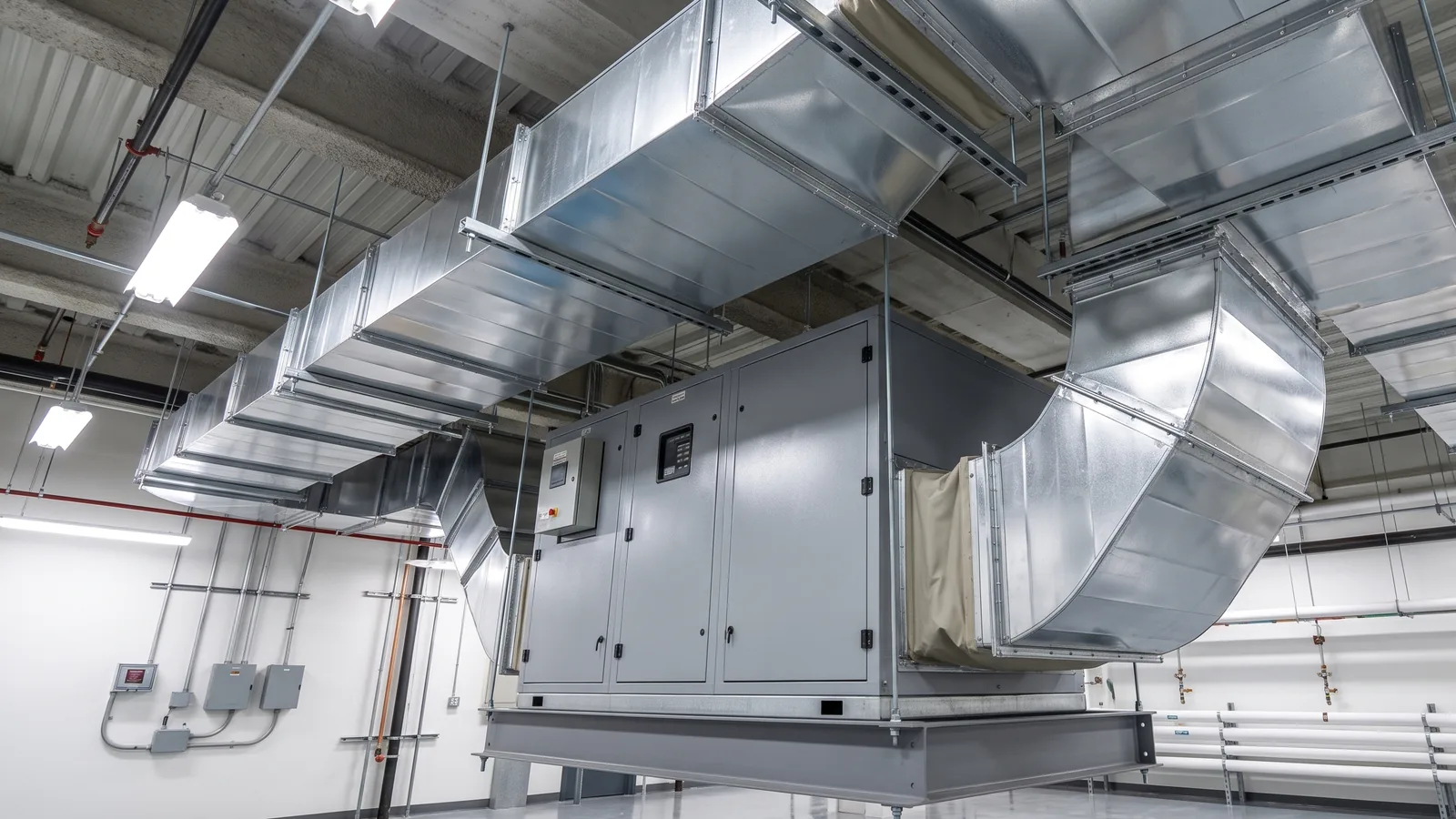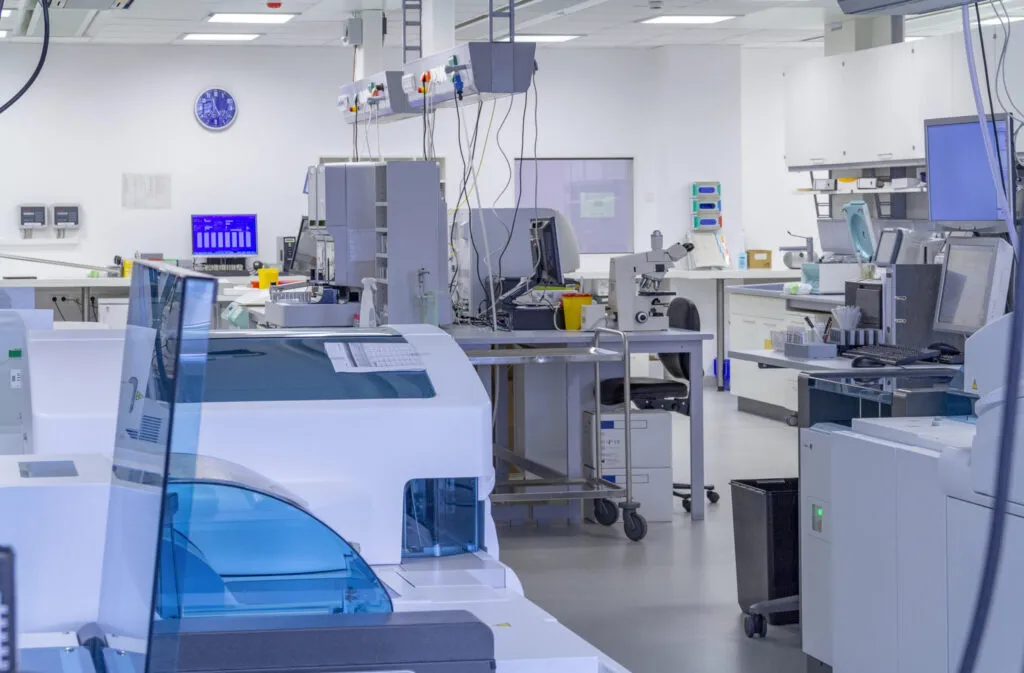
A commercial desiccant dehumidifier works where refrigerant units physically cannot.
Refrigerant dehumidifiers rely on a cold coil to condense moisture from the air. Below roughly 15°C, that coil frosts over and extraction drops to near zero.
A commercial desiccant dehumidifier uses a silica gel rotor to adsorb moisture directly, regardless of temperature. That distinction matters every time you need humidity control in a cold room, freezer facility, pharmaceutical cleanroom, or unheated warehouse.
Moisture Cure Commercial supplies industrial-grade desiccant units and full commercial dehumidifier range across Australia. Expert sizing advice is included with every enquiry.
How a Commercial Desiccant Dehumidifier Works
The core component is a slowly rotating wheel impregnated with silica gel. Process air passes through one sector of the wheel, where the desiccant adsorbs moisture.
A separate heated reactivation airstream passes through the opposite sector, driving the captured moisture out as warm, humid exhaust. The wheel rotates continuously, so the process never stops.
- No compressor, no refrigerant gas, no cold coil
- Operates from -20°C to +50°C ambient temperature
- Can reduce relative humidity to as low as 1% RH
- Reactivation heat can come from electricity, gas, or steam
- Exhaust air is typically 10 to 15°C warmer than inlet air
The desiccant adsorption process is purely physical. The silica gel is not consumed and does not degrade under normal operating conditions.
When to Choose Desiccant Over Refrigerant
Not every facility needs a desiccant unit. If your space stays above 15°C year-round and you only need to hold 50 to 60% RH, a refrigerant dehumidifier will do the job at lower upfront cost.
Desiccant is the correct specification when one or more of the following conditions apply:
- Operating temperatures drop below 15°C at any point during the year
- Target relative humidity is below 45% RH
- The space is a cold store, freezer, or blast chiller environment
- Compliance standards (GMP, HACCP) require tight humidity tolerances
- The unit must operate reliably across wide temperature swings
- Ducting into an HVAC system is required for distributed airflow
For a detailed breakdown of both technologies, see the guide on choosing a commercial dehumidifier for Australian conditions.
Industries That Specify Commercial Desiccant Dehumidifiers
Desiccant dehumidifiers are standard equipment in industries where temperature, compliance, or product sensitivity rules out refrigerant technology.
| Industry | Why Desiccant Is Specified | Typical Target RH |
|---|---|---|
| Pharmaceutical manufacturing | GMP compliance requires tight RH control regardless of season or ambient temperature | 30 to 45% |
| Food production and storage | Prevents mould and spoilage in cold chain environments where refrigerant units frost up | 35 to 55% |
| Cold storage and freezers | Only viable technology below 0°C; prevents ice buildup on goods and racking | Below 40% |
| Data centres | Prevents condensation on equipment during cold-aisle cooling | 40 to 50% |
| Museum and archive storage | Protects artefacts, paper, and textiles from moisture fluctuations | 45 to 55% |
| Paint and coatings facilities | Low humidity accelerates curing and prevents blistering or adhesion failures | 30 to 45% |
| Marine and offshore | Salt air and wide temperature swings make refrigerant units unreliable | Below 50% |
Each application has different airflow, capacity, and ducting requirements. The RH target alone does not determine the correct unit size.
Desiccant vs Refrigerant at a Glance
The table below summarises the practical differences that matter at specification stage. A more detailed comparison is covered in the industrial dehumidifier selection guide.
| Factor | Desiccant | Refrigerant |
|---|---|---|
| Effective temperature range | -20°C to +50°C | Above 15°C (efficiency drops sharply below) |
| Lowest achievable RH | Down to 1% | Around 45% |
| Energy source | Electricity + reactivation heat | Electricity (compressor) |
| Exhaust heat | Adds 10 to 15°C to reactivation air | Adds 2 to 3°C to room air |
| Upfront cost | Higher | Lower |
| Best application | Cold, dry, or compliance-critical environments | Warm, moderately humid spaces |
| Maintenance | Filter replacement, rotor inspection | Filter cleaning, refrigerant checks, coil cleaning |
YAKE desiccant units supplied by Moisture Cure Commercial operate from -20°C to +50°C. They are rated for continuous duty in pharmaceutical, food, cold storage, and industrial environments.
Key Factors When Specifying a Desiccant Unit
Under-specifying a desiccant dehumidifier leads to the same outcome as under-specifying any mechanical plant: it runs continuously without reaching target conditions, wastes energy, and fails to protect the space.
- Moisture load calculation. Account for product respiration, air infiltration, door openings, process moisture, and personnel. This is the single most common point of failure in sizing.
- Ambient temperature range. The unit’s reactivation efficiency changes with inlet air temperature. Provide the full annual range, not just average conditions.
- Target RH and tolerance band. A pharmaceutical cleanroom holding 35% ±3% RH is a different specification from a cold store holding 50% ±10% RH.
- Airflow and ducting. Determine whether the unit operates standalone or integrates into existing HVAC. Ducted configurations distribute dry air across larger or segmented spaces.
- Reactivation energy source. Electric reactivation is standard. Gas or steam reactivation may be more cost-effective at scale.
- Exhaust air management. Reactivation exhaust is warm and moisture-laden. It must be ducted outside or managed within the building’s ventilation design.
Moisture Cure Commercial provides sizing calculations as part of every enquiry. Supplying accurate site data upfront shortens the process and avoids over- or under-sizing.
Common Mistakes in Desiccant Specification
These errors come up repeatedly in commercial projects. Each one leads to equipment that underperforms or costs more than necessary to operate.
- Ignoring exhaust heat. Desiccant reactivation adds 10 to 15°C to the exhaust air. In a temperature-sensitive environment, this heat must be ducted out or offset by cooling. The AIRAH guidelines cover thermal load calculations for mechanical plant.
- Sizing on room volume alone. A 500 m³ cold store with 20 door openings per hour has a vastly different moisture load than the same volume with 2 door openings. Infiltration dominates the calculation.
- Specifying refrigerant for cold environments. A refrigerant unit rated at 30°C/80% RH will deliver a fraction of its stated capacity at 5°C. Below 5°C, most stop dehumidifying entirely.
- Overlooking maintenance access. Desiccant rotors require periodic inspection. Install the unit where technicians can access the rotor, filters, and reactivation heater without dismantling surrounding equipment.
- No humidity monitoring. Without a logging system, you have no way to verify the unit is maintaining target conditions. Install sensors with remote readout at minimum.
Desiccant Applications in Australian Conditions
Australia’s climate varies from tropical in the north to cold and dry in alpine regions. That range creates specific challenges for humidity control that differ from Northern Hemisphere norms.
- Cold storage and logistics hubs. Cold chain facilities in every state need sub-zero humidity control. Desiccant is the only technology that works at these temperatures.
- Pharmaceutical and medical manufacturing. GMP-compliant production requires documented humidity control year-round. Desiccant delivers consistent RH regardless of outdoor conditions.
- Food processing. Confectionery, dairy, and grain processing all suffer from uncontrolled humidity. The FSANZ code requires environmental controls that desiccant can satisfy.
- Construction drying in winter. Southern states see winter temperatures that stop refrigerant dehumidifiers from working. Desiccant units dry concrete, plaster, and coatings regardless of ambient temperature.
- Electronics manufacturing. Static discharge and condensation both increase with uncontrolled humidity. Desiccant holds RH in the 30 to 40% range needed for clean production.
- Wine storage and barrel halls. Stable humidity prevents cork shrinkage and barrel seepage. Desiccant handles the cool, stable conditions these spaces require.
Getting the Specification Right
A commercial desiccant dehumidifier is the correct choice when operating temperatures, target RH, or compliance requirements exceed what refrigerant technology can deliver. Specifying the wrong type wastes capital and leaves the facility exposed.
The variables that determine the right unit are site-specific: moisture load, temperature range, ducting layout, and compliance standards. Generic sizing charts do not account for real-world conditions like door traffic, product moisture content, or seasonal variation.
Moisture Cure Commercial has over 20 years of experience sizing and supplying desiccant dehumidifiers for Australian commercial and industrial facilities. YAKE units cover operating conditions from -20°C to +50°C with expert technical support included.
Contact Moisture Cure Commercial for a consultation or quote. Sizing advice is included with every enquiry, and the team can recommend the right unit for your site conditions.